

A Guide to Cup and Bra Sizes
Finding the right bra is not merely a matter of comfort; it is a foundational element of personal style, posture, and confidence. Yet, the world of cup bras sizes remains shrouded in confusion and misconception for many. This guide aims to demystify the process, moving beyond vague notions of “understanding” to provide a clear, actionable, and scientifically-grounded roadmap. We will dismantle the myths, explore the objective measurements, and provide you with the knowledge to make informed choices that bring both professional expertise and the promise of a better fit—often at more accessible prices—directly to you.
The Foundational Error: Why Most People Wear the Wrong Size
It is a startling but widely acknowledged fact that a significant majority of individuals are wearing an incorrect bra size. This isn’t a personal failing but a systemic issue rooted in outdated fitting methods, inconsistent sizing across brands, and a pervasive lack of public education on the subject. The common practice of adding inches to the underbust measurement to determine band size, for instance, is a relic that often results in a band too large and cups too small. This flawed approach fails to account for the fundamental engineering of a bra: the band should provide approximately 80% of the support, with the straps offering only stabilization. When the band is loose, the straps dig into the shoulders, causing pain and poor posture. Furthermore, the complexity of cup bras sizes is frequently oversimplified. A “D cup” is not an absolute volume but a relative proportion to the band. A 30D holds a different volume than a 38D, a concept known as sister sizing, which we will explore later. This misunderstanding leads to the “boob hat” phenomenon—a bra that sits on top of the tissue without encapsulating or supporting it properly. The consequence is more than discomfort; it can affect how clothing fits, one’s silhouette, and long-term physical well-being.
Deconstructing the Code: Band, Cup, and Volume
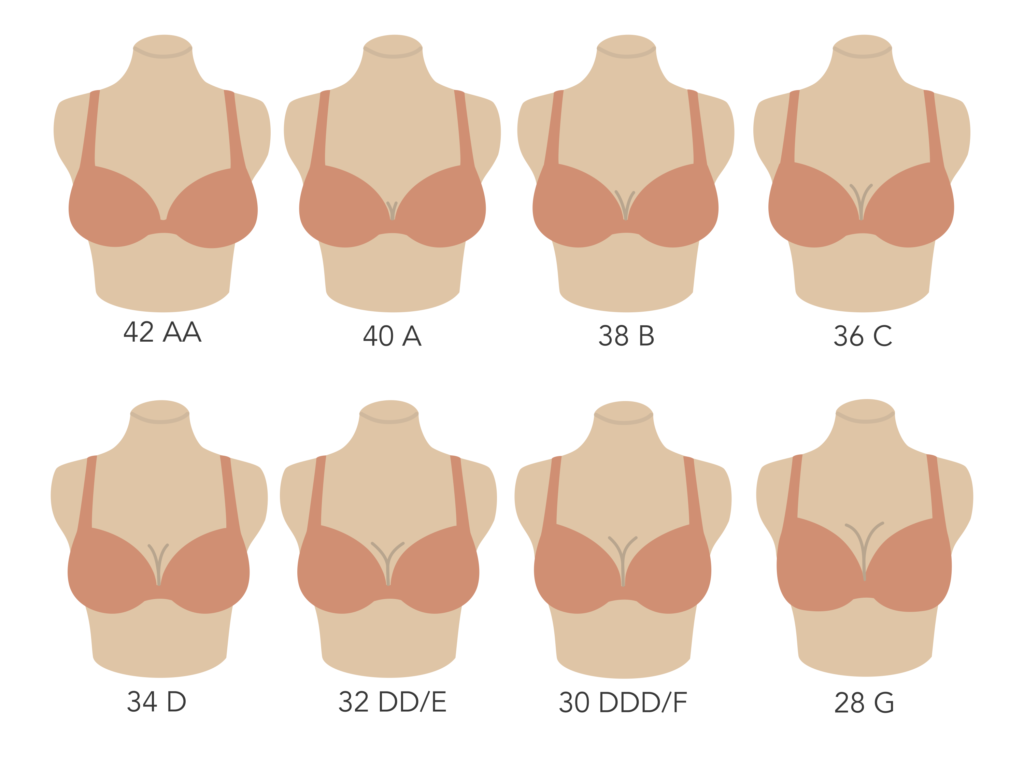
To master cup bras sizes, we must first become fluent in its language. A bra size is a two-part code: a number (the band) and a letter (the cup). The band size is a direct reflection of your underbust circumference in inches (or centimeters, depending on the region). It should be measured snugly, on bare skin, directly under the bust, ensuring the tape is parallel to the floor. This number is not arbitrary; it’s the anchor of the entire structure. The cup size is not an absolute measure but represents the difference between your full bust circumference (measured at the fullest part, without compressing tissue) and your underbust measurement. Each inch of difference typically corresponds to a cup letter. For example, a 1-inch difference might be an A cup, 2 inches a B cup, and so forth. This is where the science becomes crucial. As noted in resources from authoritative institutions and apparel engineering literature, the cup volume increases proportionally with the band. The widely cited analogy is that of a drinking glass: a “D cup” represents the ratio of liquid to glass size, not a fixed amount. Therefore, the volume of a 32D is not equivalent to that of a 40D; the latter is designed for a larger total bust circumference. This proportional system explains why someone with a smaller frame might correctly wear a DD or DDD cup, sizes often mistakenly associated only with larger busts.

The Sister Size System: A Crucial Nuance
Within the matrix of cup bras sizes exists a powerful concept known as sister sizing. When the band size changes, the cup volume must adjust to maintain the same total bust capacity. Sister sizes are groups of bra sizes that hold approximately the same cup volume. The rule is simple: go up a band size and down a cup letter, or go down a band size and up a cup letter. For instance, a 34C, 32D, and 30DD are sister sizes—their cups are designed to hold a similar volume of tissue, but on different rib cage circumferences. This is not merely a theoretical idea; it’s a practical tool endorsed by professional fitters and lingerie experts across platforms from YouTube to specialized forums. A common application is when you find a bra where the cups fit perfectly but the band is too loose. Instead of abandoning that style, you might try its sister size with a smaller band and larger cup. However, it is a tool for fine-tuning, not a primary fitting method, as the band’s fit and placement of underwires and straps are optimized for its intended frame. Understanding this system empowers you to navigate sales and limited stock, increasing your chances of finding a good fit even if your “true” size is unavailable.
Beyond the Tape: Shape, Projection, and Root Width
Even with perfectly accurate measurements, you may find bras that are the “right size” but the wrong fit. This is because the alphanumeric code of cup bras sizes only tells part of the story—the volume. The equally critical factors are shape and distribution. Breast shape is multifaceted, involving concepts like projection (how far breast tissue extends from the chest wall when supported), root width (where breast tissue attaches along the chest wall), and fullness (whether more tissue sits above or below the nipple). A shallow shape, with tissue spread over a wider area of the chest, will require a fundamentally different cup design—often wider and more shallow—than a projected shape, which needs deeper, more forward-projecting cups. Resources like the subreddit r/ABraThatFits have built extensive community-driven wikis that categorize these shapes, providing visual guides and brand recommendations. As one expert contributor often states on such platforms, “Two people who measure as a 36F can have completely different fitting needs. One might need a wide, shallow cup from Wacoal, while the other requires a narrow, projected cup from a Polish brand like Ewa Michalak. Ignoring shape is like knowing your shoe size but not your width.” Recognizing your shape is the key to transitioning from a bra that technically fits to one that feels like a second skin.
Translating Knowledge into Action: A Practical Fitting Journey
Armed with this knowledge, how do you proceed? Begin by discarding your assumptions and taking fresh measurements. Use a soft measuring tape and, for the most accurate starting point, consider the method popularized by online communities: take a loose underbust, a snug underbust, a tight underbust, a standing bust, a leaning bust, and a lying bust measurement. These six data points account for tissue compressibility and softness, providing a more robust calculation than the traditional two-measurement method. Input these into a reputable calculator, such as the one provided by r/ABraThatFits, to get a suggested starting size. Remember, this is a starting point, not a decree. The real test is in the trying. When you try on a bra, always start on the loosest hook; the elastic will stretch over time. The band should feel firm and level around your body, not riding up. The center gore (the piece between the cups) should lie flat against your sternum. The wires should encircle your breast tissue fully at the sides, not sitting on it. Your breast tissue should be fully contained within the cups, with no spillage (quad-boob) or gaping. Gaping often indicates a shape mismatch, not necessarily a too-large cup. This process of trying, assessing, and adjusting—potentially using sister sizes—is how you claim ownership over your cup bras sizes.
Expertise Meets Value: Finding Quality at Accessible Prices
Professional-grade lingerie knowledge should not be gatekept behind luxury price tags. While boutique fittings are invaluable, the principles of fit are universal and can be applied anywhere. Many reputable brands now offer detailed size charts and fit guides online, often developed with input from professional fitters. The rise of direct-to-consumer lingerie brands has also disrupted the market, offering high-quality materials and a wider range of cup bras sizes at more accessible price points by cutting out traditional retail markups. Furthermore, end-of-season sales, clearance sections on brand websites, and retailers specializing in discounted designer lingerie are excellent avenues. The key is to know your size and shape parameters so you can confidently shop these opportunities. An ill-fitting $20 bra is money wasted, while a perfectly fitting $50 bra bought on sale is a wardrobe cornerstone. Investing time in your fitting education is the ultimate discount, preventing the endless cycle of purchasing unsatisfactory garments.

The Empowered Outcome: Fit as a Form of Self-Care
Navigating the intricacies of cup bras sizes is more than a sartorial exercise; it is an act of practical self-knowledge. The correct fit transforms your relationship with your body and your wardrobe. Shoulder and back pain can diminish. Posture often improves as the torso is properly supported. Clothes drape as intended, smoothing lines and creating a more polished silhouette. But perhaps most importantly, it fosters a sense of agency. You are no longer at the mercy of an arbitrary tag or a salesperson’s limited inventory. You possess the analytical tools to diagnose fit issues and seek solutions. This knowledge allows you to filter the overwhelming world of lingerie, seeking out brands known for your shape, and understanding why certain styles work while others don’t. It turns a frustrating chore into a curated selection process. The journey to finding your ideal bra is a declaration that comfort, support, and accurate representation of your form are not luxuries, but essentials. Start with the tape, honor your shape, and let the right fit provide a foundation of confidence that extends far beyond the wardrobe.