

Finding Your Perfect Fit and Style
Forget the endless dressing room frustration and the drawer full of unworn, uncomfortable lingerie. The journey to finding bras that feel like a second skin and express your personal style isn’t about following fleeting trends; it’s a foundational act of self-knowledge. It begins with dismantling myths and embracing a precise, almost scientific understanding of your form. This isn’t just about aesthetics—it’s about comfort, confidence, and the silent support that empowers you from the moment you get dressed. We often accept minor annoyances—straps digging, bands riding up, wires poking—as inevitable. They are not. They are clear signals of a mismatch, a conversation your body is trying to have about what it truly needs. By learning its language, you can transform your entire wardrobe experience, starting with the most intimate layer.
The Foundation: Demystifying Bra Anatomy and Sizing
To find your perfect fit, you must first become fluent in the language of lingerie. A bra is an engineered garment, and its two most critical components are the band and the cup bras sizes. The band, which fastens around your ribcage, provides the vast majority of the support—approximately 80%. A common misconception, perpetuated by outdated fitting methods, is that support comes from the straps. In reality, straps should only offer about 20% of the lift and are primarily for shaping. The band must be snug, level all around your torso, and stay firmly in place without riding up. If it does ride up, it’s a definitive sign the band is too large. The cup bras sizes are not just about volume; they are about proportion and containment. A cup that is too small will cause spillage over the top or sides, while a cup that is too large will gap, wrinkle, or leave empty space. The wire, if present, should lie flat against your chest, fully encapsulating your breast tissue at the sides without resting on it. This precise interplay between band and cup is non-negotiable for comfort.

Why the +4 Method Fails You
Many department store fitters still use the antiquated “+4 method,” where they add four or five inches to your underbust measurement to determine your band size. This technique, a holdover from mid-20th-century bra construction with less elastic materials, systematically puts women into bands that are too large and cups that are too small. As bra expert and author of “The Bra Book,” Jene Luciani, has stated, “A proper fit starts with the band. It should be firm and secure on the loosest hook when new.” Starting on the loosest hook allows you to tighten the band as the elastic naturally wears out over time, extending the garment’s life. A band that is too loose shifts the support burden to the shoulders, leading to strap grooves, neck pain, and poor posture. Scientific literature from textile and apparel studies at universities like Cornell confirms that load-bearing in a bra system is most effective and comfortable when distributed around the sturdy ribcage, not the delicate musculature of the shoulders. Therefore, your starting band size should be very close to your snug underbust measurement in inches. If you measure 32 inches, you will likely wear a 32 or 34 band, not a 36. This correction is the single most important step in finding your true cup bras sizes.
The Revelation of Sister Sizing and Shape Mismatch
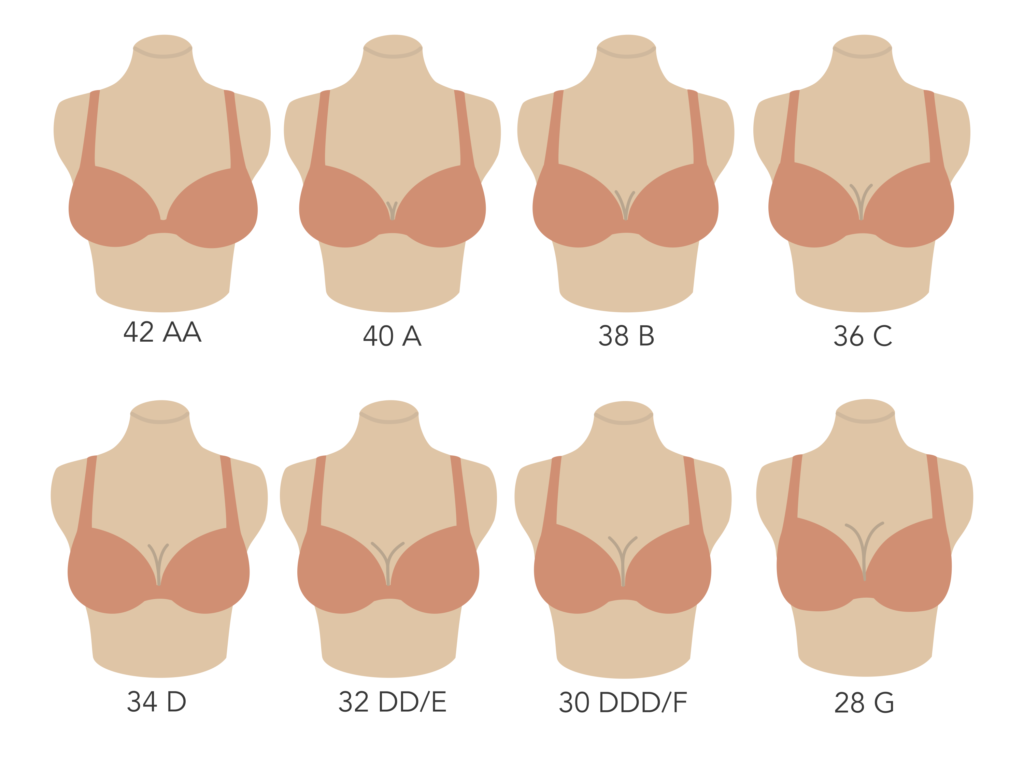
Once you grasp the band-cup relationship, the concept of sister sizing becomes logical. Sister sizes are bras with the same cup volume but on different band sizes. For example, a 34D, 32DD, and 30E all hold a similar volume of breast tissue. However, they are not interchangeable. A woman who needs a 30E but wears a 34D is in a band four inches too large, sacrificing all support. Sister sizing is a useful tool for fine-tuning—if the band of a 32DD feels perfect but the cup is slightly small, trying a 34D (the sister size) would worsen the fit by loosening the band. Instead, you would move to a 32E. This highlights that cup bras sizes are a ratio, not an absolute. The letter ‘D’ is meaningless without its band number partner. Furthermore, breast shape is as crucial as size. Two women who measure as a 34F may have completely different fitting needs: one may have full-on-bottom, projected breasts requiring deep cups, while another may have shallow, wide-set breasts needing wide, shallow cups. Resources like the Reddit community r/ABraThatFits provide extensive shape guides, categorizing factors like projection, root width, and fullness distribution, which are essential for diagnosing why a bra in your supposed size might still not fit.
Bringing Professional Knowledge to Your Doorstep
You don’t need to navigate this complex landscape alone. The professional knowledge once confined to boutique fitting rooms is now widely accessible. Websites like Bratabase allow users to compare measurements and fit reviews for thousands of specific bra models. YouTube channels run by certified fitters, such as “The Fuller Bust” or “Bra Talk by Dillard’s,” offer visual tutorials on assessing fit, swooping and scooping all tissue into the cup—a critical step—and identifying shape characteristics. This democratization of expertise means you can become your own best fitter. Armed with this knowledge, you can approach shopping with a discerning eye. You’ll understand that gapping doesn’t automatically mean the cup is too large; it can often mean the cup is too small or shallow for your projection, pushing the bra away from your body. You’ll know that center spillage or a floating gore (the center piece between the cups) indicates a need for a larger cup size or a different wire design. This self-knowledge is empowering and transforms shopping from a chore into a targeted, successful mission.
Style as an Expression of Your Architecture
With a solid grasp on fit, style becomes a joyful exploration rather than a limitation. Your correctly determined cup bras sizes and shape are the architectural blueprint; style is the interior design. Different bra styles serve different purposes and create distinct silhouettes under clothing. A seamless T-shirt bra with molded cups offers a smooth, rounded line under tight knits, while a balconette bra with vertical seams provides uplift and a separated, lifted shape perfect for lower necklines. For those with close-set breasts, a plunge bra with a low gore is essential under V-necks, whereas a front-close bra can offer a unique back silhouette and easy fastening. The choice of material matters too: luxurious French lace may be beautiful but offer less compression, while technical microfiber provides a firm, supportive hold. As fashion historian Valerie Steele notes in her book “The Corset: A Cultural History,” intimate apparel has always reflected both technological innovation and cultural ideals of the body. Today, we have the unprecedented freedom to choose bras that reflect our personal ideals of comfort, support, and beauty. Understanding your size and shape allows you to select styles that will actually work for your body, ensuring that the beautiful bra you buy is also a comfortable, functional one.

Investing in Your Comfort: Value Beyond the Price Tag
It’s a common belief that a well-fitting, quality bra must be prohibitively expensive. This is a false economy. While specialty bras with complex constructions may carry a higher initial price, their value is immense. A bra that fits perfectly will last longer because it is not being stretched and strained beyond its design parameters. The fabrics and elastics in higher-end brands are often more durable and retain their shape through countless washes. More importantly, consider the cost-per-wear. A $80 bra worn twice a week for two years costs about 38 cents per wear. A $20 bra that causes discomfort and is worn only a handful of times before being relegated to the back of the drawer is infinitely more expensive. Furthermore, many reputable online retailers and boutiques offer seasonal sales, loyalty discounts, and package deals. Signing up for newsletters from specialty stores can give you access to flash sales where you can acquire these foundational pieces at 20-30% off. This isn’t about luxury; it’s about prioritizing long-term comfort, spinal health, and wardrobe functionality. Investing in two or three perfectly fitting bras in core styles (a nude T-shirt bra, a versatile balconette, and a comfortable wireless option) will serve you better than a drawer full of ill-fitting alternatives.
Your Actionable Path Forward
The path to your perfect fit and style is clear. First, take your measurements using a soft tape measure, following a modern guide like the one on A Bra That Fits’ calculator. Record your snug underbust, tight underbust, and three bust measurements (standing, leaning, lying). This data is your starting point. Second, use this data to determine your likely starting size range, remembering that the band should be close to your snug underbust. Third, research your probable shape characteristics. Look in the mirror and compare your breast footprint and behavior when supported to online guides. Fourth, with your size and shape hypothesis in hand, seek out brands known for catering to your characteristics. For projected shapes, Polish brands like Ewa Michalak or UK brands like Panache are renowned. For shallow shapes, brands like Natori or Aerie often work well. Finally, order multiple sizes and styles—perhaps a 32F and 32FF in both a balconette and a plunge style—from retailers with generous return policies. Try them on at home, in peace, assessing the band, wire, cup, and gore. Take notes. The perfect fit is out there, and it transforms not just your silhouette, but your daily comfort and confidence. It is the ultimate sartorial foundation, making every outfit that goes over it look and feel better. Your journey to understanding cup bras sizes and personal style is an investment that pays dividends in well-being every single day.
This knowledge is your toolkit. Discomfort is optional. The perfect fit is not a mythical unicorn but an achievable reality built on measurement, shape awareness, and a willingness to see your body as unique. When your foundation is secure, style becomes a true expression of self, not a compromise. Start the conversation with your wardrobe today—your body will thank you.