How to Find Your Perfect Fit: A Guide to Cup and Bra Sizes
For many, the journey to finding the right bra is fraught with confusion, discomfort, and resignation to an ill-fitting norm. It doesn’t have to be. The perfect bra is not a mythical creature; it’s a garment defined by precise measurements and an understanding of your unique shape. This guide moves beyond vague suggestions to provide a concrete, scientific, and practical roadmap. We will dismantle the common misconceptions surrounding cup bras sizes, replacing guesswork with geometry and anatomy. By the end, you will possess the knowledge to confidently identify your true size, understand why it matters, and transform how you shop for this essential item of clothing.
The Foundational Error: Why Most Women Wear the Wrong Size
The statistic is staggering: industry experts and lingerie fitters consistently report that an estimated 70-80% of women are wearing the incorrect bra size. This isn’t a minor miscalculation; it’s a systemic issue rooted in outdated fitting methods, limited size ranges in mainstream stores, and a fundamental lack of public education on breast morphology. The consequences extend beyond a strap mark. An improperly fitted bra can lead to chronic back, shoulder, and neck pain, poor posture, skin irritation, and even restricted breathing. Furthermore, it fails to provide the intended support, which can affect the appearance of clothing and, importantly, one’s sense of comfort and confidence. The core of the problem often lies in the misunderstanding of the two-component system: the band and the cup. Most fitting errors involve a band that is too large and a cup that is too small—a combination that offers minimal support and creates the illusion of a fit while actually redistributing tissue in uncomfortable ways. To correct this, we must start from the beginning, with objective tools.
Deconstructing the Code: Band, Cup, and the Mathematics of Fit
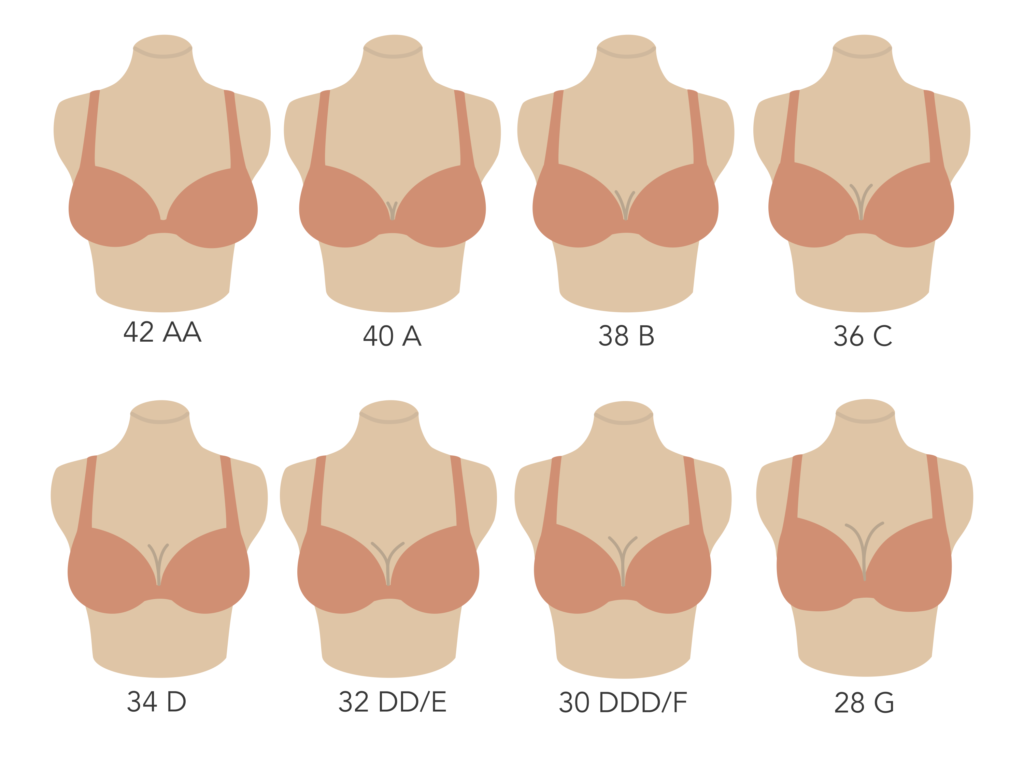
A bra size is not a single number; it’s a ratio. It describes the relationship between the circumference of your ribcage and the volume of your breast tissue. The number (e.g., 34, 36, 38) represents the band size—the measurement in inches around your torso directly under your bust, pulled snugly. This band should provide approximately 80-90% of the bra’s support. The letter (e.g., C, D, DD, G) represents the cup size—a measure of volume, not an absolute value. Scientifically, a cup letter indicates the difference in inches between your full bust circumference (measured at the fullest part, without compressing tissue) and your underbust measurement. Each inch of difference corresponds to a cup letter: 1 inch = A, 2 = B, 3 = C, 4 = D, 5 = DD (or E in some systems), and so forth. Therefore, a 34D describes a different volume than a 38D. The 34D has a smaller frame and a 4-inch difference, while the 38D has a larger frame with the same 4-inch difference, resulting in a physically larger cup. This is why simply “trying a D cup” is meaningless without the band context. Understanding this arithmetic is the first step to demystifying cup bras sizes.
The Sister Size Concept: A Useful, But Limited, Tool
When you encounter a scenario where the band feels perfect but the cup is wrong, or vice-versa, the “sister size” chart becomes relevant. Sister sizes are bra sizes that hold approximately the same cup volume on different band lengths. For example, the sister sizes to a 34D might be 32DD (go down a band, up a cup) and 36C (go up a band, down a cup). The underlying principle is volume equivalence. As noted on resources like Wikipedia’s “Brassiere measurement” page, this is a mathematical reality of the sizing system. However, it is a compromise. A bra fitter from a renowned boutique like Rigby & Peller often cautions that while a sister size can work in a pinch, it is not a perfect solution. Moving to a larger band reduces support, as the band is designed to be the anchor. Moving to a smaller band may feel too restrictive. The goal is always the true size where both band and cup are correct for your individual measurements.

Beyond the Tape: The Critical Role of Breast Shape
Measurements give you a starting point—a size range to explore. But the final arbiter of “perfect fit” is shape compatibility. Two women with identical underbust and bust measurements (and thus the same numerical cup bras sizes) can require dramatically different bra styles due to shape variations. Key shape factors include projection (how far breast tissue extends from the chest wall when supported), root width (where breast tissue attaches along the chest wall), fullness (whether more tissue sits above or below the nipple), and spacing (the distance between the breasts). For instance, a shallow shape with wide roots may gap in a bra designed for a projected, narrow shape, even in the “correct” size. Authoritative resources, including the bra-fitting community on Reddit’s r/ABraThatFits, emphasize shape analysis as the missing link for many. A full-on-top shape may need open-on-top cups, while a full-on-bottom shape may need more closed, supportive lower cups. This is why trying multiple styles within your size is not just recommended, it’s essential.

Professional Knowledge at Your Fingertips: A Self-Fitting Checklist
You can become an expert in your own fit. Use this checklist when trying on bras. First, band fit: It should be level all around your back and feel snug on the loosest hook (allowing you to tighten it as the elastic stretches over time). You should be able to slide only one or two fingers underneath comfortably. Second, cup fit: The underwire (if present) should encase all breast tissue, sitting flat against your ribcage in the front and not digging into your sides or armpits. There should be no gaping or cutting in at the top of the cup. The center gore (the piece between the cups) must lie flat against your sternum. Third, strap function: Straps should provide only about 10-20% of the support. They should not dig into your shoulders; if they do, the band is likely too large, forcing the straps to overcompensate. Finally, the overall feel: After scooping all tissue from the sides into the cups—a crucial step—the bra should feel secure and uplifting without constant adjustment. As bra fitting expert and author Jene Luciani states in her book, “The Bra Book,” a proper fit should feel like “a hug, not a straitjacket.”
Translating Knowledge into Action: Where and How to Shop
Armed with your measurements and shape understanding, the shopping experience changes. Instead of heading to a department store and grabbing an array of 36Bs, you can seek out retailers—both online and brick-and-mortar—that specialize in a wide range of cup bras sizes and styles. Many independent boutiques offer virtual fittings. Online retailers like Bare Necessities, HerRoom, and Bravissimo provide extensive filters for size, shape, and style, along with detailed user reviews that often discuss fit for specific body types. Look for sites with generous return policies to facilitate trial. Remember, your size can vary between brands and even styles, much like other clothing. Do not be discouraged if you need to try several options. This process is an investment in long-term comfort and wardrobe functionality. Furthermore, this knowledge empowers you to seek value. Once you know your consistent size in a particular brand, you can confidently shop sales, outlet sections, and discount sites, transforming what was once a frustrating chore into a strategic, and even enjoyable, acquisition.
The quest for the perfect bra is a journey of re-education. It requires discarding old assumptions and embracing a personalized, technical approach. By understanding the precise meaning behind band and cup bras sizes, acknowledging the pivotal role of individual breast shape, and applying a rigorous fitting checklist, you move from being a passive consumer to an informed individual. The right fit is out there—not as a one-size-fits-all solution, but as a perfect equation of your unique measurements and form. It’s the foundation for comfort, support, and confidence in everything you wear.