

Unlock Timeless Elegance with the Box Pleat Skirt
In the ever-evolving landscape of fashion, where trends flicker and fade with the seasons, true style is anchored in pieces that transcend the temporal. It is not about the fleeting allure of the new, but about the enduring power of design, cut, and silhouette. Among these sartorial constants, the box pleat skirt stands as a monument to structured grace. Its journey from the playing fields of 19th-century Scotland to the ateliers of Paris and the streets of global metropolises is a testament to its unparalleled versatility and elegance. This is not merely a garment; it is a design principle realized in fabric—a fusion of mathematical precision and aesthetic freedom that offers a unique proposition: dynamic movement coupled with a poised, architectural form. To choose a box pleat skirt is to choose a tool for self-expression that is as powerful in a boardroom as it is in an art gallery, capable of conveying authority, creativity, and a refined sensibility without uttering a single word.
The Architectural Foundation: Deconstructing the Box Pleat
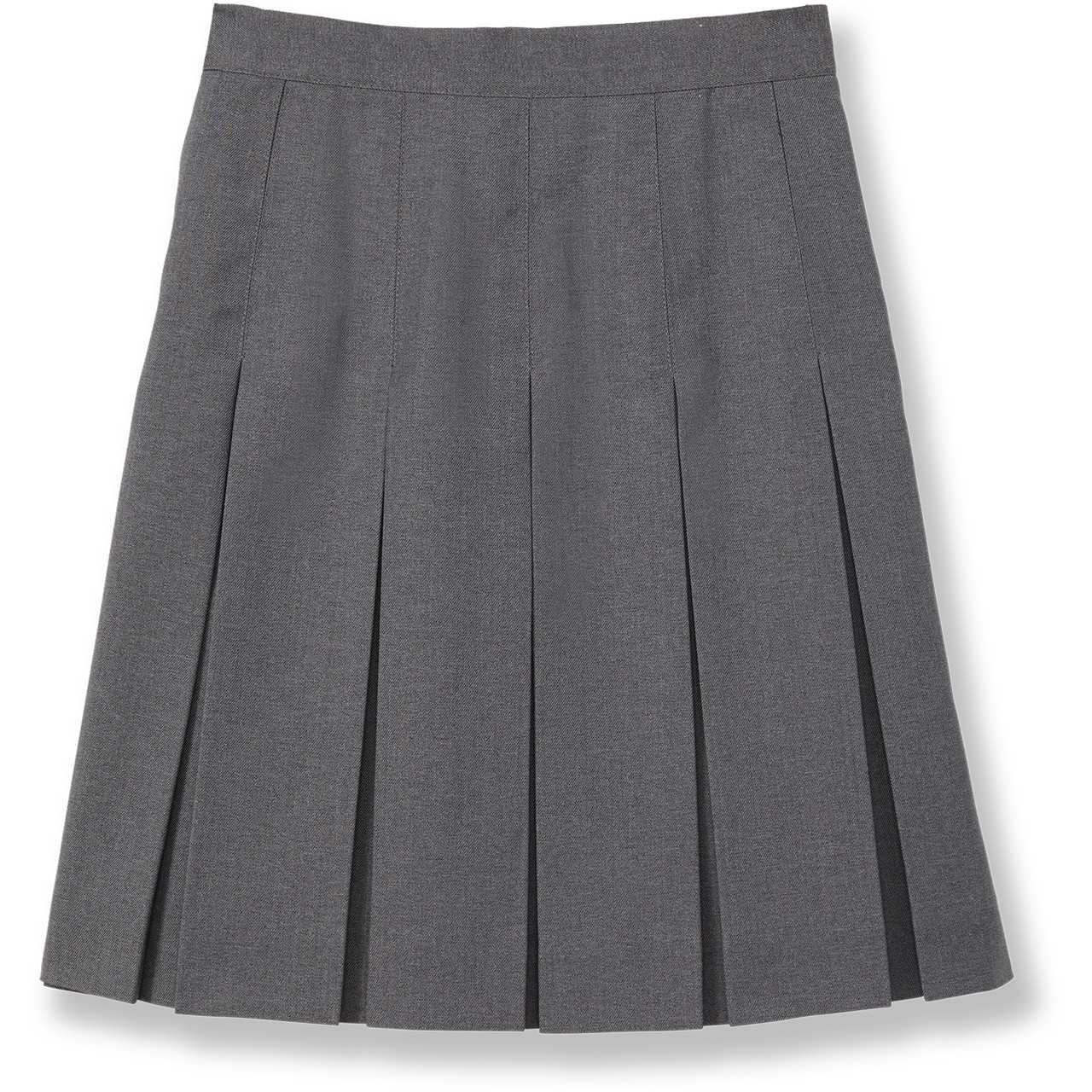
To appreciate the box pleat skirt, one must first understand its architecture. Unlike a simple gathered skirt or a casual knife pleat, the box pleat is a study in controlled volume. Each pleat is constructed by folding the fabric away from itself in opposite directions, creating a flat, inverted panel on the outside and a hollow, box-like structure on the inside. This technique, rooted in traditional tailoring, requires precise calculation of fabric consumption—often three times the finished waist measurement—to achieve its signature fullness without bulk. The result is a garment that possesses inherent structure. When stationary, it hangs with a dignified, columnar neatness, the pleats lying flat and sharp. With movement, however, it transforms. Each step releases a controlled cascade of fabric, the pleats opening and closing in a rhythmic, almost kinetic, display. This duality is its genius. As noted in textile studies from institutions like the Fashion Institute of Technology, the pleat serves as a functional hinge, a point of articulation that allows fabric to expand and contract around the body. This scientific principle of allocating material for movement finds its purest sartorial expression in the box pleat skirt, making it a marvel of wearable engineering that prioritizes both form and function in equal measure.

A Lineage of Liberation and Refinement
The history of the pleated skirt is a narrative intertwined with social change. Its early association with the Scottish kilt is well-documented, a garment designed for freedom of movement in the Highlands. However, the modern box pleat skirt owes a significant debt to the seismic shifts of the early 20th century. As women entered the workforce and embraced more active lifestyles, restrictive silhouettes became impractical. Design visionaries like Mariano Fortuny and, later, Cristóbal Balenciaga and Christian Dior, began experimenting with pleating, elevating it from folk costume to high art. Fortuny’s famous Delphos gown, with its fine, permanent pleats, demonstrated how texture and line could create a new, liberated elegance. But it was in the school uniform where the box pleat found a democratic foothold, symbolizing youthful order and potential. This legacy is powerfully echoed in popular culture. The iconic uniform in the anime “Sailor Moon” or the scholarly aesthetic of Hogwarts in the “Harry Potter” series popularized the pleated skirt as an emblem of identity and belonging. From these diverse origins—battlefield, atelier, and classroom—the skirt emerged as a canvas for both conformity and rebellion. A well-cut box pleat skirt carries this rich lineage: it speaks of a heritage that values precision, acknowledges the need for physical freedom, and aspires to an intelligent, composed beauty.
The Style Algorithm: Curating Your Personal Aesthetic
The true power of this garment lies in its chameleonic ability to adapt to the wearer’s intent. It is a foundational piece that rewards strategic styling. For a portrait of contemporary minimalism, pair a midi-length wool box pleat skirt in charcoal grey with a sleek black turtleneck and polished ankle boots. The outfit’s impact derives from the contrast between the soft drape of the knit and the sharp, graphic lines of the pleats. Conversely, to channel a romantic, vintage-inspired sensibility, a high-waisted, ankle-length version in a floral-printed crepe, paired with a delicate lace blouse and block-heeled sandals, creates a look that is both feminine and substantial. The key is understanding balance. As style authorities from platforms like Who What Wear often articulate, the volume introduced by the pleats should be counterpoised with more fitted elements on the torso. A tucked-in silk camisole or a tailored blazer provides that necessary equilibrium. Furthermore, fabric choice dictates personality. A stiff cotton poplin offers a playful, academic air, perfect for daytime; a flowing silk georgette lends drama and movement for evening; while a technical fabric with permanent pleats, as pioneered by brands like Issey Miyake, presents a futuristic, sculptural edge. Each combination writes a different style statement, proving the skirt is not a single note, but an entire scale upon which to compose your look.
Investing in Form: The Professional Knowledge of Quality
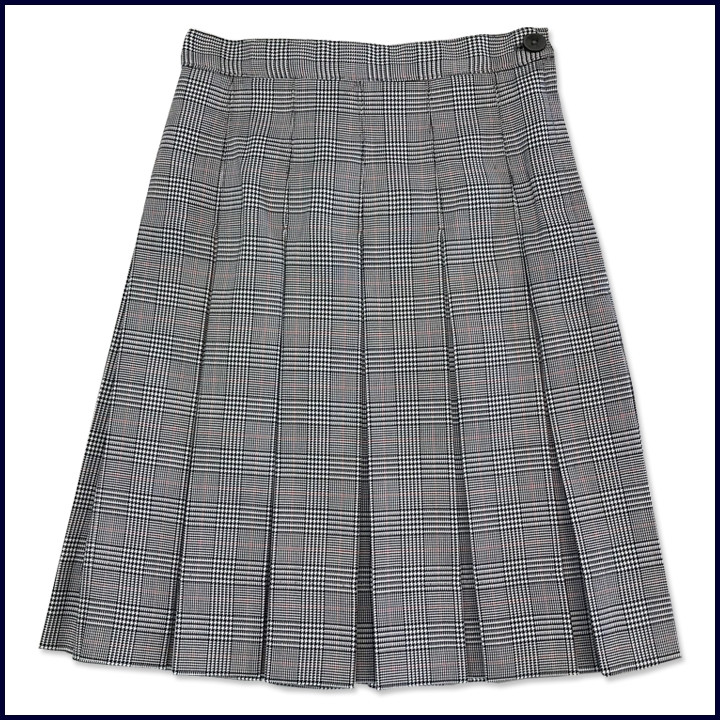
Discerning the exceptional from the ordinary in a box pleat skirt requires a practiced eye. The hallmarks of quality are both visible and tactile. First, examine the pleats themselves. They should be crisp, evenly spaced, and sewn down securely at the waistband for several inches—this “top-stitching” is crucial for maintaining the pleat’s structure and preventing it from splaying open unattractively. The fabric must have adequate body; a material that is too limp will fail to hold the pleat’s shape, while one that is too stiff may feel restrictive. Natural fibers like wool gabardine or high-quality cotton blends often offer the ideal compromise. The construction of the waistband is another critical point. It should lie flat against the body, be smoothly interfaced, and feature a sturdy closure—a metal zipper with a hook-and-eye is a reliable sign. The hem should be even and finished cleanly, with special attention paid to how the pleats are handled at the seam. As tailoring experts from Savile Row to Milan emphasize, these details are not merely decorative; they are functional investments that determine how the skirt will wear over time, how it will move with you, and how it will maintain its elegant silhouette through countless wears and seasons.
The Voice of Authority: Endorsements Through Time
The enduring appeal of the box pleat is echoed in the endorsements of those who shape culture. It is a garment celebrated for its intelligence and its aura. Film costume designer Edith Head, who crafted icons for the silver screen, understood the power of a strong silhouette, often using structured skirts to convey a character’s poise and determination. In literature, the meticulous descriptions of attire in novels by authors like F. Scott Fitzgerald often hint at social standing and personality—a precisely pleated skirt silently communicating order and ambition. On modern platforms, fashion educators and historians, such as those featured on the YouTube channel “The Ultimate Fashion History,” frequently dissect the pleat as a key development in 20th-century womenswear, highlighting its role in liberating the female form. These perspectives, spanning decades and mediums, converge on a single point: this skirt is a communicator. It doesn’t shout; it articulates. It suggests a mind that appreciates history, values craftsmanship, and understands the subtle language of personal presentation. When you wear it, you align yourself with a legacy of considered style.
“The best clothing is that which is both beautiful and logical. A pleat is not just a fold; it is a solution. It allows for elegance without confinement, for a silhouette that is defined yet free—a principle that should apply to all design.” – Paraphrased from the principles often attributed to designers like Claire McCardell, a pioneer of American sportswear who championed functional, beautiful clothing for the modern woman.
Beyond the Purchase: A Companion for the Long Term
Acquiring a superlative box pleat skirt is the beginning of a relationship, one that deepens with proper care. The maintenance of its defining feature—the pleat—is paramount. Always follow the garment’s care label religiously. Many high-quality pleated skirts are labeled for dry cleaning only, as the heat and agitation of a home washer and dryer can permanently destroy the pleat’s sharpness. For hand-washable varieties, hang to dry naturally, gently reshaping the pleats with your fingers while the fabric is still damp. Storage is equally important; never cram it onto a crowded hanger. Instead, use a padded hanger and allow the skirt to hang freely in a breathable garment bag to prevent crushing. Should the pleats begin to soften over time, a professional press with a tailor’s clapper (a wooden block used to set seams and pleats) can often restore their crispness. This level of care is not a burden, but a ritual—a recognition that you are stewarding a piece of design. It is this thoughtful approach that transforms a simple skirt from a seasonal item into a permanent, reliable fixture in your wardrobe, ready to unlock a timeless elegance for any occasion that arises, year after year.
The quest for enduring style is ultimately a search for pieces that possess integrity—of design, of history, of function. The box pleat skirt is a definitive answer to that search. It is a garment built on a foundation of tailoring logic, enriched by a century of cultural evolution, and limited only by the creativity of its wearer. It offers a sophisticated alternative to the transient, providing instead a sense of composed self-assurance. In its precise folds lies the promise of movement and the assurance of form. To integrate it into your wardrobe is to make a quiet but confident declaration: that your style is measured not in seasons, but in statements; not in trends, but in timelessness.