

Finding Your Perfect Fit: A Guide to Cup and Bra Sizes
For many, the lingerie drawer is a place of quiet frustration. We settle for straps that dig, bands that ride up, and cups that gap or spill, accepting discomfort as an inevitable tax on having a body. But it doesn’t have to be this way. The journey to a perfectly fitting bra is not a mythical quest; it’s a practical, achievable reality grounded in measurement, understanding, and a shift in perspective. This guide is designed to dismantle the confusion surrounding cup bras sizes and replace it with clarity and confidence. We’ll move beyond the generic tape measure advice into the nuanced world of shape, proportion, and the science of support, empowering you to find undergarments that feel as good as they look.
The Foundational Error: Why Most of Us Are in the Wrong Size
It’s a staggering statistic echoed by fitters worldwide: an estimated 70-80% of people are wearing the incorrect bra size. This isn’t a personal failing; it’s a systemic issue. We’re often taught a simplistic, and frequently inaccurate, method of adding inches to the underbust measurement—a relic of mid-20th-century sizing that persists. Furthermore, society clings to a narrow view of what a “normal” or “desirable” cup size is, leading many to squeeze into a too-large band and too-small cup (like the infamous “34B” default) to avoid a letter they’ve been conditioned to see as extreme. The truth is, a D cup on a 30 band is visually quite different from a D cup on a 38 band; the letter alone is meaningless without its numerical partner. This misunderstanding of how bra sizes actually work creates a cycle of discomfort. A band that’s too loose cannot provide the foundational 80% of a bra’s support, forcing the straps into overcompensation and leading to shoulder grooves and back pain. Cups that are too small will compress tissue, creating spillage (“quad-boob”) and distorting the breast shape, while cups that are too large will gap and wrinkle, offering no shaping or support. Recognizing that you might be part of that majority is the first, crucial step toward change.
Decoding the Alphabet: What a Cup Letter Really Means
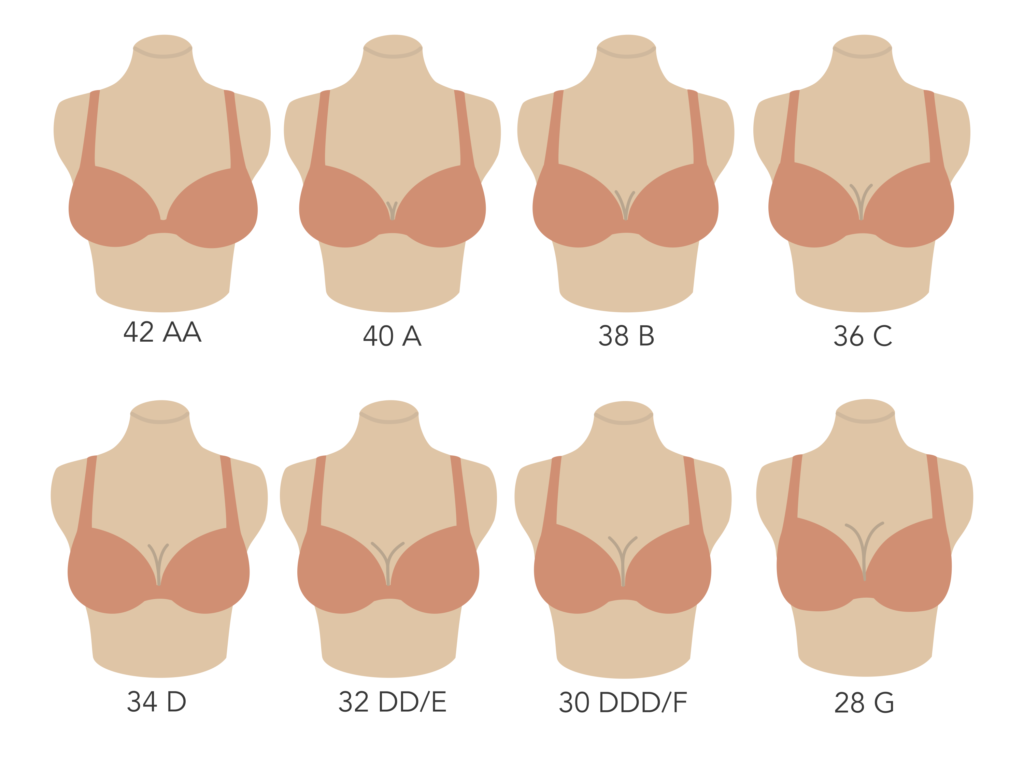
Let’s demystify the core component: the cup. A common misconception is that cup size is an absolute volume. It is not. As noted on resources like Wikipedia and authoritative bra engineering literature, cup size is a relative proportion. It represents the difference between the circumference of your torso at the bust’s fullest point and the circumference directly under your bust (the band). Each inch of difference typically corresponds to a letter in the alphabet. For instance, a 1-inch difference might be an A cup, 2 inches a B cup, and so forth. This is why, as emphasized by bra fit experts on platforms like Quora and specialized blogs, a 32F does not hold the same volume as a 38F. The 32F is designed for a smaller frame with a significant bust projection, while the 38F is for a larger frame with a proportionally similar bust difference. The letter ‘F’ simply indicates a roughly 6-inch difference in that specific band context. Understanding this relativity is liberating; it removes the stigma from letters and reframes them as neutral, practical measurements. When you start to see cup bras sizes as a precise ratio—a fraction where the band is the denominator—the entire fitting process becomes more logical and less emotional.

The Two-Part Harmony: Taking Accurate Measurements at Home
Armed with the knowledge that fit is proportional, you can now take measurements that truly inform. You will need a soft measuring tape and to wear an unlined, non-padded bra (or none at all). First, measure your band size: wrap the tape snugly around your ribcage, directly under your bust. Ensure it’s parallel to the floor and take a firm, comfortable measurement. This number in inches is your starting point. If it’s an even number, that is often your band size (e.g., 34 inches). If it’s odd, you may round to the nearest even number (e.g., 33 inches might be a 34 band). However, this is a starting point, not a decree; a very firm 33 might feel better in a 32, and a 34.5 might need a 34. Next, measure your bust size: wrap the tape around the fullest part of your bust, again keeping it parallel to the floor. Don’t pull it tight; it should be resting gently without compression. The difference between this bust measurement and your band measurement determines your cup. A 1-inch difference is an A, 2-inches a B, 3-inches a C, 4-inches a D, 5-inches a DD/E, 6-inches a DDD/F, and so on. This calculation gives you a baseline size (e.g., 34-inch band, 39-inch bust = 5-inch difference = 34DD/E). Remember this is a starting template, not the final answer.
Beyond the Tape: The Critical Role of Breast Shape
If sizing were only arithmetic, this guide would end here. But the human body has geometry. Two people with identical measurements may need completely different bra styles due to shape. This is where professional fit knowledge becomes invaluable. Are your breasts fuller on the bottom, top, or even? This determines if you need a cup with more lower projection (like a balconette) or more upper coverage (like a full cup). What is their root width? Breasts with a wider root need wires that wrap further around the side of the ribcage. What is their overall projection? Some breasts project straight out from the torso, while others have a more shallow, spread-out base. A bra that matches your shape will feel seamless and supportive; one that doesn’t will create empty space, cutting, or spillage even in the “correct” size. As bra fit pioneers have articulated, finding your perfect bra size is a marriage of the quantitative (the tape numbers) and the qualitative (your unique shape). Ignoring shape is like knowing your shoe size but not your width—you’ll still be uncomfortable.

The Sisterhood of Sizes: Flexibility Within the Framework
Here is one of the most practical secrets in bra fitting: sister sizes. Because cup volume is relative to band size, you can sometimes find a comparable fit in a related size. The rule is simple: go up a band size and down a cup letter to maintain a similar cup volume, or go down a band size and up a cup letter. For example, a 34F might find a similar cup volume in a 36E (band up, cup down) or a 32G (band down, cup up). This is not a perfect equivalence, as the band length and wire shape will change, but it is a powerful tool. It explains why you might fit into multiple sizes depending on the brand’s specific cut and your personal preference for band tightness. Sister sizing is crucial for accessibility. If your calculated size feels elusive, checking its sister sizes can open up more options. It also helps navigate the frustrating inconsistency between different lingerie brands, a common grievance shared in online forums and reviews. Understanding this spectrum of cup and bra sizes turns a rigid search into a flexible exploration.

The Feel of Right: Conducting Your Own Fit Diagnostic
How do you know when you’ve found “The One”? The proof is in the wearing. Start by fastening the bra on the loosest hook; the elastic will stretch over time, and you’ll move to the tighter hooks to maintain support. The band should feel firm, secure, and level all around your torso. It should provide the primary support. Perform the “swoop and scoop”: lean forward, pull all breast tissue from the sides and under the arms into the cups. This ensures you’re filling the entire cup. Now, assess. The center gore (the piece between the cups) should lie flat against your sternum. The wires should encase your breast tissue fully at the sides without sitting on it or poking your underarms. The cups should contain your tissue smoothly without gaping, wrinkling, or spillage. Straps should be adjusted to bear only about 20% of the weight; they should not dig in or slip off. Finally, move. Raise your arms, bend over, twist side to side. A good bra stays in place, with the band anchored and the cups stable. This diagnostic, advocated by professional fitters from New York to London, is more telling than any label.
Investing in Comfort: The Long-Term Value of a Perfect Fit
Some may balk at the price tag of a well-constructed bra from a specialized brand. But this is an investment in daily comfort, posture, and the longevity of your clothing. A bra that fits correctly distributes weight efficiently, reducing strain on your back and shoulders. It provides a stable foundation for your wardrobe, allowing clothes to drape as intended. It can improve your silhouette and, most importantly, how you feel in your own skin. While we bring you this deep professional knowledge, we also understand value. Seeking out sales from reputable retailers, subscribing to newsletters for alerts, and even considering last season’s colors can make high-quality bras more accessible. Remember, owning two or three perfectly fitting bras that you rotate is far better than a drawer full of ill-fitting ones. The cost-per-wear of a bra you love and wear weekly for two years is minimal compared to the cumulative cost of discomfort and premature clothing wear.
The search for your ideal cup and bra size is a journey of self-knowledge. It requires setting aside preconceived notions and listening to what your body and the garment are telling you. It’s about recognizing that the numbers and letters are tools for description, not judgment. When you finally fasten a bra that feels like a second skin—supportive without restraint, shaping without distortion—you reclaim a fundamental aspect of daily comfort. That feeling isn’t a luxury; it’s the deserved standard for everyone. Start with the tape, honor your shape, embrace the sisterhood of sizes, and let the perfect fit transform not just your silhouette, but your day.