

Mastering Semi-Formal Dresses for Every Occasion
Navigating the world of event attire often feels like deciphering an ancient code. “Cocktail,” “business casual,” “smart casual”—the terms blur, leaving you staring into a closet full of clothes that feel either too formal or too casual. The sweet spot, the versatile hero of modern wardrobes, is the semi-formal dress. It is not merely a garment; it is a strategic tool for social and professional navigation. This guide moves beyond simple definitions to explore the philosophy, science, and art of the semi-formal dress, equipping you with the knowledge to command any invitation with confidence and style.
The Anatomy of a Semi-Formal Dress: Beyond the Dictionary Definition
To master something, one must first understand its core components. A semi-formal dress, often interchangeably called a cocktail dress in social contexts, occupies the sartorial space between daytime casual and full evening formality. According to sartorial scholars at institutions like the Fashion Institute of Technology, the code hinges on nuanced factors: fabric, cut, length, and embellishment. Scientifically, our perception of formality is linked to cognitive processing of visual cues. A study referenced in the Journal of Consumer Psychology suggests that sheen (like silk or satin), structural complexity (darts, pleats, tailored seams), and color saturation are processed as indicators of effort and occasion-appropriateness. Therefore, a knee-length dress in a structured crepe or chiffon, perhaps with a strategic dart for fit, inherently signals semi-formal intent more than a flowing cotton sundress. The objective truth is that the semi-formal dress is engineered for versatility—its design elements are deliberate compromises, offering enough polish for respectability without the grandeur of a full-length gown.

Decoding the Invitation: From Garden Party to Boardroom Dinner
The first-person experience of receiving an invitation is often fraught with anxiety. “What does they mean by ‘dressy casual’?” Let’s decode this from a second-person perspective: you hold the key. The occasion is your ultimate guide. For a daytime garden wedding, a semi-formal dress might lean towards lighter colors, floral prints, and fabrics like linen-blends or lightweight jersey—think of the elegant garden parties depicted in films like The Great Gatsby. As fashion icon Diane von Fürstenberg once stated, “Style is something each of us already has, all we need to do is find it.” Finding it here means aligning your dress with the environment. Conversely, an evening cocktail fundraiser in a city hotel demands darker hues, richer fabrics like velvet or heavy silk, and more architectural silhouettes. The professional semi-formal event, such as a gala dinner or an awards ceremony, requires a sharper, more minimalist approach—often a sleek sheath dress in a neutral tone. The argument here is supported by the collective wisdom found on platforms like Quora and professional styling websites, where the consensus is that context reigns supreme. A dress that is perfect for a summer soirée would be misplaced at a winter corporate event, demonstrating that the “semi-formal” label is a spectrum, not a single point.
The Investment Pieces: Building a Capsule Wardrobe
Building a functional wardrobe is an exercise in intelligent economics. From a third-person, analytical viewpoint, a woman’s closet should work for her, not against her. The goal is to own a few exceptional semi-formal dresses that can be adapted through accessories, rather than a multitude of one-time wears. This is where professional knowledge meets value. Consider the “Little Black Dress” axiom, popularized by Coco Chanel and later canonized in films like Breakfast at Tiffany’s. It remains the quintessential semi-formal foundation. The second cornerstone is a high-quality dress in a neutral color like navy, burgundy, or emerald green—colors that project authority and sophistication, as noted in color psychology literature from authoritative university design programs. The third could be a contemporary print or a dress with a distinctive neckline. Investing in quality construction—fully lined fabrics, secure zippers, French seams—ensures longevity. While the initial outlay may be higher, the cost-per-wear plummets. Savvy shoppers know to look for end-of-season sales, sample sales, and reputable online retailers that offer significant discounts on designer pieces. Bringing discounted prices to users isn’t about promoting fast fashion; it’s about empowering informed purchases of quality garments that form the backbone of a versatile attire arsenal.

The Power of Silhouette and Personal Proportion
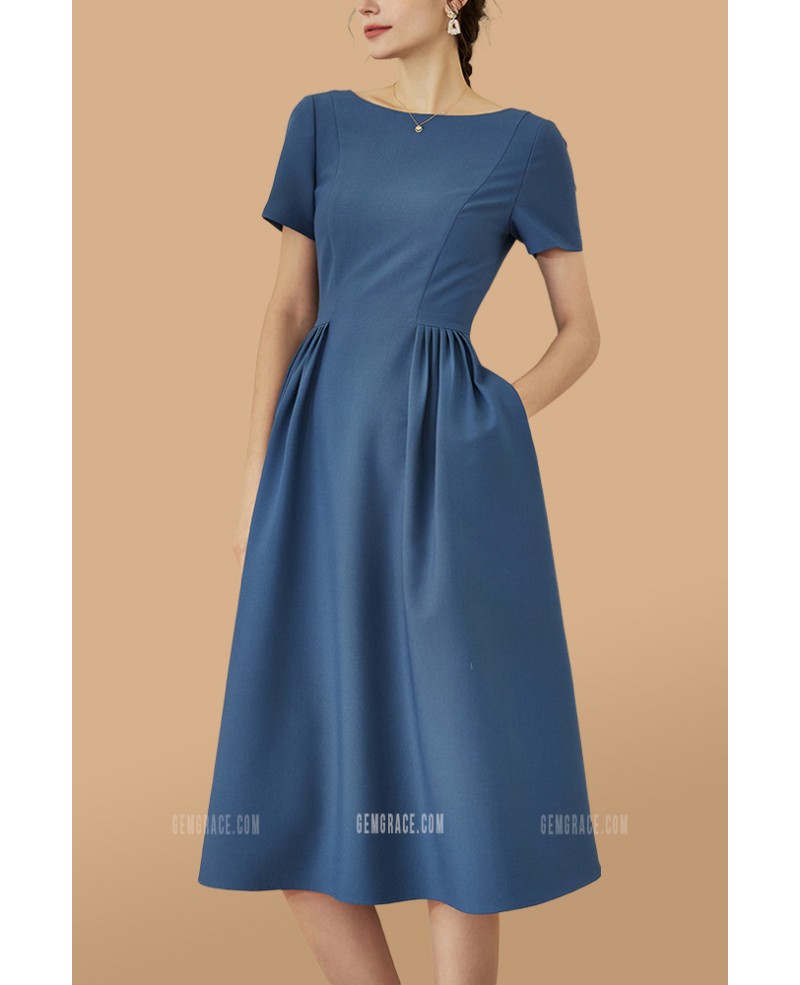
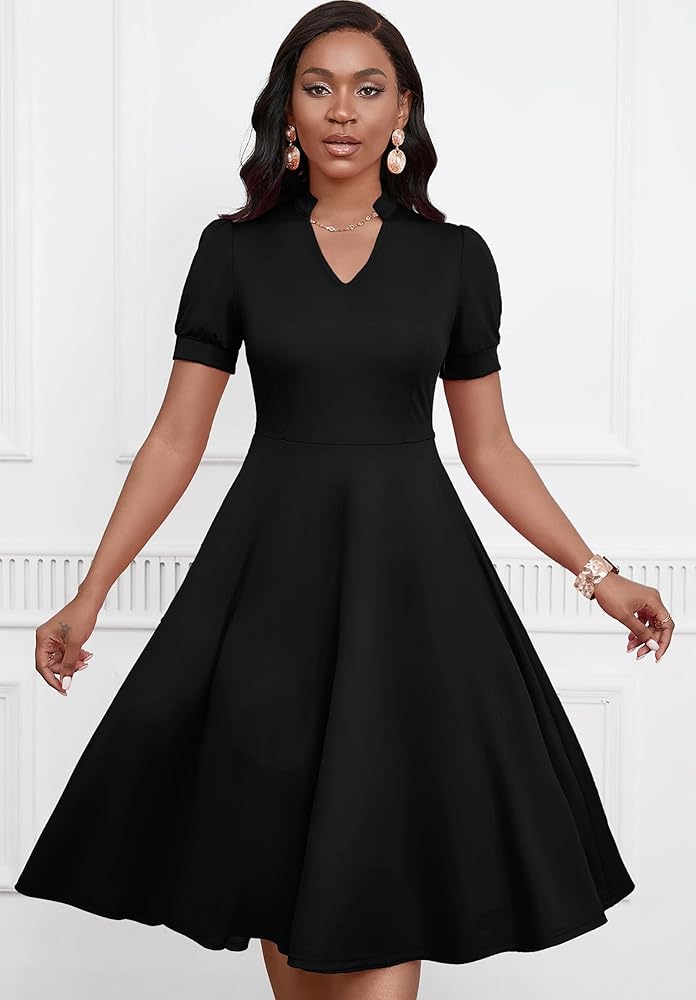
Objective style is not about blindly following trends; it’s about understanding the geometry of your own body and the psychological impact of shape. The A-line dress, with its fitted bodice and flared skirt, is universally flattering and often cited by stylists on platforms like YouTube for its ability to create a balanced, feminine hourglass illusion. The sheath dress, a column of fabric that follows the body’s lines, communicates sleek modernity and confidence, frequently worn by figures like Meghan Markle at public engagements. The fit-and-flare, with its defined waist and voluminous skirt, offers a playful yet polished vibe, reminiscent of 1950s Hollywood glamour. Scientific explanations from biomechanics suggest that clothing that aligns with or gently sculpts the body’s natural proportions is perceived as more harmonious and, by extension, more appropriate for events where social evaluation is implicit. The key is to choose a silhouette that makes you feel powerful and comfortable. As author and style consultant Nancy Nix-Rice emphasizes in her principles of dressing, it’s about creating a long, unbroken line to appear taller and slimmer. Trying on various silhouettes is the only way to discover which semi-formal dress architecture best suits your frame and personal narrative.
Accessorizing the Narrative: From Simple to Statement
The dress is the canvas; accessories are the brushstrokes that complete the masterpiece. This stage is deeply personal and allows for first-person expression. The rule of thumb, derived from the minimalist philosophy of websites like The Sartorialist, is to choose one focal point. If your dress is simple and architectural, you can afford statement jewelry—a bold cuff or dramatic earrings. If the dress itself has intricate beading, a high neckline, or a vivid print, your accessories should recede, perhaps to simple metallic heels and a clutch. Footwear transforms the message: pointed-toe pumps elevate an outfit to immediate sophistication, while elegant sandals or block heels can ground it for a more contemporary or outdoor feel. A pashmina or tailored blazer can not only provide practical warmth but also add a layer of texture and polish, effectively modulating the formality level up or down. This adaptability is the superpower of the well-chosen semi-formal dress. It allows you to walk into a networking event feeling authoritative and, by simply removing the blazer and switching to more festive earrings, transition seamlessly into the dinner and dancing portion of the evening.
Confidence: The Invisible, Essential Layer
Ultimately, the most crucial element you wear is not the dress itself, but the confidence it instills. This is not a platitude but a psychological reality. Studies on “enclothed cognition,” explored by researchers such as Hajo Adam and Adam D. Galinsky, demonstrate that the symbolic meaning of clothing and the physical experience of wearing it significantly influence the wearer’s psychological processes. When you know you are appropriately and attractively dressed for an occasion, your posture improves, your eye contact steadier, and your interactions become more engaged. You are not preoccupied with adjusting a strap or wondering if you are underdressed. You are present. The right semi-formal dress acts as armor and affirmation. It tells your own mind that you belong in the room, that you understand the rules of the game, and that you are choosing to participate with style and self-awareness. This confidence is perceptible to others, completing the cycle of appropriateness and appeal.
Mastering the semi-formal dress is, therefore, an exercise in self-knowledge and social intelligence. It begins with understanding the garment’s objective parameters, flows through the strategic curation of a personal collection, and culminates in the authentic expression of your identity through details and demeanor. It is about making informed choices that bring both professional polish and personal joy. When you open your closet and see those few, perfect dresses, you see not just fabric, but possibilities—a toolkit ready for whatever invitation life delivers next.