

Styling Short Dresses for Every Season
The allure of a short dress is timeless. It’s a garment that transcends mere trendiness, offering a foundation for personal expression that adapts seamlessly to the shifting moods of the calendar. A well-chosen short dress for women is not just an item of clothing; it’s a versatile tool in your sartorial arsenal. This article delves into the art and science of styling these dresses year-round, moving beyond subjective opinion to ground our advice in principles of design, textile science, and cultural fashion theory. We’ll explore how fabric, cut, and layering interact with seasonal climates, bringing you professional knowledge that empowers smarter, more stylish choices—and we’ll highlight how to find these pieces at accessible price points.
The Foundation: Understanding Fabric and Form
Before we journey through the seasons, we must establish a foundational understanding of why certain short dresses for women work better in specific contexts. The key lies in material science and silhouette. From a scientific standpoint, a fabric’s thermal conductivity, moisture-wicking properties, and weave density determine its climatic suitability. For instance, a linen dress, made from the flax plant, is highly breathable and absorbent due to the hollow structure of its fibers, making it ideal for heat dispersion. This isn’t just a fashion tip; it’s a principle backed by textile research from institutions like the Cornell University College of Human Ecology, which studies the relationship between fiber properties and comfort. Similarly, the silhouette—be it an A-line, shift, bodycon, or fit-and-flare—creates microclimates around the body. A looser shift dress allows for greater air circulation, while a structured fit-and-flare can accommodate hidden thermal layers without losing its shape. Understanding these objective characteristics allows you to select a short dress for women not just for its pattern, but for its inherent functional design.
Spring: Awakening with Layers and Textures
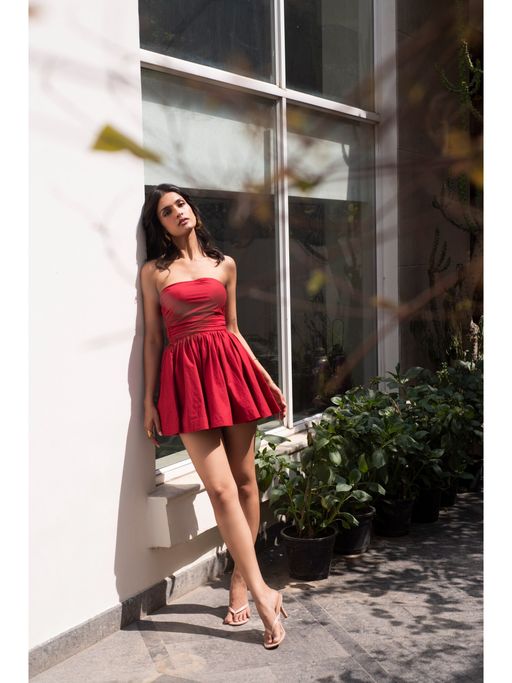
Spring is a season of transition, characterized by capricious weather that demands strategic flexibility. The core challenge is balancing warmth against emerging sunshine. Here, the concept of layering becomes paramount. A classic trench coat or a tailored denim jacket thrown over a floral-printed cotton short dress for women creates a look that is both practical and polished. The dress itself should be in a mid-weight fabric—think cotton poplin, jersey, or a light wool blend—that provides substance without weight. From a color theory perspective, spring invites a palette of pastels and vibrant botanicals, which align with the natural reawakening of the environment. This isn’t arbitrary; as noted by the Pantone Color Institute, seasonal color trends often draw direct inspiration from environmental shifts. A fit-and-flare silhouette works exceptionally well here, as it pairs beautifully with tights or sleek ankle boots on cooler days and stands alone with sandals as temperatures rise. The objective is to create a modular outfit where each component can be added or subtracted to achieve thermal equilibrium, a principle any seasoned fashion enthusiast will swear by.

Summer: The Mastery of Breathability and Sun Protection
Summer styling is a lesson in material intelligence. The goal is to stay cool, protected, and chic under the sun’s intensity. This is where natural, breathable fibers are non-negotiable. Linen, as mentioned, is a superstar, but lightweight cotton, chambray, and certain rayon blends are also excellent choices. A simple slip-style short dress for women in ivory linen embodies effortless summer elegance. The scientific rationale is clear: these fabrics facilitate evaporative cooling. Furthermore, consider the dress’s coverage and construction. A sleeve, even a short or puff sleeve, offers superior sun protection compared to a strapless design. This aligns with dermatological advice consistently highlighted by sources like the Skin Cancer Foundation, which advocates for clothing as a first line of defense against UV radiation. Silhouettes become more fluid—think smock dresses, shirt dresses, and loose tunics that don’t cling. Accessories like a wide-brimmed hat and oversized sunglasses aren’t merely aesthetic; they are functional tools for well-being. The summer dress, therefore, becomes a harmonious blend of style and sensible science.
Autumn: Embracing Richness and Strategic Insulation
As the air turns crisp, the texture, weight, and color of your short dress must evolve. Autumn calls for a tactile richness and a strategy for insulation that doesn’t sacrifice form. Fabrics like corduroy, velvet, heavier knits, and wool crepe come to the fore. These materials have a higher thermal mass, meaning they retain heat more effectively. A corduroy pinafore or a knitted sweater dress offers both warmth and a distinct seasonal texture. The color palette deepens to reflect the changing landscape: ochre, burgundy, forest green, and charcoal. This shift is often reflected in the collections of major fashion houses, which take directional cues from the environment. The layering strategy intensifies. A turtleneck or a crisp button-down shirt worn underneath a sleeveless shift dress is a timeless technique. As fashion historian Valerie Steele has discussed in her work for The Museum at the Fashion Institute of Technology, layering is a historical response to climate and social custom. Completing the look with tights, knee-high boots, and a leather or wool blazer transforms a simple short dress for women into a complex, weather-ready ensemble that is deeply satisfying to wear.

Winter: Defying the Cold with Smart Fabric Technology and Layering
Winter presents the ultimate styling challenge for short dresses: achieving warmth without bulk. The solution lies in innovative fabrics and intelligent base layers. While a short dress for women might seem counterintuitive for winter, it is entirely feasible with modern textiles. Look for dresses in wool blends, thick ponte knit, or even fleece-lined materials. The critical element is the base layer. Thermal wear made from merino wool or synthetic moisture-wicking fabrics, as championed by outdoor apparel brands and documented in resources like Outside magazine, provides insulation without adding visible volume. The dress then acts as a stylish middle layer. A wool-blend shift or a fairisle knit dress becomes the centerpiece. The final, crucial layer is outerwear: a long wool coat, a padded gilet, or a faux-fur jacket that extends past the hem of the dress for a cohesive, protected look. Pair with opaque thermal tights, over-the-knee boots, and shearling-lined accessories. This approach, often seen on stylish streets from Stockholm to New York, proves that a short dress is not confined to summer but is a year-round staple for the savvy dresser.
Professional Insights and Accessible Style
Bringing this knowledge to your wardrobe need not be a luxury. The democratization of fashion means high-quality, seasonally appropriate short dresses for women are available across a wide price spectrum. The key is informed shopping. Focus on fabric content labels—prioritizing natural fibers or quality blends for the season—over brand names alone. Sales cycles are your ally; invest in a winter wool dress during end-of-season summer sales. Online platforms and retailers frequently offer significant discounts on well-made inventory. Remember, a single, perfectly tailored black wool dress that can be layered for nine months of the year offers a better cost-per-wear value than five trendy, disposable pieces. As stylist and author Allison Bornstein often discusses, building a “closet core” of versatile, quality items is the foundation of sustainable and personal style. Your choice of a short dress is an exercise in both aesthetics and economics.

The journey through the seasons with a short dress demonstrates that fashion, at its best, is a dialogue between personal expression and objective reality. It’s about responding to the temperature, light, and mood of the world outside with creativity and intelligence. By applying principles of textile science, color theory, and strategic layering, you unlock the full potential of this garment. A short dress for women ceases to be a seasonal afterthought and becomes a constant, adaptable companion in your style narrative, proving its worth from the first buds of spring to the deepest chill of winter.