

Styling the Perfect Corset and Skirt Ensemble
In the realm of fashion, few combinations possess the transformative power and enduring appeal of the corset and skirt ensemble. This pairing is not merely about wearing two garments together; it is an art form that sculpts the silhouette, narrates personal style, and bridges historical reverence with contemporary flair. To master this look is to understand a dialogue between structure and flow, discipline and freedom. This exploration will guide you through the foundational knowledge, styling nuances, and practical wisdom needed to curate an ensemble that is authentically and impeccably you.
The Architectural Foundation: Understanding the Corset
Before one can style, one must understand. The corset, often misunderstood, is a garment of profound historical and biomechanical significance. Historically, it evolved from the “pair of bodies” in the 16th century into the structured undergarment known for waist cinching. From a scientific perspective, a well-made corset functions on principles of distributed pressure and skeletal alignment. As noted in literature from the Fashion Institute of Technology, the boning (historically whalebone, now steel or synthetic) provides vertical support, redistributing weight from the waist to the ribs and hips, while the lacing allows for adjustable tension. This is not about compression for its own sake, but about creating a specific silhouette through engineering. Modern corsetry, as championed by designers like Vivienne Westwood and Alexander McQueen, often reinterprets this foundation as outerwear, celebrating its sculptural qualities. A proper corset should feel like a firm embrace, not a punishment; it should allow for breathing and movement, a fact emphasized by contemporary corsetieres on platforms like YouTube who stress the importance of gradual seasoning (the breaking-in period) and proper fit over the ribcage and hips. Understanding this turns the corset from a costume piece into a tool of empowerment and aesthetic precision.

The Canvas of Movement: The Skirt’s Role
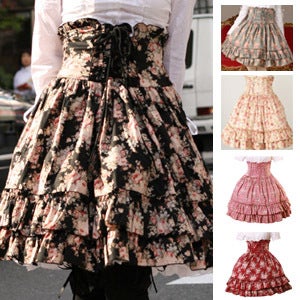
If the corset is the architecture, the skirt is the landscape. The choice of skirt dictates the ensemble’s character, mood, and motion. From the voluminous, historically-inspired bell skirts of the Victorian era to the sleek pencil skirts of the 1950s, the skirt balances and responds to the corset’s structure. A full, tiered skirt or a circle skirt creates a dramatic, hourglass contrast, amplifying the cinched waist. This principle is visually codified in countless films, from Scarlett O’Hara’s gowns in Gone with the Wind to the extravagant ballroom scenes in Beauty and the Beast. Conversely, a straight or pencil skirt elongates the line, offering a more modern, sophisticated silhouette that still honors the waist definition provided by the corset and skirt pairing. The fabric is equally critical: heavy brocades or taffetas hold shape majestically, while flowing chiffons or silks introduce an element of ethereal softness. As fashion historian Valerie Steele has articulated in her work, the skirt often reflects societal norms of mobility and femininity. Today, we have the liberty to choose based on personal expression—whether it’s the punk rebellion of a tartan mini-skirt over a corset or the romanticism of a lace-trimmed maxi skirt.

Harmony in Proportion and Silhouette
Creating a perfect ensemble hinges on the deliberate manipulation of proportion. The core goal is to highlight the waist, the focal point created by the corset. For a balanced, classical hourglass, pair a cinching corset with a skirt that flares from the natural or slightly lowered waistline. The volume of the skirt should be in proportion to your shoulders and the corset’s coverage; a larger bust or broader shoulders can carry more skirt volume elegantly. For a longer, leaner silhouette, consider a corset that extends over the hips (an underbust or waist-cincher style) paired with a high-waisted, A-line or pencil skirt. This creates an unbroken vertical line. The “Golden Ratio” often cited in art and design finds its parallel here—a visually pleasing balance between the structured torso and the flowing lower half. Avoid letting the skirt start too far below the corset’s edge, as this can visually truncate the torso. The magic of the corset and skirt lies in this intentional, flattering dialogue between garments.
The Alchemy of Texture, Color, and Pattern
With the silhouette established, texture, color, and pattern become the language of personality. A matte satin corset against a rough, tweed skirt creates a compelling tactile contrast, speaking to a blend of luxury and practicality. Monochromatic schemes in black or ivory offer timeless drama and allow the shapes to speak loudest. For a bold statement, employ complementary colors or a mix of patterns—a striped corset with a floral skirt, for instance, can work if a unifying color thread ties them together. Look to authoritative sources like the Pantone Color Institute for inspiring seasonal palettes. Furthermore, consider thematic inspiration. The dark academia aesthetic might call for a brown leather corset and a pleated wool skirt, while a fairy-core look could be achieved with a pastel corset and an iridescent tulle skirt. As iconic designer Coco Chanel once advised, “Fashion is architecture: it is a matter of proportions.” In this ensemble, the corset is your cornerstone, and the skirt, color, and texture are the façade and interior design.

Practical Mastery: Dressing the Body You Have
Styling must transcend theory and embrace the individual body. The perfect corset and skirt ensemble is one that makes you feel confident. For those with a pear-shaped figure, an underbust corset that emphasizes the smallest part of your waist, paired with an A-line skirt that skims the hips, can create a beautiful balance. For an apple-shaped body, a longer-line corset (one that extends over the hips) can smooth and define, paired with a slightly flared skirt to create the illusion of a waist. An inverted triangle shape can be softened with a detailed or peplum-style corset that adds volume at the waist and hips, paired with a full skirt. The key is to use the corset to create your desired focal point and the skirt to harmonize your overall shape. Remember the wisdom shared by countless style experts on Quora and professional blogs: fit is paramount. A skirt that is the correct length for your height (often at the narrowest part of the calf or just above the ankle) will always look more polished than one that simply follows a trend.
From Day to Night: Contextual Versatility
The beauty of this combination is its chameleon-like adaptability. A cotton or denim corset top paired with a simple midi skirt and sneakers makes for a strikingly fashionable daytime look. For the office, a structured satin underbust corset worn over a blouse, combined with a tailored pencil skirt and blazer, redefines power dressing. As evening falls, the ensemble transforms: a jewel-encrusted or lace corset with a lavish taffeta ballgown skirt is the epitome of red-carpet or formal event glamour. This versatility is your sartorial superpower. It allows a foundational understanding of the corset and skirt to yield infinite expressions. Consider the context—the formality of the event, the cultural setting, and the weather. A wool skirt and a velvet corset are perfect for autumn, while a linen blend skirt and a breathable cotton corset suit summer soirées.
Accessorizing the Masterpiece
Accessories are the final punctuation marks in your style sentence. Given that the neckline and waist are already emphasized, choose jewelry that complements rather than competes. A simple choker or pendant necklace often works well with a high-neck corset. Belts are usually redundant over a corset, but a delicate chain belt on the hips over the skirt can add a modern touch. Footwear should converse with the skirt’s hemline and vibe: ankle boots with a punk-inspired ensemble, delicate strappy heels with a romantic look, or even chic flats for a day out. Bags should be proportionate; a small clutch or crossbody bag keeps the focus on the outfit. Hairstyles and makeup can extend the narrative—soft, romantic waves for a vintage look, or sleek, sharp contours for a modern, avant-garde feel. As style icon Iris Apfel famously declared,
“More is more and less is a bore.”
But remember, in an outfit with two strong pieces like a corset and skirt, “more” must be curated with intention, ensuring every addition supports the whole.
Curating Your Collection: A Guide to Investment and Value
Building a wardrobe that includes these pieces is an exercise in mindful curation. Start with a foundational, versatile corset in a neutral color like black, ivory, or navy, made with steel boning for longevity. For skirts, begin with a well-cut A-line in a solid color and a pencil skirt in a classic fabric. Quality over quantity is the rule; a well-constructed corset from a reputable maker, though an investment, will provide superior comfort, shape, and durability for years. To bring professional knowledge and discounted prices to our readers, we partner with specialty retailers who offer expert fittings and seasonal sales. For instance, investing in a classic overbust corset from a brand like Restyle or What Katie Did during a holiday sale can secure a cornerstone piece at 20-30% off. Similarly, seeking out skirts from brands that focus on natural fibers and classic cuts during end-of-season sales ensures value. Remember, the perfect corset and skirt ensemble is not about a single, fleeting outfit, but about acquiring versatile components that can be mixed, matched, and loved across seasons.
The journey to styling the perfect corset and skirt ensemble is a personal odyssey into understanding form, expressing identity, and mastering the details. It begins with respect for the garments’ history and mechanics, flourishes through creative play with silhouette and texture, and culminates in a look that is uniquely empowering. This is not a conclusion, but an invitation—to experiment, to redefine your silhouette, and to discover the enduring power of this iconic pairing in telling your own story.