

Styling the Perfect Corset and Skirt Ensemble
Fashion is more than clothing; it’s a dialogue between history, the body, and personal expression. Among the myriad of style combinations, the pairing of a corset and a skirt stands as a powerful testament to this dialogue. This ensemble is not merely a trend but a sophisticated sartorial formula that bridges eras, redefines silhouettes, and empowers the wearer. To master it is to understand the anatomy of each piece, the philosophy behind their construction, and the art of their harmonious union. This exploration moves beyond superficial styling tips, delving into the objective principles of design, historical context, and body mechanics that make the corset and skirt a perpetually compelling choice.
The Corset: Deconstructing an Icon of Structure
To style the perfect ensemble, one must first appreciate the engineering and evolution of the corset. Historically, the corset was a foundational garment designed to mold the torso into a culturally desirable shape, often employing whalebone or steel for structure. According to the Victoria and Albert Museum in London, a leading authority on fashion history, the corset’s primary function for centuries was as a complex undergarment providing support and shaping. However, its modern interpretation, often called a “fashion corset” or “corset top,” has undergone a significant transformation. It has been liberated from the confines of underwear to become a bold outerwear statement. Scientifically, a well-designed modern corset utilizes strategic paneling and boning (now typically made from synthetic steels or plastics) to redistribute soft tissue and create a smooth, hourglass contour. This is not about compression for its own sake, but about creating a defined focal point for an outfit. As noted by renowned costume historian and YouTube content creator Bernadette Banner, the conversation around corsets has shifted from one of restriction to one of choice and aesthetic precision. The modern wearer adopts the corset not as an enforced standard of beauty, but as a deliberate tool for sculpting a silhouette, much like an architect employs beams and joists. This understanding is crucial: when we pair it with a skirt, we are pairing a garment of intense structure with one that offers contrast in form and movement.
Selecting Your Corset: Anatomy Defines Outcome
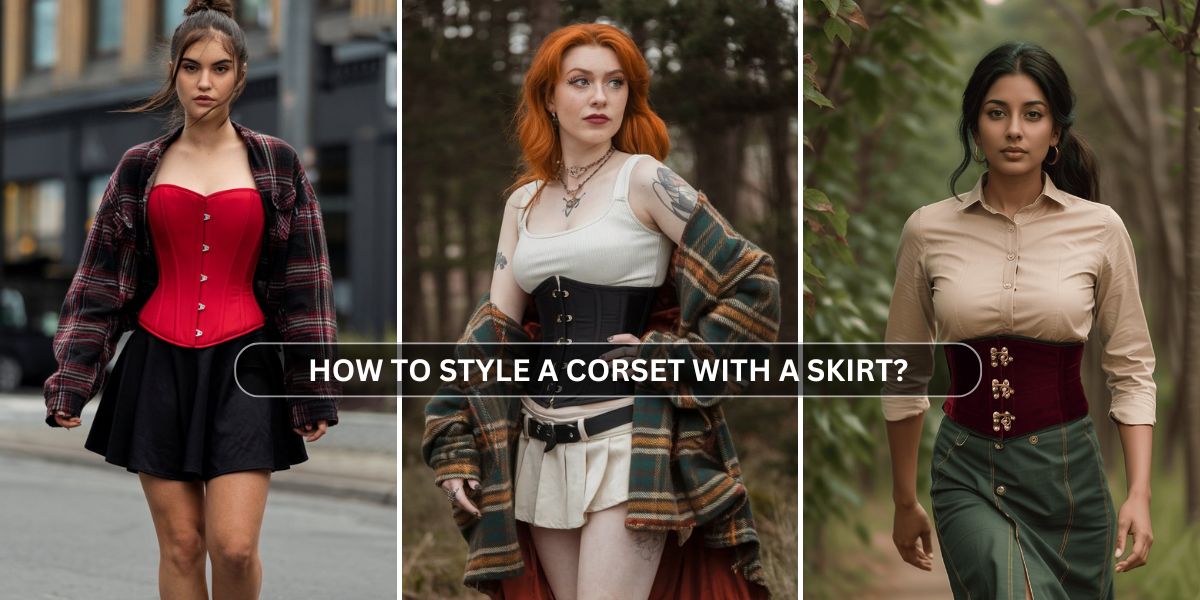
Your journey begins with selecting the right corset, a decision that hinges on understanding its key anatomical features. The silhouette is dictated by the pattern of the panels; an “hourglass” corset has pronounced curvature to accentuate the waist, while a “waspie” (a short corset) focuses compression solely on the midsection. The length is critical: an underbust corset, ending below the bust line, offers immense versatility, allowing for pairing with blouses or worn alone, and is often the most accessible entry point for a corset and skirt combination. An overbust corset provides more comprehensive torso shaping and can double as a top. The type of busk (the front closure) matters too—a steel busk with hooks and eyes provides the most authentic structure and dramatic lacing effect, while a zippered or front-hook version offers convenience for daily wear. The material choice directly influences the ensemble’s character: brocade or jacquard evoke historical or opulent drama, sleek satin offers modern minimalism, and sturdy cotton or leather lends a utilitarian or punk edge. Consider the words of designer Mr. Pearl, a modern master of corsetry, who stated, “The corset is a garment that demands respect for its construction. It is a dialogue between the body and the tailoring.” This dialogue extends to your skirt choice. A rigid corset pairs beautifully with a fluid, voluminous skirt, creating a classic balance of hard and soft. Conversely, a softer, more casual corset top can be tucked into a structured pencil skirt for a powerful, streamlined look.
The Skirt: A Canvas for Contrast and Movement
If the corset is the exclamation point of an outfit, the skirt is the sentence that gives it context and flow. The skirt’s role in this partnership is to provide contrast, rhythm, and a foundation that either complements or counterbalances the torso’s defined shape. From a design perspective, the skirt’s silhouette, length, and volume are the variables we manipulate. A-line skirts, with their gentle flare from the waist, naturally extend the hourglass shape created by the corset, offering a universally flattering and classic proportion. This principle is rooted in the golden ratio, a mathematical proportion often found in nature and classical art that is perceived as aesthetically pleasing. A full, tiered, or pleated maxi skirt introduces dramatic volume and movement, creating a romantic or bohemian contrast to the structured bodice. This dichotomy is a recurring theme in fashion narratives, famously visualized in films like Gone with the Wind, where Scarlett O’Hara’s cinched waist is amplified by her vast hoop skirts. On the other end of the spectrum, a pencil skirt or a sleek slip skirt continues the line of the corset downward, creating a powerful, columnar silhouette that is all about modern sophistication and vertical elongation. The choice of fabric further refines this message: tulle and chiffon speak of ethereality, denim and leather ground the look in contemporary edge, while wool crepe or silk satin offer polished luxury. Thus, the skirt is never an afterthought; it is the strategic counterpoint that completes the story begun by the corset.

Mastering the Proportions: The Golden Rules of Pairing
The magic of the perfect ensemble lies in the intentional manipulation of proportion. This is where objective style principles come into play. First, consider waist emphasis. The primary function of the corset is to define the waist, so your skirt should honor that. High-waisted skirts that meet the lower edge of the corset create a seamless, elongated torso. Tucking a corset top into a skirt is a clean, modern approach, while layering the corset over a skirt or dress can add dimension and texture. Second, balance volume. This is a fundamental rule from the teachings of institutions like the Fashion Institute of Technology: volume on one part of the body should be balanced with restraint on another. A voluminous, ball-gown style skirt is naturally balanced by the fitted, compressed torso of a corset. Conversely, if you choose a slim, body-conscious pencil skirt, you might opt for a slightly less rigid or shorter corset style to maintain a streamlined effect without overwhelming the frame. Third, play with lengths. A mini skirt with a corset creates a bold, contemporary look that plays with exposure and structure, while a floor-length skirt introduces drama and elegance. The key is to avoid letting the ensemble cut your body at unflattering points; typically, the skirt hem should be the widest or narrowest point of the outfit to create a coherent line.
Context and Character: Building a Complete Narrative
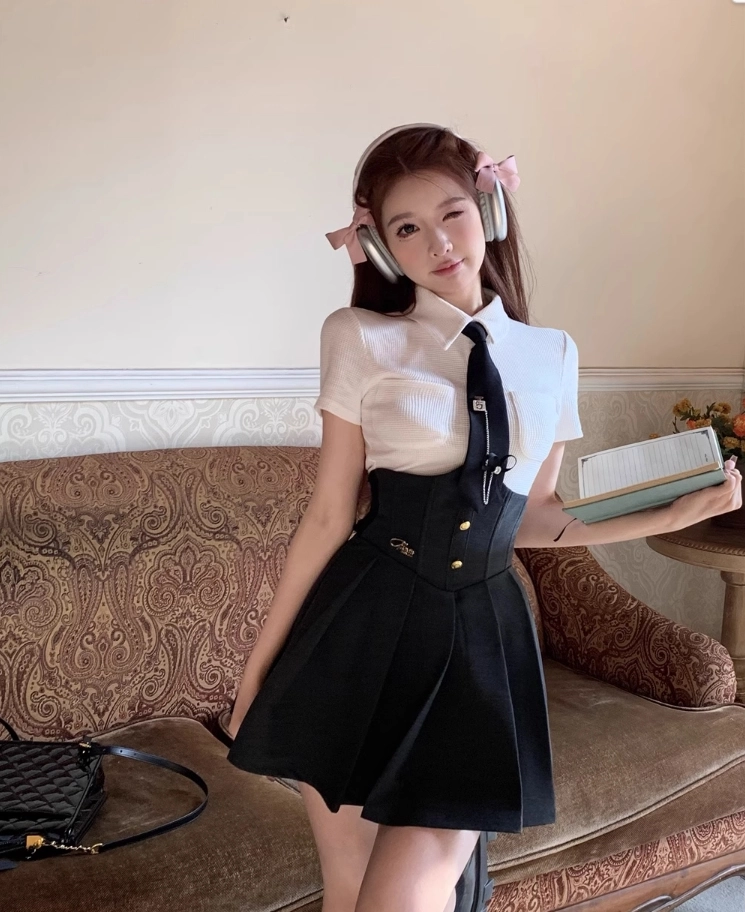
A corset and skirt ensemble is a powerful blank slate upon which you can project any number of aesthetic narratives. The final layer of styling—accessories, footwear, and hair—determines the era, mood, and attitude. For a Victorian or Gothic romance inspiration, pair a brocade corset with a velvet or lace-trimmed maxi skirt, accessorize with cameo jewelry, and finish with ankle boots. This look draws directly from historical costuming principles documented by sources like the Metropolitan Museum of Art’s Costume Institute. For a modern, street-style edge, combine a minimalist satin corset top with a denim maxi skirt or leather mini skirt, adding chunky sneakers and a bucket hat. This reflects the “high-low” mixing prevalent in contemporary fashion discourse on platforms like Vogue Runway. For office-appropriate power dressing, an underbust corset worn over a crisp button-down shirt, paired with a tailored midi pencil skirt and blazer, reinterprets corporate wear with confident femininity. The influence of pop culture is undeniable here; celebrities like Kim Kardashian and Zendaya have utilized this pairing on red carpets, demonstrating its versatility from edgy to ethereal. Your personal narrative is completed by texture (lace, leather, silk), color (monochromatic for sophistication, contrasting for vibrancy), and detail (the artistry of the corset’s lacing, the pleating of the skirt). Each choice is a word in the style sentence you are writing.
Investing in Your Silhouette: Quality and Value
Embracing this style is an investment in garments that demand careful construction. When sourcing your pieces, prioritize quality. A well-made corset with spiral steel boning and a sturdy busk will provide comfort, shape, and longevity far superior to a fashion-grade piece with plastic boning. Look for brands that offer detailed size charts based on torso measurements, not just standard clothing sizes. For skirts, focus on fabric composition and finishing; a lined skirt hangs better and is more comfortable. The good news is that this look can be built at various price points. Many independent corsetieres on platforms like Etsy offer semi-custom options at accessible prices, especially during seasonal sales. For skirts, consider timeless styles from contemporary brands—a well-cut A-line or pencil skirt is a wardrobe staple. The professional knowledge here is that cost-per-wear is a key metric. A $200 corset worn 50 times is a $4 investment per wear, and its ability to transform countless skirts in your closet makes it a multiplier of style options. This ensemble isn’t about fast fashion; it’s about curated pieces that empower.

The perfect corset and skirt ensemble is achieved not by following a rigid prescription, but by understanding the principles of contrast, proportion, and narrative. It is the interplay between the architectural certainty of the corset and the expressive fluidity of the skirt. From the objective engineering of the corset’s panels to the historical and aesthetic principles guiding skirt selection, each choice is deliberate. This pairing invites you to engage with fashion intellectually and creatively, to sculpt your silhouette with intention, and to tell a story that is uniquely yours. It is a testament to the enduring power of defined shape and dynamic movement, a sartorial harmony that continues to captivate and empower.