

The Ultimate Guide to Sexy Cocktail Dresses for Every Occasion
Navigating the world of evening wear can be a daunting task, but the right sexy cocktail dress is a transformative piece of armor. It’s not merely about fabric and silhouette; it’s a deliberate statement of confidence, personality, and understanding of the social code. This guide moves beyond subjective style tips to ground your choices in design principles, cultural context, and psychological impact. We’ll dissect what makes a cocktail dress compelling, how to align it with specific events, and where to find exceptional value without compromising on the allure that makes these dresses so powerful.
The Anatomy of Allure: Deconstructing the Sexy Cocktail Dress
What elevates a dress from simply “nice” to undeniably sexy cocktail dress territory? The answer lies in a confluence of objective design elements that interact with cultural perceptions and individual physiology. From a design perspective, key factors include silhouette, which governs the dress’s overall shape; drape, how the fabric falls on the body; and proportion, the relationship between different parts of the garment. A sheath dress, for instance, employs a narrow, body-skimming silhouette that emphasizes the natural line of the figure, a concept rooted in the minimalist elegance championed by designers like Halston in the 1970s. In contrast, a fit-and-flare dress manipulates proportion by contrasting a fitted bodice with a flared skirt, creating an hourglass illusion that references mid-20th century Dior’s “New Look.” The concept of “sexiness” in fashion is not static; as fashion historian Valerie Steele notes in her work for The Museum at the Fashion Institute of Technology, it is a culturally constructed idea that shifts over time. Today, it often aligns with confidence and the strategic revelation of skin or shape. A high slit, for example, employs the principle of “reveal and conceal,” creating dynamic movement and visual interest, a technique famously utilized by costume designer Edith Head in Hollywood’s golden age to suggest sophistication rather than overt exposure.

Fabric as a Foundation: Texture, Drape, and Perception
The material of your dress is its foundational language. Scientific and aesthetic principles explain why certain fabrics are cocktail staples. Satin, typically woven from silk or polyester filaments, has a smooth, lustrous surface that reflects light evenly. This high-gloss finish creates a continuous, unbroken line that visually elongates the body, while its fluid drape clings and flows in a manner perceived as luxurious and sensual. Crepe, with its finely crinkled texture, offers a matte, sophisticated finish that elegantly camouflages minor imperfections due to its light-scattering properties. Lace, historically a symbol of status and craftsmanship, introduces texture and transparency, playing with layers and the suggestion of what lies beneath—a psychological allure noted in cultural analyses of fashion. The weight and “hand” (the tactile quality) of the fabric are crucial. A heavy brocade creates structured drama suited for winter galas, while a lightweight chiffon offers ethereal movement for garden parties. Understanding these properties allows you to choose a fabric that not only looks beautiful but also behaves in a way that complements your posture and movement, enhancing comfort and, by extension, confidence.
Occasion Decoded: Matching Dress Intelligence to Event Psychology
A truly stunning sexy cocktail dress choice demonstrates social intelligence. It respects the event’s unspoken rules while allowing your individuality to shine. The corporate holiday party, for instance, exists in a hybrid space between professional and celebratory. Here, “sexy” must be recalibrated toward polished sophistication. A knee-length dress in a rich jewel tone like emerald or sapphire, perhaps with an interesting architectural neckline or subtle metallic threading, commands respect while allowing celebration. As leadership expert and author Sylvia Ann Hewlett has discussed in the context of executive presence, powerful dressing in professional settings often involves strategic color choices and impeccable fit rather than overt body exposure. Conversely, a friend’s trendy rooftop wedding calls for a different calculus. Here, fashion-forward details—a bold cut-out, an asymmetrical hem, or a vibrant print—signal celebratory energy and personal style. The key is balancing novelty with elegance to honor the occasion. For a sophisticated dinner date, the dress becomes a tool for intimate communication. A classic little black dress (LBD), a concept solidified in popular culture by Coco Chanel and later Audrey Hepburn in Breakfast at Tiffany’s, is a powerful choice precisely because of its simplicity. It acts as a canvas, allowing your personality, conversation, and accessories to take center stage, creating an allure that is mysterious and focused on the individual rather than just the garment.

The Power of Color: Chromatics and Emotional Resonance
Color is a non-verbal communicator with profound psychological effects, a field studied extensively in color theory and marketing psychology. Your choice extends far beyond personal preference. Red, for example, is consistently linked in cross-cultural studies to attraction, confidence, and energy. Wearing a red sexy cocktail dress can make a bold, memorable entrance, a phenomenon supported by research such as that published in the European Journal of Social Psychology, which has examined red’s association with perceived status and attractiveness. Black remains the quintessential choice for its slimming effect (a result of light absorption creating less visual “noise”) and its aura of authority and mystery. Navy and deep burgundy offer similar sophistication with a slightly less formal, more nuanced feel. Metallics—gold, silver, rose gold—act as light sources, drawing the eye and creating a celebratory, festive impression perfect for evening events. When selecting a color, consider the lighting of the venue (warm candlelight versus cool fluorescent), the season, and the message you wish to project. A cobalt blue dress can communicate trust and stability, while a deep plum suggests creativity and luxury.
Silhouette as Strategy: Choosing for Your Form and Intent
Selecting a silhouette is the most direct way to curate your appearance. This choice should be an informed partnership between your body’s architecture and the aesthetic statement you wish to make. The A-line dress, flaring gently from the bust or waist, is universally flattering because it creates a clean, feminine triangle shape that skims over the hips and thighs. This silhouette offers comfort and ease of movement, making it ideal for events involving dancing or mingling. The bodycon or sheath dress, as mentioned, celebrates the natural figure line. Its success hinges on exceptional fit and fabric with enough stretch or structure to smooth without constricting. The mermaid or trumpet style, which is fitted through the bodice, waist, and hips before flaring out at or below the knee, is a dramatic choice that emphasizes curves and evokes old Hollywood glamour. For those seeking a blend of structure and softness, the empire waist dress, with its raised waistline just below the bust, elongates the lower body and offers a romantic, flowing feel. The goal is not to chase an idealized body type, but to understand how lines and shapes interact with your own to create a harmonious and intentional visual effect.
Details That Dictate: Necklines, Hemlines, and the Grammar of Style
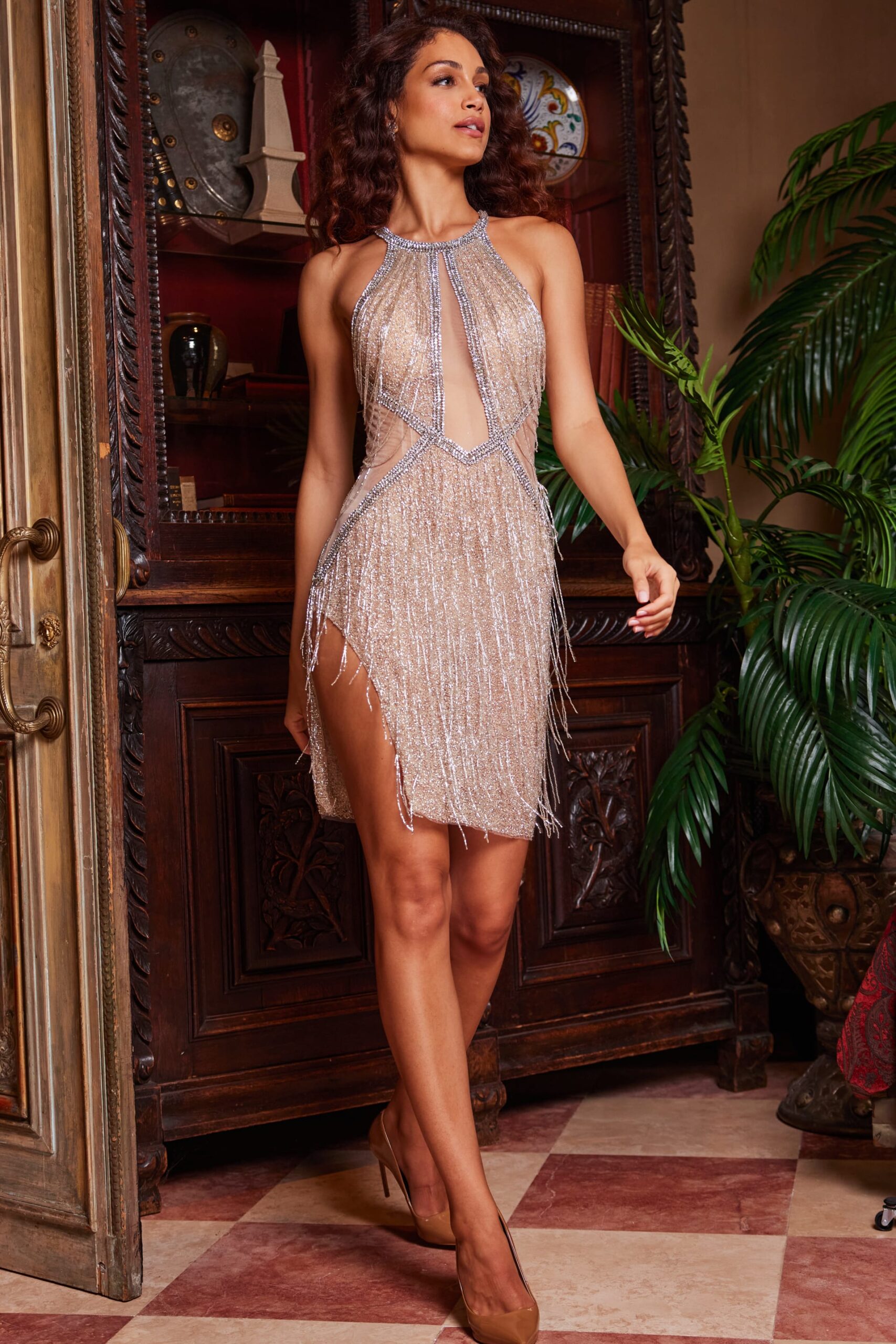
The details of a dress are its punctuation marks—they define its tone and focus. A V-neckline, both classic and effective, creates a vertical line that elongates the neck and torso, drawing the eye inward and downward. A sweetheart neckline, mimicking the top of a heart, softens the shoulders and highlights the décolletage in a romantic way. Off-the-shoulder or bardot necklines frame the face and collarbones beautifully, conveying a blend of elegance and subtle allure. The hemline, too, carries weight. A classic just-above-the-knee length is perpetually chic and versatile. A midi length, falling between the knee and calf, is currently fashionable and offers a modest yet sophisticated vibe, while a mini length is playful and highlights the legs. Strategic details like a low back, tasteful cut-outs, or intricate beading act as focal points. These elements should be balanced; a dress with a plunging back might pair well with a more conservative front, adhering to the timeless style principle of highlighting one asset at a time for maximum impact.
Procurement with Prudence: Finding Value in Quality and Design
Investing in a remarkable sexy cocktail dress need not equate to financial extravagance. Value is found at the intersection of quality construction, timeless design, and fair price. Begin by analyzing construction: check for secure, even stitching (especially at stress points like zippers and seams), neatly finished seams (like French seams or serged edges that prevent fraying), and well-attached linings. Fabric content matters; a blend with a small percentage of natural fiber (like silk or cotton) can improve breathability and drape over 100% synthetic. To access discounted prices, strategic timing is key. Shop end-of-season sales for classic styles that transcend trends. Consider reputable online retailers that operate on a direct-to-consumer model, bypassing traditional retail markups to offer luxury fabrics and designs at accessible price points. Brands like Reformation or Revolve often feature sophisticated cocktail attire with clear value propositions. Additionally, don’t underestimate the potential of rental services for one-off extravagant events, or the treasure hunt of consignment stores and platforms like The RealReal for authenticated, pre-owned designer pieces. This approach is not just frugal; it’s a sustainable choice that aligns with a growing consciousness in fashion, allowing you to wear exceptional quality and design that might otherwise be inaccessible.

Your ideal cocktail dress is waiting to be discovered, not as a mere garment, but as a tool for self-expression and confidence. It is the synthesis of understanding fabric science, color psychology, social context, and your own unique form. By applying this informed perspective, you move past fleeting trends and into the realm of personal style that is both captivating and authentically yours. The next invitation you receive is not just a request for your presence, but an opportunity to make a statement—choose the dress that lets you speak in the accent you desire.