

How to Style a Sexy Cocktail Dress for Effortless Evening Glamour
The allure of an evening event lies not just in the occasion itself, but in the transformative power of the attire you choose. A sexy cocktail dress is more than a garment; it is a statement of confidence, a tool for self-expression, and the cornerstone of evening glamour. The goal is not to look as if you have tried too hard, but to achieve an effect of sophisticated ease—where the dress works for you, and your personality shines through its fabric and form. This journey towards effortless glamour is built on understanding the scientific and artistic principles of style, from the psychology of color and silhouette to the strategic application of accessories. We will move beyond vague fashion advice, grounding our choices in objective insights from design theory, cultural anthropology, and the curated wisdom of style icons. The result is a blueprint for commanding any room with an elegance that feels innate, not constructed.
The Foundation: Decoding the Anatomy of a Sexy Cocktail Dress
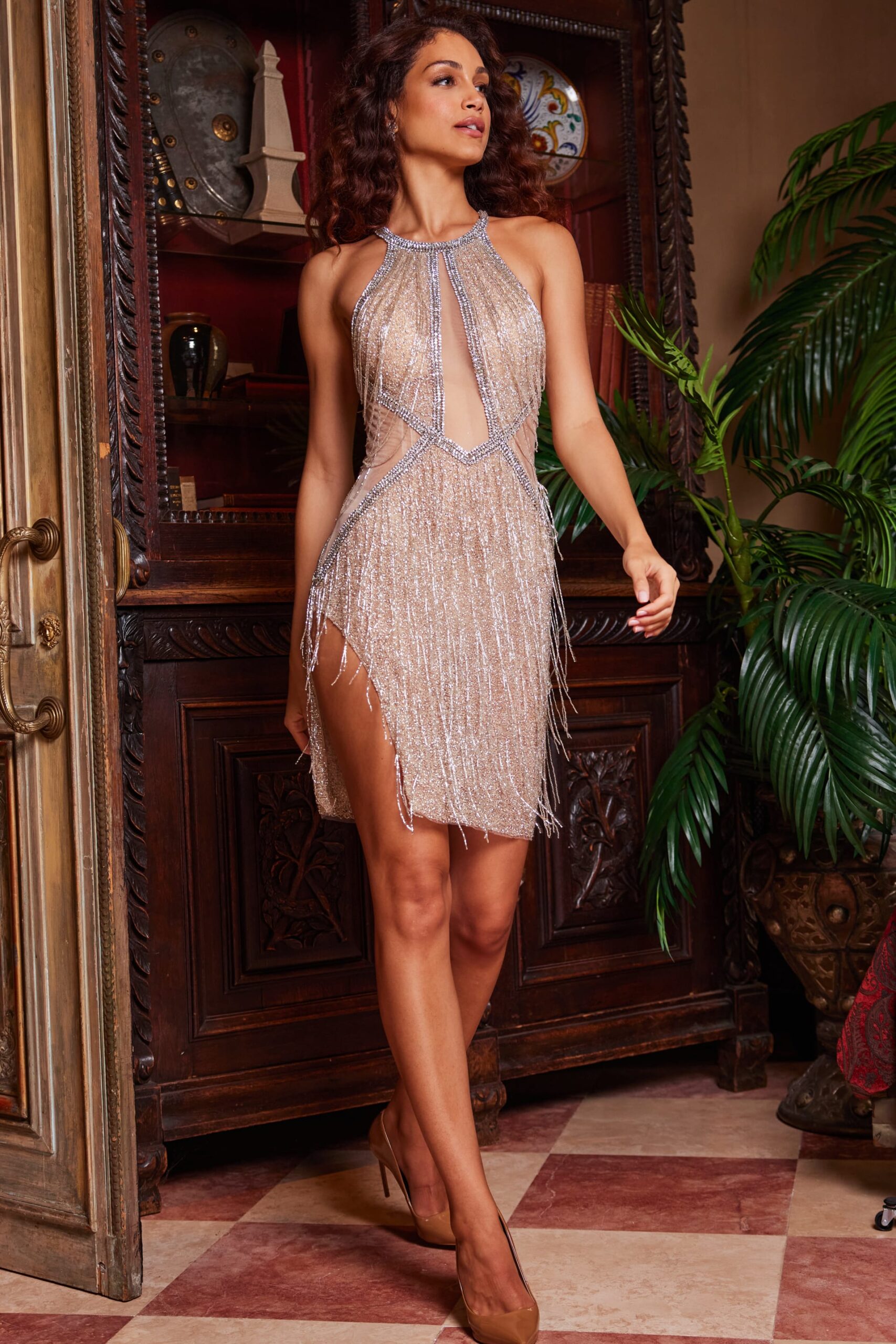
To master the styling of a sexy cocktail dress, one must first understand its fundamental components. The term “cocktail dress” itself has a rich historical context, originating in the post-World War II era as a specific attire for cocktail parties, shorter than formal gowns but more refined than daywear. Its “sexiness” is not a monolithic concept but a calculated interplay of several elements. Silhouette is paramount; it refers to the overall shape the dress creates on the body. The renowned fashion historian and curator at The Museum at FIT, Valerie Steele, has often discussed how silhouettes cycle through fashion history, reflecting societal attitudes towards the body. A fit-and-flare silhouette, for instance, emphasizes the waist and creates a feminine hourglass, a shape studies in evolutionary psychology have repeatedly linked to perceptions of health and fertility. Conversely, a sleek sheath dress offers a different kind of allure, one rooted in modernity and streamlined power, championed by icons like Audrey Hepburn. The neckline—be it a daring plunge, a classic sweetheart, or an elegant halter—frames the face and collarbone, areas neurologically tied to human attraction and communication. Fabric choice, from the liquid drape of silk charmeuse to the structured hold of duchesse satin, communicates texture and movement, influencing both the wearer’s comfort and the observer’s perception. A sexy cocktail dress, therefore, is a precise amalgamation of cut, cloth, and contour, each element serving a specific aesthetic and psychological purpose.
Strategic Accessorizing: The Alchemy of Enhancement
Accessories are not mere additions; they are the strategic tools that complete the narrative of your dress. The principle of “less is more,” often attributed to the architect Ludwig Mies van der Rohe, finds perfect application here. Over-accessorizing can fragment the visual impact of a stunning sexy cocktail dress, while a few well-chosen pieces can elevate it to art. Consider the science of focal points. The human eye is naturally drawn to areas of contrast and sparkle. A statement necklace works by creating a frame for the face and décolletage, but its success depends on the dress’s neckline. As stylist to the stars, Rachel Zoe, famously stated on her digital platform, “Style is a way to say who you are without having to speak.” This philosophy underscores that your accessories should feel like an extension of your intent. A delicate, minimalist bracelet and ring set allows a detailed dress to remain the star, while a bold, architectural cuff can balance the simplicity of a solid-color sheath. Footwear is both aesthetic and biomechanical; a heel alters posture, tilting the pelvis and elongating the calf muscle, creating a silhouette synonymous with evening wear. However, the burgeoning trend of pairing cocktail dresses with elegant flats or block heels, as seen on fashion-forward sites like Who What Wear, champions a new kind of effortless glamour rooted in comfort and practicality. Your clutch or minaudière is the final punctuation mark—small, intentional, and holding only the essentials. This curated approach to accessories transforms your outfit from a simple dress into a cohesive, personal style signature.

The Psychology of Color and Your Evening Persona
Color is the silent yet powerful communicator of your ensemble. Its impact is not subjective whimsy but is rooted in color theory and cultural semiotics. The pioneering work of color psychologist Eva Heller, as detailed in her book “Psychologie de la couleur,” demonstrates clear relationships between colors and the emotions they evoke. A classic Little Black Dress (LBD) leverages the color black’s cultural coding for sophistication, authority, and mystery—a fact famously exploited by cinematic icons from Coco Chanel to Audrey Hepburn in “Breakfast at Tiffany’s.” Red, however, operates on a different frequency. Research published in the Journal of Personality and Social Psychology has shown that wearing red can increase perceived attractiveness and is often associated with confidence and dynamism, making it a potent choice for a sexy cocktail dress. Metallics—gold, silver, bronze—borrow their allure from their association with light, value, and celebration. They reflect and amplify the ambient lighting of an evening event, literally making the wearer a center of luminosity. Beyond universal psychology, consider your personal coloring. The concept of seasonal color analysis, developed by Carole Jackson in “Color Me Beautiful,” provides a framework for choosing hues that harmonize with one’s skin tone, hair, and eyes, ensuring the dress enhances you, not competes with you. Choosing a color is thus an act of defining your desired evening persona: the powerful minimalist in black, the captivating center of attention in red, or the radiant celebrant in metallic gold.
From Dressing Room to Dance Floor: Confidence as the Ultimate Accessory
The most meticulously styled outfit remains incomplete without the vital, intangible element of confidence. This is not a vague platitude but a physiological and psychological state that alters your presence. Amy Cuddy’s seminal TED Talk and subsequent book, “Presence,” explored the concept of “power posing”—how adopting expansive, open postures can actually increase levels of testosterone (the dominance hormone) and decrease cortisol (the stress hormone). When you step into a sexy cocktail dress that fits impeccably, you are naturally inclined to stand taller, pull your shoulders back, and own your space. This embodied confidence is perceptible. It changes how you move, speak, and interact. The dress becomes a catalyst for this state, but the confidence must emanate from within. It is the understanding that glamour is not about perfection, but about authenticity and poise. As the legendary actress and style icon Sophia Loren once mused, “Nothing makes a woman more beautiful than the belief that she is beautiful.” This belief is fortified by preparation: knowing your dress fits flawlessly, that your accessories are secure, and that your overall look aligns with your self-image. This internal assurance allows you to forget about your outfit and fully engage with the evening, to laugh freely, dance, and converse without the nagging worry of a strap or a hem. In this state, the glamour you project is truly effortless because it is an authentic expression of self-assured enjoyment.

Curating Your Wardrobe: Investing in Versatile Glamour
Building a collection of evening wear that delivers consistent glamour requires a shift from impulsive buying to strategic curation. The goal is to acquire pieces that offer maximum versatility and longevity, providing a superior cost-per-wear value. This is where professional knowledge intersects with smart consumerism. Focus on foundational silhouettes that flatter your body type consistently—perhaps a tailored sheath, an A-line, or a wrap dress. These styles serve as blank canvases. Invest in superior fabrics; a dress made of natural silk or high-quality lace will drape better, last longer, and feel more luxurious than its synthetic counterpart, a principle consistently emphasized by fashion education resources from institutions like the Fashion Institute of Technology. Look for design details that allow for adaptability: a dress with a convertible neckline, detachable sleeves, or a skirt with both sleek and voluminous options effectively gives you multiple dresses in one. To bring this professional knowledge directly to you, consider this: many direct-to-consumer brands and end-of-season sales offer these quality pieces at significantly discounted prices. By focusing on timeless cuts over fleeting trends and prioritizing material quality, you build a capsule of go-to sexy cocktail dresses that feel fresh for seasons. This approach not only saves money over time but also eliminates the pre-event stress, as you have a roster of trusted, glamorous options at your disposal.

Effortless evening glamour is a symphony, not a single note. It begins with the intelligent selection of a dress whose design speaks a language of confident allure, is amplified through the strategic whisper of accessories, and is colored by an understanding of hue’s profound message. This external composition, however, finds its true power only when conducted by the internal rhythm of genuine confidence. By applying these principles—grounded in design theory, psychology, and the wisdom of style authorities—you move beyond simply wearing a dress to embodying a vision. The result is a glamour that appears innate, a captivating presence that is both polished and perfectly at ease, ensuring you are not just attending the evening, but defining it.