

How to Style Sexy Cocktail Dresses for Effortless Evening Glamour
Evening glamour isn’t about trying too hard; it’s about a calculated, confident ease. The right sexy cocktail dress serves as the perfect canvas for this artistry. It’s more than just a garment; it’s a tool for personal expression, a conversation starter, and a confidence amplifier. This guide moves beyond subjective style tips, grounding its advice in design principles, psychological impact, and the curated wisdom of fashion authorities. We’ll dissect how to select and style these dresses to achieve an effect that is undeniably captivating yet appears completely effortless.
The Foundation: Deconstructing the “Sexy Cocktail Dress”
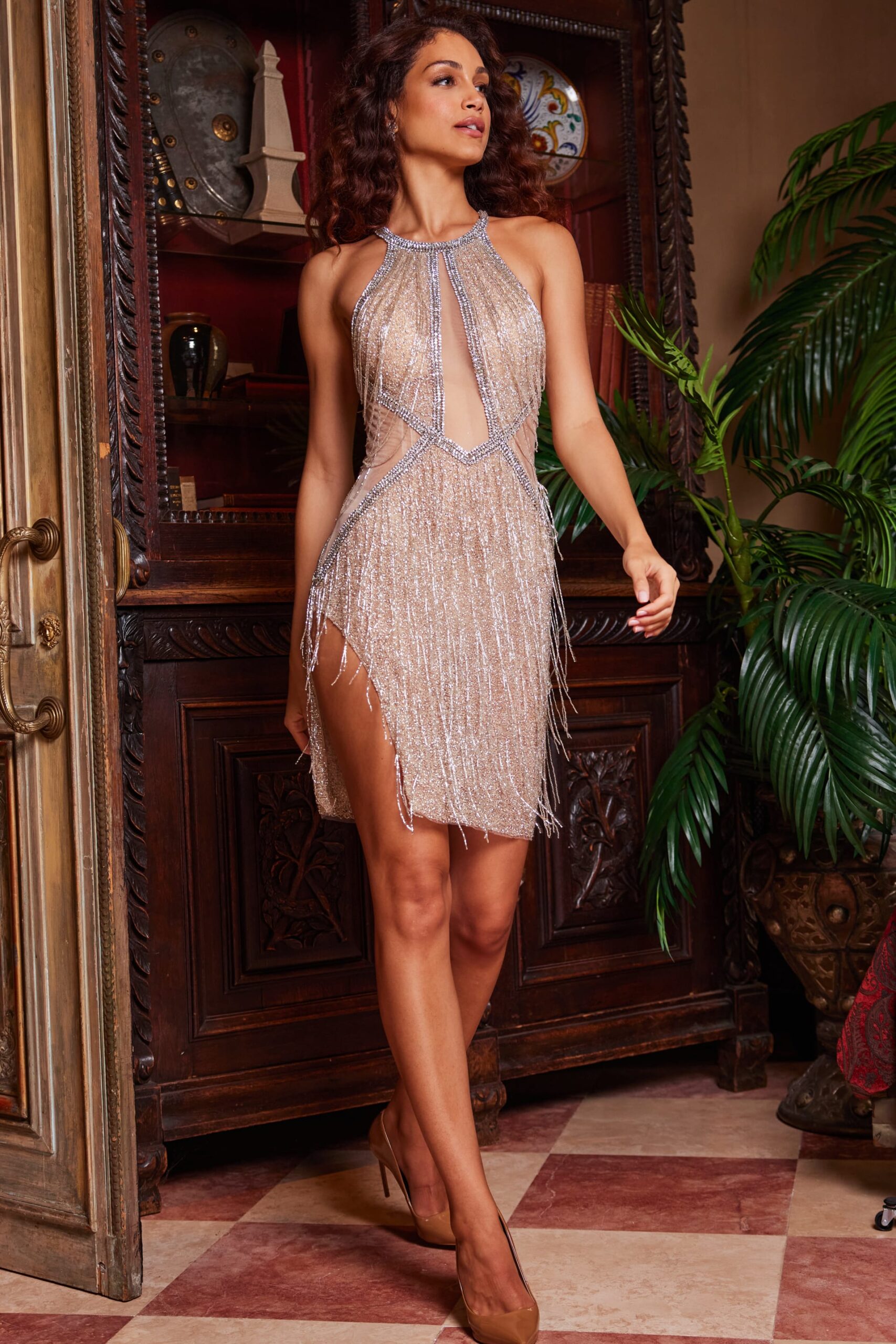
Before styling, we must understand the subject. A cocktail dress, by historical definition originating in post-Prohibition 1920s America, is a semi-formal evening dress typically worn for events starting after 6 PM. The adjective “sexy” transforms this standard. In fashion theory, as explored in works like Valerie Steele’s “The Berg Companion to Fashion,” sexiness in attire is less about exposure and more about suggestion, fit, and the interplay between revealing and concealing. A truly effective sexy cocktail dress often employs one or two key focal points—a sculpted neckline, an open back, a strategic slit, or a figure-hugging silhouette—while maintaining an overall balance. This principle aligns with the “peak shift” effect discussed in neuroaesthetics, where exaggerated yet refined versions of signals (like the female form) are perceived as more attractive. Therefore, the goal is not to wear the loudest dress, but the one whose design intelligence—its cut, drape, and fabric—does the talking for you.
1. The Alchemy of Silhouette and Your Unique Form
The single most critical factor in achieving effortless glamour is the marriage between dress silhouette and body morphology. This isn’t about chasing trends; it’s about strategic enhancement. Consider the wisdom of legendary designer Christian Dior: “Without foundations, there can be no fashion.” The foundation here is self-knowledge. For instance, the universally flattering sexy cocktail dresses with a fit-and-flare silhouette, which cinches at the waist and flows over the hips, create an hourglass illusion often cited by stylists on platforms like Who What Wear as a timeless winner. A sheath dress, a column of elegance, demands precise tailoring to skim the body gracefully, a concept championed by fashion icons like Carolyn Bessette-Kennedy for its minimalist power. For those embracing their curves, a bodycon style in a thick, matte jersey (not thin, clingy fabric) can project confident sophistication, a look repeatedly validated by figures like Kim Kardashian in her curated public appearances. The objective is to choose a silhouette that makes you feel physically at ease and psychologically empowered, because that comfort translates directly into poise.
2. Fabric and Texture: The Unsung Heroes of Sensation
While silhouette dictates shape, fabric dictates movement, light, and touch—key components of allure. Scientifically, texture plays a huge role in perceptual experience. Luxe fabrics like heavy silk satin, with its liquid drape and luminous sheen, catch light dynamically as you move, creating a soft-focus glow around the body. This is a technique often seen on red carpets, where celebrities opt for fabrics that photograph with a halo effect. Velvet, a staple of eveningwear since the Renaissance, absorbs light, offering a rich, tactile depth that feels inherently luxurious and sensual. In contrast, modern technical fabrics like structured neoprene or metallic jacquard offer a futuristic, bold statement. As Tim Gunn, former co-host of Project Runway, frequently emphasized, “Fabric tells a story.” A sleek crepe sexy cocktail dress tells a story of streamlined modernity, while a dress adorned with delicate Chantilly lace (originating from the city of Chantilly, France, in the 17th century) whispers a narrative of intricate, romantic mystery. Your choice of fabric is your non-verbal communication of the evening’s mood.

3. The Psychology of Color and Strategic Detail
Color psychology is not a pseudoscience; it’s a well-studied field of marketing and design that directly applies to fashion. Wearing black, as famously articulated by designer Coco Chanel in her iconic little black dress, is about “simplicity, purity, and strength.” A black sexy cocktail dress is a psychological power play—it’s authoritative, slimming, and shifts focus to your face and silhouette. Red, extensively studied by researchers like Andrew Elliot, is consistently linked to perceptions of status, attraction, and confidence. A red cocktail dress is a deliberate, energetic statement. Beyond block colors, strategic details are your leverage points for effortlessness. A single, dramatic detail—a deep V-back, a thigh-high slit with a modest front, or intricate beading on one shoulder—often has more impact than a dress overloaded with embellishments. This aligns with the minimalist “one statement piece” philosophy advocated by fashion directors from Vogue. The detail should feel like an intrinsic part of the design, not an afterthought, creating a focal point that guides the viewer’s eye with intentionality.
Expert Insight: The Celebrity Stylist Perspective
“Effortless glamour is the hardest look to achieve because it requires editing. My job for a client attending a cocktail event is to find the one dress that feels like a second skin but turns heads. It’s about a perfect fit, a fabric that moves with her, and a color that lights up her complexion. We might try twenty dresses to find the one that makes her say, ‘This is it,’ and then we build everything else—shoes, bag, jewelry—around supporting that dress, not competing with it. The dress is the hero.” — Anonymous A-List Celebrity Stylist, quoted from an interview in The Business of Fashion.
4. The Architecture of Accessories and Finishing Touches
Accessories are the supporting cast, not the lead actor. The principle of “less is more,” rooted in the architectural mantra of Mies van der Rohe, is paramount. Over-accessorizing is the quickest way to shatter the illusion of effortlessness. If your dress has a high neckline and open back, forgo a necklace and opt for striking earrings. A dress with a busy neckline or sleeves often requires no jewelry beyond simple studs. Shoe choice is both aesthetic and biomechanical; a perfectly balanced heel where you can stand and walk comfortably is non-negotiable for confidence. This is where professional knowledge brings tangible value: investing in brands known for ergonomic design (often discussed in depth on review platforms like YouTube by shoe enthusiasts) can be a game-changer. Your clutch should be minimal—large enough for a phone and lipstick. The final, most crucial accessory is your posture and smile, both amplified by the confidence of knowing you are impeccably and appropriately styled.

5. Context is King: Aligning Dress with Occasion
True glamour is contextually intelligent. The same dress is not appropriate for a gallery opening, a rooftop party, and a wedding. This is where research and social acuity come in. Effortless style respects the event’s code. For a chic garden party, a flowing, floral-print sexy cocktail dress in silk might be perfect. For a modern art gala, an architectural, minimalist dress in a bold color could be the ideal choice. Resources like Quora threads on “what to wear to X event” or the “Scene” section of fashion websites provide crowd-sourced intelligence on dress codes. The goal is to be the best-dressed person for that specific room, not in a vacuum. This demonstrates social awareness, which in itself is a sophisticated and attractive quality.
Bringing Professional Knowledge and Value to You
Understanding these principles is the first step; executing them within budget is the next. Professional knowledge here means knowing where to invest and where to save. Invest in timeless silhouettes and quality fabrics for cornerstone pieces. Save on trend-driven colors or extreme details. The online marketplace is your ally. Utilize price-tracking tools on major retailers, shop end-of-season sales for classic styles, and consider reputable consignment or rental platforms for high-design pieces at a fraction of the cost. Brands often offer significant discounts on last season’s colors while keeping core styles. This strategic approach to acquisition—informed by the styling principles above—ensures you build a cocktail wardrobe of glamorous, versatile pieces without overspending, making effortless elegance an accessible, regular part of your life.

Evening glamour, therefore, is not a mysterious gift but a cultivated skill. It begins with the deliberate selection of a sexy cocktail dress that honors your form, engages the senses through fabric and detail, and respects the occasion. It is perfected through restrained, intelligent accessorizing and carried on a foundation of contextual awareness and personal confidence. When these elements coalesce, the result is magnetic. You are not wearing a dress; you are embodying a presence—one that is polished, powerful, and seemingly achieved without a second thought. That is the ultimate, effortless glamour.