

Discover the Charm of Traditional Irish Women’s Clothing
To walk through the verdant hills of Ireland is to step into a living tapestry of history, where every thread tells a story. Among the most vibrant and enduring threads is the story of what women wore. Traditional Irish women’s clothing is far more than mere fabric and stitch; it is a language of identity, a testament to resilience, and a canvas of artistry that has evolved over centuries. This attire, often romanticized yet deeply practical, speaks of a culture intimately connected to its land, its struggles, and its celebrations. From the humble léine to the elaborate crios, these garments are not relics of a forgotten past but are living symbols, continually reinterpreted in modern fashion and cultural practice. To understand them is to understand a key part of Ireland’s soul—a blend of myth, hardship, and unwavering pride.
The Foundations: The Léine and the Brat
The bedrock of early traditional Irish women’s clothing was deceptively simple. The léine (pronounced ‘lay-nuh’), a long, loose-fitting tunic typically made from linen, was the universal garment for both men and women in Gaelic Ireland, with distinctions often in length and decoration. For women, the léine could reach the ankles. Its simplicity was its strength, allowing for freedom of movement in daily agrarian life. Historians from University College Dublin’s Folklore and Ethnology department note that the léine was more than a shirt; it was a social signifier. The fullness and quality of the linen, often saffron-dyed for those of higher status, indicated wealth and standing. Over this, women of means would wear a brat, a large, rectangular cloak fastened with a dealg (brooch). The brat was the ultimate practical garment, woven from thick, oily wool that provided near-impermeable protection against Ireland’s relentless rain and wind. The size and color of the brat were also markers of status, with kings and queens purportedly wearing cloaks of multiple colors. This foundational duo—the léine and brat—encapsulated the Gaelic world’s values: practicality, a deep connection to locally sourced materials (linen and wool), and a social hierarchy displayed through craftsmanship and dye.

Symbolism Woven in Thread: The Aran Sweater’s Legacy
While the léine and brat represent ancient traditions, no discussion of Irish attire is complete without the iconic Aran sweater, a 20th-century phenomenon rooted in deep tradition. Originally knit for fishermen on the Aran Islands, these sweaters, often worn by women as sturdy outerwear, are a masterpiece of symbolic storytelling. Each family, or clann, was said to have its own pattern of cables, diamonds, and knots, serving as both an identifier and a talisman. The honeycomb stitch symbolized the hard work of the bee and a wish for prosperity; the cable stitch represented the fisherman’s ropes and a prayer for safety at sea; the diamond stitch evoked the small fields of the islands and hopes for wealth and success. This tradition of encoding meaning into knitwear connects directly to the Celtic artistic tradition of intricate, interlacing patterns seen in manuscripts like the Book of Kells. As noted by the National Museum of Ireland, these sweaters transitioned from purely functional workwear to global symbols of Irish heritage. When we see an Aran sweater today, we are not just looking at a warm garment; we are reading a history of community, faith, and the battle against the elements—a direct, tangible link to the narrative spirit of traditional Irish women’s clothing.
The Crios and Footwear: Accents of Daily Life
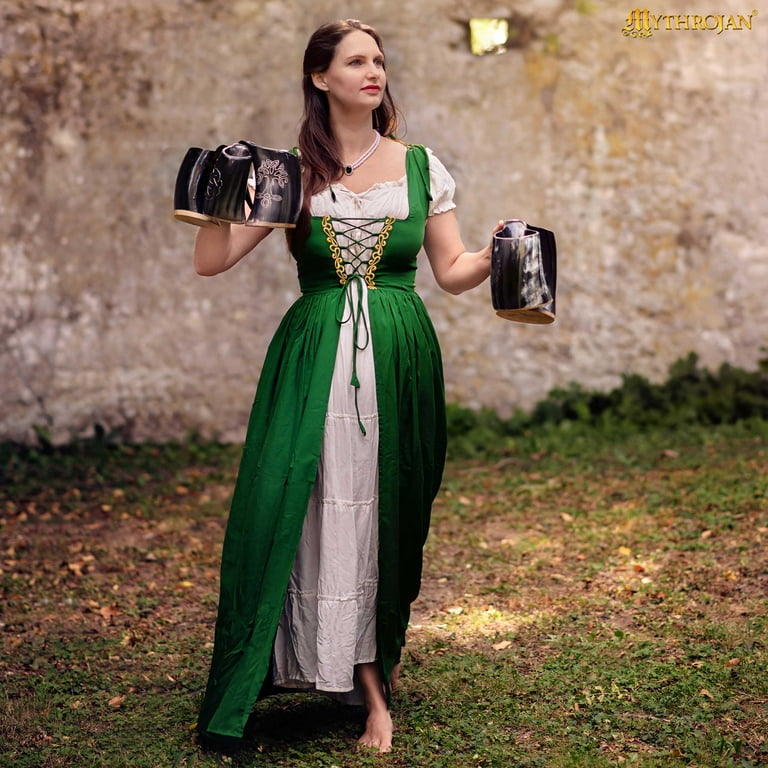
Beyond the primary layers, the accessories completed the ensemble with both function and flair. The crios (pronounced ‘kriss’), a multi-colored woven belt, was a vital component. Worn by both men and women, it cinched the léine at the waist. For women, it provided shape and practicality, allowing them to gather up the hem of their long tunics for work. The crios was typically handwoven from wool in bright, contrasting stripes, introducing a vibrant pop of color to an otherwise earthy palette. Its craftsmanship was a point of pride, a small-scale display of weaving skill. Footwear, too, was born of the environment. While often going barefoot, when shoes were worn, they were simple pampooties, made from untanned hide and stitched with leather thongs. These were flexible, durable, and perfectly adapted to the rocky terrain. This attention to practical detail in accessories underscores a central truth about traditional Irish women’s clothing: every element had a purpose. Beauty was not separate from utility; the beauty was the utility—the clever weave of a crios, the protective density of a brat, the symbolic knit of a sweater. It was clothing in dialogue with a demanding, beautiful landscape.
Modern Resonance: From Stage to Street Fashion
The journey of these traditional elements from historical necessity to modern symbol is fascinating. The late 19th and early 20th centuries, with the Gaelic Revival and the struggle for independence, saw a conscious reclamation of Irish identity, with clothing as a potent symbol. The iconic image of a woman in a “Celtic” dress, often with a cross-body brat and intricate embroidery, became a staple of nationalist imagery and early theatrical productions by the likes of the Abbey Theatre. This staged, romanticized version cemented a certain look in the global imagination. Fast forward to today, and the influence is pervasive but nuanced. High-fashion designers like Simone Rocha and JW Anderson frequently reference Irish craft—Aran stitches reinterpreted on couture gowns, cable knits on runway silhouettes, linen used in avant-garde cuts. The global “cottagecore” aesthetic owes a debt to the rustic, natural-fiber simplicity of the léine. This modern resonance is powerfully summarized by Irish author and commentator Sinéad Gleeson, who once reflected on cultural identity in The Irish Times:
“The things we make with our hands—the knit, the weave, the stitch—carry the memory of the hands that made them before us. Wearing a pattern that echoes an Aran sweater isn’t just fashion; it’s an act of continuity, a quiet conversation with the past that we choose to wear on our skin in the present.”
This perspective bridges the gap between museum piece and modern wardrobe, showing how traditional Irish women’s clothing continues to inspire as a language of belonging and artistic expression.

Where to Find Authentic Pieces and Modern Interpretations
For those captivated by this charm and wishing to incorporate it into their own lives, the quest for authentic or thoughtfully interpreted pieces is part of the joy. True, historically accurate garments are best found through specialty historical reenactment suppliers or skilled individual artisans who study medieval Gaelic dress. For the iconic Aran sweater, seeking out brands still knit in the Aran Islands or along the western coast, such as Inis Méain or The Aran Sweater Market, ensures you are supporting the tradition’s heartland. The quality of the wool and the authenticity of the stitches are unparalleled. For modern interpretations, the landscape is rich. Many Irish designers, from established names like Magee 1866 to independent Etsy artisans, create beautiful shawls, wraps, and knitwear that use traditional techniques in contemporary designs. When searching, prioritize natural materials—100% wool, linen, and cotton—as these are the true heirs to the tradition. While high-street chains offer “Aran-style” cardigans, often at discounted prices, understanding the story behind the stitches makes investing in a genuine, handcrafted piece a profoundly different experience. You are not just purchasing an item; you are stewarding a narrative, bringing a fragment of Ireland’s artistic heritage into your daily life.

The enduring charm of traditional Irish women’s clothing lies precisely in its duality. It is both rooted in the muddy, practical reality of island life and elevated into the realm of symbol and art. It speaks of a culture that could find profound meaning in the twist of a cable stitch and divine protection in the fold of a woolen cloak. From the ancient léine to the modern runway, this sartorial tradition refuses to be confined to history books. It is a living, breathing, and evolving conversation between past and present, inviting all who encounter it to appreciate the depth of story that can be woven into the very clothes we wear. To discover its charm is to understand that in Ireland, clothing was never just about covering the body; it was about expressing the spirit of a people.