

If there’s one piece that has quietly dominated my wardrobe for years, it’s the wrap skirt. I discovered it almost by accident — browsing a vintage shop in my early twenties, I found a mustard-colored wrap skirt with a slightly faded floral print and a tie that seemed to promise endless possibilities. That single purchase changed how I thought about getting dressed every morning. What I didn’t realize then was that the wrap skirt has been a wardrobe staple for decades, worn by everyone from Hollywood icon Diane Keaton in the 1970s to modern-day fashion editors at Vogue.
The beauty of a wrap skirt lies in its deceptive simplicity. At first glance, it’s just a piece of fabric with a tie. But once you put it on, you understand why designers have kept returning to this silhouette for over a century. The wrap design creates a natural A-line shape that flatters nearly every body type, and the adjustable waist means you never have to worry about fluctuating sizes. It’s the kind of piece that feels like it was designed specifically for your body — because in a way, it was. You adjust it, tie it, and it becomes yours.
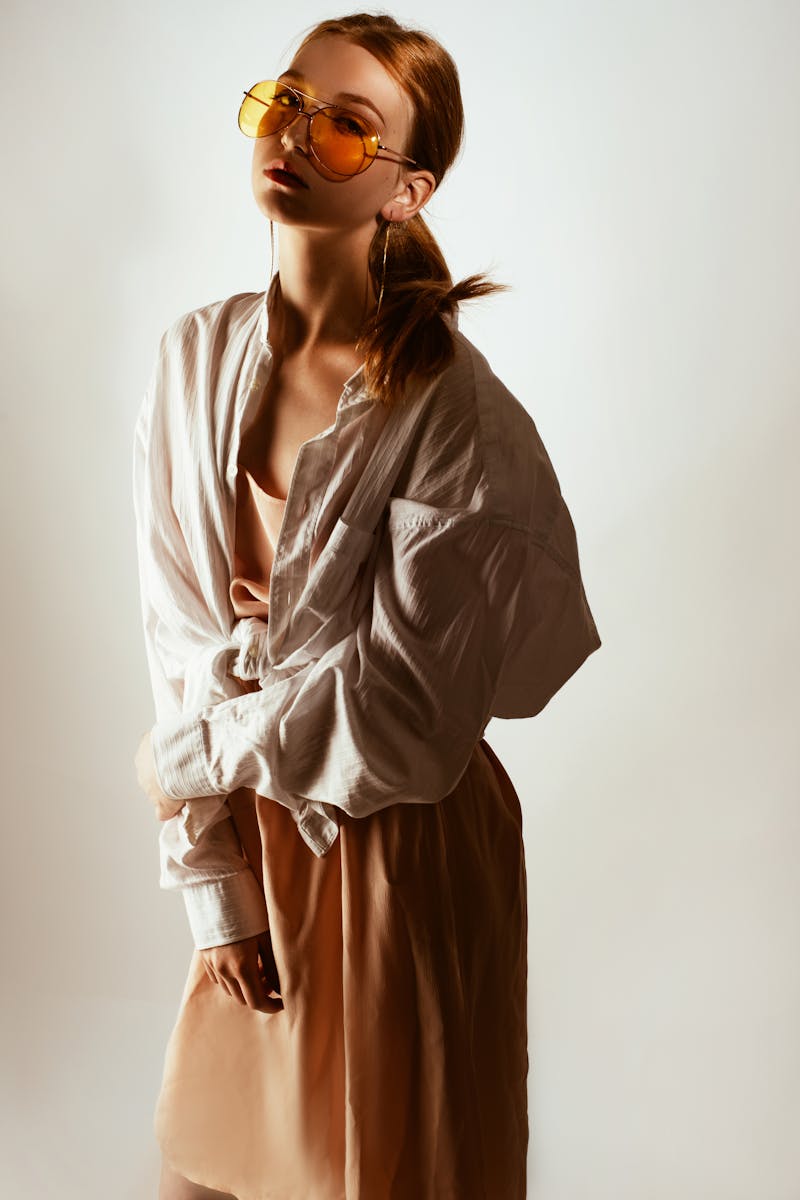
The History Behind the Wrap Skirt: From Ancient Garments to Modern Runways
The wrap skirt is far from a modern invention. Its origins can be traced back to some of the earliest garments humans ever created. Archaeological evidence suggests that wrapped garments — essentially pieces of fabric draped around the lower body and secured with a tie or belt — were among the first forms of clothing across virtually every ancient civilization. The sarong, found throughout Southeast Asia, the lungi worn in South Asia, and the kilt from Scotland all share the same fundamental construction: a single piece of cloth wrapped and fastened around the waist.
In the Western fashion world, the wrap skirt as we know it today gained serious traction in the 1970s. Designer Diane von Fürstenberg is widely credited with popularizing the wrap dress in 1974, and the wrap skirt quickly followed as a natural extension of that design philosophy. According to the Wikipedia entry on the wrap dress, von Fürstenberg’s design was revolutionary because it offered women a garment that was both professional enough for the office and sensual enough for a night out — all without requiring a zipper or buttons. This same principle carried over to wrap skirts, making them an instant hit with working women who wanted versatile, flattering options.
What makes the wrap skirt’s longevity so remarkable is its ability to adapt to every era’s aesthetic. In the bohemian 1970s, it was a flowing maxi with ethnic prints. In the power-dressing 1980s, it took on sharper lines and bolder colors. The minimalist 1990s stripped it down to its essentials — a simple slip skirt with a wrap overlay. And today, it exists in every conceivable form: denim, silk, leather, plaid, floral, solid, mini, midi, maxi. The fundamental design hasn’t changed, but its expression is endlessly mutable. That’s the mark of a truly great garment.
Why the Wrap Skirt Flatters Every Body Type
Let me be honest about something: not every piece of clothing looks good on every person. We’ve all had that experience — buying something because it looked incredible on the model, only to discover that our body does something entirely different with the same fabric. The wrap skirt is the rare exception to this rule, and there’s a specific anatomical reason why it works so universally well.
The wrap design creates what fashion experts call a “custom-fit illusion.” When you wrap and tie the skirt, you’re essentially creating a diagonal line across your torso that draws the eye in a flattering direction. This diagonal line — often referred to as a ” princess seam effect” — creates visual interest while simultaneously cinching the narrowest part of your waist. The result is an hourglass silhouette that appears whether or not you naturally have one.
For women with a pear-shaped body, the wrap skirt is particularly advantageous because the A-line flare from the waist down balances wider hips beautifully. The adjustable waist means you can tie it exactly where it feels most comfortable, without being constrained by a fixed waistband. For those with an apple-shaped figure, the wrap skirt draws attention to the legs while creating a defined waistline that might otherwise be absent. And for rectangle-shaped bodies, the wrap creates curves where there weren’t any before — the diagonal tie and gathered fabric add dimension and shape.
I’ve personally recommended wrap skirts to friends across the entire spectrum of body types, and the results have been consistently positive. The key is choosing the right length and fabric weight for your proportions. A midi-length wrap skirt in a medium-weight fabric works beautifully for most people. If you’re petite, a shorter length prevents the skirt from overwhelming your frame. If you’re taller, a maxi length wrap skirt creates an elegant, elongated line that’s hard to beat.
Five Ways I Style My Wrap Skirt Throughout the Week
One of the reasons the wrap skirt earned a permanent place in my closet is its extraordinary versatility. I can wear the same skirt five days in a row and no one would notice — or rather, they’d notice that I look different every single day. Here’s how I rotate my favorite wrap skirt through a typical week, and you can use these same formulas to maximize your own wardrobe.
Monday — Office Ready: I pair a navy wrap skirt with a crisp white button-down shirt and block heels. The combination is polished but not stiff, and the wrap skirt adds a touch of softness to the otherwise structured look. I add a structured blazer when I have meetings, and the outfit transitions seamlessly from desk to dinner.
Tuesday — Casual Errands: The same wrap skirt, but this time with a fitted t-shirt and white sneakers. I roll the tie slightly for a more relaxed drape and add a denim jacket. It’s the kind of outfit that says “I didn’t try too hard” while actually being very thoughtfully put together.
Wednesday — Creative Workday: I swap the white shirt for a silk blouse in a complementary color — think blush pink with a navy skirt, or champagne with a burgundy skirt. I add statement earrings and a slim belt over the skirt’s tie for extra definition. This look works especially well if you work in a creative field where personal style is encouraged.
Thursday — Date Night: Here’s where the wrap skirt really shines. I pair it with a fitted camisole, strappy sandals, and a leather jacket. The wrap skirt’s inherent femininity pairs beautifully with the edge of the leather, creating a look that’s both sophisticated and slightly rebellious. I’ve gotten more compliments on this outfit than almost any other combination in my wardrobe.
Friday — Weekend Brunch: I go full bohemian with a printed wrap skirt, a crochet top, and flat sandals. I add layered necklaces and let my hair down. This is the version of the wrap skirt that feels most effortless — like you just threw it on and still managed to look incredible.
Choosing the Right Wrap Skirt: Fabric, Length, and Print
Not all wrap skirts are created equal, and the difference between a great one and a disappointing one often comes down to three factors: fabric quality, length, and print choice. After years of buying wrap skirts in every price range, I’ve developed some strong opinions about what works and what doesn’t.
Fabric is the most critical factor. A wrap skirt in a lightweight, drapey fabric — think rayon, viscose, or silk — will hang beautifully and create that coveted flowing silhouette. Heavier fabrics like denim or wool crepe work well for structured, tailored looks but won’t give you the same fluid movement. Avoid stiff synthetics that hold their shape too rigidly — they defeat the purpose of the wrap design, which is meant to drape naturally against your body.
Length is a personal choice, but I strongly recommend starting with a midi length — somewhere between the knee and mid-calf. It’s the most universally flattering length and works for nearly every occasion. Mini wrap skirts are fun and flirty but can be tricky to manage when sitting down. Maxi wrap skirts are gorgeous but can overwhelm shorter frames. Once you’ve mastered the midi, you can experiment with other lengths confidently.
Prints are where you can express your personality most fully. A solid-color wrap skirt is a wardrobe workhorse — you’ll reach for it constantly because it goes with everything. But don’t underestimate the power of a good print. A floral wrap skirt adds instant femininity and works beautifully with neutral tops. A plaid wrap skirt brings a preppy, intellectual vibe. And a geometric print wrap skirt feels modern and architectural. I recommend owning at least one solid and one printed wrap skirt — that combination will cover virtually every occasion in your life.
The Wrap Skirt in Global Fashion: A Cross-Cultural Icon
What fascinates me most about the wrap skirt is how it transcends cultural boundaries. While we often think of it as a Western fashion item, the wrapped garment exists in some form in nearly every culture on Earth. In Japan, the hakama — a traditional wrapped skirt-like garment — has been worn for centuries. In India, the ghagra and lehenga are essentially elaborate wrap skirts adorned with embroidery and embellishments. In West Africa, the wrapper (known as iro in Yoruba) is a fundamental part of traditional women’s dress.
According to BBC Culture’s exploration of global wrap garments, the universal appeal of wrapped clothing comes from its fundamental efficiency — it requires no complex tailoring, no zippers, no buttons, and no elastic. It’s just fabric and a tie. Yet despite this simplicity, it can be elevated to the highest levels of luxury and sophistication. A well-cut wrap skirt in Italian silk can be just as elegant as a couture gown, and sometimes more so because of its effortless quality.
This cross-cultural heritage is one reason the wrap skirt never goes out of style. It’s not tied to a specific trend or era — it’s a fundamental form of dress that humans have been creating for thousands of years. When you wear a wrap skirt, you’re participating in a tradition that spans continents and centuries. That’s not just fashion — that’s history you can wear.
I like to think about this whenever I tie my wrap skirt in the morning. There’s something grounding about wearing a garment that connects you to women across time and place — from ancient civilizations draping fabric around their waists to modern designers reimagining the form on runways in Paris and Milan. The wrap skirt is proof that good design is timeless, and that the simplest solutions are often the most enduring.