

Satin Spaghetti Strap Dresses Are Quietly Winning 2026 — And Nobody Expected It
I walked into a rooftop party three weeks ago wearing a champagne satin spaghetti strap dress that cost less than a nice dinner for two, and three separate people — strangers, not friends obligated to be nice — stopped me to ask where I got it. That’s when I realized something had shifted. The satin spaghetti strap dress, once relegated to bridesmaid obligations and very specific prom scenarios, has quietly become the silhouette that fashion insiders are hoarding in every available color. And the thing is? Most people haven’t caught on yet.
I’m not talking about a fleeting TikTok micro-trend that disappears before your package arrives. I’m talking about a genuine shift in how women are approaching evening-adjacent dressing — a move away from stiff, structured formalwear and toward pieces that feel like wearing nothing at all while looking like you tried harder than anyone else in the room. The satin spaghetti strap dress sits at the precise intersection of comfort and impact, and in 2026, that’s the only intersection that matters.
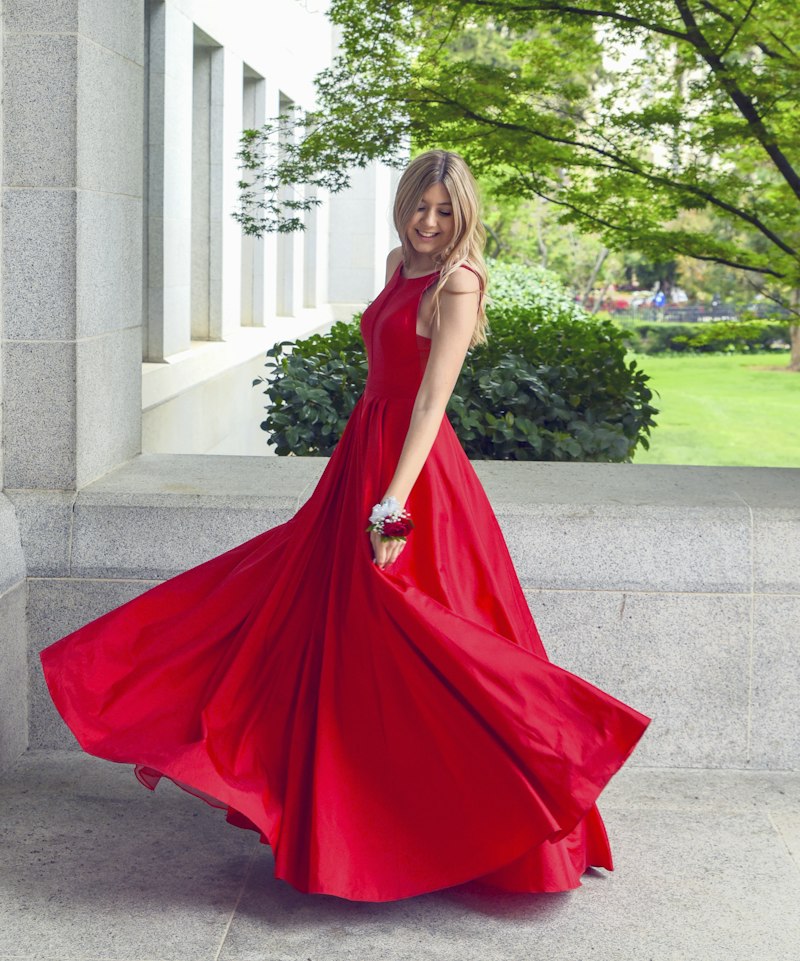
The Fabric That Changes Everything
Satin isn’t just a material — it’s a delivery mechanism for light. Unlike cotton, which absorbs light, or polyester crepe, which diffuses it without ceremony, satin reflects light in a way that creates dimension and movement even when you’re standing completely still. This is the first thing you need to understand about why the satin spaghetti strap dress works so effectively: the fabric does half the work for you. According to textile historians at the Victoria and Albert Museum, satin weaving techniques originated in China over 2,000 years ago and traveled the Silk Road before becoming a cornerstone of European luxury fashion by the 14th century. The technique — floating warp yarns over weft yarns to create a smooth, glossy surface — has barely changed, which tells you something about how perfectly the original engineers solved the problem.
What makes satin uniquely suited to the spaghetti strap silhouette specifically is the contrast it creates. Spaghetti straps are inherently minimal — they’re the architectural equivalent of whisper-thin scaffolding. Satin is inherently maximal — it’s loud without making a sound. When you put them together, you get a dress that feels impossibly light on the body but reads as deliberate and considered to anyone looking at you. It’s the sartorial equivalent of showing up to a black-tie event barefoot and somehow pulling it off. The tension between restraint and excess is what gives the garment its electricity.
I’ve spent too much time thinking about this, but here’s the practical takeaway: a satin spaghetti strap dress doesn’t need elaborate accessories, statement jewelry, or complicated layering to feel complete. The fabric is the statement. The straps are the architecture. Everything else is just noise. And in 2026, when most of us are exhausted by the relentless pace of micro-trends and algorithm-driven aesthetics, a garment that does its job without demanding a supporting cast of seventeen other pieces feels almost radical.
What Actually Happens When a Spaghetti Strap Dress Meets Satin
Let me walk you through the physics of this, because it matters more than most shopping guides will admit. When you pair the structural minimalism of spaghetti straps with the liquid-mirror quality of satin, three things happen simultaneously that don’t happen with other fabric-strap combinations. First, the straps — because they’re so thin — create a visual negative space between your shoulders and the fabric that elongates your neck and collarbone area. Second, the satin drapes rather than hangs, meaning it follows the contours of your body without gripping or clinging the way jersey or stretch fabrics do. Third, the combination of minimal anchoring points and fluid fabric creates a silhouette that moves independently of your body when you walk — that cinematic trailing effect that makes people turn their heads not because anything is exposed, but because something is flowing.
Harper’s Bazaar senior fashion editor Kerry Pieri noted in a 2025 trend analysis that “satin slip dresses have evolved beyond loungewear territory into legitimate evening options, largely because designers are treating the spaghetti strap as a design element rather than an afterthought.” This is the key distinction that separates a 2026 satin spaghetti strap dress from the slip dresses of the 1990s — back then, the strap was purely functional, often hidden or minimized. Now, the strap itself has become a focal point, sometimes embellished, sometimes contrast-colored, sometimes literally the only thing connecting the dress to your body. It changes the psychological relationship you have with the garment: you’re not just wearing a dress, you’re suspended inside an object that feels intentionally precarious in the best possible way.
I’ve owned four satin spaghetti strap dresses across different price points — from a $28 fast-fashion experiment to a $340 Reformation piece — and I can tell you the difference isn’t just in the stitching quality. It’s in how the satin catches the light. Cheaper satin finishes (typically polyester-based) produce a flat, uniform sheen that reads as costumey under certain lighting. Higher-quality satin — whether silk-based or high-grade acetate — creates what fabric specialists call “depth of reflection,” where the fabric appears to change color slightly as you move because different warp threads are catching the light at different angles. According to textile researcher Dr. Susan Kay-Williams, Chief Executive of the Royal School of Needlework, “Satin’s distinctive luster comes from the way light hits the long floats in the weave structure — the longer the float, the more brilliant the shine, but also the more delicate the fabric.” This isn’t fashion snobbery; it’s physics that directly impacts how the dress photographs and how it makes you feel when you catch your reflection.
Styling for Daylight — Because Satin Belongs Everywhere
The biggest mistake people make with a satin spaghetti strap dress is boxing it into the evening-only category. I made this mistake for years. My champagne satin dress hung in my closet for eleven months between wears because I only took it out for weddings and anniversary dinners. Then, last June, on a 34-degree day when every other garment in my closet felt like a personal attack, I threw it on with flat leather sandals and a cotton bucket hat and realized I’d been fundamentally misunderstanding the assignment. Satin in daylight is not overdressed — it’s unexpected, and unexpected is infinitely more interesting than appropriately dressed.
Here’s how to pull it off without looking like you got lost on your way to an awards show. Layer something aggressively casual over the satin spaghetti strap dress — an oversized cotton button-down left completely unbuttoned, a cropped denim jacket, or even a slouchy knit cardigan that looks like you stole it from someone twice your size. The friction between the casual top layer and the formal base layer creates a visual tension that reads as intentional styling rather than confusion about the dress code. Footwear is where you make or break the look: flat sandals, retro sneakers, or chunky slides establish the daytime context immediately, while heels — even block heels — push the outfit back into evening territory. The bag matters too. Carry something woven, canvas, or generally beat-up-looking, and suddenly a satin spaghetti strap dress becomes the most casual thing in your outfit rather than the most formal.
I’ve also learned that accessories need to fight the satin rather than complement it if you want the daytime effect to hold. Pearls, crystals, or anything metallic will amplify the formal reading. Instead, try wooden beads, leather wrap bracelets, or a single cord necklace with a pendant that looks like you made it at summer camp. The goal is to drag the satin spaghetti strap dress down to earth without ruining what makes it special. Think of it like taking a sports car to the grocery store — the dissonance is the entire point, and the more convincingly you commit to it, the better it works. One final note on this: if you’re going to layer anything under the dress during daylight hours — and I highly recommend it — a white ribbed tank top beneath a satin spaghetti strap dress creates a strangely compelling 90s-meets-2026 effect that I’ve seen on at least four different street style accounts in the past month alone.
After Dark — The Satin Spaghetti Strap Dress at Night
When the sun goes down, the satin spaghetti strap dress doesn’t need to transform — it just needs the distractions removed. This is the dress’s natural habitat, and overcomplicating it is the fastest way to ruin the effect. I’ve watched women at gallery openings, restaurant bars, and rooftop parties absolutely nail the satin spaghetti strap dress look, and the common thread among all of them is restraint. They’re not layering. They’re not accessorizing heavily. They’re letting the fabric operate at full capacity, which is exactly what satin was engineered to do in low or directional lighting.
A single element of contrast is all you need. It can be architectural — a sharp-shouldered blazer thrown over the shoulders but never actually worn, creating a defined line above the fluid drape of the satin. Or it can be textural — a velvet clutch, a pair of patent leather heels, or anything that absorbs light rather than reflecting it, giving the eye a place to rest amidst all that liquid shimmer. The one thing you should avoid is pairing satin with more satin: a satin bag plus a satin spaghetti strap dress plus satin heels reads as a costume rather than an outfit, like you raided a theater wardrobe and committed to a single fabric with excessive enthusiasm. Let the dress be the only glossy surface in your outfit and everything else will fall into place around it.
I’ve found that the necklace decision matters more with a satin spaghetti strap dress than with almost any other neckline. The spaghetti straps create a wide, open expanse across the collarbone and chest that practically begs for something — but filling it with a heavy statement necklace undermines the minimalism that makes the dress compelling in the first place. A single thin chain, preferably at collarbone length, is the sweet spot: it acknowledges the open space without occupying it. As Vogue contributing editor Rickie De Sole noted in a 2026 accessories feature, “the most effective evening styling right now subtracts rather than adds — one extraordinary piece, worn with confidence, beats a curated collection of safe choices.” The satin spaghetti strap dress is already your one extraordinary piece. Everything else is just supporting cast.
Which Colors Are Driving the Trend in 2026
The color landscape for satin spaghetti strap dresses in 2026 has splintered into two distinct camps, and which one you choose says more about your personal style philosophy than you might think. The first camp is the neutral maximalists: champagne, ivory, blush, dove gray, and the particular shade of pale gold that looks like honey backlit by morning sun. These colors lean into satin’s light-reflecting properties, using the fabric’s natural luminosity to create an almost ethereal effect — the fabric glows on its own, so the color doesn’t need to shout. This is the camp I personally fall into, and I’m not objective about it. My champagne satin spaghetti strap dress gets more compliments than anything else I own, and I’m fairly certain it’s because the color reads differently depending on the light source, which makes it feel like a new dress every time I wear it.
The second camp is the jewel-tone maximalists: emerald, sapphire, amethyst, and the deep oxblood burgundy that fashion editors have been calling “the new neutral” since approximately 2019 but which actually peaked as a satin spaghetti strap dress color just this year. These darker, richer tones use satin differently — instead of amplifying light, they amplify depth. A sapphire satin spaghetti strap dress in low restaurant lighting looks less like fabric and more like a liquid that happens to be holding the shape of a garment, which is a visual trick that never gets old. The tradeoff is versatility: a champagne or dove gray satin spaghetti strap dress can plausibly show up at a 2pm garden brunch, while an emerald one announces its evening intentions the moment it enters the room.
The data supports what the eye already knows. According to retail analytics platform Edited, searches for satin dresses in neutral tones increased 47% year-over-year through Q1 2026, while jewel-tone satin dresses saw a 38% increase in the same period. What’s interesting is that the two trends aren’t competing — they’re operating in parallel, serving different occasions and different psychological needs. The neutral satin spaghetti strap dress says effortless; the jewel-tone satin spaghetti strap dress says intentional. Both messages are valuable, and the smartest wardrobes I’ve seen this year contain at least one of each. For what it’s worth, the specific shade I’m seeing everywhere right now — on Instagram, at events, on the racks at Zara and Cos and The Frankie Shop — is a kind of burnished copper that occupies the exact middle ground between champagne and terracotta, and it looks extraordinary against both pale and deep skin tones.
What Nobody Tells You About Caring for Satin
I ruined my first satin spaghetti strap dress within six weeks of buying it because nobody had told me that antiperspirant and satin are mortal enemies. The aluminum compounds in most antiperspirants react with satin fibers — particularly silk-based satin — to create a yellowish discoloration that doesn’t wash out. Not sort-of washes out. Doesn’t wash out. The stains become part of the fabric’s permanent history, and not in the charming vintage way. Switch to an aluminum-free deodorant on days you’re wearing satin, or apply your regular antiperspirant at least twenty minutes before putting the dress on so it has time to fully dry. I learned this from a dry cleaner who looked at my ruined dress with the weary expression of someone who has delivered this exact news to hundreds of women before me.
Beyond the antiperspirant issue, satin has specific care requirements that most care labels understate. Hand washing in cold water with a detergent specifically formulated for delicates is ideal, but if you must use a machine, put the dress in a mesh laundry bag, use the gentlest cycle, and never — under any circumstances — put it in the dryer. Heat is satin’s enemy. The dryer will break down the long fibers that create the signature sheen, and a satin spaghetti strap dress that has lost its luster is just a spaghetti strap dress, which misses the entire point. Air dry it flat on a towel, away from direct sunlight, which can also fade and weaken the fibers over time. If you’re dealing with wrinkles, a steamer is infinitely preferable to an iron; satin scorches easily, and the temperature setting that works for cotton will permanently scar satin. Hold the steamer at least six inches from the fabric and let the steam do the work rather than pressing the steamer head directly against the material. Your future self — and your satin spaghetti strap dress — will thank you for the extra effort.
Storage matters more than you’d think for a fabric that looks so durable. Pink spaghetti strap dresses and their satin cousins should never be folded and stacked, because the pressure of other garments on top of satin will create permanent crease lines that no amount of steaming will fully remove. Hang satin on padded or velvet hangers to prevent shoulder bumps and strap stretching. And if you’re storing it for a season, a breathable cotton garment bag is worth the investment — plastic bags trap moisture and can cause yellowing over time. None of this is complicated, but all of it is easy to skip when you’re tired and just want to throw your clothes in a drawer. The satin spaghetti strap dress rewards the extra five minutes of care with years of reliable service, which seems like a fair trade to me.
The satin spaghetti strap dress isn’t going anywhere. It’s too practical, too flattering, and too versatile to be a passing phase. What I’ve seen in 2026 isn’t a trend — it’s a correction. After years of aggressively complicated fashion — cutouts, asymmetrical hems, architectural sleeves that made it impossible to fit through doorways — people are gravitating toward garments that do one thing exceptionally well. A satin spaghetti strap dress does exactly that. It takes a simple silhouette, wraps it in a fabric that transforms under light, and lets the wearer decide what story to tell. That’s not a trend. That’s a classic in the making, and I suspect we’ll still be talking about it long after the algorithm has moved on to the next thing.