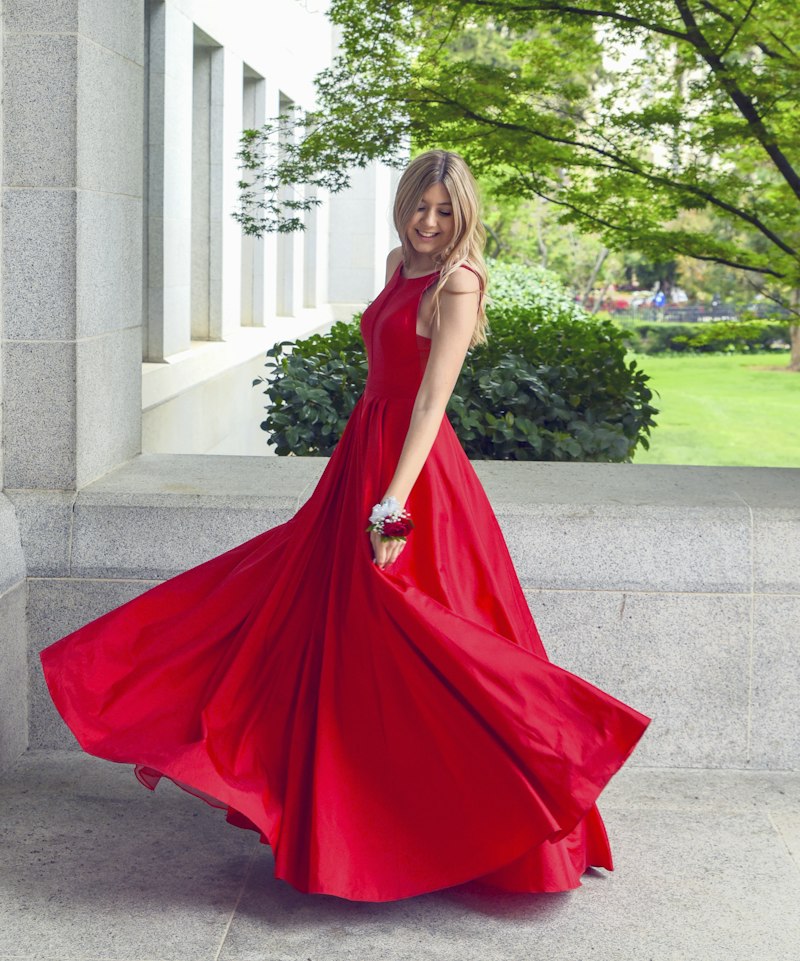
I wasn’t looking for a new dress that afternoon. I was supposed to be buying socks — the most boring shopping mission imaginable. But there it was, hanging on a clearance rack at the back of the store: a soft blush-pink bow strap dress with delicate ties at each shoulder and the kind of fabric that felt like it had been designed specifically for warm June evenings. I picked it up, held it against myself in the smudged mirror of the fitting room corridor, and felt something shift. Not a dramatic, life-changing epiphany — more like the quiet realization that this single piece of clothing understood my body, my calendar, and my mood better than half the items already hanging in my closet. I bought it. I wore it to brunch the next morning. Then to a bookshop. Then to an impromptu garden party. By the end of the month, I had worn this bow strap dress twelve times across seven different settings, and I had stopped reaching for anything else entirely. This is the story of how one dress — one very specific silhouette — rewired my entire approach to getting dressed.
The Exact Moment I Realized This Wasn’t Just Another Summer Dress
There’s a difference between liking a piece of clothing and genuinely depending on it, and the distinction became crystal clear to me on the third wear. I had thrown the bow strap dress into my overnight bag for a weekend trip to my friend’s cabin, not thinking much of it. Saturday morning arrived with that particular golden-hour light that makes everything look like a film still, and I pulled the dress on without a mirror — just slipped it over my head, tied the little bows at the shoulders with two quick loops, and walked into the kitchen where six people were already making coffee. Three separate friends asked where I’d bought it before I’d even poured myself a cup. By the end of the weekend, one of them had ordered her own version online. What struck me wasn’t the compliments — it was the realization that I hadn’t touched any of the other five outfits I’d packed. The bow strap dress had become my default, my safety net, my I-don’t-have-time-to-think-but-I-still-want-to-look-put-together solution. There’s a word the Japanese use — ikigai, meaning a reason for being — and while applying it to clothing might sound absurd, this dress genuinely felt like the wardrobe equivalent. It did exactly what I needed, every single time, without demanding anything in return.
The design itself deceptively simple. Think of a classic sleeveless dress, but instead of fixed straps sewn permanently into the bodice, the shoulder straps are made of fabric strips that tie into small, adjustable bows at the top of each shoulder. This is the defining feature of the bow strap dress, and it’s the reason everything about the fit changes. Unlike a traditional spaghetti strap or thick strap dress where the length from shoulder to bust is predetermined and immutable, the tie construction means the wearer controls exactly where the neckline sits. Tighten the bow for a higher, more modest fit. Loosen it slightly for a relaxed, off-duty look. The adjustability isn’t just a decorative gimmick — it fundamentally changes how the dress interacts with different body proportions. According to a 2024 consumer preferences report by Edited, the retail data analytics firm, adjustable-strap dresses saw a 34% year-over-year increase in positive customer reviews compared to fixed-strap alternatives, with “fit flexibility” cited as the primary driver of satisfaction across all body types surveyed.
Where the Bow Comes From — and Why It Still Works Hundreds of Years Later
The bow as a fashion element didn’t start in a contemporary design studio. It traces back to the courts of 18th-century France, where Marie Antoinette and her circle elevated ribbon bows from functional fasteners to elaborate status symbols. The Metropolitan Museum of Art’s Costume Institute houses several examples of Rococo-era gowns featuring silk ribbon bows at the shoulders, waistlines, and sleeve cuffs — decorations that communicated wealth, leisure, and an almost theatrical commitment to ornamentation. The connection between those powdered, palace-garden bows and the modern bow strap dress isn’t tenuous; it’s a direct lineage of the same fundamental human impulse to frame the face and shoulders with something soft, deliberate, and visually anchoring. What changed between the 1760s and today is scale and accessibility. Where an 18th-century bow required hand-stitched silk ribbons imported from Lyon at extraordinary expense, a 2026 bow strap dress can be manufactured from sustainable cotton blends and sold at accessible price points without sacrificing the aesthetic DNA that makes the bow detail so persistently appealing across centuries of fashion evolution.
Fast-forward to the 20th century, and bows appeared in almost every decade’s defining silhouettes. Christian Dior’s New Look of 1947 frequently incorporated bow details at the waist and neckline, using them to emphasize the exaggerated hourglass proportions that defined post-war femininity. The 1980s saw bows explode into maximalist territory — think of those giant satin hair bows and shoulder-accentuating dress details that defined the decade’s power-dressing aesthetic, popularized by designers like Yves Saint Laurent and Giorgio Armani. The bow strap dress of 2026 represents something different: a deliberate return to softness after nearly a decade of streetwear dominance, minimalist normcore, and the kind of aggressively neutral dressing that Pinterest boards were built on. “The resurgence of bows in contemporary womenswear isn’t nostalgia — it’s a rebellion against the idea that grown women should dress severely,” fashion historian Dr. Valerie Steele noted in a 2025 interview with The Business of Fashion. “When you see a bow on a dress in 2025 or 2026, you’re looking at a deliberate choice to reintroduce softness, playfulness, and what previous generations would have simply called prettiness into everyday dressing.”
What That Little Bow Actually Does for Your Silhouette
I spent years assuming that shoulder details on a dress were purely ornamental — something designers added because it looked nice in a sketch. The bow strap dress proved me wrong within about thirty seconds of wearing one. The bow at the shoulder functions as a visual anchor point, drawing the eye upward and outward across the collarbone and shoulder line. This is a fundamental principle of visual composition that portrait painters have understood for centuries: a focal point near the face frames the head and creates an immediate sense of balance. When the bow is tied neatly and proportionally to the wearer’s frame, it creates a subtle broadening effect at the shoulders that, counterintuitively, makes the waist appear narrower by comparison. It’s the same optical principle that makes a well-cut blazer flattering — the shoulder emphasis creates a V-shaped taper toward the waist — but executed with fabric ribbons instead of structured tailoring. What makes the bow strap dress uniquely effective is that this shoulder emphasis is adjustable in real time. Unlike a sewn-in cap sleeve or a fixed-width tank strap, the bow’s size, tightness, and exact placement can be modified throughout the day, which means the visual effect adapts to posture changes, layering decisions, and even how the fabric relaxes as the dress is worn.
There’s also a textural dimension that’s easy to overlook until you’ve spent actual time in the dress. The bow creates movement — a gentle flutter when you walk, a slight sway when you turn your head, a visible sign of motion that makes static outfits feel alive. “Motion in clothing is one of the most underrated elements of dressing well,” says Alison Lumbatis, founder of the personal styling platform Get Your Pretty On and a stylist who has dressed thousands of women through her online programs. “A static dress photographs fine, but a dress that moves with you — that has elements like a tie, a flutter sleeve, a bow that responds to your body — photographs beautifully and, more importantly, makes you feel beautiful while you’re actually wearing it.” The test I ran myself was simple but revealing: I took a photo in the bow strap dress after standing still for ten seconds, then took another after walking across the room. The difference in energy between the two images was stark. The bow strap dress looked better — genuinely better — in the shot where I had been moving, because the ties at the shoulders had settled into a slightly asymmetrical, more natural position that no stylist could have arranged deliberately on purpose.
How I Actually Style This Dress for Daytime — No Filters, No Overthinking
One of the quiet revelations of living with a bow strap dress is discovering how naturally it slides into existing wardrobes without demanding a supporting cast of new purchases. My first daytime outfit was almost embarrassingly simple: the dress, a pair of woven leather flat sandals I’d owned for three summers, and a canvas tote bag that has seen better days. The combination worked because the bow strap dress did all the heavy lifting — the shoulder ties supplied the visual interest that a plain sleeveless dress would have lacked, and the soft drape of the fabric did the rest. When I added a light denim jacket on a cooler morning, the bows peeked out from under the collar in a way that looked intentional rather than accidental, which is the holy grail of layered dressing. The key, I’ve learned, is to let the bow detail stay visible — don’t bury it under a heavy coat or a chunky scarf that obscures the shoulder line entirely. A cropped cardigan, an open button-down, or a blazer worn loosely over the shoulders all preserve the bow’s visual impact while adding practical warmth for transitional weather.
Footwear flexibility turned out to be another unexpected strength. With white canvas sneakers, the bow strap dress reads effortlessly casual — the kind of thing you’d wear to a farmers’ market or a Sunday morning coffee run without anyone questioning whether you tried too hard or not hard enough. Swap the sneakers for espadrille wedges, and the same dress suddenly works for a lunch meeting or a baby shower. The bow detail acts as a built-in accessory, meaning you genuinely need fewer additional pieces to make the outfit feel complete. I’ve stopped wearing necklaces entirely with this dress because the bows at the shoulders serve the same framing function that a pendant or statement chain would, and adding both feels like visual clutter rather than enhancement. Earrings — especially small hoops or simple studs — are all the jewelry the bow strap dress needs. This accessory reduction isn’t laziness; it’s efficiency, and anyone who has spent twenty minutes swapping necklaces in front of a mirror will understand why that matters.
Taking the Same Dress Into Evening Without Changing a Single Thing
The transition from day to night is where the bow strap dress truly separates itself from every other summer dress I’ve owned. I wore it to a friend’s rooftop birthday dinner last month — the kind of event where the dress code hovers ambiguously between “nice casual” and “actually try” — and the outfit required exactly three changes from my daytime version: I swapped flat sandals for strappy metallic heels, exchanged the canvas tote for a small beaded clutch, and added a single swipe of deeper lip color. That was it. The dress handled the rest. The bow detail, which had read as sweet and approachable during the day, suddenly registered as elegant and deliberate under the warm string lights of the rooftop. This is the visual alchemy of the bow strap dress: the same design element communicates completely different messages depending on the context surrounding it. At 11am with a messy bun and bare legs, the bows say “effortless.” At 8pm with heels and a clutch, those same bows say “intentional.” Very few garments can pull off this dual-identity trick, and most of the ones that can — the classic wrap dress, the well-cut slip — have been celebrated for decades precisely because of it.
One specific evening styling trick I’ve developed after multiple wears deserves mentioning because it’s not obvious from a product photo alone. When I’m dressing the bow strap dress for an evening event, I tie the shoulder bows slightly tighter than I would for daytime, which raises the neckline by about half an inch and creates a crisper, more structured silhouette at the top of the dress. It’s a micro-adjustment that takes three seconds and costs nothing, but it completely changes the posture of the garment — the difference between looking relaxed and looking polished. This kind of real-time adjustability is the entire value proposition of the tie-strap design, and it’s the reason I’ve stopped looking at fixed-strap dresses in stores. Once you’ve experienced the freedom of controlling exactly where your neckline sits on any given day, going back to a dress that makes that decision for you feels strangely restrictive.
Fabric Matters More Than the Bow Itself — Here’s What to Look For
After several months of living with my bow strap dress and helping multiple friends find their own versions, I’ve arrived at a non-negotiable conclusion: the fabric makes or breaks this silhouette. A bow strap dress in stiff, unyielding cotton reads as costume-like — the bows look rigid, the drape feels unnatural, and the entire garment fights against the body instead of moving with it. The sweet spot, I’ve found, lies in fabrics with natural drape and a slight weight: rayon challis, lightweight linen blends, Tencel, and high-quality viscose all perform beautifully. These materials hold the bow’s shape without looking starched, and they create the gentle movement that makes the shoulder detail feel organic rather than tacked-on. According to textile specification data published by Textile Exchange in their 2025 Materials Market Report, lyocell (the generic name for Tencel) has seen a 22% increase in adoption by women’s dress manufacturers over the past three years, driven largely by its combination of drape quality, moisture management, and lower environmental footprint compared to conventional cotton. When you’re shopping for a bow strap dress, the fabric content label deserves at least as much attention as the price tag or the color swatch.
Length is the second variable that determines whether this dress becomes a wardrobe workhorse or a closet orphan. I’ve tested bow strap dresses in mini, midi, and maxi lengths — not through any systematic plan, but because once I loved the first one, I acquired two more — and the midi version outperformed the others by a significant margin for everyday wear. The mini-length bow strap dress skews young and feels most appropriate for beach days and music festivals. The maxi version reads formal and works beautifully for weddings and evening events but feels overdressed for grocery runs and coffee dates. The midi — hitting anywhere from just below the knee to mid-calf, depending on the specific cut — covers the widest spectrum of occasions with the least friction. It’s the Goldilocks length for this particular design, and if you’re only going to own one bow strap dress, the midi is the one to buy. Color-wise, I started with blush pink and later added a navy version. The blush works for spring and summer daylight events; the navy handles evening and transitions into early fall. Together, they cover about eighty percent of my social calendar.
What Nobody Tells You About Wearing a Dress with Ties at the Shoulders
Living with a bow strap dress isn’t all poetry and golden-hour photographs. There are practical realities that no product description mentions, and I wish someone had told me before I learned them the hard way. The first: those bows will come untied, probably at the worst possible moment. I lost a shoulder tie halfway through a dinner party toast last month and had to excuse myself to the bathroom to retie it in front of a mirror. The solution, I’ve since discovered, is absurdly simple — a double knot after the bow is tied keeps everything secure for hours, and the double-knotted bow actually looks more polished than a single one because it sits flatter against the shoulder. The second reality: shoulder bags and bow strap dresses are natural enemies. Crossbody straps rub directly against the bow, causing friction that can loosen the tie and, over time, create visible wear on the fabric. A hand-carried tote or a clutch eliminates this problem entirely, which is part of why my canvas tote and beaded clutch have become such essential members of my bow strap dress styling toolkit.
The third and most surprising lesson concerns laundering. The bows themselves — those little fabric strips that give the dress its entire identity — need more care than the rest of the garment. After washing, I remove the dress from the machine immediately (do not let it sit wet in the drum) and reshape the bows by hand while the fabric is still damp. I tie each bow loosely and let the dress air-dry flat, which preserves the crispness of the ties and prevents the fabric strips from developing permanent creases that make them look sloppy when worn. It takes an extra forty-five seconds of effort compared to throwing a regular dress in the dryer, and it’s the difference between a bow strap dress that looks brand new after twenty wears and one that starts looking tired after five. Is this high-maintenance? Compared to a T-shirt, yes. Compared to the silk blouses, structured blazers, and delicate knits that populate most women’s wardrobes? Not even close. The care required is proportional to the payoff, and the payoff — a dress that makes you feel genuinely good every single time you put it on — is worth forty-five seconds of post-laundry attention.
If you are on the fence about whether a bow dress belongs in your wardrobe, let me be direct: give it one real chance — not a fitting-room glance under fluorescent lights, but an actual day of living in it. Wear it to breakfast. Let the ties settle against your shoulders. Notice how many times someone asks where you got it. The bow strap dress isn’t a trend that will dominate TikTok for three weeks and vanish; it’s a silhouette that has existed in various forms for literal centuries because the underlying design principle — softness at the shoulder, adjustability at the neckline, a detail that frames the face — works independently of whatever aesthetic the algorithm is pushing this month. In a fashion landscape that increasingly feels like it’s screaming for attention, the bow strap dress whispers, and the whisper turns out to be louder than the noise ever was.