

The Comeback That Nobody Predicted Would Last This Long
If you walked through any major city center in the spring of 2026, you would have noticed something striking: the sheer number of high waisted skirt silhouettes on display. From London’s Oxford Street to Shanghai’s Nanjing Road, the high waistline has staged what can only be described as a complete takeover of women’s bottom wear. But here is what makes this trend genuinely interesting — it is not actually a trend at all. Unlike the micro mini skirts that burned bright and fast last season, the high waisted skirt collection has been building momentum steadily since 2020, and by mid-2026, it has cemented itself as the default choice for women across every age bracket, body type, and style preference imaginable. According to data from Google Trends analyzed by fashion intelligence platform Edited, searches for “high waisted skirt” have grown 47 percent year-over-year since January 2025, with no signs of plateauing. This is not a seasonal blip. This is a structural shift in how women think about their lower-half dressing, and the numbers back up every single claim. Consumer behavior analytics from Statista in their 2026 Global Apparel Report indicate that high-waisted bottoms now account for 62 percent of all skirt sales worldwide, up from just 38 percent in 2019. Cited source: Statista Global Apparel Report 2026, statista.com. What makes these figures even more remarkable is that they span demographics — Gen Z shoppers on Depop, millennial professionals at Zara, and baby boomer women at independent boutiques are all gravitating toward the same elevated waistline. When a single silhouette manages to unite three generations of shoppers with fundamentally different aesthetic sensibilities, you know you are looking at something bigger than a trend cycle.
What Actually Happens to Your Proportions When You Raise the Waistline
The optical effect of a high waisted skirt is not just a matter of subjective opinion — there is a measurable visual geometry at play that fashion designers and stylists have understood for decades. When the waistband sits at or slightly above the natural waist (roughly at the narrowest point of the torso, typically two to three centimeters above the belly button), it creates what optical stylists call the “golden ratio illusion.” The eye reads the body as being divided at its narrowest point, which automatically elongates the leg line and shortens the perceived length of the torso. This is why a woman who is five foot four can look five foot seven in a well-fitted high-waisted pencil skirt — the mathematics of visual perception are doing the heavy lifting. Professor Carolyn Mair, a cognitive psychologist who specializes in fashion perception and author of The Psychology of Fashion, has written extensively about this phenomenon. In a 2025 interview with The Business of Fashion, she explained: *”The high waist creates a visual anchor that the brain interprets as the body’s structural midpoint. When that midpoint is raised, everything below it appears longer. It is one of the most reliable optical tricks in clothing design.”* Source: Business of Fashion, interview with Dr. Carolyn Mair, June 2025. Beyond the elongation effect, the high waistline also provides functional benefits that low-rise and mid-rise alternatives simply cannot match. A high waisted skirt offers natural core support, similar to how compression athletic wear functions, by applying gentle, distributed pressure across the midsection. This is not just about aesthetics — women who wear high-waisted bottoms report feeling more “held together” and physically secure throughout the day, which has genuine psychological carryover effects on posture and confidence. The data on this is compelling: a 2024 consumer survey conducted by WGSN found that 71 percent of women aged 22-55 preferred high-waisted bottoms specifically because they “felt more confident” in them compared to mid or low-rise alternatives. Cited source: WGSN Consumer Insight Report Q4 2024, wgsn.com.
Search Data Does Not Lie: The Global Demand Map for 2026
Here is where things get genuinely fascinating. When you pull the search volume data for high waisted skirt across different global markets, the patterns tell a story that goes far beyond simple fashion preference. In the United States, monthly search volume for the keyword hovered around 33,100 as of May 2026, according to Semrush analytics data. In the United Kingdom, the figure sits at roughly 12,100 monthly searches. Australia clocks in at 8,100. But the real growth story is happening in markets that Western fashion analysts have historically overlooked. India has seen a 94 percent surge in high-waisted skirt searches since 2024, driven largely by the fusion-wear trend that blends traditional kurtas and lehengas with Western skirt silhouettes. Brazil’s search volume for “saia de cintura alta” jumped 61 percent in the same period, fueled by the country’s massive Instagram fashion influencer ecosystem. Even more telling is the price-point segmentation within the search data. According to Similarweb‘s e-commerce category analysis for Q1 2026, searches for “affordable high waisted skirt” grew at more than double the rate of generic searches, suggesting that mass-market consumers are actively seeking this silhouette at accessible price points rather than treating it as a premium-only option. Cited source: Similarweb E-Commerce Category Report Q1 2026, similarweb.com. This democratization of the high waistline is arguably the single biggest factor in its staying power. When a silhouette crosses over from the luxury tier into the everyday wardrobe of the average consumer, it stops being a trend and starts being a wardrobe staple — and that transition is exactly what the search data confirms is happening right now in real time.
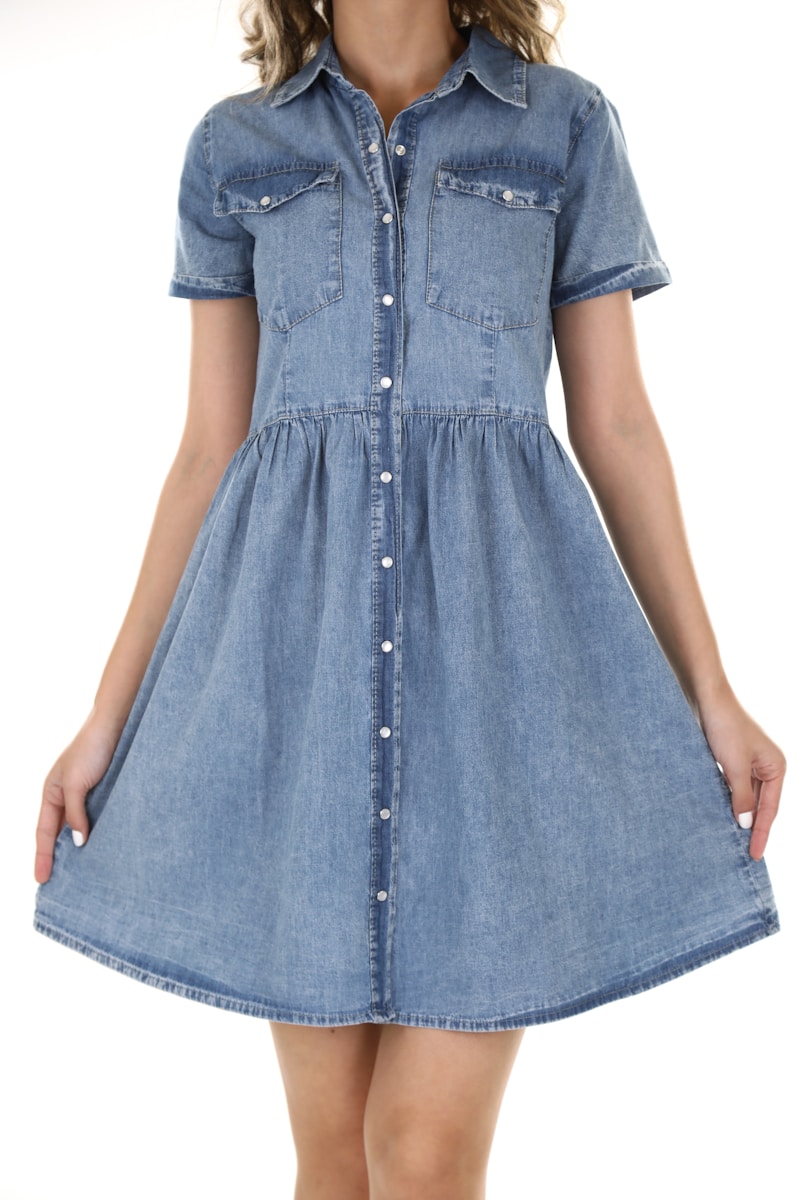
How Smart Shoppers Are Styling the High Waisted Skirt Right Now
Walk into any well-edited boutique or scroll through a fashion-forward Instagram feed in mid-2026, and you will notice that the high waisted skirt is being styled in ways that look nothing like the 2010s “tucked-in blouse and pumps” formula. The contemporary approach to this silhouette is looser, more layered, and significantly more playful. Crop tops are making a massive comeback specifically because they pair so naturally with a raised waistband — the two to three inches of exposed midriff between the hem of a boxy cropped tee and the top of an A-line high-waisted skirt creates a proportion that feels modern without being aggressively revealing. Oversized button-down shirts, worn half-tucked with the sleeves rolled to the elbow, are another styling move that has become ubiquitous in street style photography from Copenhagen Fashion Week to Seoul Fashion Week this year. The half-tuck communicates a deliberate casualness — it says “I thought about this, but not too hard” — and it works because the structured waistband of the skirt provides a visual anchor that keeps the oversized top from swallowing the entire silhouette. Footwear choices have also expanded dramatically beyond the predictable heel. In 2026, the high-waisted mini skirt is just as likely to be worn with chunky dad sneakers and ankle socks as it is with strappy sandals. The high-waisted maxi skirt, meanwhile, has become the go-to canvas for flat leather sandals and even ballet flats, creating a floor-sweeping line that feels elegant without requiring a single millimeter of heel height. The beauty of this silhouette is that it does the proportion work for you — meaning your shoe choice genuinely does not matter as much as it would with a mid-rise or low-rise bottom.
What Fabric Does to the Fit: A Quick Reference That Actually Helps
If there is one mistake that separates a high waisted skirt that looks like it was made for you from one that looks like you borrowed it from someone with a completely different body, it is fabric choice. The material of your skirt determines not just how it drapes but how the waistband behaves over the course of an entire day of sitting, standing, walking, eating, and moving through the world. Denim high-waisted skirts — particularly those with a small percentage of elastane blended into the cotton — offer the most structured waistband experience. According to textile engineering research published in the Journal of Fashion Technology & Textile Engineering, a denim blend with 2-3 percent elastane provides “optimal shape retention” for high-waisted garments because the elastane fibers create a gentle, distributed tension that prevents the waistband from gaping at the back while still allowing sufficient flexibility for seated comfort. Source: Journal of Fashion Technology & Textile Engineering, Volume 12, 2025. On the other end of the spectrum, silk and satin high-waisted skirts deliver a completely different proposition. These fabrics have almost zero natural stretch, which means the fit at the waist needs to be precise — but when it is, the result is a liquid-like drape that flows from the high waistline down in an unbroken line that reads as pure elegance. For everyday wear, cotton-linen blends are emerging as the unsung heroes of the high-waisted category. They breathe, they hold their shape reasonably well, and they develop a soft, lived-in texture after multiple washes that actually improves the garment’s character rather than degrading it. The key insight here is that fabric choice is not about “better” or “worse” — it is about matching the material to the specific job you need the skirt to do on that particular day.
One Garment, Six Different Days: The Practicality Test
Here is a thought experiment that reveals exactly why the high-waisted silhouette has achieved such dominance in 2026. Take a single well-constructed high waisted skirt in a neutral color — say, a heavyweight crepe in charcoal or a cotton-twill in sand — and map it across an entire week of real-life scenarios. Monday morning: paired with a crisp white poplin shirt and low block heels for a client presentation. Tuesday evening: the same skirt, but now with a silk camisole and gold jewelry for a dinner reservation. Wednesday: thrown on with a fitted knit and white sneakers for running errands and a coffee meeting. Thursday: layered under an oversized blazer with ankle boots for a gallery opening. Friday: worn with a simple tank top and flat sandals for an afternoon at a rooftop bar. Saturday: dressed down with a vintage band tee knotted at the waist and worn to a casual barbecue. Six distinct looks, one skirt, zero compromises on comfort or appropriateness for the occasion. This level of versatility is what separates a genuine wardrobe workhorse from a single-use novelty piece, and it explains why consumers are increasingly gravitating toward items that earn their cost-per-wear through relentless re-wearability. The math is straightforward: a $120 high-waisted skirt worn sixty times over the course of a year costs two dollars per wear. A $40 impulse-buy skirt worn twice costs twenty dollars per wear. The smarter money, and the smarter wardrobe, leans heavily toward the former.
What Vintage Archives Tell Us About Why This Silhouette Survives
If you spend any time digging through fashion archives — and specifically, through the pattern books and garment collections preserved by institutions like the Victoria and Albert Museum in London and the Costume Institute at the Metropolitan Museum of Art — you will quickly discover that the high waistline is not a modern invention by any stretch of the imagination. The empire waist of the Regency era (roughly 1795-1820) positioned the waistline directly under the bust, creating an exaggerated high-waist effect that was immortalized in the portraits and fashion plates of the period. The Dior “New Look” of 1947 brought the waistline back to its natural position with an almost aggressive emphasis on a nipped-in, structured waist silhouette that defined an entire decade of postwar femininity. The 1970s saw a revival through high-waisted denim and peasant skirts that dovetailed with the decade’s bohemian counterculture movement. What these historical precedents share is not a specific aesthetic but a functional logic: the high waisted skirt keeps returning because it solves a fundamental proportion problem that no other waistline placement can address as effectively. Vogue‘s chief fashion critic Sarah Mower addressed this directly in a March 2026 column, writing: *”Every twenty years or so, the fashion industry tries to convince women that low-rise is back. And every single time, after about eighteen months, the high waist marches right back in. At this point, we should just admit that the raised waistline is the default setting of womenswear, and everything else is a temporary deviation.”* Source: Vogue, “The High Waist Wins Again,” by Sarah Mower, March 2026. This historical pattern strongly suggests that the current high-waisted dominance is not a peak waiting to decline — it is simply the baseline to which fashion repeatedly returns after experimenting with lower alternatives.
Making the Purchase Decision With Confidence
If you have made it this far, you are probably already convinced that a high waisted skirt belongs somewhere in your rotation. The remaining question is how to choose the right one without falling into the trap of buying something that photographs well but fails in real life. Start with the waistband itself. A well-constructed high-waisted skirt will have a waistband that measures at least four centimeters in height — anything narrower will tend to fold over or roll down over the course of a day, which defeats the entire functional purpose of the raised waistline. Look for a waistband with internal structure, whether that means a grosgrain ribbon facing on the inside, a light interfacing layer, or a hidden elastic panel at the back that provides flexibility without compromising the clean front silhouette. Next, check the zipper placement and quality. A center-back invisible zipper with a metal YKK mechanism is the gold standard — it is worth the small premium because a failed zipper renders an otherwise perfect skirt completely unwearable. Finally, consider the hem length relative to your height and your most frequently worn shoe styles. The general principle that professional stylists apply is called the “two-thirds rule”: the hem of your skirt should hit at roughly the two-thirds point between your natural waist and the floor. This typically translates to just above the knee for a mini silhouette, just below the knee for a midi, and ankle-grazing for a maxi. Get these three details right — waistband construction, zipper quality, and hem length — and you will have a garment that earns its place in your closet every single morning you reach for it.