

The White Skirt: Why Fashion’s Most Underrated Power Piece Belongs in Your Closet
There’s something almost alchemical about pulling on a white skirt. The moment that fabric settles around your waist, the entire energy of an outfit shifts — brighter, sharper, more intentional. You might think you know what a white skirt can do for your wardrobe, but honestly, most women are only tapping into about ten percent of its potential. This isn’t just a summer staple you pull out when the temperature hits 80 degrees and you need something breezy for brunch. A white skirt is a chameleon, a confidence amplifier, and — I’d argue — one of the smartest investments you can make in building a wardrobe that actually works across seasons, occasions, and moods. The fashion world spends so much time obsessing over the little black dress that it’s almost forgotten to talk about the little white skirt sitting right next to it, quietly doing more heavy lifting than any single piece deserves credit for. From the runways of Paris to the sidewalks of Brooklyn, from beachside weddings to corner-office meetings, the white skirt has been silently proving its versatility for decades. The question isn’t whether you need one — it’s which version you’ll reach for first.

From Status Symbol to Street Style: The Surprising History of White Skirts
Here’s something most fashion histories gloss over: for most of human civilization, wearing white wasn’t an aesthetic choice — it was a flex. Before industrial dyeing processes democratized color in the mid-19th century, keeping fabric white required constant maintenance that only the wealthy could afford. A woman in a pristine white skirt wasn’t just fashionable; she was broadcasting that she didn’t need to do physical labor, that she had servants to handle her laundry, that she could afford to replace garments the moment they showed any wear. According to fashion historians at the Victoria and Albert Museum, white clothing in 18th-century Europe was so closely associated with aristocracy that sumptuary laws in several countries actually regulated who could wear pure white fabrics in public — a fascinating detail that reframes the white skirt as a historical symbol of social status rather than a mere fashion preference (V&A Fashion Collections, “The Social Meaning of White in Western Dress”). Fast forward to the 1920s, and the white skirt underwent its first major democratization. Coco Chanel, that relentless disruptor of fashion hierarchies, began incorporating white sportswear-inspired skirts into her collections, deliberately stripping away the elitist connotations and repositioning white as a color of modernity and freedom. By the 1960s, the white miniskirt had become a symbol of youth rebellion — think of Twiggy in London, all long legs and white A-line minis, turning a color once reserved for debutante balls into a uniform for the counterculture. The Metropolitan Museum of Art’s Costume Institute notes that white garments in the post-war period represented a conscious break from the somber, rationed aesthetic of the 1940s — a deliberate embrace of optimism and new beginnings (The Met, “White: A History of a Color in Fashion”). What’s remarkable isn’t just that the white skirt survived all these cultural shifts, but that it managed to absorb new meanings with each era without losing its essential appeal.
Why a White Skirt Flatters Literally Everyone Who Wears One
Let’s get practical for a minute, because there’s a persistent myth I need to dismantle: the idea that white skirts are somehow unforgiving or only suitable for certain body types. That’s nonsense, and the data backs it up. When you look at fabric physics — how light interacts with different textile weaves, how silhouette choices affect visual proportion — white actually has some unique optical properties that work in your favor. Lighter colors reflect more light, which means a white skirt naturally draws the eye downward and creates a sense of verticality that can make anyone look taller and more elongated. This isn’t just my opinion; it’s basic color theory that fashion designers have been exploiting for generations. The key, of course, is choosing the right silhouette for your specific body geometry. An A-line white skirt — cut to flare gently from the waist — works brilliantly on pear-shaped figures because it skims over the hips without clinging. A pencil white skirt, meanwhile, creates a continuous vertical line that’s stunning on hourglass and athletic builds alike. For petite frames, a white mini skirt avoids cutting the leg line, which can be an issue with midi lengths on shorter women. And here’s something nobody talks about: white skirts are actually easier to style than printed ones because they function as a neutral canvas. That floral top you never wear because you can’t find the right bottom? Throw it on with a white skirt and suddenly the whole outfit makes sense. That statement blazer in lime green that’s been hanging in your closet with the tags still on? A white skirt grounds it instantly. This is what fashion editors at Elle Magazine have been saying for years — white operates as a palette cleanser in outfit composition, making it arguably more versatile than black, which can sometimes feel heavy or overly formal depending on the context (Elle, “Why White Is Actually the Most Wearable Color”, 2025).
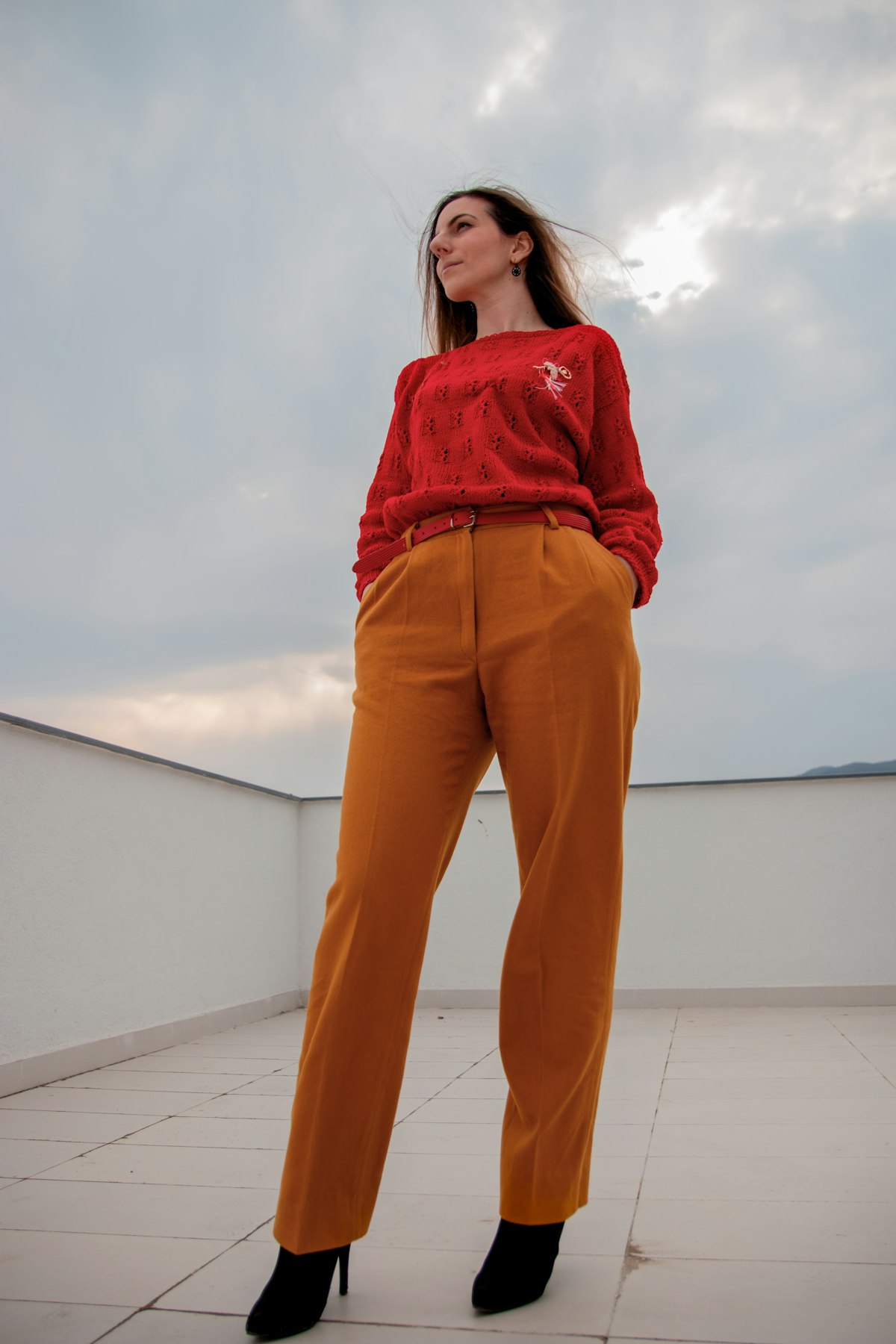
The Fabric Game: How Material Choice Completely Transforms a White Skirt
If you’ve ever tried on two white skirts that looked identical on the hanger and wondered why one felt magical while the other felt meh, the answer is almost always fabric. Material isn’t just about comfort — it fundamentally alters how a white skirt moves, drapes, photographs, and communicates. Let me break this down because it’s the kind of knowledge that separates women who buy clothes from women who build wardrobes. A white cotton poplin skirt is your summer workhorse: crisp, breathable, holding its shape with almost military precision. It’s the skirt you wear to outdoor weddings, farmers’ markets, and casual Fridays when you want to look put-together without looking like you tried. But swap that cotton for a white silk charmeuse skirt and suddenly you’re in entirely different territory — the fabric catches light like liquid, moving with a fluidity that reads as luxurious and sensual. This is the skirt for date nights, gallery openings, and any occasion where you want to feel a little dangerous. Then there’s white linen: polarizing, yes, because it wrinkles if you so much as look at it the wrong way, but irreplaceable for that specific Mediterranean-resort aesthetic that no other fabric can replicate. The wrinkles aren’t a bug — they’re a feature that signals leisure and authenticity. A white denim skirt sits at the intersection of casual and structured, offering the familiar comfort of jeans with a silhouette that’s infinitely more intentional. And we haven’t even talked about white lace, white eyelet, white broderie anglaise — fabrics that bring texture and dimension to what would otherwise be a flat white surface. Each of these materials tells a different story. A woman in a white leather skirt is communicating something fundamentally different from a woman in a white chiffon maxi, even though they’re both technically wearing “a white skirt.” Understanding this distinction — and building your collection accordingly — is what elevates dressing from functional to expressive.
Seasonal Styling: Making Your White Skirt Work 365 Days a Year
The “no white after Labor Day” rule is so thoroughly dead that mentioning it feels almost quaint, but the hangover from that particular piece of fashion mythology still lingers in how many women approach white skirts. Here’s the reality: a white skirt is a four-season garment if you know how to style it. Summer is the obvious starting point — a white maxi skirt paired with a simple tank and flat sandals is basically the official uniform of warm-weather ease. But the real magic happens when you start pushing into the other three seasons. For fall, layer a chunky oatmeal-colored knit sweater over a white midi skirt and add ankle boots — the contrast between heavy knit texture and light, flowing fabric creates a visual tension that’s incredibly sophisticated. Throw on a camel coat and you’ve got an outfit that would look right at home in a Parisian street style gallery. Winter is where most women abandon white entirely, and that’s exactly where the opportunity lies. A white wool-blend pencil skirt worn with opaque black tights, knee-high boots, and a fitted black turtleneck is one of the sharpest cold-weather looks you can assemble — it’s the kind of outfit that makes people think you have your life together even if you absolutely don’t. The snow-on-snow effect of white against a gray winter cityscape is unexpectedly striking, a deliberate contrast to the sea of black and navy that dominates cold-weather dressing. Spring might be the most natural fit for a white skirt — it mirrors the season’s themes of renewal and freshness — but it’s also where you can experiment most freely. Try a white denim mini skirt with a pastel blazer and white sneakers for an updated take on preppy style, or go full romantic with a white lace skirt and a silk camisole. The point is that a white skirt isn’t seasonal — it’s foundational. Build your outfits around it the way you’d build them around a great pair of jeans, and you’ll be shocked at how many new combinations emerge.
Celebrity White Skirt Moments That Changed Fashion
Pop culture has given us some indelible white skirt moments, and looking back at them reveals just how powerful this single garment can be when deployed at the right moment. The most iconic might be Carolyn Bessette-Kennedy‘s white skirt suits in the late 1990s — so minimal, so impossibly chic, so thoroughly copied that they essentially defined an entire aesthetic era. Her approach to the white skirt wasn’t about standing out; it was about standing apart, a quiet confidence that communicated status without needing to announce it. More recently, Zendaya has been making a compelling case for the white skirt as a red carpet disruptor — her Valentino white skirt ensemble at the 2024 Met Gala wasn’t just beautiful; it was a strategic choice that cut through the visual noise of more colorful, elaborate gowns with surgical precision. On the street style side, Hailey Bieber‘s ongoing love affair with white mini skirts — often paired with oversized leather jackets and chunky sneakers — has been driving search traffic and fast-fashion production cycles for going on three years now. According to Google Trends data, searches for “white mini skirt outfit” spike predictably every time Bieber is photographed in a new iteration of the look, a phenomenon that fashion data analysts at Lyst have dubbed the “Bieber Effect” (Lyst Insights, “The Celebrity Influence Index 2025”). Meanwhile, Meghan Markle‘s white pleated midi skirt — worn during the 2023 Invictus Games events — generated so much interest that several retailers sold out of similar styles within 48 hours. These celebrity moments aren’t random; they signal something about where the white skirt sits in the cultural imagination right now — not as a background player, but as a deliberate choice that conveys taste, awareness, and a certain fearlessness about wearing something that demands attention without demanding maintenance.
Practical White Skirt Care That Actually Works
Let’s address the elephant in the room: white skirts get dirty. They show coffee spills, grass stains, and that mysterious gray tinge that appears after a few washes even when you’ve done nothing wrong. But here’s what nobody tells you — caring for a white skirt isn’t nearly as difficult as the anxiety around it suggests. The single most important thing you can do is separate your whites from literally everything else in the laundry. Not just darks — everything. That pale gray T-shirt you think is fine? It’s slowly leaching dye into your wash water, and your white skirt is absorbing every molecule of it. Use a detergent specifically formulated for whites — these contain optical brighteners that counteract the natural yellowing that occurs as fabric ages. For spot treatments, hydrogen peroxide is your friend, but only on natural fibers; for synthetics, stick to oxygen-based bleach rather than chlorine, which can weaken synthetic fibers and create a yellow cast on polyester blends. If you’re dealing with a white silk or wool skirt, just take it to a dry cleaner — the at-home remedies almost always end badly with protein-based fibers, and the cleaning cost is trivial compared to replacing the garment. The other essential habit is treating stains immediately. Carry a stain-removing pen in your bag. If you spill red wine on a white cotton skirt and treat it within five minutes, you have about a 95% chance of complete removal. Wait until you get home four hours later, and that drops below 30%. This isn’t Fashion Miss opinion — it’s textile chemistry. Consumer Reports testing consistently shows that time-to-treatment is the single biggest variable in stain removal success rates, more important than the specific product or technique used (Consumer Reports, “Stain Removal Guide”, 2025). Sun-drying white garments is another underrated strategy — UV light has a natural bleaching effect that keeps whites bright without any chemical intervention at all. Hang your white skirt in direct sunlight after washing and you’re getting centuries-old laundry wisdom absolutely free.
Building Outfits Around Your White Skirt: A Practical Framework
Instead of giving you a list of outfits to copy — which is helpful for about five minutes and then completely useless when you’re standing in front of your actual closet with your actual clothes — let me offer a framework. Framework-based dressing is what stylists use, and it’s infinitely more useful than recipe-style outfit formulas. The foundation: your white skirt is the anchor. Everything else orbits around it. The first decision is contrast level — do you want high contrast (a black top with a white skirt, creating a strong graphic statement) or low contrast (cream, beige, or pastel tones that blend softly, creating an ethereal monochrome effect)? High contrast reads as modern, architectural, deliberate. Low contrast reads as romantic, bohemian, effortless. Both are valid; the choice depends on the message you want to send that day. The second decision is texture pairing. A smooth white cotton skirt calls for something with visual weight on top — maybe a chunky knit, a textured tweed jacket, or a top with ruffles or volume. Conversely, a heavily textured white skirt (lace, eyelet, pleated) pairs best with simple, clean-lined tops that let the skirt do the talking. The third decision is shoe strategy. Heels with a white skirt create a leggy, polished silhouette that works for evening and formal settings. Flat sandals or white sneakers keep things grounded and casual. Ankle boots add edge and seasonality. The shoe you choose essentially programs the entire outfit’s vibe, so start there if you’re unsure. The fourth and final variable is accessories — and with a white skirt, you have unusually wide latitude. Metallics pop against white in a way they don’t against darker colors. A gold chain belt over a white midi skirt? Absolutely. Silver hoop earrings with a white mini? Perfect. Colorful bags read as intentional statements rather than distractions. The white skirt is doing all the heavy lifting; your accessories just need to stay out of the way and let it work.
So here’s the thing about white skirts that took me years to fully understand: they’re not precious. They’re not intimidating. They’re not reserved for special occasions or perfect weather or women with walk-in closets and personal stylists. A white skirt is just a skirt — a really, really good one that happens to go with everything you already own. The women you see on Instagram looking impossibly chic in white aren’t doing anything you can’t do. They’ve just stopped overthinking it. They treat their white skirt the way they’d treat their favorite jeans — as a starting point, a foundation, a piece that earns its place in the rotation through sheer versatility rather than novelty. If you take nothing else from this, take this: stop waiting for the perfect moment to wear white. The perfect moment is Tuesday. It’s a coffee run. It’s a work meeting where you want to feel a little more pulled-together than usual. The white skirt doesn’t need a red carpet. It just needs you to put it on and walk out the door.