

A Silhouette That Moves With You
I remember the first time I actually paid attention to a flared skirt. I was standing in front of my mirror, holding a plain black A-line I had owned for years, wondering why I kept reaching for the same pair of jeans instead. That skirt sat in my closet unworn for months, and I could not quite articulate why. Then a friend showed up to brunch wearing this incredible burgundy number that swung with every step she took. It had movement. It had drama. It had this uncanny ability to make her look like she had put effort into her outfit when she confessed she threw it on in three minutes. That was my first real encounter with the power of a well-made flared skirt, and it completely shifted how I think about getting dressed. What I have come to understand over the past year of wearing and experimenting with various silhouettes is that a flared skirt occupies a rare intersection in fashion — it is simultaneously structured and free, polished and playful. Unlike a pencil skirt, which demands a certain posture and often restricts movement, or a mini skirt, which requires constant awareness of hem placement, a flared skirt offers genuine freedom of motion without sacrificing an ounce of elegance. The Vogue archive notes that flared silhouettes first gained widespread popularity in the 1950s when Christian Dior’s “New Look” introduced wider hemlines that allowed women to move with newfound grace (Vogue: The Evolution of the Flared Silhouette). That historical context matters because it tells us that this silhouette was never just about aesthetics — it was about liberation through design. The technical brilliance of a flared skirt lies in its geometry: the skirt is cut wider at the hem than at the waist, creating a triangular silhouette that naturally balances the proportions of the body. According to fabric engineers at the Textile Research Journal, the way a flared skirt moves depends heavily on the grain line of the fabric and the bias cut, which allows the material to stretch and recover naturally as the wearer walks (Textile Research Journal: Fabric Drape and Movement Analysis). This is not just fashion theory — this is physics applied to clothing, and it explains why some flared skirts make you feel like you are gliding while others just feel like a stiff cone around your legs.
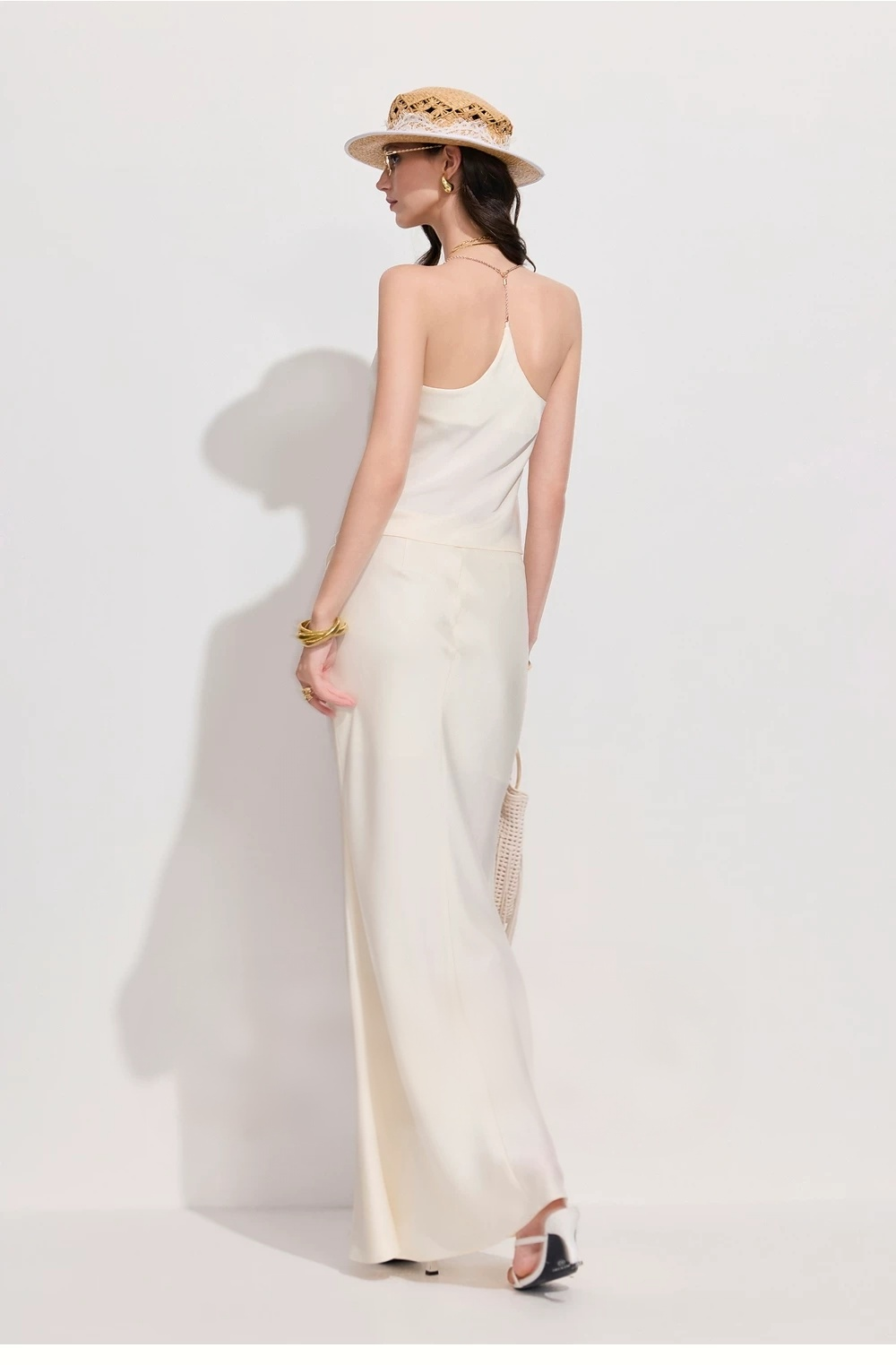
Why Every Body Type Benefits From the Flare
Here is the thing that took me years to fully appreciate: a flared skirt does not discriminate. I have watched my petite friend wear a knee-length flared skirt and look taller because the continuous vertical line created by the flare elongates her frame. I have seen my curvier friend wear a high-waisted flared maxi and look perfectly balanced because the width at the hem counterbalances her hips without adding bulk. I have worn both oversized and fitted versions myself, and I can tell you with complete confidence that the flared silhouette is the most universally flattering shape in fashion. The reason is simple geometry — the flare creates a visual triangle that draws the eye downward, creating length and proportion regardless of your natural shape. The fashion historian Valerie Steele, director of the Museum at the Fashion Institute of Technology, has written extensively about how the flared silhouette became a democratic force in women’s fashion. In her book Fifty Years of Fashion: New Look to Now, Steele argues that the post-war adoption of wider skirts was not merely a stylistic choice but a social one — it allowed women of all body types to participate in high fashion in ways that previous restrictive silhouettes had prevented. When you wear a flared skirt, you are participating in that legacy, choosing a silhouette designed to accommodate, celebrate, and liberate rather than constrain. A well-fitted flared skirt should sit comfortably at your natural waist — the narrowest part of your torso — with the fabric skimming over your hips without gripping them, then beginning its outward journey around your upper thigh. The flare should be gradual, not abrupt. If the skirt jumps out suddenly from the hip, it can create a boxy appearance. If it flares too low, you lose the shaping effect. The ideal flared skirt flares from the upper thigh region, creating a smooth, continuous A-line that flatters from every angle, which is why trying on multiple brands matters — every designer cuts their flare slightly differently, and the one that works for your specific proportions is worth searching for.
How I Style My Flared Skirts Across Seasons
When I first started collecting flared skirts, I made the classic mistake of treating them like special-occasion pieces — too dramatic for grocery runs, too polished for work-from-home days, too heavy for summer and too light for winter. I could not have been more wrong. Over the past twelve months, I have worn my collection of flared skirts in every conceivable setting, and here is what I have learned about making them work year-round. For summer, a cotton or linen flared skirt paired with a simple tank top and sandals is the most effortlessly chic outfit I own. The movement of the skirt creates its own breeze, which genuinely helps on humid days — I have tested this on 35-degree Celsius afternoons in Shanghai, and the airflow difference between a flared skirt and a fitted dress is measurable. For autumn, I layer a lightweight turtleneck under a sleeveless flared dress or tuck a fine-knit sweater into a midi flared skirt. The contrast between the fitted top and the voluminous bottom is what makes this silhouette so photogenic — fashion bloggers on Instagram frequently tag this combination as the “inverted triangle” trick, and it consistently generates engagement because it works on everyone. In winter, I wear flared maxi skirts with thick wool tights, ankle boots, and an oversized coat; the volume of the skirt contrasts beautifully with the structured coat, and the added layer of tights allows me to wear flared skirts even when temperatures drop below freezing. Spring is arguably the best season for a flared skirt — the transition from winter layers to lighter fabrics makes the movement of a flared silhouette feel particularly joyful. I gravitate toward pastel colors and solid flared skirts in cream, blush, or mint green because they generate the most compliments while reading simultaneously as intentional and effortless. For footwear, I have tested everything from white sneakers to stiletto heels with my flared skirts, and the universal winner is a low block heel or a sleek flat. The flare of the skirt creates enough visual weight below the waist that a chunky shoe can feel heavy while a very thin heel can feel disconnected — a block heel provides the perfect visual anchor.
Fabrics That Make or Break the Silhouette
Not all flared skirts are created equal, and the fabric choice matters enormously. I learned this the hard way after buying a beautiful-looking polyester flared skirt online that arrived looking like a stiff lampshade — the fabric had no drape, no movement, and no forgiveness. That experience taught me to pay attention to fabric composition before falling in love with a photo. The best fabrics for a flared skirt are those with natural weight and fluidity: cotton poplin, linen, viscose, Tencel, wool crepe, and silk. These materials have enough body to hold the flare shape but enough softness to move naturally with your body. Cotton poplin is my top recommendation for everyday flared skirts because it holds its shape well, breathes beautifully, and softens with each wash without losing its structure. Linen is ideal for summer — lightweight, breathable, and develops a beautiful relaxed texture over time; the trade-off is that it wrinkles easily, but I have come to see those wrinkles as part of the charm, as a slightly rumpled linen flared skirt reads as relaxed rather than sloppy. Wool crepe is the winter champion with enough weight to drape elegantly, enough warmth to be practical, and a subtle texture that catches light flatteringly. Silk and satin flared skirts are special-occasion pieces that photograph beautifully but require careful handling — they tend to cling to static and show every line underneath, so I reserve them for evenings when I know I will be mostly standing and sitting. One fabric I avoid for flared skirts is stiff denim with no stretch; while denim flared skirts exist and some are well-made, the rigidity of thick denim works against the natural movement that makes a flared silhouette appealing. I also avoid heavy brocade or jacquard fabrics unless the skirt is very short, since the weight of these fabrics can pull the flare downward and create an unflattering drag effect. The golden rule I have developed after trying dozens of flared skirts is this: hold the fabric up by one corner before buying — if it drapes naturally and swings when you move it, it will make a good flared skirt; if it holds its shape like a piece of cardboard, put it back.
The Unexpected Versatility of the Flared Mini
When I talk about flared skirts, people usually picture a midi or maxi length, but the flared mini skirt deserves its own spotlight. A flared mini combines the playful energy of a short hemline with the forgiving shape of a flared silhouette, creating a piece that is both flirty and functional. I bought my first flared mini almost on a whim — a navy blue number in a stretch cotton blend — and it quickly became my most-worn going-out piece. Unlike a straight mini skirt, which can feel restrictive and requires constant adjustment, a flared mini allows you to sit, bend, and dance without thinking about it. The flare provides enough fabric coverage that you do not feel exposed, while the short length keeps the overall look youthful and energetic. Styling a flared skirt in mini length requires a slightly different approach than its longer counterparts. Because the mini silhouette reads as casual and playful, pairing it with overly serious pieces can create a visual contradiction. I avoid stiff blazers or formal blouses with my flared minis, reaching instead for casual knits, simple t-shirts, cropped sweaters, or even sports jackets. The combination of a flared mini with an oversized sweatshirt and sneakers is one of those rare outfits that looks both intentional and completely comfortable — I wear this exact combination to coffee shops, casual dinners, and even short flights, and it consistently makes me feel put-together without feeling overdressed. The flared mini also works surprisingly well for semi-formal occasions when made in a dressier fabric like velvet or silk; paired with a silk camisole and heeled mules, a velvet flared mini transitions seamlessly from casual to cocktail. One thing I want to emphasize about the flared mini is that length matters more than you think. I have tried flared minis at 14 inches, 16 inches, and 18 inches, and the difference is dramatic. A 14-inch flared mini sits quite high and reads as going-out wear. An 18-inch flared mini grazes just above the knee and feels more like a day piece. The sweet spot for most women is around 16 inches — short enough to feel flirty, long enough to feel secure. A 16-inch skirt on someone who is 5 feet 2 inches will wear very differently than on someone who is 5 feet 8 inches, so checking detailed measurements is non-negotiable when shopping for your perfect flared skirt.
Why the Flared Skirt Deserves Space in Your Closet
After a full year of wearing flared skirts in various lengths, fabrics, and settings, I have arrived at a conclusion that surprised even me: the flared skirt is not a trend piece or a special-occasion garment — it is a wardrobe workhorse that deserves the same foundational status as a great pair of jeans or a classic blazer. What makes it special is not its trendiness but its adaptability. A well-chosen flared skirt can be dressed up with heels and silk or dressed down with sneakers and cotton. It can be worn to the office, to dinner, to the airport, to a wedding, or to a weekend market. It flatters every body type, suits every season, and makes the person wearing it feel more confident. That combination of attributes is rare in fashion, and it deserves recognition. I have stopped thinking of my flared skirts as occasional pieces — they are now the foundation of my weekly rotation. On any given week, I wear a flared skirt at least three or four times, sometimes as the focal point of my outfit, sometimes as a comfortable alternative to trousers when I want to feel polished without feeling constrained. The flared silhouette has taught me something important about personal style: that the best clothes are not the ones that make you look like someone else, but the ones that let you move through your day with ease and confidence. A flared skirt does exactly that. It moves when you move, breathes when you breathe, and steps aside to let you be the center of attention rather than competing for it. If you have never tried a flared skirt, or if you own one that sits unworn in your closet, I encourage you to give this silhouette a proper chance. Find one in a fabric that feels good against your skin, in a length that suits your lifestyle, in a color that makes you smile when you see it, and pay attention to how it makes you feel. I suspect you will discover what I discovered — that the flared skirt is not just another piece of clothing but a reminder that fashion can be both beautiful and freeing, and that sometimes the most impactful changes in your wardrobe come not from following trends but from understanding the timeless geometry of a silhouette designed to let you move.