

Ask a room full of women to name the piece that makes them feel best, and the answer is rarely the most expensive item they own. More often it is the one that does the quiet structural work of evening out proportions, drawing the eye upward, and moving with the body instead of fighting it. For a surprising number of them, that piece is a circle skirt. Cut from a full circular piece of fabric, gathered or fitted at the waist and left to fall in an even, uninterrupted ring of folds, it is one of the oldest and simplest shapes in dressmaking — and also one of the few that genuinely suits almost everyone who tries it. Unlike a pencil skirt, which demands a specific relationship between hip and hem, or a bodycon piece, which leaves no room for error, the circle skirt forgives. It skims rather than clings, it creates a waist where the eye expects one, and it does all of this without a single restrictive seam. According to the documented history of the circle skirt, the garment has been revived in roughly every decade since the 1950s, and the reason it keeps returning is not nostalgia alone — it is that no other cut delivers so much shape with so little effort.
What follows is a genuinely practical look at the silhouette: what separates a true circle skirt from every other flared skirt, why the geometry of the cut is unusually kind to a wide range of figures, how it travelled from 1950s dance halls to contemporary runways, which fabrics and lengths hang best, how to style it through the colder months, and how to keep its swing intact for years. If you have ever dismissed the circle skirt as costume-like or too young, this is the case for reconsidering it — and for understanding exactly why designers keep returning to a shape that has been on the cutting table for the better part of a century.
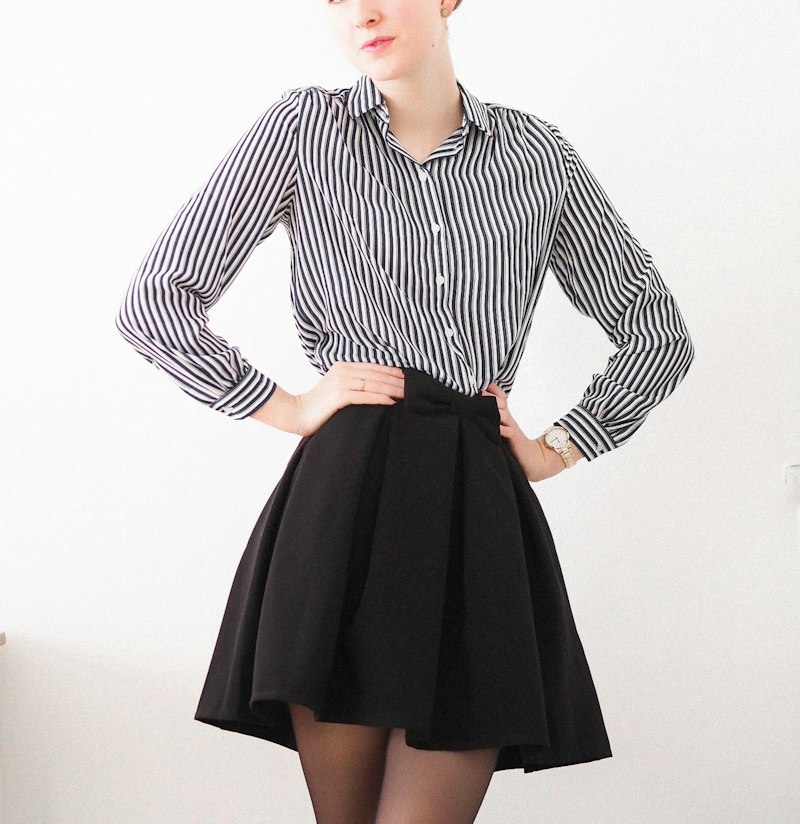
What Actually Defines a Circle Skirt — and Why It Is Not Just Any Flared Skirt
The term is used loosely in shops, so it is worth being precise. A circle skirt is cut from a full circle of fabric with a hole removed at the centre for the waist. When the fabric is laid flat, it looks like a doughnut; when it is worn, the even tension around that central opening pulls the cloth into a smooth, radiating series of folds. That construction is what produces the signature movement — the gentle, continuous flare that swings rather than flaps. A half-circle or three-quarter-circle skirt uses proportionally less fabric, which makes it calmer and closer to the body, while a full circle is the most dramatic version. A true circle skirt is therefore not simply “any skirt that flares.” It is a specific pattern with a specific drape, and once you can recognise it, you can predict exactly how it will move before you even try it on.
The distinction matters because the shape of the cut changes what the skirt does for your proportions. A gathered, rectangular skirt can add bulk at the waist where the fabric is heaviest, and a straight A-line adds width only gradually. A circle skirt distributes volume evenly and symmetrically, which means it widens below the hips rather than at them — the line that most flatters a broader upper body or a straighter waist. This is also why the piece photographs so well: the fold structure reads as intentional and architectural rather than accidental. In the language of pattern cutting, the circle skirt is one of the rare designs whose visual effect is dictated almost entirely by geometry rather than by fit, which is exactly why the same skirt can read as playful on one woman and elegantly retro on the next, with nothing changed but the styling and the fabric.
There is one more practical point worth knowing before you shop. Because the fabric is cut on curves rather than straight grain, the hem of a circle skirt rarely sits perfectly level on the first attempt; good makers let the cut “rest” for a day or two before trimming it. That is not a defect but a sign of quality — a hemmed-too-quickly circle skirt will ride up unevenly at the side seams after a few wears. When you are choosing between two similar pieces, run your thumb along the hem and look for a slightly deeper allowance on the bias sections. It is a small detail, but it is the difference between a skirt that hangs even in a year’s time and one that droops after a single season.
The Geometry Behind the Flattering Shape — Why It Works on So Many Bodies
The reason the circle skirt suits such a wide range of figures is not marketing but proportion. The cut creates a strong triangle of volume that flares away from the widest part of the hip, which makes the waist above it appear narrower by contrast. Because the fabric falls from a single central point rather than being gathered in a band, there is no thick ridge of fabric pressing at the stomach, and no horizontal line cutting the body in half. The result is a longer, cleaner vertical fall from waist to hem that visually lengthens the leg — particularly when the waistband sits at the true natural waist rather than low on the hips. For anyone who prefers to draw attention away from the midsection or to balance a fuller bust, this is one of the most useful silhouettes available.
Data backs up how much women value that effect. According to a 2024 consumer-style survey reported by Statista, a clear majority of women aged 25–44 said that “a flattering fit” was the single most important factor in a skirt purchase, ranking well above trend relevance or price. The same research found that fit concerns, not style concerns, were the main reason women returned or avoided certain skirt shapes — which is precisely the problem the circle skirt solves, because its flattery comes from structure rather than the wearer’s measurements. When a garment’s attractiveness depends on geometry instead of an exact body, it stops being a gamble. That is why the circle skirt has stayed in continuous production while dozens of more “fashionable” cuts have come and gone.
It is also unusually easy to alter, which extends its reach further. Because the flare is created by the cut, a tailor can raise or lower the hem, take in or let out the waistband, and even remove a panel to convert a full circle into a three-quarter cut without ruining the drape. Few skirts offer that much flexibility after purchase. If you are between sizes, the general advice is to size to the waist and adjust the length, because the waistband is the one part of the silhouette that must sit cleanly; the volume below will look deliberate either way.
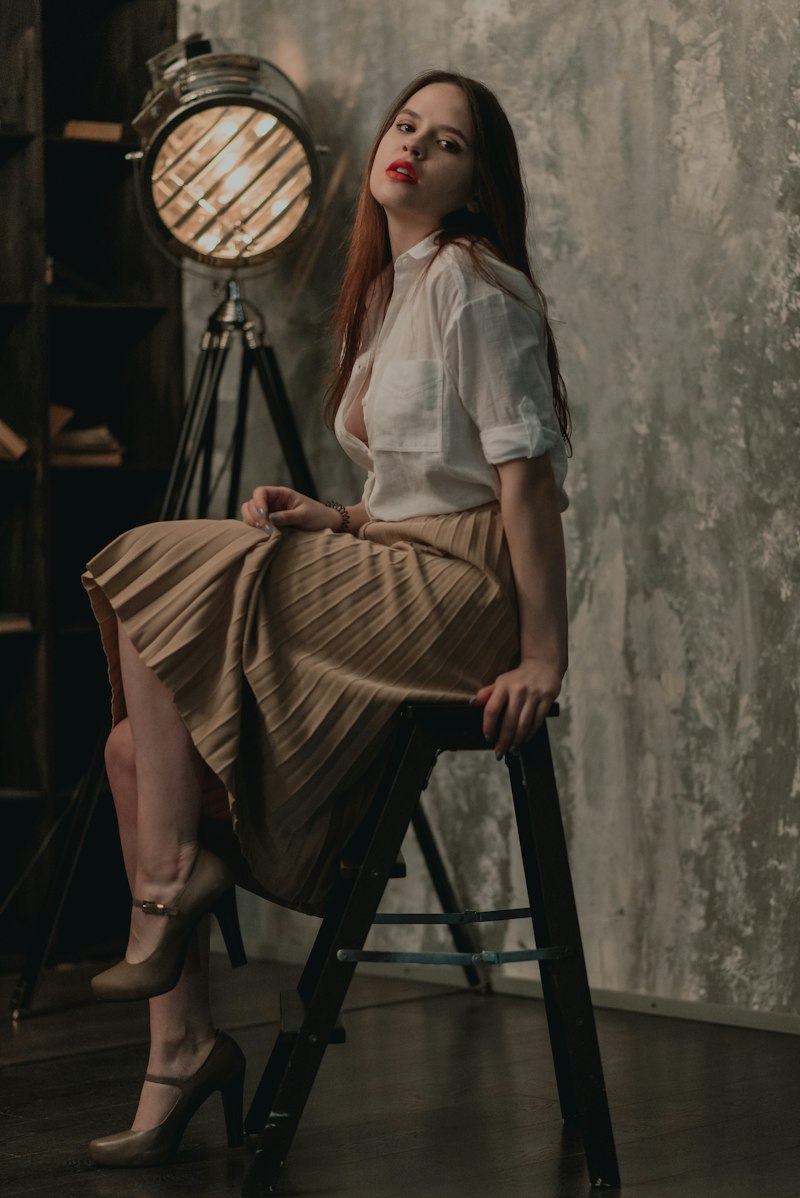
From 1950s Dance Halls to the Modern Runway — A Short History of the Circle Skirt
The circle skirt as we recognise it today exploded in the 1950s, when new synthetic fabrics, cheaper manufacturing, and the rise of youth culture combined to put a full, swinging skirt within reach of ordinary buyers. Dancers adopted it because the cut allowed freedom of movement in a way that narrower skirts did not, and the felt appliqué “poodle skirt” of that era became one of the defining images of mid-century style. It was a garment built for motion, and it was marketed as such. The shape then became so closely tied to a single decade that many people assume it belongs to the past — a mistake, because the cut itself is far older and far more adaptable than the trend it happened to symbolise.
The revival cycle since then has been remarkably consistent. Designers return to the circle skirt whenever they want volume that feels easy rather than heavy: it appears in the full-skirted party dresses of one era, the minimalist midi versions of another, and the printed summer skirts of the next. Vogue has revisited the swinging midi and full circle skirt repeatedly in its seasonal trend reports, and independent makers on platforms such as Etsy report that the circle skirt remains one of the most sewn patterns year after year. What keeps the silhouette current is precisely that it carries no fixed mood of its own; it becomes whatever the fabric and styling ask it to be. A wool circle skirt with a tucked knit reads collegiate and modern, while a satin or taffeta version reads festive and evening-ready — the same pattern, two entirely different lives.
That adaptability is also why the circle skirt has become a favourite of the slow-fashion movement. Because the pattern uses fabric efficiently in simple shapes and is straightforward to sew, it lends itself to small-batch and made-to-measure production, and to upcycling vintage fabrics into something wearable. In an era when buyers increasingly ask where a garment came from and how long it will last, a silhouette that can be made well by independent hands has a natural advantage. The circle skirt is not a trend waiting to be replaced; it is a template that each generation reinterprets, which is the strongest possible sign of a piece worth owning.
Fabrics and Lengths — How to Choose a Circle Skirt That Hangs Beautifully
Fabric choice changes a circle skirt more dramatically than it changes almost any other garment, because the volume is entirely dependent on how the cloth behaves when it is cut on the curve. Lightweight, fluid fabrics — chiffon, lightweight viscose, fine cotton voile — create a soft, floating version with many narrow folds and a delicate, romantic feel. Medium-weight fabrics — cotton poplin, ponte, mid-weight jersey, linen blends — hold a crisper, more defined flare and are the easiest to wear for everyday, because they keep their shape without clinging. Heavier fabrics — wool crepe, tweed, structured denim, taffeta — produce the most architectural version, with deep folds that stand away from the body and hold a dramatic line. None of these is “better”; they simply belong to different occasions, and the same pattern will feel like three distinct skirts depending on which one you choose.
Length works in tandem with weight, and there are a few reliable combinations worth remembering. A short circle skirt in a stiff fabric gives a playful, sixties feel and works best with a fitted top to balance the volume. A knee-length or midi circle skirt in a medium-weight cloth is the most versatile option in the category and flatters the widest range of heights, because the flare begins below the knee where it lengthens rather than truncates the leg. A long, full circle skirt in a fluid or heavy fabric is the most dramatic and the most elegant for evening; worn with a fine knit tucked in, it creates a tall, unbroken column. As a general rule, the more voluminous the skirt, the more fitted the top should be, and vice versa — the silhouette is always a conversation between the two halves of the outfit.
Colour and print deserve a moment of their own. Solid, deep shades show off the fold structure best, because shadow and light define each pleat; this is why black, navy, forest green, and burgundy circle skirts almost always look expensive. Prints are the more playful route, and small, evenly spaced motifs — dots, tiny florals, fine checks — follow the curved folds convincingly, whereas large, directional prints can distort across the bias. If you are buying your first circle skirt, a mid-weight, solid midi is the safest and most useful starting point. If you already own one, the efficient move is a second in a fabric that behaves differently, so the same pattern covers a far wider range of your wardrobe.
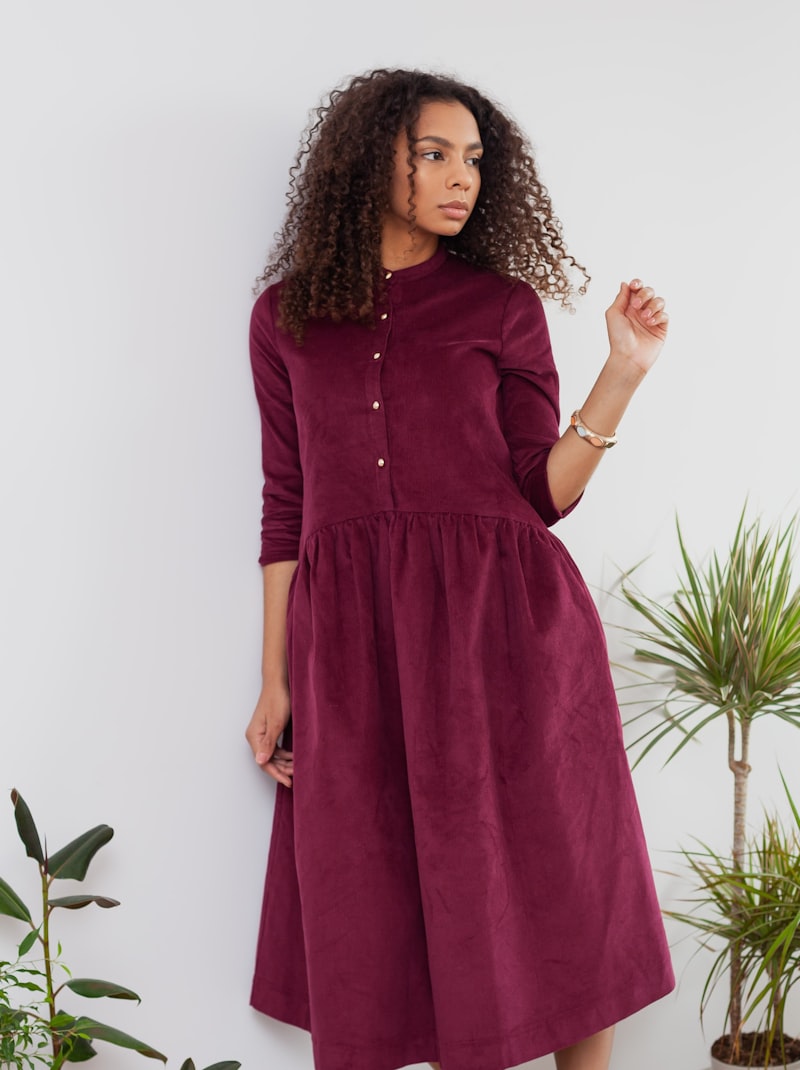
Styling a Circle Skirt Through Autumn and Winter
The circle skirt’s reputation as a summer piece is a misunderstanding. In the colder months it becomes one of the most practical and elegant items in a wardrobe, provided you pair it with the right layers. The guiding principle is balance: because the skirt supplies the volume, the top half should stay close to the body. A fine-gauge knit, a fitted turtleneck, or a tucked-in long-sleeve tee lets the skirt do the talking, while a bulky jumper worn loose over the top flattens the whole silhouette. Tuck, or at least half-tuck, your knit to keep the waist defined — the waistband is the anchor of the entire look, and if it disappears, so does the proportion that makes the skirt flattering.
Outerwear is where the autumn version really comes together. A tailored coat worn open over a midi circle skirt creates a clean, tall line and shows just enough of the flare at the hem to keep the outfit interesting. A cropped jacket works in the opposite direction, cutting the body at the waist and exaggerating the skirt’s volume for a more fashion-forward feel. On your feet, ankle boots keep the skirt grounded, while a slim knee-high boot tucked under the hem is the most polished option for colder days. Add warmth without bulk by layering tights in a matching or deliberately contrasting tonal shade — black tights with a deep green or burgundy skirt, cream tights with a camel or navy one — rather than reaching for heavier trousers, which would undo the shape entirely.
For full styling ideas and specific cuts, you can browse the site’s circle skirt outfits selection, where the fabrics and proportions discussed here appear in ready-to-wear pieces for the season. Whether you are drawn to a short, playful version for the weekend or a long, dramatic one for evenings, the styling logic stays the same: let the skirt be the statement, keep the waist visible, and finish with one considered accessory. A structured bag, a slim belt at the waistband, or a simple pair of gold hoops is enough — the skirt is already carrying the outfit.
Circle Skirt vs. Other Flared Silhouettes — Where It Wins and Where It Does Not
Because flared skirts are often grouped together, it helps to be clear about how the circle cut differs from its closest relatives. The A-line skirt flares gently and evenly from the waist, giving a restrained, versatile shape that suits formal settings particularly well; the circle skirt flares much more dramatically and with far more movement, so it reads as more expressive and more romantic. The pleated skirt creates its flare through folded fabric, which produces a sharp, regular knife-edge pattern of pleats; the circle skirt’s folds are soft and irregular by comparison, which makes it feel more relaxed. The gored or panel skirt controls volume panel by panel and can be tailored to sit closer on the hips; the circle skirt cannot be fitted that way, because its flare is the whole point.
Knowing those differences makes choosing straightforward. Choose the circle skirt when you want movement, softness, and a silhouette that flatters a broader range of figures with minimal tailoring. Choose the A-line or pencil skirt when you need a more formal, structured line or a closer fit through the hips. Choose pleats when you want crispness and a more architectural mood. None of these is a rival to the others; they solve different problems. But if your priority is a skirt that feels effortless, photographs beautifully, and works across seasons and body types, the circle skirt is the most forgiving option in the entire flared family — and the one most likely to earn its place as a genuine wardrobe staple rather than a single-season flirtation.
Keeping the Swing — How to Care for a Circle Skirt So It Lasts
A circle skirt lives or dies by its drape, and drape is fragile. Most of the damage comes not from wear but from careless care, and the good news is that the fixes are simple. Wash less often than you think you need to — spot-clean small marks and air the garment between wears — and when you do wash, use cool water and a gentle detergent, because heat and agitation destroy the fold memory of a well-cut curve. Turn the skirt inside out, and resist the temptation to wring it. For medium and heavy fabrics, a spin that is too fast can stretch the bias sections, which is what causes a hem to sag unevenly. If the label allows, dry flat or hang the skirt by the waistband so its own weight helps the folds fall straight while it dries.
Pressing is where most people go wrong. Ironing a circle skirt flat on the ironing board presses the folds into sharp, unwanted creases and flattens exactly the soft volume that makes the silhouette work. Instead, hang the skirt and use steam to relax the fabric, letting the folds reform naturally under their own weight. If you must use an iron, work on the wrong side with a low setting and press along the existing folds rather than across them. Textile-care guidance from major fabric and fibre bodies consistently recommends shade drying and low-heat, fold-following pressing for full skirts, and the circle skirt rewards that discipline more than almost any other piece. Stored on a padded hanger, or folded loosely along the waistband for heavy fabrics, a well-made circle skirt will hold its even, swinging line for years — which is ultimately the whole point of buying one in the first place.