

There is a particular kind of garment that seems to move on its own. It does not cling, and it does not stand away; it follows the body like water finding its level, gathering softly at the hip and falling in a line that looks almost liquid. That is the quiet signature of a skirt cut on the bias, and it is the reason a piece that fashion has rediscovered again and again refuses to feel dated. In a season dominated by heavy tweeds, structured denim and bulky knitwear, the bias cut skirt offers the opposite pleasure: lightness, movement and a flattery that works without a single dart or zip to hold it in place. Once you understand why it behaves the way it does, it becomes surprisingly hard to wear anything else.
What follows is a practical guide rather than a history lesson. I want to explain why this diagonal cut is surging now, in autumn rather than at any other point in the year; what actually makes a fabric “bias” and why the technique changes everything about how a skirt sits; how to choose the fibre, the fall and the fit so you buy a version that drapes rather than clings; how to style one piece for a working day, a weekend and an evening; what the long story of the cut, and current retail data, say about why it endures; and finally how to wash and store it so the drape survives years of wear. Read to the end and you will be able to judge any bias cut skirt in seconds — and know whether the one in front of you is worth its price.
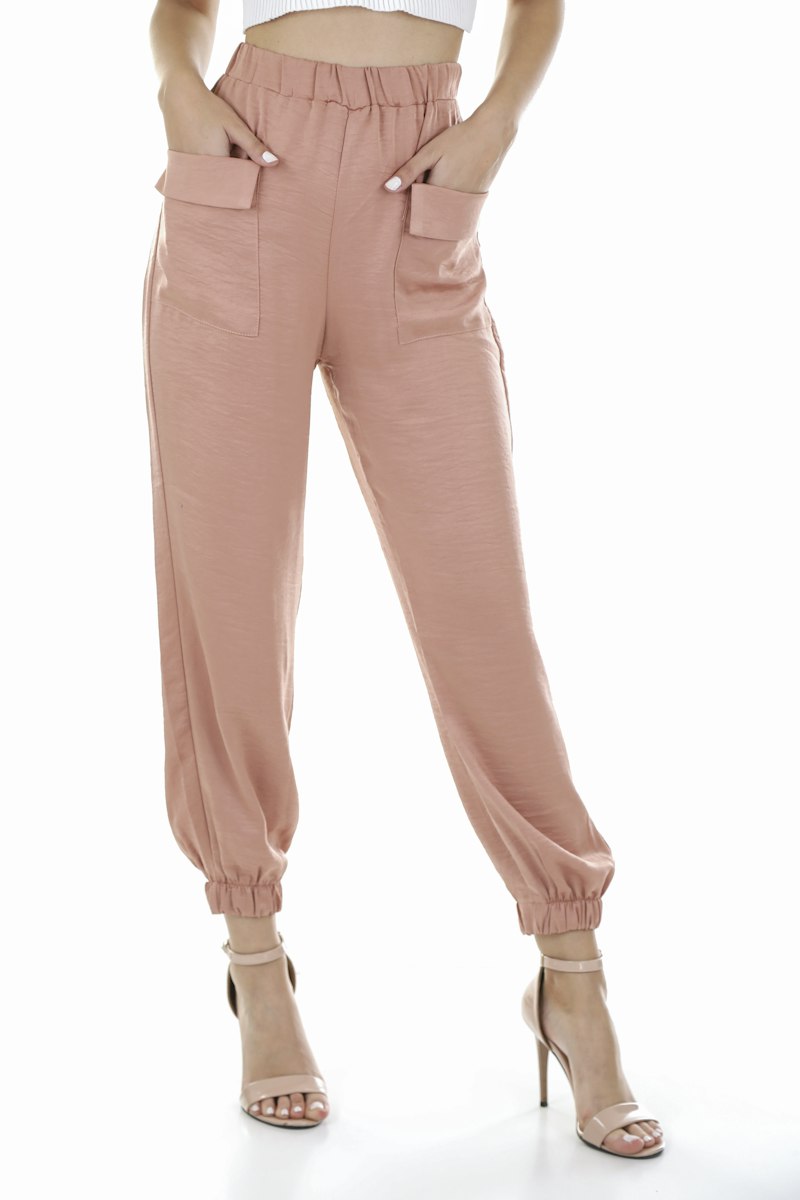
Why the Bias Cut Skirt Reads as Effortless Elegance
The first thing a bias cut skirt does is refuse to fight the body. Where a straight-cut skirt is built from vertical panels and a fitted skirt depends on darts and seams to shape it, a bias cut turns the whole grid of the weave at an angle, so the fabric hangs on the diagonal and moulds itself, gently and evenly, to the curves underneath. The result is a silhouette that is close but never tight, that skims the hip and knee and falls into a soft, shifting hem. It reads as elegant precisely because it looks unengineered, as though the wearer simply threw something on and it happened to behave beautifully. That apparent ease is, of course, the product of real technique, but the impression it leaves is one of composure rather than effort.
That quality matters more than ever this autumn, because the season’s dominant mood is texture and weight. After months of airy summer fabrics, wardrobes fill with wools, cords and chunky knits, and the eye starts to crave something that moves. A bias cut skirt answers that craving while still belonging to the colder months: cut in a heavier satin, a fluid velvet or a fine wool, it carries the season’s depth of colour and surface without any of the season’s stiffness. It also solves a styling problem that heavy fabrics create, because a fluid lower half balances a bulky upper half. Pair a bias cut skirt with an oversized knit or a boxy jacket and the outfit gains a centre of gravity rather than looking top-heavy, which is why the shape reappears every year just as the lighter skirts are packed away.
There is a third, more personal reason women return to the bias cut, and it is the most persuasive of all: it is forgiving in a way that structured skirts are not. Because the cloth stretches slightly on the diagonal, a bias cut skirt moves with you — it accommodates a fuller hip or a longer stride, it does not crease sharply across the front when you sit, and it flatters a range of body shapes rather than flattering only one. It asks nothing of the wearer beyond the right fabric and the right length. In a wardrobe that has to work across work, home and evening without a change of costume, that combination of beauty and ease is rare, and it is exactly why this diagonal silhouette keeps returning to the front of the rail.
What Actually Makes a Cut “Bias” — and Why It Matters
“Bias” is one of those fashion words that gets used loosely, so it is worth being precise. Woven fabric has two main directions: the warp, which runs lengthwise, and the weft, which runs across. Together they form a grid, and lines drawn at forty-five degrees to that grid are called the true bias. When a pattern piece is placed on the bias and cut, the resulting garment behaves entirely differently from one cut on the straight grain. The fabric gains a natural give, it drapes in soft folds, and it will gently stretch under its own weight. That is the entire secret of the bias cut skirt: it is not a different shape so much as a different relationship between cloth and body, and that relationship is what you are really paying for.
The technique carries practical consequences you can see and feel. Because bias-cut cloth stretches, a bias cut skirt must be cut and sewn with great care — the maker usually lets the cut panels “rest” before sewing so the fabric can settle, or the finished hem will drop unevenly within a day of wear. It also means the choice of fibre matters enormously, because the stretch multiplies whatever the fabric naturally wants to do. That is why the finest examples use fabrics with a fluid hand: silk and silk-blends, satin, crepe, viscose and fine wool, all of which fall in long, unbroken lines. A stiff cotton or a heavy denim on the bias will simply warp awkwardly instead of draping, so if the drape is not happening, the fibre is almost always the reason.
Understanding the technique also tells you what to look for in fit. A well-made bias cut skirt will feel slightly loose on the hanger and then settle onto the body once it is worn and warm, so it should never be bought too tight — if it is snug in the shop, it will pull and cling after a day. Look for a waistband that is stable, since the bias wants to move, and for a hem that has been allowed to hang before being levelled. A centre-back or hidden side zip keeps the front clean, and a lining, in a satin or a soft viscose, preserves modesty and helps the outer cloth glide rather than catch. These are the details that separate a bias cut skirt that looks expensive from one that merely looks like fabric with ideas above its station.
Choosing a Bias Cut Skirt: Fibre, Fall and Fit
Because the bias cut depends on the fabric, the fibre should be your first question, not your last. Satin — in silk or in a good quality recycled satin — gives the most dramatic, liquid drape and the most evening-ready sheen, and it is the classic choice for anyone who wants the skirt to be the star of an outfit. Silk crepe offers a quieter matte version of the same fluidity and reads as more understated and more expensive-feeling for daytime. Fine wool and wool-blend suiting, cut on the bias, give a warm, tailored drape that works beautifully for office dressing and holds its shape well through a long day. Viscose and cupro are the accessible, machine-washable routes to the same effect, and velvet — for late autumn and winter — turns the bias cut into something richer, deeper and unmistakably seasonal.
The fall of the cloth is the second thing to judge, and it is best assessed by hand. Pick up a corner of the skirt and let it drop: a good bias cut fabric falls in soft, rounded folds with a little weight, not in flat, angular creases. If it crackles stiffly or springs back like paper, it will not drape and the whole point of the cut is lost. If it feels flimsy and shows the hand through it, it will cling rather than skim, especially across the seat and thigh, so check the opacity by holding it against light. A bias cut skirt should feel substantial enough to hang and light enough to move, and the best way to know is simply to hold it and watch how it behaves.
Fit and length complete the picture. The most useful length this season is a midi that falls to mid-calf or just below, because it gives the bias enough fabric to express itself while keeping the silhouette easy to walk and sit in; a bias cut maxi is dramatic and lovely but demands a careful stride, and a short bias cut skirt can twist unhelpfully as the cloth stretches. Waist height sets the proportion: a mid or high rise elongates the leg and works with tucked tops, while a lower rise suits longer, untucked layers. Finally, decide whether you want the cut itself to be the statement — a clean column or a softly flared A-line — or whether you want a detail such as a subtle front slit or a wrap to do the talking. A bias cut skirt that fits your movement and your habits will be worn far more than one that merely photographs well.
Styling the Bias Cut Skirt for Work, Weekend and Evening
The bias cut skirt’s greatest practical gift is that one piece can be styled three entirely different ways without ever looking like the same outfit twice, and each approach follows a simple rule. For work, the priority is balance: a fluid lower half needs a structured top half to look deliberate rather than sleepy. A wool or crepe bias cut skirt in a midi length, worn with a neat shirt or a fine-gauge turtleneck tucked in, a slim belt to mark the waist, a tailored blazer and a low heel or a polished loafer, reads as fully professional. The soft drape of the skirt keeps the look from feeling severe, while the discipline of the tailoring stops the bias from looking informal. Keep the palette tight — charcoal, camel, navy, deep burgundy or black — and the whole outfit will look considered rather than thrown together.
For the weekend, the same skirt relaxes in seconds and the aim becomes comfort and warmth. Swap the blazer for a chunky cable knit or an oversized cashmere sweater worn loose over the waistband, add a soft leather jacket or a wool coat, and change the heel for a flat ankle boot, a knee-high boot or a pair of clean leather trainers. This is where the bias cut proves it is not only for evening, because in a matte fibre such as wool, viscose or a fine crepe, the drape reads as easy rather than glamorous. Add a crossbody bag and a scarf and you have an autumn look that survives a market, a long walk and the journey home. Worn this way, a bias cut skirt becomes the softest, most forgiving piece in a weekend wardrobe, and it never looks as though it is trying too hard.
For the evening, the bias cut comes into its own, and the styling principle is to let the drape lead. A satin or velvet bias cut skirt in a deep, saturated tone, paired with a fitted top or a delicate camisole and a sculpted heel, gives a look that is modern and grounded rather than fussy. Because the cut already provides movement and a subtle sheen, resist the urge to add a busy jacket or heavy jewellery; one considered piece — a slim belt, a small structured bag, a single pair of earrings — is enough to finish it. To stretch the same skirt into cooler evenings, layer a fine cashmere knit over the top and add a long coat worn open, so the diagonal line of the fabric stays visible from waist to hem. Styled with restraint, a bias cut skirt becomes something increasingly rare: an evening piece that is comfortable enough to wear all night and elegant enough to be the most interesting thing in the room. For more ways to wear it, our bias cut skirt styling guide follows the same piece through the whole season.
What Fashion History and the Data Say About the Bias Cut
The bias cut is not a new idea, and its age is part of its authority. As the textile history of the bias records, the technique was refined and made famous in the 1920s and 1930s by the French couturier Madeleine Vionnet, who is often credited with turning simple fabrics into garments that seemed to cling and float at the same time. Her work showed that a dress or skirt did not need boning, darts or elaborate structure to flatter — it needed intelligent cutting, and the cloth could do the shaping by itself. As Vogue has repeatedly noted in its heritage coverage, the bias cut has returned in nearly every decade since, because it offers glamour without rigidity. A garment that solves the same problem — looking effortless while flattering the body — tends to be reinvented rather than replaced.
The commercial data supports the same conclusion. Market research gathered by platforms such as Statista shows that shoppers repeatedly gravitate towards pieces that serve more than one occasion, and that fluid, season-spanning skirts continue to hold their place in the core range even as louder, faster trends cycle in and out. A bias cut skirt fits that pattern exactly: it can be styled for work, for the weekend and for the evening, it works across autumn and winter in the right fibre, and it does not depend on an embellishment that will date. That is why it survives while more decorative skirts fade — it is bought to be worn for months, not for a single event, and garments bought for many occasions stay in production year after year.
There is a craft argument beneath the numbers as well. Commentators writing for outlets such as the BBC have long observed that clothing endures when it is tied to function and quality rather than to novelty, because it stays connected to how people actually live. The bias cut skirt passes that test with ease: it is a movement-friendly shape in a fine fabric, so it improves as the cloth improves and never depends on being merely loud. That is why the technique has survived from the 1930s to the present while dozens of more eye-catching silhouettes have come and gone. For anyone weighing where to spend this autumn, that stability — beauty that is also practical — is the most reassuring signal a piece can give.
Caring for a Bias Cut Skirt So the Drape Lasts for Years
Because the drape is the whole point of a bias cut skirt, caring for the fabric is really caring for the shape. The first rule is to wash far less often than you might expect: silk, satin and fine wool dislike frequent laundering, and the bias stretch is gentlest on cloth that is allowed to recover between wears. Airing the skirt after a day of wear, and spot-cleaning marks rather than washing the whole piece, will keep the fibre and the fall fresh far longer. When you do launder, check the label first — many viscose and wool bias skirts are hand-wash or dry-clean only — and if you wash at home, use cold water, a gentle detergent and the most delicate cycle your machine offers. Never tumble-dry a bias cut skirt; heat is what shrinks the cloth and destroys the stretch.
Drying and pressing deserve particular care because the cut is what makes the skirt special. Never hang a wet bias cut skirt by the waistband, where the weight of the water will pull the fabric out of shape; dry it flat on a towel, away from direct sun, so it keeps its line. When it needs pressing, use steam rather than a hot iron — hold the iron just off the surface, or press on the reverse through a cloth — because a direct, hot iron can flatten the fluid folds that define the silhouette and leave a shiny patch on satin. If the hem has dropped slightly, which bias cloth often does as it settles, a tailor can re-level it in minutes; doing this once after the first few wears will keep the line clean for years. Fold the skirt or hang it on a padded hanger, and treat it gently: cared for this way, a bias cut skirt keeps its drape and its shine long after the trend that prompted you to buy it has moved on.