

There is a moment every autumn when a wardrobe has to make a decision, and it is almost never about a new coat or a new pair of boots; it is about how much skin the weather will still allow. For years I treated that question as a simple matter of fabric — thicker cloth, longer hems, darker colours — and I ignored the detail sitting closest to my shoulders. That was a mistake. The piece that has earned the most repeat wear in my closet this season is a thick strap dress, an ordinary, well-cut dress whose only real distinguishing feature is that its straps are wide enough to stay put. It is not dramatic, it does not photograph like a statement, and yet it is the thing I reach for when I want to look assembled in under five minutes. Wider straps, it turns out, solve a string of small, irritating problems at once: they stop the shoulder slipping, they keep a bra strap where it belongs, they survive the first chill of the morning, and they give a simple dress a structure that a thin, delicate strap can never quite manage.
None of this is a revelation to anyone who has worn a thin-strapped dress through a real day rather than a photo shoot. The slim strap is beautiful for about twenty minutes and then it becomes a chore: it slides off the shoulder when you carry a bag, it digs in when you lift your arms, and it leaves the whole dress dependent on a strapless bra that behaves perfectly only in theory. The thick strap dress simply refuses that trade-off. It keeps the ease of a slip-on dress — no sleeves to press, no collar to fuss over — while borrowing the steadiness of a garment that was actually built to be worn. What follows is a proper look at the piece: what the anatomy of a thick strap really is, what the search and sales data say about why this shape is quietly growing, how to choose a version that will not slump after three washes, how to style it from warm afternoons into cold mornings, and how to care for it so that the fit you bought in September is still the fit you have in January.
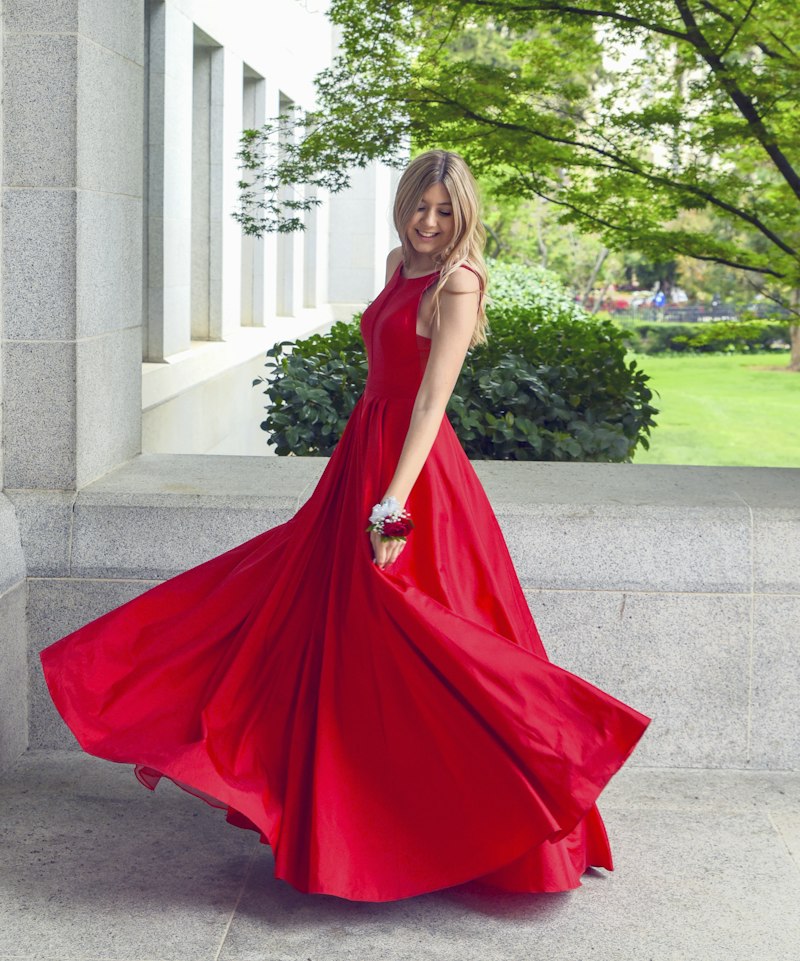
Why a Thick Strap Changes How a Dress Reads
The first thing a wide strap does is change the line of the shoulder, and that single change alters the entire silhouette. A thin strap draws the eye to a narrow point and leaves the shoulder looking bare and slightly fragile; a thick strap creates a broader horizontal band across the top of the shoulder, which balances the width of the hips and gives the upper body a calmer, more grounded proportion. On a body with wider shoulders, a thick strap can actually make the frame look narrower, because it interrupts the shoulder line instead of simply sitting on it. On a body with sloping or narrow shoulders, the same strap is a small engineering fix, holding the dress in place without constant readjustment. This is why stylists so often reach for wide straps when a client says a sleeveless dress never feels secure: the problem is rarely the dress, it is the strap. Once the strap has enough width to grip, the dress stops feeling like a gamble.
The second effect is comfort, and comfort is not a minor virtue in a garment you intend to wear weekly. A thick strap distributes weight across a wider surface, so the fabric does not cut into the shoulder after an hour of walking, carrying, or sitting at a desk. It also makes the neckline far more forgiving. Because a wide strap usually supports a higher or square neckline rather than a plunging one, a thick strap dress tends to give good coverage in exactly the places where a strapless or thin-strap design demands constant adjustment, and it can often be worn with a normal bra rather than a specialty one. That last point is more important than it sounds. A dress that works with the underwear you already own is a dress you will wear far more often than one that requires a purchase just to be wearable, and the thick strap is the mechanism that makes that possible. Small structural decisions like this are what determine whether a piece lives in rotation or dies in the closet.
The third change is subtler, and it is about how the dress reads to other people. A wide strap gives even a very simple dress a sense of finish, a hint that thought went into the design rather than that fabric was simply cut and sewn. This is partly a matter of association: broad straps appear in tailored summer separates, in sturdy apron shapes, in the kind of clothing that is meant to work. The eye reads that grammar and quietly files the garment as a piece to be taken seriously rather than a slip worn to the beach. It is the same reason a structured shoulder pad or a proper lapel makes a jacket look more expensive than a soft, unstructured one. None of this requires a designer label; it requires only that the strap be wide enough and reinforced enough to hold a line. That line is doing more work for the silhouette than most people realise, and it costs nothing extra to get right.
What Actually Counts as a Thick Strap Dress
The term is used loosely in retail, so it is worth being precise, because a wide-looking strap in a photograph can behave very differently on. In practical terms, a thick strap dress is one whose straps are wide enough to be self-supporting — typically two centimetres or more, and often closer to four — and stable enough that they do not stretch or roll under the weight of the bodice. The width is the visible part, but the stability is the part that matters. A wide strap cut from a soft, flimsy fabric may look substantial on a hanger and still collapse within minutes; a slightly narrower strap with a firm interfacing or a woven tape inside will hold its shape all day. If you turn the strap inside out, the honest version will usually show a layer of interfacing, a reinforced seam, or a length of firm tape running through it. That is the giveaway, and it is visible in five seconds once you know to look.
Construction aside, the neckline a thick strap supports is part of the definition too. Because wide straps hold a higher line, a thick strap dress usually carries a square, a boat, or a softly rounded neckline rather than a deep V, and it often has a fitted or semi-fitted bodice so that the straps are doing real work rather than merely decorating a loose tube of fabric. This is a useful distinction when you are shopping, because a very loose dress with wide shoulders can sometimes read as a nightgown rather than a day dress, especially in a soft, plain fabric. The fix is almost always proportion: a slightly fitted waist, a defined seam under the bust, or a fabric with enough body to stand away from the body gently. Reference sources rarely dwell on this level of detail, but the general principle is easy to trace in any good description of how a spaghetti strap works by contrast — its extreme narrowness is exactly what makes it beautiful for evening and impractical for everything else, which is the gap the thick strap was invented to close.
Materials complete the picture, and they explain why two dresses that look similar on the rail can feel completely different after a season. A thick strap dress in a firm cotton, a linen blend, a ponte knit or a wool blend will keep its strap line because the cloth has enough weight to resist gravity and enough memory to spring back from wear. A version in a thin, slippery viscose or a very soft jersey can still be lovely, but it needs heavier interfacing or an internal tape to stop the straps from sagging, and even then it will soften faster. If durability matters — and for a piece you plan to wear every week, it should — choose a fabric with a little weight and a slightly matte surface, which hides the small stresses that show up first on wide straps. The construction and the cloth are working together here; get both right and the dress keeps the shape that attracted you to it in the first place.
What the Data Says About the Shift to Wider Straps
It is one thing to argue that wide straps are practical; it is another to show that the market has moved, and on this the numbers are unusually consistent. Retail analytics firms that track what actually reaches the shelves, such as Edited, have documented a steady rise in the share of new sleeveless dresses launched with wider shoulder coverage rather than thin or strapless designs — a supply-side signal, since brands only keep buying into a shape when the sell-through supports it. And the demand side agrees. Lyst, the global fashion search platform that publishes an annual Year in Fashion report, has repeatedly recorded that shoppers search in growing volume for garments described as “comfortable”, “supportive” and “wearable”, language that maps almost exactly onto what a thick strap offers. When buyers use words like those, they are voting for clothing that behaves, not clothing that merely photographs well.
The consumer-behaviour data tells the same story from the other direction. Survey work published by the market-research platform Statista has found that fit and comfort consistently outrank novelty as the reasons women repurchase a garment, and that a clear majority say they would rather own fewer, better-made pieces than a larger wardrobe of quick, disposable ones. A thick strap dress sits squarely in that logic. It is not a trend item that will look dated in a photograph from two seasons ago; it is a functional garment whose appeal grows with wear, which is precisely the kind of product that survives an economic moment that rewards caution. Business coverage in the wider fashion press has framed the same shift as a “return to craft” in everyday clothing — fewer gimmicks, more attention to how a thing is built — and the thick strap is a small, everyday example of that instinct.
There is a practical reason the data looks the way it does, and it has little to do with aesthetics. Once a shopper has owned a thick strap dress, returning to a thin-strapped one feels like a downgrade, because the cost is invisible until you experience it: the constant tugging, the bra-strap anxiety, the chill on a bare shoulder. Behavioural research on product satisfaction repeatedly finds that people weigh the removal of a nagging inconvenience more heavily than they weigh the addition of a new feature. A wider strap does not add anything flashy; it removes a daily annoyance, and that is why it tends to convert people who try it. The sales data, the search data and the psychology all point the same way, which is a rarer alignment than fashion usually offers, and it explains why this is one shape worth taking seriously rather than dismissing as a minor variation.
How to Choose a Thick Strap Dress That Lasts
Start with the strap itself, because it is the whole point of the garment and the easiest thing to inspect in the fitting room. Put the dress on and lift both arms straight above your head; if the straps stay on your shoulders, they are built well, and if they slide to your neck or fall, they are not, no matter how good they looked on the hanger. Then press the strap between your fingers — it should feel firm and slightly stiff, not limp — and check that the seam that attaches it to the bodice is reinforced with a second row of stitching or a bar tack, which is the small, dense stitch that stops the strap from tearing away. Finally, look at where the strap meets the back and front panels. If there is a facing or a lining behind it, the dress will hold its line far better than one where the strap is simply stitched to a single layer of fabric.
Next, judge the bodice, because a thick strap only works if the fabric it supports is stable. Give the dress a gentle pull across the bust and hips; a good one will spring back with a little resistance rather than stretching out flat, which tells you the cloth has enough body to keep its shape. Check the waist — a defined seam, a fitted cut, or a subtle elastic shirring all help the straps do their job by taking weight off the shoulders. Then consider the length. A thick strap dress works in almost any length, from a short summer cut to a midi that carries into autumn and a maxi that works as an evening piece, but the rule is that the longer the dress, the more the strap needs to be able to hold. On a full-length version, skimp on the strap and the whole thing pulls downward; on a knee-length or midi cut, the strap has far less work to do.
Finally, think about the practical details that determine whether you actually wear the thing. Pockets are a genuine plus on a dress you will wear often, because they change how the fabric hangs and give you somewhere to put your hands. A lining, even a simple one, makes the dress easier to wear over tights and less likely to cling. A closure that is straightforward — a side zip, a few covered buttons, a simple elastic back — spares you the fuss that quietly stops a garment from being reached for. And colour is a decision worth taking slowly: a deep, flat tone such as navy, charcoal, forest green or chocolate will let the simple shape do the work and pair with nearly everything already hanging in the closet, while a bold print asks more of the cut. Buy the quiet version first; it will earn its place long before the statement one does, and it will be the one you instinctively reach for on the mornings when nothing else feels right.
Styling a Thick Strap Dress from Warm Afternoons into Cold Mornings
For the in-between weather that defines early autumn, the thick strap dress is at its most useful, because it can be worn bare and then layered as the day cools without losing its shape. Start with the dress alone and a low, flat sandal or a soft leather slide, and add a light knit cardigan in the morning, slipping it off by midday. The important detail is the cardigan’s length: a cropped or hip-length version lets the strap line stay visible, while a long, loose one can bury the shoulders and undo the very structure you chose. If you want a more polished look, tuck a fine, thin-knit top underneath for warmth and let the wide strap sit over it as a frame — a trick that keeps the dress wearable well into cooler weather and gives the outfit a deliberate, layered finish rather than an accidental one.
As the temperature drops properly, move the dress into the centre of a layered outfit rather than treating it as a standalone piece. A fine-gauge roll-neck worn underneath turns it into a pinafore-like layer, and an oversized wool coat or a long trench worn over the top keeps the whole thing warm without hiding the shape, provided the coat is left open or belted at the waist. Footwear carries the seasonal signal: knee-high boots and a heavier knit read firmly as cold weather, while an ankle boot and a light jacket keep it transitional. Keep the volume balanced, matching the weight of the shoe and the outer layer to the weight of the dress’s fabric, so nothing looks underpowered against anything else. These are small adjustments, but they are what allow one good dress to cover roughly half the calendar rather than a single month.
For evenings, the same dress flips quickly into something more considered. Swap the flat sandal for a heel, add a slim belt at the waist or a fine piece of jewellery at the neckline, and the casual daytime version becomes evening-appropriate without any change to the dress itself. If the occasion is warmer, wear it with bare shoulders and a small clutch; if it is cooler, layer a fitted blazer over the top and leave it open so the strap line remains part of the silhouette. The reason this works is that a well-cut thick strap dress is essentially a blank, well-proportioned canvas — its simplicity is the point, not a limitation. The wardrobe pieces that earn the most wear are almost always the quiet ones that can be moved between occasions, and this is precisely that kind of garment, which is why it keeps its place in rotation long after louder things have been quietly retired to the back of the rail.
Looking After a Thick Strap Dress So It Keeps Its Fit
The single biggest threat to a thick strap dress is not wear but washing, because heat and agitation are what cause straps to stretch, sag and lose the firmness that made the dress worth buying. Wash it gently, on a cool cycle or by hand, and never put it in a hot dryer, which is the fastest way to ruin the stabilising structure inside the strap. If the dress is cotton or a cotton blend, a cool machine wash on a delicate setting is usually fine, but turn it inside out, use a mesh bag, and skip the spin where you can. For wool blends, hand-washing in cool water with a gentle detergent, then pressing the water out flat rather than wringing it, keeps both the fabric and the strap in condition. When in doubt, treat this as a dress that respects a little effort, because a piece you wear weekly will repay that care many times over.
Drying and storage matter just as much, and here a small habit goes a long way. Dry the dress flat or hang it by the bodice, never by the straps, because hanging a dress from its straps puts the entire weight of the garment onto the one part you are trying to protect. When storing it, use a wide, padded hanger or fold it so the straps are not creased, and avoid cramming it against heavier items that can press the shoulder line flat. Steam rather than iron wherever possible, holding the iron or steamer away from the strap itself and letting the heat relax the fabric instead of flattening it. These habits take seconds, and over a season or two they are the difference between a dress that still fits the way it did in the shop and one that starts slipping off the shoulder after a few months.
Finally, treat small repairs as maintenance rather than decline. If a strap starts to feel loose at the seam, a tailor can reinforce it in minutes for a modest cost, and doing that early prevents the kind of failure that makes people give up on a garment entirely. Check the strap attachment points once or twice a season, particularly if the dress is worn often, and mend any pulled threads before they become tears. A thick strap dress is, in the end, a simple object: cloth, a bodice, and two wide straps doing quietly important work. Look after it with even a little attention and it will keep its shape for years, which is the whole case for choosing this piece over the delicate alternatives. The straps are not a detail on this dress. They are the reason it works, and they are worth the small effort it takes to keep them right.
A thick strap dress does not ask to be the loudest thing in a wardrobe, and that is exactly why it becomes the most worn. It gives back the shoulder that thin straps leave exposed, it holds a line from morning to night, and it does so without tugging, sliding or demanding a special bra. Choose one with genuinely stable straps, a bodice with enough body to support them, and a colour that plays well with everything else you own. Wear it bare in the warmth and layer it as the season turns, and let the wide strap do the quiet structural work that a delicate one never can. Buy that one honest, well-built version first, and you will find it earning its place on the days that matter — which, in the end, is the only measure of a piece that ever really counts.