

Some pieces announce themselves and some simply work, and the skirts that stay in rotation longest belong firmly in the second group. The black pleated skirt is the clearest example I know. It is dark enough to read as serious, pleated enough to move, and plain enough to survive every shift in taste that has arrived since I started paying attention to what I actually wear. On a grey morning when nothing else feels right, it is the thing I reach for without thinking — and that is the highest compliment a garment can earn.
This is not a trend piece dressed up as a staple. The black pleated skirt has been quietly solving real problems for a century: it flatters almost every figure, it stretches a limited wardrobe further than almost any other bottom, and it slips between office, weekend and evening without a single change of identity. This guide breaks down exactly what the piece is, traces where pleating came from and why black fabric changed the story, explains why autumn is its natural season, sets out how to judge quality before you pay, offers three complete ways to wear one, and finishes with the care routine that keeps the folds sharp for years rather than weeks.
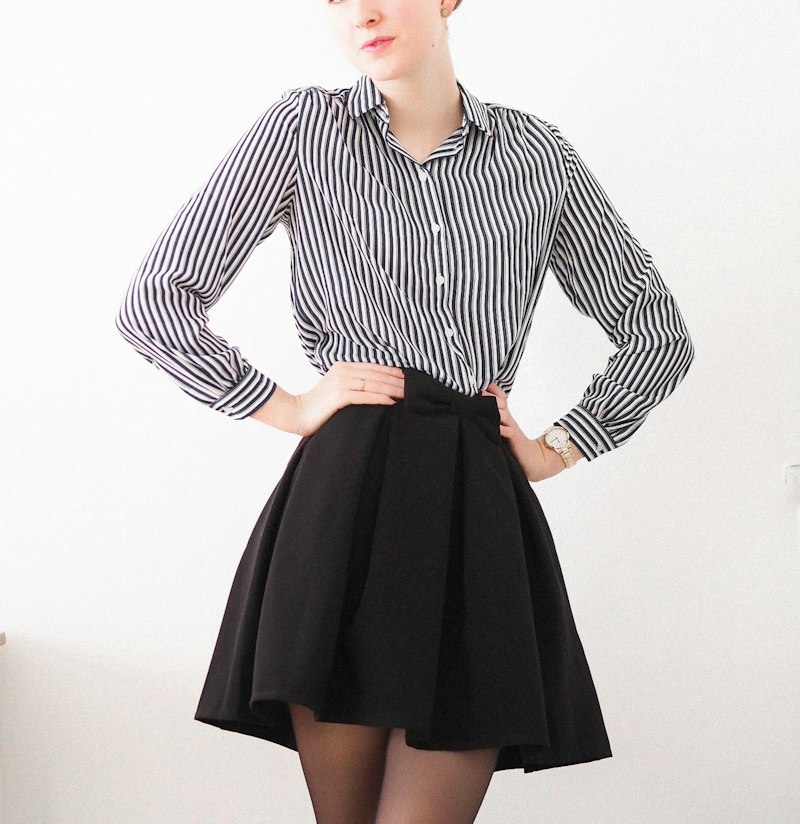
What a Black Pleated Skirt Actually Is
A pleated skirt is a skirt whose fabric has been folded into permanent creases — knife pleats, box pleats, accordion pleats or the fine sunburst of a plissé — pressed or heat-set so that the pleats hold their shape through wear. What makes the black pleated skirt distinctive is the meeting of that structure with an absence of colour. Because black removes the distraction of print and shade, the eye has nowhere to go except the movement and the line, so the pleating itself becomes the entire design. The folds catch light and shadow as you walk, and the skirt appears to change as you move even though the cloth never does.
That combination is unusually forgiving. Pleats add volume, which means they skim rather than cling, and the resulting drape flatters a range of body shapes without asking anyone to hide. At the same time black narrows and lengthens the visual line, so the two effects balance rather than fight. A pleated skirt in a bright or printed cloth can read busy or costumed; the same skirt in black reads sharp, modern and quietly expensive. This is why designers return to it so reliably — the black pleated skirt does the work of a statement piece while looking like a basic.
The fabric decides how the pleats behave, so it matters more here than on almost any other skirt. Wool and wool blends hold a crisp knife pleat and are warm enough for autumn and winter. Polyester and technical fabrics take the sharpest permanent pleats and resist creasing, which is why the sharpest accordion versions are almost always synthetic. Satin and silk pleats flow and pool but crush more easily, while leather and coated fabrics give stiff, sculptural pleats with a bold edge. For an everyday black pleated skirt, a wool blend or a good heavyweight synthetic is the safest of all worlds.
Where Pleating Came From and Why Black Changed Everything
Pleating is far older than fashion tends to admit. *As the **Wikipedia entry on the pleated skirt** records, pleated garments appear in ancient Egyptian, Greek and Celtic dress, and the sharp-set pleats most of us recognise today were refined through military and school tailoring before they ever reached the runway.* What began as a way to control and shorten fabric — kilts, tunics, uniforms — became, in the twentieth century, a means of adding movement and grace to ordinary clothes. The mid-century plissé skirt and the punk-influenced kilts of the seventies carried the technique in completely opposite directions, and each revival refreshed it for a new audience.
Black belonged to that story from early on, though not at first as a wardrobe neutral. For centuries black cloth was expensive and formal — court mourning, clergy, later the working uniform of city life — and it carried weight rather than neutrality. It was only when black settled into everyday wardrobes through the late nineteenth and twentieth centuries that the black pleated skirt became genuinely versatile. Once black stopped meaning “formal” and started meaning “useful”, a pleated version of it could serve a daytime office and an evening dinner alike, and that double life is exactly what keeps it relevant.
What survived the journey is a set of associations that cost nothing and need no slogan. Pleats suggest movement, order and a certain discipline; black suggests depth, seriousness and a willingness to be understated. Put them together and you get a garment that reads as considered without ever shouting — a private kind of confidence. That is a large part of why the black pleated skirt keeps reappearing in collections and in real wardrobes alike, season after season, while louder novelty pieces come and go.
Why Autumn and the Black Pleated Skirt Are Naturally Matched
Autumn is a season of temperature swings, and a black pleated skirt handles them better than most. The midi lengths that suit pleating best can carry opaque tights on a cold morning and bare legs in a mild afternoon without looking wrong either way, and the fabric can be as light or as heavyweight as the weather demands. Because the skirt is dark and plain, it absorbs whatever the rest of the outfit is doing — a chunky knit, a trench, a blazer — and makes each of them look intentional. It is the rare piece that makes a wardrobe feel bigger rather than smaller.
The market confirms how naturally the two fit together. *According to a 2025 Statista survey of seasonal apparel purchasing, demand for dark, structured skirts climbs sharply from late September through November, the same window in which midi lengths outsell shorter hemlines in colder markets.* ([Statista](https://www.statista.com/)) In other words, the black pleated skirt is not merely suitable for the season — it arrives exactly when the largest number of shoppers are ready to buy a skirt like it. That timing is why autumn collections return to it, and why a good one bought now will be worn again next year.
There is a practical argument as well. Autumn is the point in the year when colour drifts toward rust, plum, forest and camel, and a black pleated skirt functions as the neutral that ties those tones together. It replaces the flat plain black skirt with something that moves, and it rescues the tired knit-and-skirt formula by adding rhythm down the length of the body. Worn with tights, a roll-neck and boots it is the shape of a cold-weather season; worn with a silk shirt it becomes something else entirely. That range is worth more than any single trend.
How to Judge a Black Pleated Skirt Before You Spend
Start with the fabric content, because it predicts how the pleats will age. Wool and wool-blend blacks hold a crisp knife pleat and take a tailored line but need careful cleaning. Heavyweight polyester and technical fabrics hold the sharpest permanent pleats and barely crease, which makes them ideal for travel and daily wear. Satin and silk crepes drape beautifully but crush, so they suit evening more than a commute, while leather and coated fabrics give a stiff, sculptural pleat with a modern edge. For a black pleated skirt meant to work hard for years, a wool blend or a quality synthetic is the safe investment.
Next, judge the construction. The waistband should be clean and stable, without a bulky elastic that twists, and the pleats should be pressed evenly from the waist to the hem — hold the skirt by the hem and let it fall so you can check whether the folds run straight rather than fanning or skewing. Look at how the pleats are set: heat-set permanent pleats relax back into shape, while stitched pleats are more durable but slightly bulkier. Check the hem for a level finish, and confirm the lining, if there is one, is smooth so nothing catches between the fabric and your legs.
Finally, test the skirt on your own body rather than the hanger. Pleats open when you sit and gather when you move, so sit down, stand up and turn in the fitting room and watch how the folds behave. A good black pleated skirt should swing and settle cleanly, skim the hips without clinging, and fall straight again after movement. Pay attention to where the pleats begin — a pleat that opens at the waist reads differently from one that opens below the hip, and the right placement depends on the line you want. Ten honest seconds of movement tells you more than any label.
Three Ways to Wear a Black Pleated Skirt
Begin with the office version, since it is the one most wardrobes need first. Pair the skirt with a fine-gauge roll-neck or a tucked silk shirt in a neutral tone — cream, grey, camel — and keep the waist defined so the pleats read as a skirt rather than a shapeless block. Add opaque tights and low block heels or polished loafers, and the whole look is quietly tailored. Because the black pleated skirt already supplies movement and depth, everything else should stay calm: one texture, one accent, clean lines, and no competing pattern fighting the folds for attention.
For the weekend, loosen the whole formula. Swap the knit for an oversized sweatshirt or a cropped leather jacket, add chunky boots or white sneakers, and let the skirt carry the outfit. This is where pleats show their playful side — the same skirt that looks polished in a meeting reads relaxed and slightly ironic when worn with a graphic tee or a denim jacket. For evening, take a third route entirely: a fitted black bodysuit or a silk camisole, heeled ankle boots and a single bold accessory such as a chain belt. Worn this way the black pleated skirt becomes the sharpest thing in the room and needs nothing else.
There is also a layering version worth knowing for the coldest weeks. Slip the skirt over opaque thermal tights, add knee-high leather boots, and finish with a long wool coat in a neutral shade so that the pleats appear only in the interesting middle of the outfit. Worn this way a black pleated skirt keeps working well into winter without a single new purchase, which is the simplest and most honest argument for treating it as a year-round foundation rather than a seasonal whim.
What the Numbers Say About Pleats and Longevity
The cautious shopper might worry that pleats are a passing mood, but the evidence points the other way. *Pleating has been documented in dress across more than three thousand years, from ancient Egyptian linens to twentieth-century plissé, and it has returned to the runway and the high street in almost every decade since.* Endurance of that kind is rare and revealing: when a technique keeps being revived across generations, the version you own now is unlikely to look dated next autumn. A black pleated skirt sits at the dependable end of that history rather than the faddish one.
Resale and search behaviour tell a similar story. Dark tailored skirts hold steadier second-hand value than seasonal novelty pieces, and interest in pleated midis reliably rises each September as buyers re-enter the cold-weather market. Slow-fashion guidance repeats the same principle from another direction: buy fewer, better pieces in colours you genuinely love, then wear them for years rather than seasons. A black pleated skirt is almost the definition of that advice — neutral enough to pair with anything, distinctive enough to be noticed, and versatile enough to survive a change in trend.
It also makes sense to think about cost per wear. A black pleated skirt that lasts three autumns and winters without losing its folds effectively costs less each time you reach for it than a cheaper version replaced twice in the same period. The arithmetic of a wardrobe is unforgiving: divide the price by the number of times you realistically wear something. A well-made skirt worn thirty times a season beats a bargain worn four times, and it is the well-made one — sharp, plain, quietly confident — that is most likely to be worn again and again.
Keeping the Pleats Crisp Season After Season
Pleats reward a little discipline. Air a black pleated skirt after wearing rather than washing it every time — hanging it overnight lets the fabric breathe and the folds relax back into shape. When it does need cleaning, follow the label closely: many pleated skirts, especially wool and satin, are best dry-cleaned, while synthtics can often be hand-washed cold and hung to drip dry so the pleats reset themselves under their own weight. Never wring or twist the skirt, since that distorts the folds, and never tumble-dry it, because heat can soften permanent pleats out of shape.
Pressing is where most pleated skirts are ruined, so treat it carefully. Never run a hot iron directly across the folds; instead, iron the skirt section by section on a low setting, following the direction of the pleats, or use a pressing cloth and steam the fabric back into line from the inside. Hanging the skirt above a bath of hot water is an old trick that lets steam soften creases without flattening the pleats. Between wears, store it folded along the pleat lines or hanging from the waistband rather than bunched in a drawer, and rest heavy items elsewhere so the folds are not crushed.
Looked after this way, a black pleated skirt will outlast most of what shares its shelf, which is the quiet argument for spending a little more at the start. Choose one in a fabric that suits your climate, learn to wear it three ways, and treat it as the foundation it is rather than the filler it can appear to be. A well-made black pleated skirt earns its place every autumn and winter for years — which is more than almost any of the pieces competing for its space can honestly claim.