

Most people meet the medieval dress in the wrong order. They see it first as costume — a fairground silhouette, a rented gown with a plastic circlet — and only later, usually by accident, discover that the shapes underneath that costume were invented by people who had no interest in looking theatrical. A medieval dress for women was working clothing before it was ever a picture. It had to be cut from narrow loom widths, fastened without buttons or zips, dyed with what a household could grow or trade for, and made to survive a decade of hard wear. Those constraints produced a garment language that is, almost by accident, unusually kind to modern bodies: high waist seams, gathered fullness that hides the stomach, sleeves cut on a curve rather than a tube, and closures that adjust to the person wearing them rather than the other way round. The dress you find in the shops today, cut in linen or velvet and loosely described as medieval, is usually a modern compromise — part history, part pattern-cutting convenience, part whatever the factory had in stock. Knowing which parts of the original survived and which were quietly dropped is the difference between buying something that looks like a costume and something you can wear to dinner in November without feeling dressed up as a serving girl. What follows is written for shoppers rather than re-enactors: how the layers work, what the fabric should feel like in your hand, which details reward the money and which are decoration applied to hide a bad seam.
It helps to start with a plain correction. The single garment called a “medieval dress” did not exist. What existed was a system: a linen shift against the skin, a woollen or linen kirtle over it, and a gown on top for outdoors or for anyone with money. Each layer could be replaced, washed, inherited, or turned and remade when it wore thin, which is why surviving garments are so rare and why museum reconstructions rely so heavily on images, wills and account books rather than on the clothes themselves. The record of English medieval clothing is largely a record of inventory language — so many ells of cloth, so many gowns of a colour — and that language tells you something useful: people thought in cloth first and garment second. A dress was an amount of material made wearable, and its value lived in the fibre. When a modern label sells you a “medieval” dress, it is usually selling the silhouette without the material logic, and the result feels thin, shiny or oddly rigid in ways the buyer cannot quite name. Once you understand that the original weight and texture came from wool and heavy linen, the shopping decisions get much easier, because you can judge a garment against a physical standard instead of against a mood board.
What the layers were actually for
The shift, or chemise, was the only layer that touched the skin, and it was made of linen for a reason that has nothing to do with elegance. Linen absorbs moisture and releases it quickly, it tolerates boiling, and it takes repeated washing without disintegrating, while wool does not enjoy any of those things. Everything above the shift could then be washed rarely, brushed, aired and spot-cleaned, which is how a household kept a limited number of outer garments in service for years. In practice this means the layered look you see in paintings is not styling — it is laundry economics. A modern medieval dress for women often fuses the two layers into one: a bodice with a visible linen panel, a neckline cut to suggest a chemise edge, sleeves that show a lighter fabric at the wrist. That fusion is fine and often very comfortable, but it changes how the garment behaves. A fused dress has to be washed as a whole, so the outer fabric must tolerate water, which rules out the dry-clean-only velvet and beaded trims that give the best visual weight. The compromise most worth paying for is a dress with a detachable or sewn-in cotton voile lining, so the part that meets your skin is breathable and the part that faces the world can be heavier.
The outer layer did the work that a coat does now, and its cut followed from that. Openings were placed at the shoulder, the side or the front, because a garment that fastens along a straight edge can be adjusted by centimetres without a tailor, and because a single narrow loom width could not wrap a body without a seam somewhere. Sleeves were set in on a curve, often with a gusset under the arm, so that the wearer could raise both arms without dragging the whole bodice upward — a detail you can test in thirty seconds in a fitting room. Necklines were wide and shallow rather than high and tight, since a wide opening is stronger than a straining one. And skirts were built from triangular inserts, called gores, rather than from gathered rectangles, which is why medieval skirts fall in clean folds instead of bunching at the hip. If a modern dress has a gored skirt, a curved sleeve head and an adjustable closure, it is using the historical engineering whether or not the label says so, and it will almost always fit better than one that has simply been gathered and elasticated. One quick test in the shop: hold the dress by the shoulders, let the skirt hang free, and watch whether the folds fall straight to the hem or twist toward one side. A twisting hem means the panels were cut off grain, and no amount of pressing will straighten it.
The four details that decide whether it reads as clothing or costume
Start with the closure. Lacing is the most visible medieval signal, and it is also the most frequently faked. Real lacing means a placket with worked eyelets — metal grommets set into a reinforced strip, or hand-bound eyelets on heavier cloth — spaced closely enough to distribute tension. Fake lacing means a ribbon stitched flat across a solid front panel, sometimes with a decorative cord tied in a bow over it, doing nothing. The first adjusts to your body and lets you breathe after a meal; the second is a graphic. Look at the inside of the panel: if there is no interfacing behind the eyelets, the cloth will tear within a season, and if the lacing cord is shiny synthetic satin it will slip and knot badly. A well-made lace-up back on a velvet or heavy linen gown is worth the extra cost because it turns a fixed size into a range of about six centimetres, which is the difference between a dress you wear in October and one you wear in January. Ask whether the cord is cotton or polyester, too. Cotton grips, polyester slides, and a sliding cord on a laced medieval dress for women is the reason a good number of people give up on the style after two outings and blame the pattern instead of the trim.
Then look at the seams, because a medieval silhouette is unforgiving about them. A gored skirt multiplies the seam length, and every one of those seams is a place where cheap construction shows. Turn the skirt inside out and check whether the edges are overlocked and left raw, French-seamed, or bound with tape. Overlocked-and-raw is normal at a low price and will survive if the fabric does not fray badly, but on linen it produces a shedding edge that leaves threads around the hem after a few washes. French seams or bound seams cost more and last longer, and they are the reason some dresses still look tidy after three years. Check the waist seam too: on a proper kirtle-style dress it sits high, just under the bust, and it should be stabilised with a strip of tape or a facing so it does not stretch out of shape when the weight of the skirt pulls on it. A waist seam that has already begun to sag on the hanger will be a full size wider by the end of the first evening. If the waist seam is sewn but not taped, plan on a fifteen-minute alteration before you wear it: a strip of grosgrain ribbon stitched into the seam allowance will hold the shape for years and costs almost nothing.
The sleeve is the third tell, and it is the one people notice without knowing why. Historical sleeves were cut with a high, curved cap and a generous upper arm, then narrowed toward the wrist; the result is a sleeve that looks fitted and moves freely. Modern cost-cutting produces a straight tube set into a straight armhole, which reads as stiff from the front and restricts movement from the shoulder. Try the dress on and reach forward as if to pick something off a high shelf. If the whole bodice lifts and the waist seam climbs, the armhole is too shallow or the cap too flat. Finally, look at the hem and the finishing at the neckline. A deep facing, a hand-finished edge or a band of contrasting cloth at the neck are historical solutions to a real problem — the edge that takes all the wear — and they also happen to be the details that make a dress look considered rather than assembled. Decoration that sits on top of a bad seam, by contrast, is almost always the most expensive thing in the garment and the first to fall off. The test is simple and slightly rude: pinch a decorative bow or a cluster of beads between finger and thumb and pull gently. If it shifts independently of the cloth beneath, it was applied to distract rather than to finish.
Fabric: what the hand should feel before you look at the price
Wool was the backbone of the medieval textile economy in northern Europe, and it is still the best answer to the question of what a medieval dress for women should be made of if you want it to behave. A medium-weight wool, somewhere between 250 and 400 grams per square metre, holds a fold, resists creasing, sheds light rain, and warms without bulk. It also has a matte surface that photographs badly and wears beautifully, which is why the modern market prefers shinier alternatives. The properties of wool fibre — crimp, elasticity, the way it fulls into a denser cloth when agitated — explain why medieval fulled cloth could be cut into garments with almost no seam finish and still last for years. If you are buying a woollen dress online, ask for the weight in grams per square metre and the composition. A blend with more than about thirty per cent synthetic will pill at the underarm and the seat within a season, and no amount of careful washing will bring the surface back. Weight also predicts season more reliably than any description does. Anything under roughly 250 grams per square metre will feel like a dress in July and like a shirt in November, whatever the listing claims about warmth.
Linen is the other half of the story, and it is the fabric most often misdescribed in listings. Good linen is crisp when new, softens with every wash, and has a slight irregularity in the yarn that reads as texture rather than fault. It creases — that is not a defect and trying to eliminate it usually means the cloth has been resin-finished, which makes it feel slick and stops it breathing. The production of linen from flax is long and labour-heavy, which is why real linen costs more than cotton and why “linen-look” is such a common phrase in cheap listings. A linen-viscose blend is a reasonable middle ground: it drapes more softly than pure linen, creases less, and keeps most of the breathability. Silk velvet, the fabric in the heaviest and most luxurious versions of this style, is a different proposition altogether — a silk pile catches light in a way polyester cannot imitate, but it marks when pressed, needs careful storage on a padded hanger, and shows every crease from sitting. Buy it for evening and treat it as a garment that needs a routine, not as something you throw on. Velvet also has a direction to it: run your palm up the pile and the colour deepens, run it down and it lightens. Panels cut in alternating directions will read as two different fabrics under evening light, so look at the skirt in daylight, not in a shop mirror, before you commit.
Colour, pattern, and the honesty of dye
The medieval palette was narrower than the modern one and considerably more interesting for it. Blues came from woad, a fermented plant dye that produces a soft, slightly grey blue rather than the electric blue of synthetic indigo. Reds came from madder root and, at the expensive end, from kermes and cochineal insects, which is why true scarlet was a status colour long before it was a fashion one. Yellows came from weld, browns from walnut hulls and oak galls, and the greys and blacks that dominate modern “medieval” ranges were difficult, uneven and often closer to charcoal or brown-black than to the flat black of a factory dye. What this means practically is that a historically plausible dress looks softer and slightly uneven in colour, with visible variation between panels, and that extremely saturated, perfectly matched colour across a whole garment is a modern signal. That is not a reason to avoid saturation — plenty of people want a deep red dress and should have one — but it is a reason to be suspicious when a listing describes a fabric as “authentic medieval colour” while showing a flat, glossy surface. A useful shortcut is to turn the garment inside out and look at the reverse of a hem or the inside of a seam. Natural dyes and yarn-dyed cloth are usually the same colour through the thickness of the fabric, while printed imitations show a pale back and a visible edge where the pattern stops.
Pattern deserves the same scepticism. Woven checks, stripes and small geometric motifs existed and were widely used, particularly in wool; block-printed and painted pattern existed too, at a price. What did not exist was all-over photorealistic floral print on a synthetic ground, which is what most budget medieval-style dresses actually offer. If you want the look without the costume feel, choose a solid colour in a fabric with texture, or a small woven check, or a tone-on-tone jacquard where the pattern lives in the cloth rather than on it. Embroidery is the other route, and it is where money is best spent sparingly: a single band of embroidery at a neckline or cuff, in wool or silk thread, will read as considered, while embroidery spread across an entire bodice tends to look like stage wear and adds weight that pulls the shape out of line. One good rule is to keep the garment’s visual interest in one place — the neckline, the sleeves, or the skirt — and let the rest be quiet. That discipline also solves the biggest practical problem with printed cloth, which is that busy pattern makes every seam and every slight fit error visible. The cheaper the print, the more perfect the construction has to be to carry it off, which is a hard bargain to win at a low price.
Fitting a fifteenth-century shape to a twenty-first-century body
Historical patterns were made to measure, by eye, on a specific person, which is why museum reconstructions fit their makers so well and why off-the-rack medieval dresses can be so unpredictable. The three measurements that matter most are bust, high waist and shoulder width, and of those three the high waist is the one to check first, because a kirtle-style seam sits under the bust rather than at the natural waist. If that seam lands two or three centimetres too low, the skirt starts at the wrong place, the torso looks short, and the whole garment drags. Measure from the shoulder, over the fullest part of the bust, down to the point where you want the seam to sit, and compare it with the listing’s bodice length. Then measure your own shoulder width across the back, seam to seam, since this is the one dimension a tailor cannot economically change. Everything else — hem, sleeve length, waist suppression — can be altered for the price of a lunch. Before you order a medieval dress for women online, write those three numbers down beside the size you normally take. A size label tells you very little from one maker to the next, while bust, high waist and shoulder width travel fairly reliably across brands and let you compare two listings honestly.
Support is the second issue and it is rarely discussed in listings. A structured bodice with boning or a firm canvas interlining can be worn without a bra, which is one of the practical pleasures of this style, but only if the bodice is genuinely structured and not merely interfaced with fusible web. Press the front panel between your fingers: if it folds like a shirt, it will not support anything, and you will need a bra underneath, which changes the neckline you can wear. A dress with a wide, shallow neckline and no structure needs a bra with a low front or a bandeau, and if the back is laced low, that rules out most racerbacks. Length is the last decision and the easiest to get wrong from photographs. A floor-length gown in a heavy fabric is magnificent and impractical for anything but evening; a mid-calf version in wool is arguably the most useful length in this whole family, because it works over boots, hides the knee and reads as modern rather than theatrical. Petite frames do better with a hem that finishes just below the knee, and anyone tall should check the bodice length rather than the total length, since proportion fails before coverage does.
Wearing it in ordinary life, not just at a fair
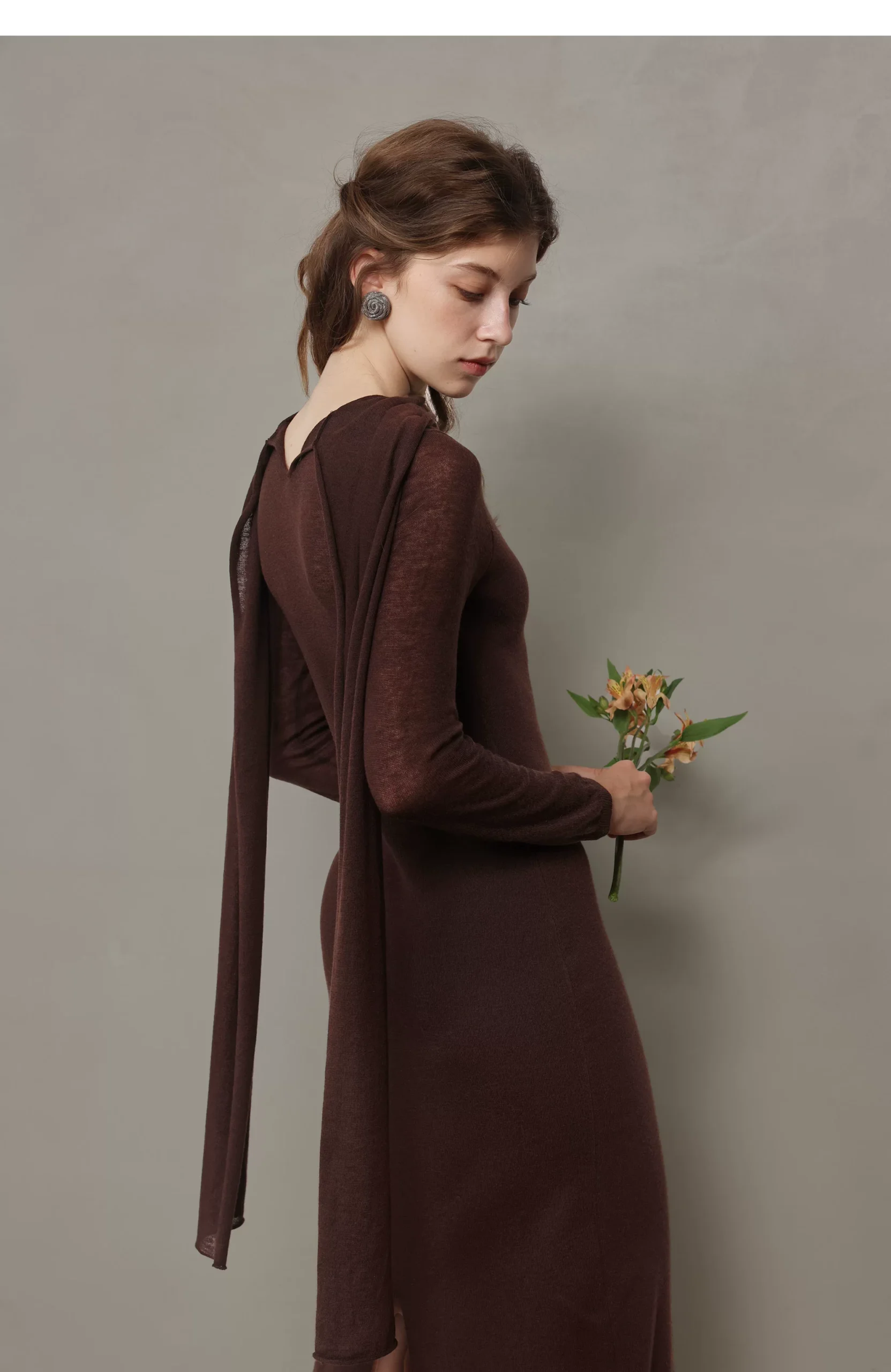
The trick to wearing a medieval dress for women outside a themed event is to let one element speak and keep the rest quiet. If the dress has a laced bodice and a full skirt, the shoes should be plain and modern — a flat leather boot, a square-toe loafer, a clean ankle boot with a low heel — and the bag should be small and unadorned. If the dress is a simple wool kirtle with no lacing, you have room for a belt, and a leather belt at the high waist is the single most effective way to make the silhouette look deliberate rather than borrowed. Jewellery follows the same logic: a thin gold chain and small earrings will disappear, while a torc, a circlet or a heavily beaded collar will tip the outfit into costume. Hair matters more than people expect. Loose and unstyled reads as romantic; a low bun or a simple braid reads as modern; anything involving ribbons woven through the hair reads as a photograph taken at a fair. Outerwear follows the same rule. A long wool coat left open, a suede jacket cropped at the waist, or a knitted cardigan belted high will all work, while a hooded cloak will not, and neither will anything with a faux fur collar or a bit of braid at the cuff.
Occasion changes the formula quickly. For an autumn office, a mid-calf wool dress with a high waist under a long coat, opaque tights and flat boots is almost indistinguishable from good tailoring, and the lacing stays hidden. For dinner, the same dress in a darker colour with a heel, a small bag and nothing else is enough; adding a shawl or a velvet jacket usually makes it look heavier rather than richer. For a winter wedding or an evening event, silk velvet with long sleeves and a deep but not low neckline works across a wide range of dress codes, and it needs no jewellery beyond earrings. For travel, choose linen or a wool-linen blend, because both survive being folded in a bag and both look better, not worse, after a day of wear. The one occasion where the full historical look belongs is a festival or a re-enactment, and there the details that read as excessive in daily life — a wide belt, a visible chemise edge, a hood — become correct rather than costume, which is a useful reminder that “costume” is mostly a question of context rather than of construction. If you only ever own one garment of this type, make it the plainest version you can find in the best cloth you can afford, because plain survives changing taste and good cloth survives the years that change it.
Care, storage, and the arithmetic of keeping it
Heavy natural fabrics repay care in a way that synthetics never do, and the routine is short. Wool should be brushed after wearing, aired overnight rather than washed, and cleaned only when it actually needs it; a medium-weight wool dress worn over a linen slip can go a whole season between washes. When it does need water, use cool water and a wool-specific detergent, never wring it, and dry it flat on a towel because the weight of the water will stretch a hanging garment out of shape. Linen goes in the machine at thirty or forty degrees, comes out creased, and should be ironed damp on the reverse; the crease is part of the character, and pressing it flat with steam every single time is a habit worth breaking. Silk velvet should not be washed at all if it can be avoided — steam it, brush the pile in one direction with a soft clothes brush, and store it folded in acid-free tissue rather than on a hanger, because a shoulder line stretched by a hanger never comes back. A plain cotton dust bag costs very little and does more for a wool dress than any product on a shelf, mainly by keeping light, dust and the friction of neighbouring hangers away from the surface.
Storage is where most people lose a good dress. Heavy skirts should hang from the shoulders on a wide, padded hanger with the weight distributed across the whole garment, not pinched at two thin points; laced bodices should be loosely laced so the eyelets are not under tension for months; and anything with embroidery should be folded with tissue between the layers so the thread does not catch. Moths are the real risk with wool, and the answer is cleanliness plus airflow rather than scent: a garment worn once and put away with food or sweat on it will attract them regardless of how much lavender is nearby. Keep a note of the fabric weight and composition when you buy, because it tells you what the garment will look like in three years, and it makes the second purchase much easier. On a site like long sleeve velvet high waist dress listings, that note is often the only reliable information you have, so write it down while the listing is still open in front of you and the details are still visible. Photograph the label, save the page, and note the date; when the same style reappears next season in a lighter weight, you will be able to tell within seconds whether it is the garment you already own and like.
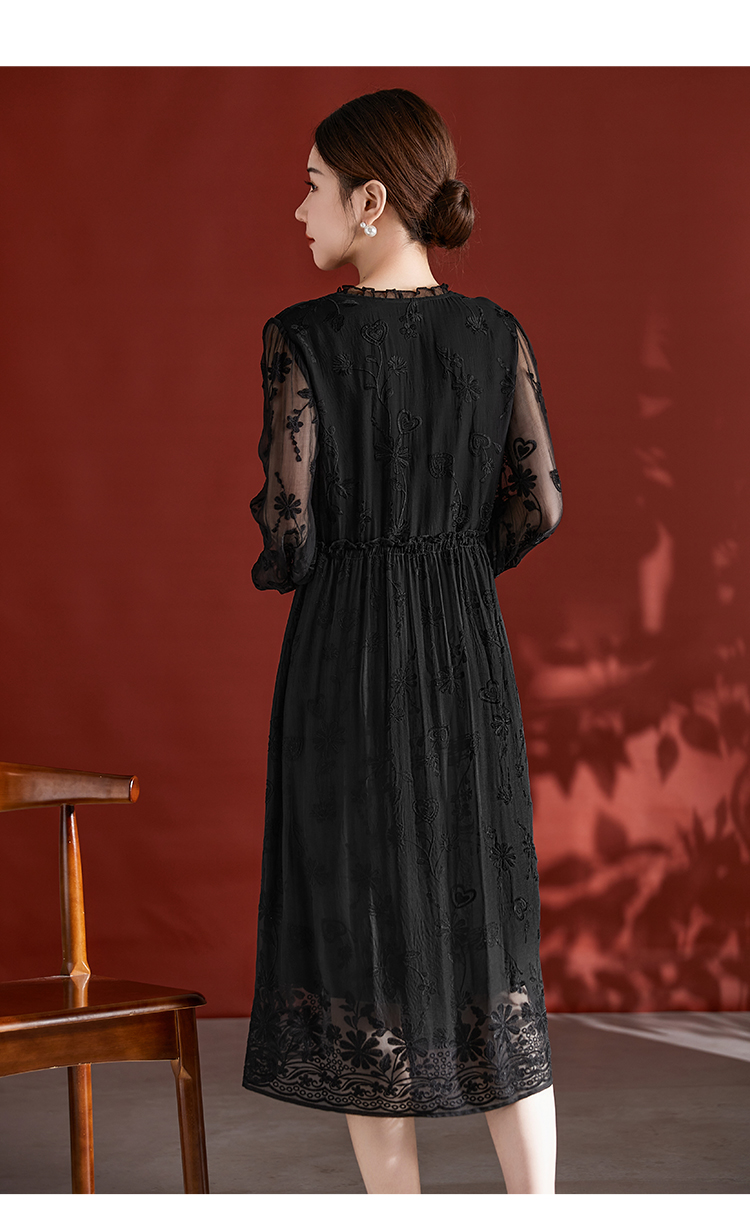
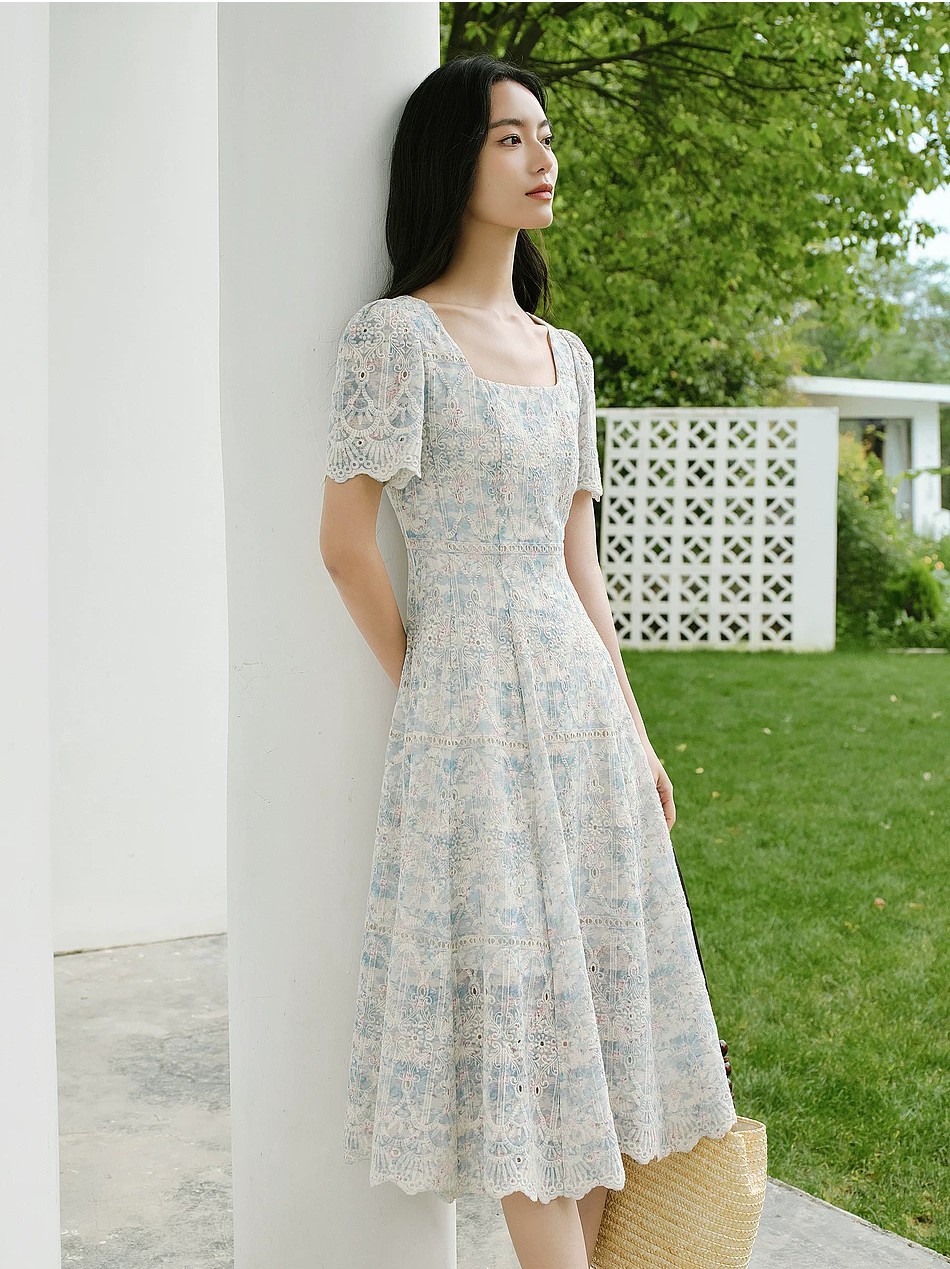
None of this requires a specialist wardrobe or a historical education. It requires deciding, before you buy, whether you want a garment that references the past or one that copies it, because those are different purchases with different lives. A referenced dress — good cloth, a curved sleeve, a high stabilised waist, an adjustable closure — will be worn to work, to dinner and to a cold station platform, and will look better each year as the cloth softens. A copied dress will be photographed once, at an event, and then live in a bag. The long sleeved silk velvet dress and the simpler heavy lace dress on this site are useful examples of the difference in practice: one is built around weight and drape, the other around surface and density, and each asks for different shoes, different weather and a different amount of attention. Choose the one that matches the life you actually have, keep the details few, and the medieval line stops being a costume and becomes a shape you reach for whenever the weather turns and you want to look like you meant it. That is the useful thing about this silhouette: it was never designed to be noticed, only to be worn, and garments built on that principle tend to age better than the ones built to be photographed once and forgotten.