

Effortless Support and Style: The Ultimate Guide to Cross Back Bras
Forget everything you thought you knew about bra discomfort and style limitations. The journey toward finding undergarments that truly align with both your body’s needs and your aesthetic desires often feels fraught with compromise. Yet, a singular design has steadily moved from the peripheries of athletic wear and specialty lingerie into the very heart of everyday wardrobes, championed by fitness experts, fashion icons, and everyday wearers alike. This is the domain of the cross back bra. More than a mere trend, it represents a fundamental rethinking of support, posture, and silhouette. This guide isn’t about following a fleeting fashion; it’s about understanding an engineering and design principle that can transform how you feel in your clothes from the inside out. We’ll dissect its mechanics, celebrate its versatility, and provide you with the knowledge to select the perfect one, blending professional insight with accessible choices.
The Anatomy of Support: Why the Cross Back Design Works
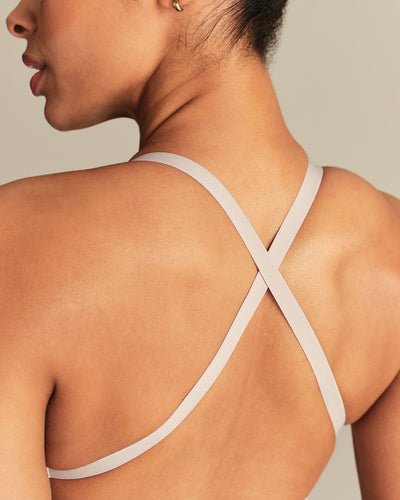
To appreciate the cross back bra, one must first understand the biomechanics it addresses. A conventional bra distributes its supportive force primarily through the straps resting on the acromion processes of your shoulders (the bony tips) and the band around the ribcage. This often creates a problematic vector of force: downward and forward, leading to shoulder grooving, upper back tension, and a reliance on tight bands that can restrict diaphragmatic breathing. The cross back design fundamentally alters this force vector. By having the straps cross between the shoulder blades, they create a tensile network across the upper back. This harnesses the larger, more robust musculature of the upper back—like the trapezius and rhomboids—to share the load. From an engineering perspective, it’s the difference between a simple hanging load and a triangulated suspension system, a principle well-documented in structural engineering for its stability. A study on biomechanics from the University of Portsmouth’s Research Group in Breast Health highlighted that optimal breast support should minimize vertical movement and reduce strain on the shoulders, a goal inherently served by dorsal-crossing strap configurations. This isn’t just about comfort; it’s about posture. By pulling the shoulders slightly back and down, the cross back bra can counteract the forward-slumping posture exacerbated by modern life, a point frequently emphasized by physiotherapists on platforms like YouTube and in clinical literature.

From Gym to Street: The Unparalleled Versatility
The initial association of cross back bras with high-impact sports is understandable, but their evolution into a fashion staple is a testament to their functional elegance. This versatility stems from the clean, architectural lines the back design creates. Unlike the utilitarian look of a racerback, which can sometimes appear purely sporty, a well-designed cross back offers a stylish, criss-cross detail that transforms the back into a focal point. It seamlessly pairs with a wide range of necklines—deep V-backs, open-back tops, wide armholes, and off-shoulder styles—that would render a traditional bra visibly awkward or impossible to wear. Fashion commentators from Vogue to Who What Wear have repeatedly noted the cross-back as a key detail in “athleisure” and contemporary layered looks, praising its ability to bridge categories. As author and style consultant Allison Bornstein often articulates, modern dressing is about intentional details; a visible cross back bra strap is no longer a wardrobe malfunction but a deliberate style choice, adding structure and interest. This duality of purpose means a single garment can transition from a yoga session to a casual coffee meet-up without requiring a change, embodying the efficiency and multifaceted nature of contemporary life. The design speaks to a wearer who values both performance and presentation, refusing to sacrifice one for the other.
Navigating the Spectrum: Types and Fit Considerations
Not all cross-back designs are created equal, and understanding the spectrum is crucial for a perfect match. The primary categories hinge on the nature of the cross and the level of support. A true cross back bra typically has straps that are sewn into the back band in a fixed “X” formation, offering immutable, firm support—ideal for running or HIIT training. Then there are convertible or adjustable styles, where straps can be detached and reconfigured, offering flexibility but sometimes at a slight cost to the unwavering stability of a fixed design. Another key variant is the longline cross back, which extends further down the torso, providing enhanced core compression and an even broader distribution of pressure, often favored in dance and gymnastics. The fit principle here transcends standard bra fitting. While the underband should remain snug and level (a universal rule), the focus shifts to the back. The cross should sit flat against your skin without digging, and the intersection point should rest comfortably between your shoulder blades, not riding up toward your neck. A common mistake is sizing down for a tighter cross, which can cause uncomfortable pressure on the spine. Instead, ensure the cup volume is correct first—a principle echoed by fitters from renowned retailers like Bare Necessities and Brava Lingerie—as an ill-fitting cup will compromise the entire system’s efficiency, regardless of the back design.
The Material Science: Fabric and Construction
The magic of a great cross back bra is not solely in its geometry; its material composition is equally vital. Modern performance fabrics are engineered with specific intentions. Moisture-wicking blends, often involving polyester or nylon with proprietary technologies like Coolmax or Supplex, are non-negotiable for athletic use, drawing sweat away from the skin to regulate temperature and prevent chafing. For everyday or fashion-oriented pieces, the fabric palette expands to include modal, microfiber, and even lace, but with a critical caveat: elasticity and recovery. The power of the cross-back relies on constant, dynamic tension. The materials must have excellent memory to return to their original shape after stretching, lest the support becomes lax. Seam construction is another silent hero. Flat-lock or bonded seams in the critical areas where the straps cross and meet the cups prevent irritation, a detail highly praised in user reviews on platforms like Amazon and detailed by textile engineers in industry publications. As Dr. Joanna Wakefield-Scurr, a leading researcher in breast health, has stated in her publications, “The interaction between the garment’s design, its material properties, and the individual’s morphology dictates the efficacy of support.” This triad is perfectly exemplified in a well-constructed cross back bra.

Making an Informed Choice: Aligning Design with Intention
With this knowledge in hand, selecting your ideal cross back bra becomes an exercise in aligning design with your specific intentions. Ask yourself the primary question: Is this for high-impact activity, moderate support, or primarily aesthetic appeal? For runners and CrossFit enthusiasts, prioritize fixed-cross designs with encapsulated cups (each breast is separately housed) and high-performance, compressive fabrics. Brands like Sweaty Betty and Lululemon often feature these in their technical collections. For yoga, Pilates, or daily wear, a softer, more flexible cross with seamless construction and breathable fabric might be preferable, offering freedom of movement without compression. The fashion-forward wearer should look for designs where the back detail is part of the aesthetic—think intricate straps, luxurious textures, or bold colors meant to be seen. Crucially, this informed approach also empowers you to discern value. A higher price point often reflects advanced fabric technology, durable construction, and precise ergonomic patterning, which translates to longevity and consistent performance. However, the market also offers excellent value, with brands like AYBL and others providing quality options that incorporate these principles at accessible price points, especially during seasonal sales or through direct-to-consumer models that cut out retail markups.

The cross back bra is far more than an item of clothing; it is a solution. It solves for physical strain, for stylistic expression, and for the modern demand for versatile, multi-functional apparel. It embodies a convergence of biomechanical science, textile innovation, and design intelligence. By choosing a design that respects the architecture of your body and the contours of your life, you invest in a foundation of comfort and confidence. This isn’t about concluding a search, but about beginning a new standard for what you expect from what you wear next to your skin—where effortless support and undeniable style are not mutually exclusive, but intrinsically linked.