

Styling Semi-Formal Dresses for Every Occasion
Navigating the world of event attire often leads us to the versatile and essential category of semi-formal dresses. This dress code, a midpoint between casual daywear and full evening glamour, offers immense creative freedom yet requires a nuanced understanding to master. It’s not merely about selecting a pretty garment; it’s about crafting an appropriate, confident, and personal statement for moments that matter—from garden parties and cocktail hours to sophisticated dinners and daytime weddings. The right semi-formal dress acts as a sartorial chameleon, adapting to context, time, and personal style. This guide delves into the art and science of styling these dresses, moving beyond subjective opinion to ground our advice in design principles, cultural context, and authoritative perspectives. We’ll equip you with the knowledge to make impeccable choices, ensuring you feel perfectly attired, empowered, and authentically yourself for every semi-formal invitation that arrives.
Decoding the Semi-Formal Lexicon: Beyond the Label
The term “semi-formal” or “dressy casual” can be a source of sartorial anxiety. To demystify it, we must look to its definition in fashion literature and authoritative sources. The Fashion Institute of Technology’s curriculum often describes semi-formal wear as attire that is polished and intentional without adhering to the strict protocols of white or black tie. It occupies the space where elegance meets relative comfort. Historically, as explored in works like “Dress Codes: How the Laws of Fashion Made History” by Richard Thompson Ford, dress codes evolved as markers of social class and occasion. The semi-formal dress emerged as a 20th-century response to increasingly varied social events that demanded more than day dress but less than full evening regalia. On platforms like Quora, style experts frequently analogize it to “cocktail attire,” though with a slightly broader scope that can extend to certain daytime events. The key objective markers include length (typically knee to midi, though tea-length is also classic), fabric quality (silks, satins, jerseys, fine knits, and lace over casual cottons), and structural detail (defined seams, draping, or minimal embellishment). Understanding this lexicon is the first step toward intentional styling, transforming a vague directive into a clear creative blueprint.

The Architectural Elements: Silhouette, Fabric, and Color Psychology
Choosing a semi-formal dress is an exercise in architectural selection. The silhouette forms the foundation. A-line dresses, universally flattering and rooted in designs pioneered by Christian Dior’s “New Look,” offer elegance and ease. Sheath dresses provide a modern, streamlined profile that commands attention through simplicity, a principle championed by designers like Calvin Klein. Fit-and-flare styles introduce movement and a touch of retro charm. Each silhouette communicates a different non-verbal cue; for instance, a wrap dress, popularized by Diane von Furstenberg, signals approachable confidence. The fabric is the texture of your message. A flowing chiffon or georgette suggests softness and romance, ideal for garden or beachside events. A structured crepe or matte jersey conveys modern sophistication for urban cocktail parties. Color psychology, studied extensively by institutions like the Pantone Color Institute, plays a crucial role. Navy and emerald green project authority and polish, while blush pink and lavender offer a softer, feminine appeal. For evening events, metallics or deep jewel tones align with the ambiance. As the renowned stylist Rachel Zoe once stated on her social media, “Color is a point of view. In a semi-formal setting, it’s your first opportunity to express the mood you wish to embody.” This trifecta—silhouette, fabric, color—works in concert to build a dress that is not just worn but performed.
Context is King: Occasion-Specific Styling Algorithms
A dress does not exist in a vacuum; its appropriateness is dictated by the specific algorithm of the occasion. Let’s apply this to common scenarios. For a daytime wedding, especially in spring or summer, the algorithm favors lighter fabrics, brighter or pastel colors, and often more modest necklines and lengths. A floral-print midi dress in silk would be a scientifically sound choice, harmonizing with the daylight and celebratory yet respectful tone. A cocktail party held after 6 PM calls for a different formula: darker hues, richer fabrics like velvet (in cooler months) or satin, and more dramatic silhouettes. Here, a little black dress—a concept solidified in cultural consciousness by Audrey Hepburn in “Breakfast at Tiffany’s”—becomes a statistically optimal solution, its versatility well-documented in style literature from Vogue to Harper’s Bazaar. A sophisticated dinner at an upscale restaurant allows for sleek, minimalist dresses that focus on cut and drape, avoiding excessive embellishment that might clash with the setting. The “context algorithm” also includes venue: a museum gala differs from a rooftop lounge. By inputting variables—time of day, season, venue formality, and event purpose—you can output a perfectly styled semi-formal dress ensemble with logical precision.
The Multiplicative Power of Accessories and Footwear
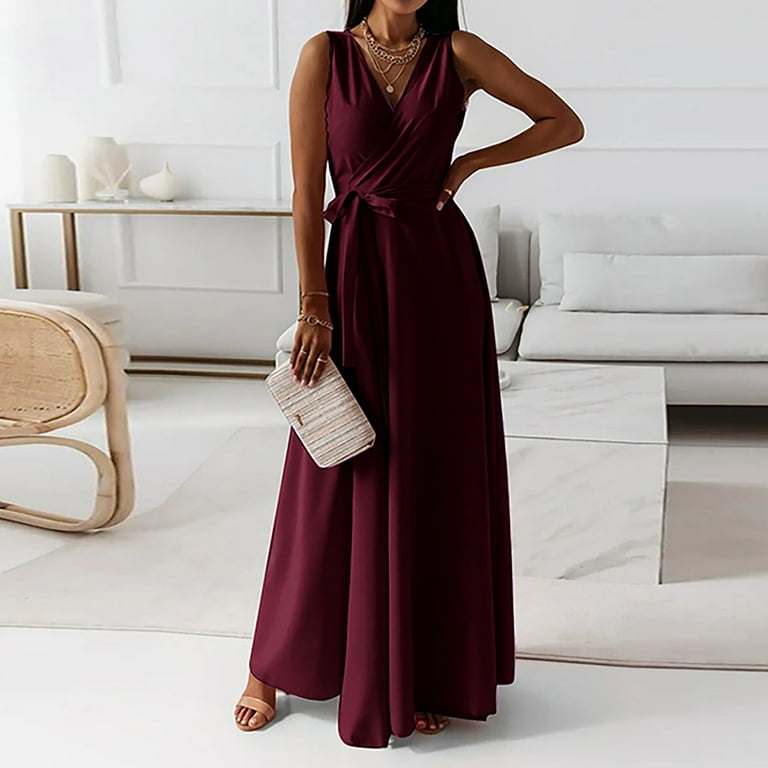
If the dress is the core thesis of your outfit, accessories and footwear are the compelling evidence and concluding remarks. Their role is multiplicative, not additive; the right choices amplify the dress’s impact exponentially, while wrong ones can undermine it. The principle of balance, taught in design schools worldwide, is paramount. A dress with intricate beading or a high neckline pairs well with simple, elegant jewelry—perhaps a single statement earring or a delicate necklace. Conversely, a minimalist sheath dress provides the perfect canvas for bold, architectural jewelry. Handbags should be scaled appropriately; a sleek clutch is the canonical companion to semi-formal dresses, as it maintains a streamlined silhouette. Footwear is the final determinant of stance and attitude. A classic pump, with its heritage in both power dressing and femininity, elevates almost any silhouette. A strappy sandal introduces a note of lightness, perfect for warmer months or outdoor events. Even the choice between a pointed or rounded toe carries semantic weight—pointed often reads as sharper and more formal. As fashion historian Dr. Valerie Steele has noted in lectures at The Museum at FIT, “Accessories are the punctuation marks of fashion. They can turn a simple sentence of a dress into a question, an exclamation, or a definitive period.” This layer of styling is where personal identity shines brightest within the semi-formal framework.
Building a Cost-Per-Wear Wardrobe: Investment and Intelligence
In an era of conscious consumption, styling extends beyond a single event to building a versatile wardrobe. The concept of “cost-per-wear,” popularized by financial and style advisors alike, is a rational model for acquiring semi-formal dresses. Instead of a one-time, expensive purchase for a single event, consider dresses that can be reconfigured through accessories for multiple occasions. A well-constructed black midi dress in a quality fabric is a high-utility item. For a professional dinner, pair it with pearls and pumps; for a friend’s birthday, add colorful statement earrings and metallic sandals. This approach is not only economically sound but also environmentally considerate. Furthermore, knowledge of fabric care and simple tailoring can extend a garment’s life significantly, ensuring your investment pays dividends over time. Look for dresses with clean lines and timeless proportions—elements that transcend fleeting trends. This strategic approach to your wardrobe means you’re never starting from zero when an invitation arrives; you’re simply curating from a collection of intelligent, adaptable pieces.

Mastering the art of the semi-formal dress is an ongoing dialogue between personal expression and contextual understanding. It’s about harnessing objective style principles—from silhouette science and color theory to occasion-specific algorithms—to serve your unique identity. By viewing each dress not as a costume for a single event but as a versatile component in a broader sartorial strategy, you cultivate both confidence and clarity. The goal is to move through your social landscape with ease, knowing your attire is a thoughtful, appropriate, and powerful extension of yourself. Let this knowledge guide you to choices that feel not just right for the event, but authentically and brilliantly right for you.
