

5 Chic Semi-Formal Dresses for Effortless Style and Versatility
Navigating the space between casual daywear and formal evening attire often feels like a sartorial tightrope walk. The answer, consistently elegant and endlessly adaptable, lies in the realm of semi-formal dresses. These are not merely garments; they are strategic tools for modern living. They carry you from pivotal afternoon meetings to celebratory dinners with a simple change of accessories, embodying a philosophy of intelligent, effortless dressing. This exploration delves into five distinct silhouettes of semi-formal dresses, dissecting their aesthetic principles, psychological impact, and practical versatility. We’ll move beyond subjective taste, anchoring our understanding in design theory, cultural context, and the wisdom of style authorities to build a foundational wardrobe that works as hard as you do.
The Wrap Dress: Architectural Flattery and Psychological Confidence
The wrap dress stands as a monument to democratized elegance. Its genius is rooted in universally flattering architecture. Unlike fixed-size garments, the wrap silhouette creates a customizable V-neckline and a cinched waist that adapts to the individual body, a principle of inclusive design celebrated by institutions like the Fashion Institute of Technology. This isn’t just about looking slimmer; it’s about creating a harmonious, balanced silhouette that follows the golden ratio, a concept of aesthetic perfection studied in art and design for centuries. The deep V-neck draws the eye vertically, lending an air of poised authority, while the tied waist defines the body’s narrowest point. Diane von Furstenberg, who famously declared the wrap dress a “uniform,” didn’t just sell a dress; she sold a feeling of confident, controlled femininity. The dress’s psychological power is noted by style psychologists; the act of “wrapping” oneself can create a sense of being securely and intentionally put together. For the professional woman, this translates to a non-verbal cue of competence and self-assurance. The versatility is staggering: pair it with sleek pumps and a structured blazer for client presentations, or loosen the wrap slightly, swap to strappy sandals, and add bold jewelry for an evening soiree. It is the quintessential example of a semi-formal dress that masters multiple domains.

The Midi Shirt Dress: Borrowed from the Boys, Perfected for Power
Emerging from the revolutionary act of women appropriating menswear, the shirt dress has evolved into a cornerstone of sophisticated, androgynous style. Its authority is derived from its origins. As Coco Chanel once intimated, borrowing from masculine tailoring was not about erasing femininity but about claiming its comfort and authority. The midi-length shirt dress, particularly, strikes a masterful balance. It retains the structured collar, button-front, and often a belt—elements signaling order and professionalism—while the flowing midi skirt and softer fabrics introduce movement and grace. This duality is its superpower. From a sociological perspective, as discussed in forums like Quora and analyses on Business of Fashion, clothing that blends gendered codes can enhance perceived credibility in hybrid environments. A crisp cotton or satin version can be worn to a creative agency or a tech summit, projecting organized creativity. The scientific explanation for its appeal may lie in “enclothed cognition,” a studied phenomenon where the symbolic meaning of clothing influences the wearer’s psychological processes. Wearing a structured dress can prime the mind for focused, strategic thinking. For a seamless day-to-night transition, consider the fabric: a lustrous crepe or silk-blend elevates it instantly. Unbutton the collar, swap the loafers for mules, and add a metallic belt—the transformation is swift, intelligent, and deeply stylish.

The Fit-and-Flare: Cinematic Romance Meets Modern Structure
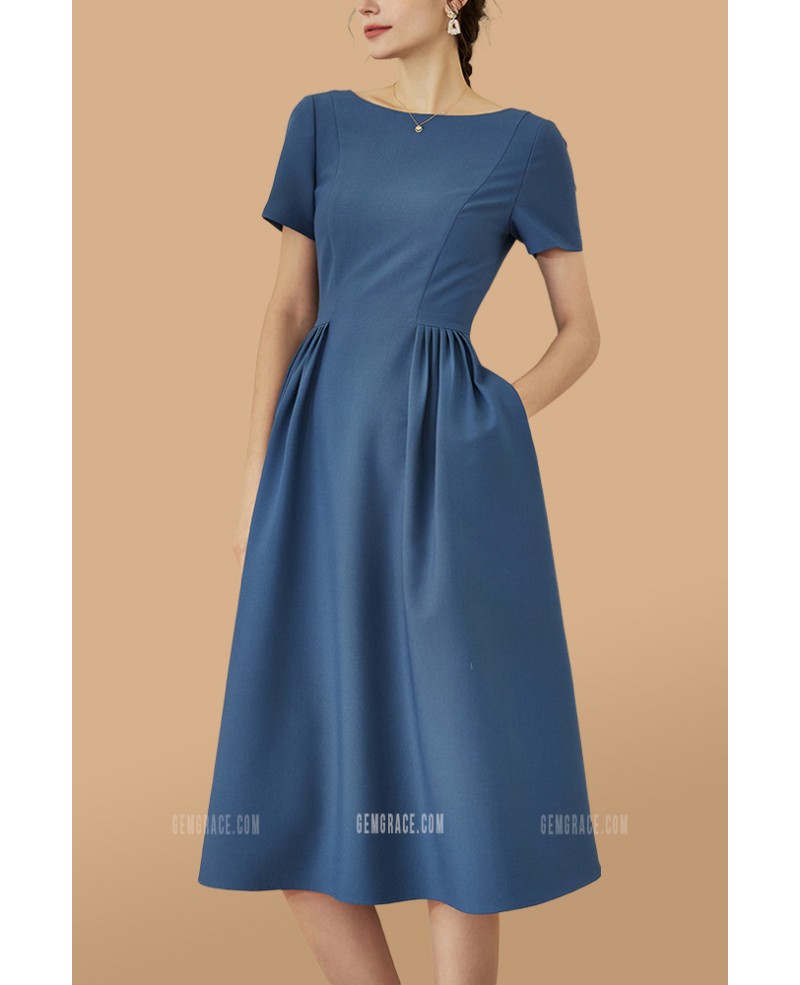
There is a reason the fit-and-flare silhouette is eternally linked with icons like Audrey Hepburn and the golden age of cinema. Its design creates a joyful, hourglass shape—a fitted bodice that emphasizes the torso and a skirt that flares out from the natural waist. This shape doesn’t just flatter; it performs. The fitted top provides a clean canvas for necklaces and earrings, while the skirt offers freedom of movement and a touch of whimsy. In her book “The Psychology of Fashion,” Professor Carolyn Mair notes that clothing that allows for physical ease can positively affect mood and social interaction. The fit-and-flare is inherently optimistic and engaging. For semi-formal occasions, the key is in the details. Opt for a dress in a matte jersey, heavy crepe, or wool blend rather than overly casual cotton. A knee-length or tea-length version maintains modernity. This dress is your secret weapon for weddings, gallery openings, or dinner dates where you wish to appear polished yet approachable. It masterfully negotiates the semi-formal brief by balancing structure with softness, making it a perennial favorite that feels both nostalgic and completely current. Its versatility is further proven by its acceptance across style authorities, from Vogue’s seasonal guides to timeless style capsules recommended by universities like Harvard for their alumni networking events.
The Slip Dress: Minimalist Alchemy in Luxe Fabrics
At first glance, the slip dress appears to be the simplest of all—a mere whisper of fabric. Yet, this is where its sophisticated deception lies. Its power is born from minimalism and material alchemy. Rooted in intimate apparel, its transition to outerwear in the 1990s, championed by figures like Kate Moss and Calvin Klein, was a fashion revolution that celebrated a kind of effortless, undone glamour. The semi-formal iteration of the slip dress is defined by its fabric: silk satin, charmeuse, or high-quality velvet. As the Costume Institute at The Metropolitan Museum of Art has highlighted, fabric is the primary signifier of a garment’s formality. A silk slip dress, with its inherent luminosity and drape, immediately elevates the basic shape. The scientific principle here is tactile and visual weight. Luxe fabrics fall and move in a specific way, creating a column of light and shadow that is inherently elegant. Styling is where you dictate its formality. For a crucial afternoon event, layer it under a tailored cashmere cardigan or a sharp, oversized blazer. Come evening, wear it solo with fine jewelry and heels. This dress teaches a vital style lesson: investment in superior fundamentals pays endless dividends. It is a semi-formal dress that speaks in a low, confident voice, proving that less, when executed with precision, is invariably more.
The Statement Sleeve Dress: Sculptural Detail as a Focal Point
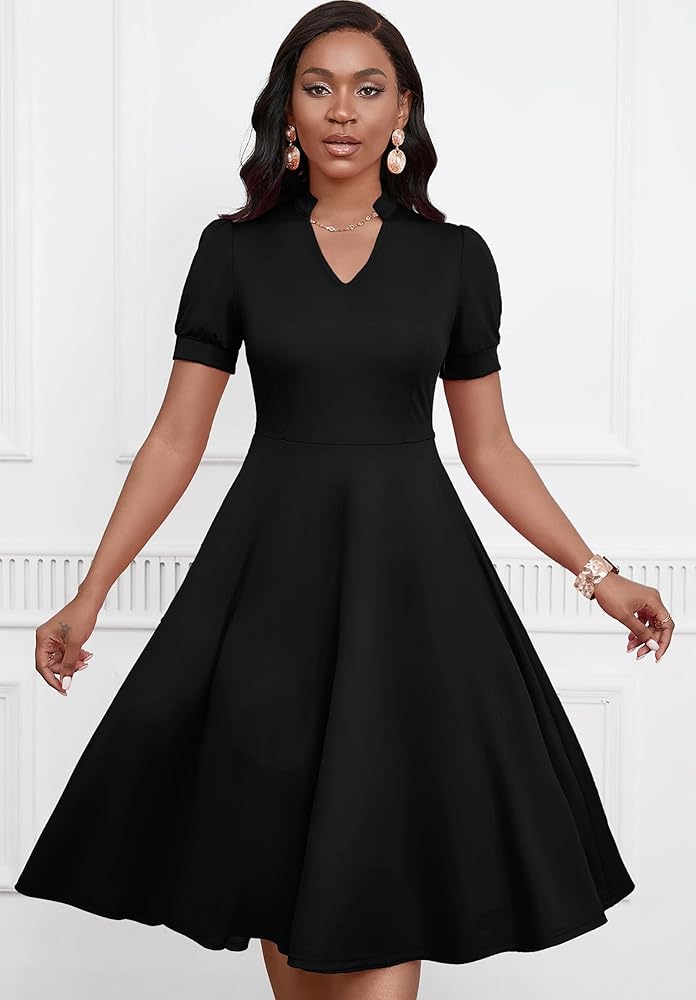
In a landscape often dominated by minimalism, the statement sleeve dress offers a compelling counterpoint through architectural detail. This style uses the sleeve—whether puffed, leg-of-mutton, bell, or dramatically ruffled—as the primary sculptural element. The design principle at play is focal point creation, a concept central to visual arts. By drawing attention to the shoulder and arm, the dress creates a powerful, upward-focused silhouette that can convey creativity, boldness, and artistic sensibility. Fashion historian Valerie Steele has discussed how exaggerated sleeves have cyclically returned as symbols of status and individuality throughout history. In a modern semi-formal context, the key is balance. The dress itself is often kept relatively simple in cut—a column, an A-line, or a modest wrap—allowing the sleeves to be the star without veering into costume territory. This makes it ideal for events where you want to express personal style without sacrificing professionalism: think office parties, literary dinners, or opening nights. The versatility is intelligent; the dramatic sleeve often means you need little other jewelry, simplifying your getting-ready process. It’s a dress that does the talking for you, offering a blend of historical reference and contemporary boldness that is both memorable and perfectly pitched for creative semi-formal settings.
Building Your Versatile Arsenal: A Practical Synthesis
Understanding these five silhouettes provides a theoretical framework, but their true value is realized in strategic application. Building a capsule of semi-formal dresses is an exercise in mindful consumption. Begin by assessing your lifestyle’s dominant tones—is it corporate-adjacent, creative-industry, or a hybrid? A wrap dress and a shirt dress form a formidable core for a business-inclined wardrobe. Introduce a fit-and-flare or statement sleeve dress for social obligations. The slip dress serves as the luxurious wildcard. When sourcing these pieces, prioritize natural, quality fabrics (silks, wools, high-grade cottons, and crepes) which not only drape better but are more durable, offering a lower cost-per-wear over time. To bring professional knowledge on discounted prices to you, consider these tactics: subscribe to newsletters from retailers known for quality workwear and contemporary elegance for early sale access; utilize price-tracking browser extensions; and explore outlet sections of premium brands, especially post-holiday and during seasonal transitions. Remember, an investment in a single, versatile semi-formal dress that can be styled multiple ways often outweighs the fleeting satisfaction of several trend-driven pieces.
The pursuit of effortless style is not about owning a vast wardrobe, but about possessing the right tools. These five archetypes of semi-formal dresses—the Wrap, the Shirt, the Fit-and-Flare, the Slip, and the Statement Sleeve—each offer a unique language of form, function, and expression. They are backed by principles of design, psychology, and cultural history, making them more than mere fashion choices. They are reliable, versatile partners for the multifaceted demands of modern life. By choosing wisely and styling intentionally, you craft not just an outfit, but a consistent, confident presence ready for whatever the day—or night—may hold.