

Mastering Semi-Formal Dresses for Every Occasion
Navigating the world of event attire often feels like deciphering an unspoken code. “Cocktail,” “business casual,” “smart casual”—these terms float on invitations, leaving many in a state of sartorial uncertainty. Yet, nestled within this lexicon lies a category of remarkable versatility and power: the semi-formal dress. This is not about rigid rules or fleeting trends, but about understanding a foundational principle of modern dressing. A well-chosen semi-formal dress acts as a chameleon, adapting its character to context, and serves as a cornerstone of a confident, prepared wardrobe. It bridges the gap between the overtly casual and the strictly formal, offering a spectrum of elegance suitable for a vast array of life’s moments, from professional gatherings to celebratory dinners. The mastery of this single category can liberate you from wardrobe anxiety and provide a toolkit for polished self-presentation.
The Anatomy of a Semi-Formal Dress: Beyond the Label
To master the semi-formal dress, one must first deconstruct its essence. Objectively, semi-formal attire, sometimes referred to as “cocktail attire” in evening contexts, occupies the middle ground in the formality hierarchy. According to widely referenced style guides from institutions like the Emily Post Institute, it is less formal than black-tie but more deliberate than business or casual wear. For women, this typically translates to a dress of knee-length or midi length, though sophisticated jumpsuits can also qualify. The fabrics lean towards elegance—think crepe, silk blends, lace, high-quality jersey, or velvet in season—avoiding the overt sheen of full formal gowns or the informality of denim or jersey knits. The silhouette is where personal expression blooms within a framework: A-line, sheath, fit-and-flare, and wrap dresses are all classic contenders. The key scientific principle here is one of contextual appropriateness. A study from the Kellogg School of Management at Northwestern University highlighted that clothing affects the wearer’s psychological processes, a phenomenon known as “enclothed cognition.” The semi-formal dress, by its balanced nature, can induce a mindset of confident professionalism or relaxed elegance, depending on its design and setting. It is attire that signals respect for the occasion and the people present, without overwhelming the environment.
The Daytime Shift: Professional and Social Engagements
When the sun is high, the semi-formal dress takes on a refined, often structured, character. For a daytime wedding, a garden party, or an important client luncheon, the parameters shift slightly. Here, modesty and polish are paramount. A knee-length sheath dress in a solid pastel or a subtle floral print, perhaps with three-quarter sleeves, is a quintessential choice. Fabric weights can be lighter—a linen-blend or cotton-silk—but the cut should remain precise. This is not the domain for overt sparkle or dramatic slits. The viewpoint from style authorities like Who What Wear often emphasizes the power of accessories in these scenarios: a structured leather tote, closed-toe pumps or elegant flats, and minimalist jewelry complete a look that says “considered and capable.” As fashion historian and author Amber Butchart has noted, daytime formalwear has historically drawn from masculine tailoring for womenswear, translating into clean lines and defined shapes that communicate authority in social-professional spaces. The goal is to look effortlessly put-together, as if your elegance is an intrinsic part of your persona, not a costume donned for the event.
The Evening Transformation: Cocktail Hours and Dinners
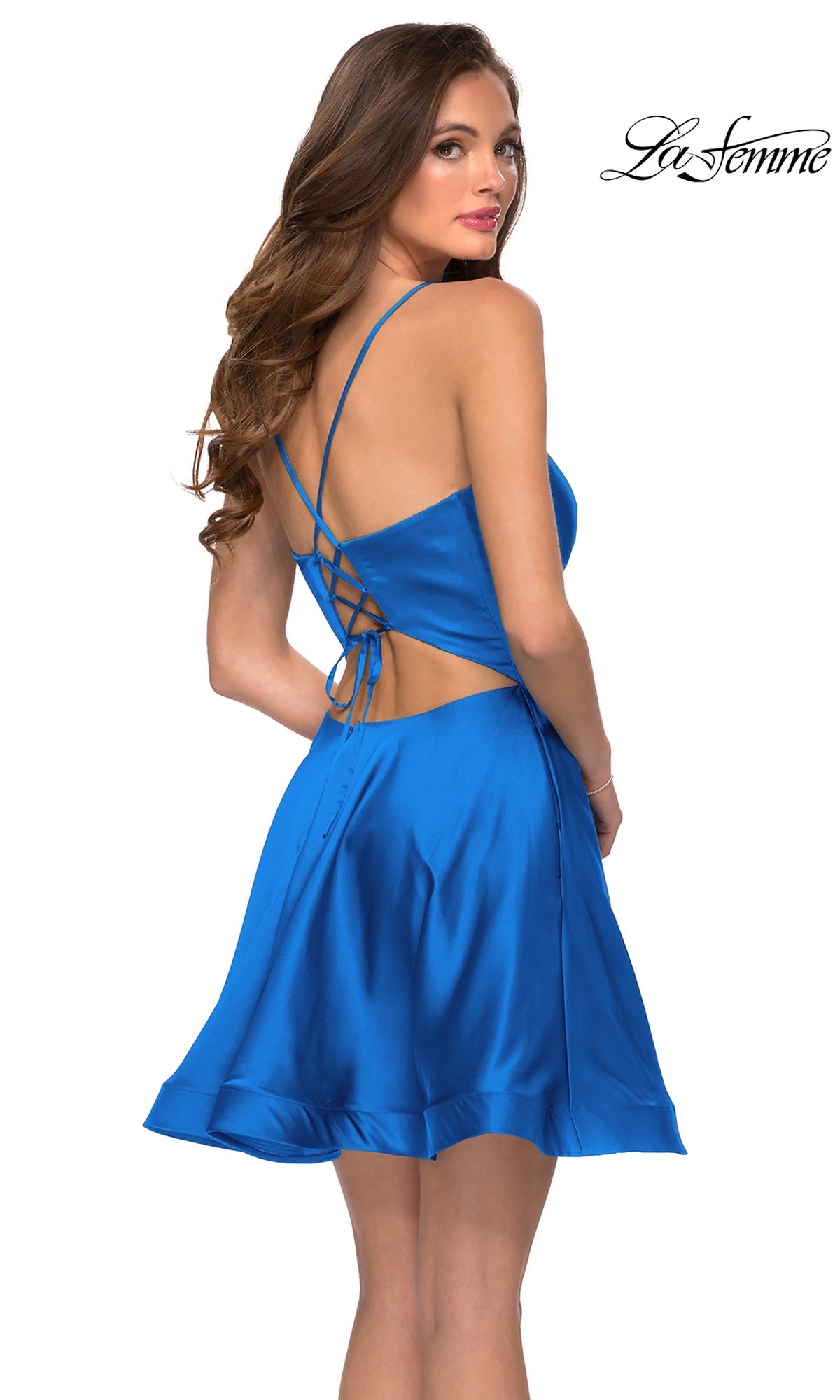
As daylight fades, the semi-formal dress is allowed—and expected—to embrace a touch more drama. This is the realm of the classic cocktail dress. Think of the iconic little black dress immortalized by Audrey Hepburn in Breakfast at Tiffany’s, a film that permanently cemented a specific silhouette into the cultural consciousness of evening semi-formal wear. Evening options can venture into richer hues—emerald green, burgundy, navy—or incorporate metallic threads, delicate beading, or lace overlays. Silhouettes may feature strategic cut-outs, sleek slip styles, or fuller skirts. The length can graze the knee or fall to a sophisticated midi. Footwear shifts to heels, whether stiletto or block, and clutches replace daytime bags. The underlying principle, echoed by celebrity stylists on platforms like YouTube, is one of balanced allure. It’s about highlighting one feature without overwhelming the whole. A statement sleeve balances a modest neckline; a high slit offsets a covered-up top. This balance is what separates semi-formal from casual clubwear; the elegance is inherent in the design, not solely in the amount of skin revealed.

Building Your Arsenal: A Strategic Approach
Mastery implies a curated collection, not a chaotic closet. Building a versatile lineup of semi-formal dresses is an exercise in strategic investment. The first pillar is the Foundation Dress: a supremely flattering, neutral-colored dress in a timeless silhouette. This is your sartorial safety net, ready to be accessorized up or down. The second is the Statement Dress: a piece in a bold color, unique print, or with a distinctive design element that reflects your personal style. The third is the Seasonal Dress: this could be a floral piece for spring events, a rich velvet for winter holidays, or a breezy linen-blend for summer soirees. This approach aligns with the “capsule wardrobe” philosophy popularized by style experts, which focuses on fewer, higher-quality pieces that mix and match efficiently. When considering quality, look for finished seams, lined interiors, and resilient fabric. These details are the hallmarks of a garment that will endure beyond a single season. As for the practical matter of cost, knowledge is your greatest ally. Understanding fabric quality and construction allows you to identify true value. Furthermore, leveraging end-of-season sales, reputable outlet retailers, and even rental services for highly specific one-off events can bring designer-level semi-formal dresses within reach at significantly discounted prices, making a sophisticated wardrobe an accessible goal rather than a financial burden.
The Power of Context: Reading the Unspoken Rules
No dress exists in a vacuum; its appropriateness is dictated by the specific context. Mastering semi-formal wear requires becoming a subtle anthropologist of the event. A semi-formal dress for a tech startup’s holiday party will differ from one for a law firm’s gala. Clues are often embedded in the invitation’s wording, the venue, and the time. “Cocktail attire” at a modern art museum suggests more fashion-forward leeway than the same phrase on an invitation to a country club. When in doubt, the principle of slight over-dressing is generally safer than under-dressing, as it conveys respect. Quora threads and community forums are filled with real-world advice on this very topic, with consensus often pointing towards erring on the side of elegance. Furthermore, consider the cultural context. As global interconnectedness grows, understanding regional norms is crucial. What is semi-formal in Milan may lean more formal in Minneapolis. Resources like travel guides or even the social media feeds of attendees from previous years can offer invaluable visual cues. The objective is to achieve harmony with the environment, allowing your confidence to shine because you know you belong.
From Personal Experience to Universal Principle
Let me speak from a personal perspective for a moment. I once attended a day-into-evening event with a single, simple navy blue semi-formal dress. For the afternoon seminar, I paired it with a tailored blazer, pearl studs, and low block heels. As the event transitioned to a dinner reception, I removed the blazer, swapped the pearls for a dramatic gold necklace, changed into sleek high heels, and applied a bolder lip color. The transformation was swift but complete, and I felt appropriately dressed for both phases without the need for a cumbersome change of outfit. This experience underscored the core tenet: mastery is about flexibility and intelligent design. It’s about owning pieces that serve you, not ones you must serve. The right dress is a tool for self-expression and social navigation. It answers the unspoken question on every invitation, allowing you to focus on the experience itself—the conversations, the connections, the celebration. In a world of constant sartorial noise, understanding and utilizing the semi-formal dress is a quiet declaration of self-assured style and pragmatic elegance. It is the art of being perfectly, unassumingly, prepared for whatever occasion arises.