Mastering the Versatility of Shift Dresses
In the lexicon of fashion, few garments claim the enduring, transformative power of the shift dress. It is not merely a piece of clothing; it is a sartorial proposition, a blank canvas of confidence that speaks to an ethos of effortless elegance. This article posits that mastering the shift dress is less about following trends and more about unlocking a foundational tool for personal expression—a tool that democratizes style, flatters myriad forms, and adapts with intellectual grace to the demands of modern life. We will move beyond superficial styling tips to explore its architectural integrity, its socio-cultural resonance, and its practical supremacy in building a capsule wardrobe that is both intellectually curated and viscerally appealing.
The Architectural Foundation: Deconstructing the Silhouette
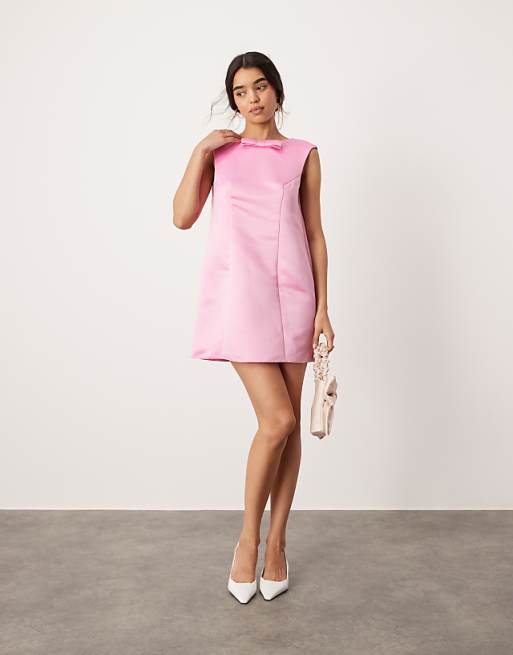
To understand the versatility of the shift dress, one must first appreciate its architecture. Defined by its straight, clean lines that fall from the shoulders without a cinched waist, the shift is a study in geometric purity. This is not an absence of design but a deliberate exercise in negative space, allowing the wearer’s form to interact with the fabric in a dynamic, personal way. As the Victoria and Albert Museum notes in its analysis of 20th-century fashion, the shift silhouette emerged as a radical departure from the restrictive, hourglass figures of the 1950s, championed by designers like Cristóbal Balenciaga and Hubert de Givenchy who explored shape and volume. The scientific principle at play is one of optical illusion. The unbroken vertical line created by a well-cut shift can elongate the frame, while its strategic darting or A-line flare (often subtle, originating from under the bust or hips) can create a perception of structure without constraint. This foundational design makes it universally flattering; it skims rather than clings, offering a sophisticated modesty that can be paradoxically powerful. It accommodates movement and breathability, principles rooted in both ergonomics and the early feminist embrace of practical, comfortable clothing that did not sacrifice polish. The shift dress, therefore, is a garment built on the principles of modernist design: form follows function, and the function is liberated, confident dressing.
A Canvas for Identity: Styling the Psychological Shift
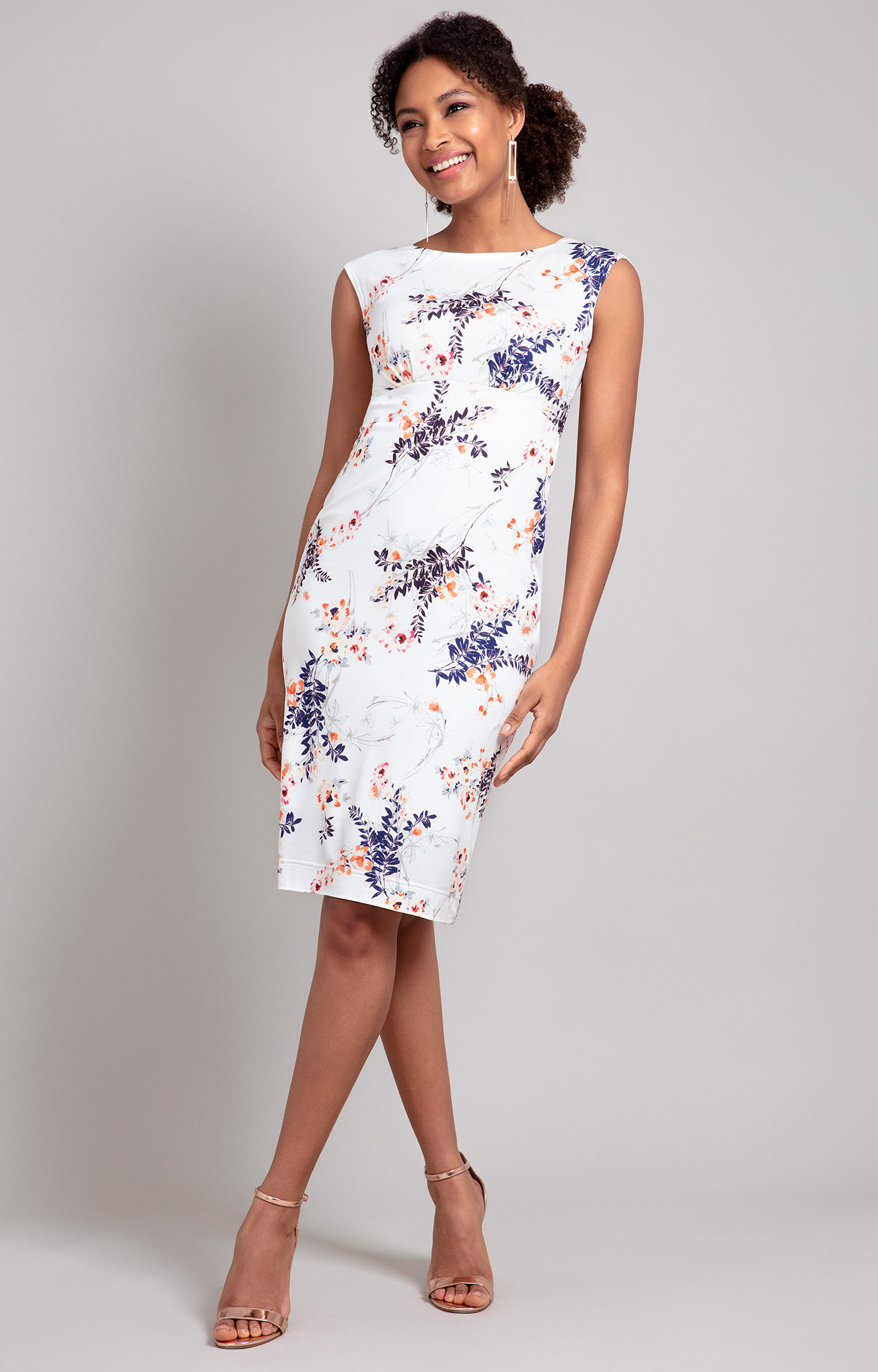
If the architecture provides the form, styling infuses it with personal narrative. The true mastery of the shift dress lies in recognizing it as a chameleon, its meaning shifting with context and accessories. Consider the perspective of a third-person observer: a woman in a stark black wool shift, paired with minimalist pumps and a structured leather portfolio, projects an aura of authoritative competence in a boardroom. The same dress, seen later with vibrant statement jewelry, patterned tights, and ankle boots, transforms into a declaration of creative boldness at a gallery opening. This transformative power is psychological. Dressing, as explored in works like Professor Carolyn Mair’s “The Psychology of Fashion,” is a non-verbal communication tool. The shift dress serves as a neutral, powerful base for this communication. Its simplicity avoids shouting, allowing the wearer’s choices—a bold lip, a vintage brooch, the texture of a bag—to speak in nuanced volumes. Fashion critic Vanessa Friedman of The New York Times has often argued that the most powerful wardrobe pieces are those that serve multiple narratives; the shift is a prime exemplar. From the iconic simplicity of Audrey Hepburn’s Givenchy shifts in “Breakfast at Tiffany’s,” which communicated a blend of fragile grace and steely independence, to the colorful, graphic shifts of the 1960s that became uniforms for a generation challenging social norms, the garment has consistently been a canvas upon which cultural and personal identities are painted.

The Intellectual Curator’s Wardrobe: A Capsule Philosophy
Adopting a first-person perspective, let us consider the shift as the cornerstone of an intellectually curated wardrobe. The modern consumer, overwhelmed by fast fashion’s churn, seeks sustainability not just in materials but in mindset. A capsule wardrobe, built on versatile, high-quality pieces, is the antithesis of waste. Here, the shift dress is invaluable. Investing in two or three shifts in superior fabrics—a crisp cotton for day, a fluid silk for evening, a sturdy tweed for winter—creates a rotational core. The economic and sartorial logic is sound. As financial advisor and author Paco de Leon highlights in her writing on mindful spending, the cost-per-wear of a versatile, well-made garment plummets over time. A single shift can be the foundation for dozens of outfits across seasons. Layer it over a turtleneck and tights with boots for winter; wear it alone with sandals in summer; throw a blazer over it for a meeting; or belt it (contradicting its very form, yet effectively) to create a momentary silhouette change. This approach brings “professional knowledge” to the user: understanding fabric weights, seam construction, and color theory to make informed purchases. It also inherently advocates for value over volume, which aligns with seeking “discounted prices” on quality items during sales for key investment pieces, rather than on transient, low-quality trends.
Material World: The Textile as Co-Conspirator
The versatility of a shift dress is inextricably linked to its material composition. A shift in stiff organza commands a room with its architectural presence, while one in fluid jersey moves with the body in a dance of comfort and ease. Scientific explanations of drape and hand—terms used in textile science to describe how fabric falls and feels—are crucial here. Authorities like the Textile Institute explain that a fabric’s drape coefficient determines its suitability for different silhouettes. A shift dress benefits from a medium to high drape for an elegant flow, or a low drape for a more structured, graphic look. Consider the words of designer Diane von Fürstenberg, who, while famous for the wrap dress, has often praised simple silhouettes: “The dress must serve the woman, not the other way around.” The right fabric ensures this service. A linen shift embraces wrinkles as part of its casual, intellectual charm, perfect for a weekend brunch or a creative workspace. A satin-backed crepe shift, with its luminous surface and matte reverse, offers a tactile luxury suitable for evening soirees. This material knowledge empowers you, the wearer, to choose shifts that align not only with aesthetic desires but with lifestyle needs, ensuring the garment is a workhorse of pleasure, not a fragile museum piece.
Cultural Resonance and Modern Reinterpretation
The shift dress carries a historical weight that informs its modern power. Its explosion in the 1960s, popularized by designers like Mary Quant and André Courrèges, was not a mere fashion trend but a social statement. It represented youth, modernity, and a rejection of previous generations’ formality. As the BBC’s culture archives note, it became the uniform of the liberated woman, one who was active, working, and claiming space. This legacy is not archival; it is active. Today, the shift is reinterpreted through inclusive lenses. Brands across the spectrum offer shifts in extended size ranges, acknowledging that this flattering silhouette belongs to every body. The conversation has shifted from “does this dress fit me?” to “how does this dress make me feel?” The modern shift can be mini, midi, or maxi; sleeveless, long-sleeved, or puff-sleeved. It can feature bold prints, derived from global textile traditions, or remain in a solid, powerful hue. This evolution demonstrates the garment’s democratic spirit. It is a tool of empowerment, its simplicity making it accessible, its history making it meaningful, and its adaptability ensuring its perpetual relevance.
Mastering the versatility of the shift dress is an exercise in intentional living. It is choosing a garment whose design integrity supports the body, whose simplicity champions the individual, and whose history is woven with threads of liberation. It is building a wardrobe on a foundation of thoughtful pieces that offer exponential returns in style and confidence. The shift dress is not a trend to be consumed but a principle to be embraced: that true elegance often resides in refined simplicity, and the most powerful statement is the one that allows you, in all your complexity, to shine through.