

How to Style Sexy Cocktail Dresses for a Night Out
Stepping into the night, the right attire does more than just cover you—it becomes an extension of your confidence, a statement of intent. The sexy cocktail dress stands as a sartorial cornerstone for these moments, a garment designed to navigate the delicate balance between allure and sophistication. This isn’t about following a rigid set of rules, but about understanding the principles of silhouette, fabric, and context to craft an unforgettable presence. From the physics of drape to the psychology of color, styling such a dress is an art form grounded in both aesthetic theory and practical knowledge.
The Foundation: Understanding Silhouette and Fit
The journey to mastering the sexy cocktail dress begins with the fundamental principle of silhouette. A silhouette is the overall shape or outline of a garment as it hangs on the body. In fashion theory, as explored in resources like the Fashion Institute of Technology’s archives, the right silhouette works in harmony with your natural proportions to create a visually pleasing, balanced form. A dress that is too loose can obscure your shape, while one that is too tight can create unflattering tension lines. The goal is a fit that skims the body, allowing for movement while accentuating curves. For instance, a sheath dress, with its clean, narrow lines from shoulders to hem, offers a modern, streamlined sexiness. It creates a continuous vertical line that elongates the figure, a concept supported by the Gestalt principles of visual perception, which emphasize the human eye’s tendency to perceive continuous forms. Conversely, a fit-and-flare dress uses structural contrast—a fitted bodice against a flared skirt—to highlight the waist and create a dynamic, feminine shape. This play of positive and negative space is a core tenet of design, applicable from architecture to apparel. When you try on a dress, move in it. Sit, walk, raise your arms. The fabric should move with you, not against you. This isn’t merely about comfort; it’s about the dress becoming a part of your kinetic expression, a concept echoed by designers like Diane von Fürstenberg, who famously linked confidence and wrap dresses.
Fabric as a Language: Texture, Drape, and Perception
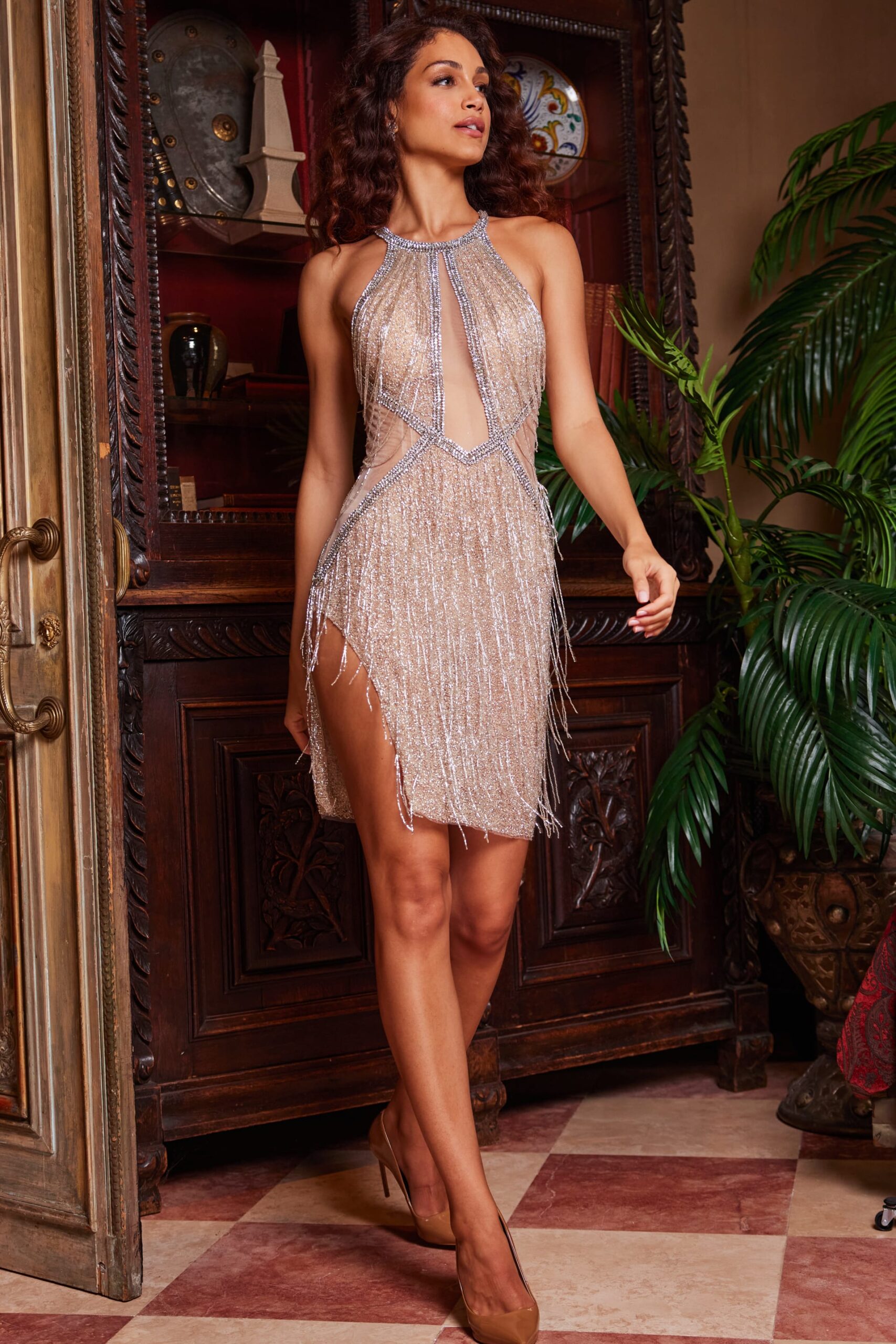
If silhouette is the grammar, fabric is the vocabulary of your sexy cocktail dress. The material communicates subtleties before a single word is spoken. Scientifically, fabrics interact with light and gravity in distinct ways, affecting how color is perceived and how the dress falls on the body. Satin, with its smooth, lustrous surface, reflects light uniformly, creating a sleek, liquid-like effect that highlights the body’s contours. This luminous quality has long been associated with luxury and evening wear, as noted in historical costume studies from universities like the University of Fashion. Crepe, with its slightly pebbled texture, has a matte finish and a graceful drape that conceals while it reveals, offering a more subdued, sophisticated allure. Lace, a fabric built on the interplay of opacity and transparency, introduces a tactile and visual complexity. Its patterns create a play of shadow and light on the skin, an effect that has been romanticized in literature and film for centuries, symbolizing both delicacy and daring. The choice of fabric also dictates the dress’s behavior. A structured brocade will hold its shape, offering architectural sexiness, while a flowing chiffon will move with ethereal grace. Understanding this language allows you to choose a fabric that aligns with the night’s ambiance—a sleek satin for a high-energy rooftop bar, or a delicate lace for an intimate, dimly-lit lounge.

The Chromatic Strategy: Color Psychology in Nightlife
Color is not merely decorative; it is a psychological tool. The hue of your sexy cocktail dress sets a non-verbal tone for your interactions. This is grounded in color theory and psychology, fields studied by institutions like the Pantone Color Institute and referenced in marketing and design literature. Classic black, far from being a simple default, is the color of absorption. It absorbs all wavelengths of light, creating a slimming, authoritative silhouette. As fashion icon Coco Chanel purportedly advocated, black has a sophistication that focuses attention on the wearer’s form and demeanor rather than competing with it. Red, on the other end of the spectrum, is a color of high arousal. Studies, such as those cited in the Journal of Personality and Social Psychology, have suggested associations between red and perceptions of attractiveness and confidence. A red cocktail dress is a bold, energetic statement. Metallics—gold, silver, bronze—capture and refract ambient light, making the wearer a dynamic part of the environment’s lighting. They speak of celebration and glamour. Conversely, deep jewel tones like emerald or sapphire convey richness, mystery, and a classic elegance. Your choice should be a conscious one: are you aiming to command the room with powerful simplicity, ignite it with vibrant energy, or intrigue it with deep, resonant color?
Architecting the Details: Necklines, Hemlines, and Strategic Accentuation
The power of a great sexy cocktail dress often lies in its specific architectural details, which guide the viewer’s gaze and create focal points. A V-neckline, for example, creates a vertical line that draws the eye downward, elongating the neck and torso—a principle of visual lengthening used in everything from portrait painting to graphic design. A high slit, a detail popularized by screen sirens of Hollywood’s Golden Age, introduces a dynamic diagonal line that breaks the dress’s silhouette, offering glimpses of movement and leg, thereby creating narrative and anticipation. The placement of embellishments follows the rules of emphasis in art; sequins or beading concentrated at the waist will cinch and define it, while a fully embellished bodice creates a radiant focal point up top. It’s crucial to balance these elements. As the design principle of “one focal point” often advises, if the neckline is dramatic (a deep plunge or intricate halter), a more modest hemline might provide balance, and vice-versa. This creates a look that is compelling without being overwhelming, allowing your confidence to be the ultimate accessory.

The Synergy of Adornment: Shoes, Bags, and Jewelry
A perfectly styled dress is part of an ecosystem, not an island. Your choices in accessories either build upon or dismantle the narrative you’ve started. Footwear fundamentally alters your posture and the dress’s hemline. A sleek stiletto continues the leg line, adding height and a poised, powerful stance—a concept explored in non-verbal communication research linking height with perceived authority. A strappy sandal adds delicate detail and can make the overall look feel more modern and less formal. The bag should be an accent, not a burden. A small, structured clutch or a delicate chain bag complements rather than competes. Jewelry requires editing. As stylists on platforms like YouTube often demonstrate, the trend leans towards curation over accumulation. If your dress has a busy neckline or texture, perhaps forego a necklace and opt for statement earrings and a few well-placed rings. The goal is synergy, where each piece speaks the same stylistic language, creating a cohesive and intentional whole.
Confidence: The Invisible, Essential Layer
All the objective knowledge about fit, fabric, and color converges on one subjective, indispensable element: your own confidence. This is the intangible layer that no garment can provide, yet it is the most visible part of any outfit. Psychological studies, including those from sources like the American Psychological Association, consistently link posture, eye contact, and self-perception with both felt and projected confidence. When you feel secure and authentic in your attire, it changes how you carry yourself. You move with more assurance, you engage more freely. This isn’t a mystical concept; it’s the result of reduced cognitive load—you’re not preoccupied with adjusting a strap or doubting your choice—freeing your mental energy to be present in the moment. The sexiest thing you can wear with any cocktail dress is the unshakeable belief that you belong in it. This confidence transforms the dress from a mere object into an expression of self.

Practical Alchemy: Where Knowledge Meets Value
Armed with this understanding of silhouette, fabric, and detail, you are equipped to make discerning choices that offer tremendous value. Knowing that a well-constructed sheath in a quality crepe can be more impactful than a trendy but poorly-made piece allows you to invest wisely. Look for clean finishing inside the garment, secure zippers, and lined fabrics—these are hallmarks of durability. Furthermore, this knowledge empowers you to spot true value. A simple black sexy cocktail dress with perfect seams and a flattering neckline is a wardrobe workhorse that can be reinvented endlessly with accessories, offering a cost-per-wear that diminishes over time. Seek out end-of-season sales for classic styles or explore reputable online retailers that offer direct-to-consumer pricing on well-designed pieces. Remember, the goal is not to acquire the most dresses, but to curate a selection where each one feels like a second skin and a masterpiece of your personal style.
Ultimately, styling a sexy cocktail dress is an exercise in informed self-expression. It merges the objective science of design with the subjective art of personality. When you understand the why behind the what—why this cut elongates, why that color captivates, why this fabric flows—you move beyond dressing for a night out and begin crafting an experience. You become the curator of your own presence, turning every entrance into a statement and every moment into a memory.