

How to Style Sexy Cocktail Dresses for a Night Out
The allure of a night out is often crystallized in the perfect outfit—a garment that balances confidence, allure, and personal expression. At the heart of this sartorial quest lies the sexy cocktail dress, a piece that transcends mere clothing to become a tool of empowerment and narrative. This isn’t about following a rigid set of rules dictated by fleeting trends; it’s about understanding the architectural and psychological elements of the dress and its styling to craft an unforgettable presence. From the scientific principles of color psychology to the geometry of silhouette, styling a sexy cocktail dress is an exercise in intentional design. Let’s move beyond generic advice and delve into the objective, strategic elements that transform a beautiful dress into a commanding statement.
The Foundation: Deconstructing the “Sexy Cocktail Dress”
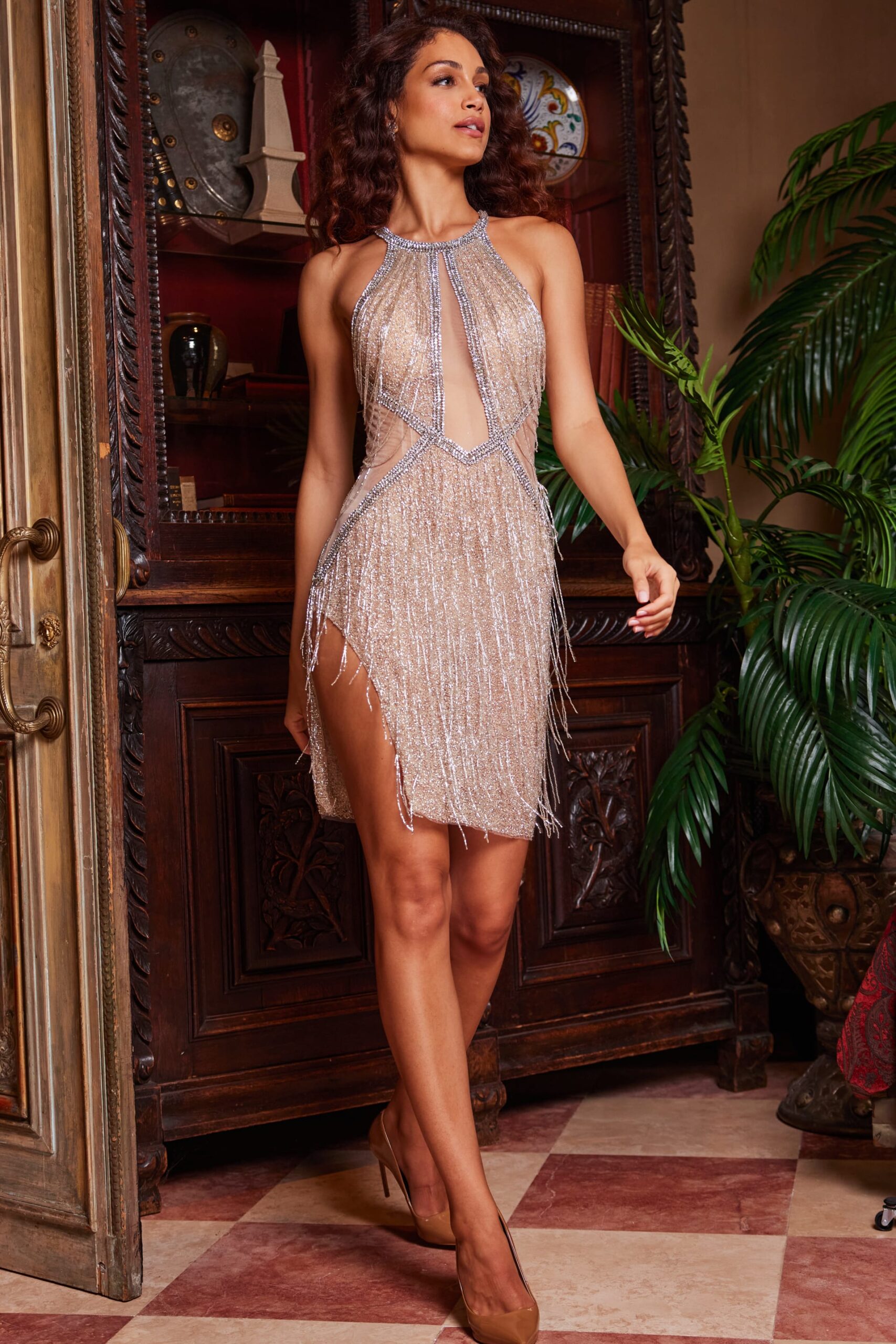
Before accessorizing or selecting shoes, we must define our canvas. The term “sexy cocktail dress” is not monolithic. Scientifically, its appeal often hinges on principles of visual perception. For instance, the hourglass silhouette, frequently emphasized in such dresses, aligns with cross-cultural research into attractiveness, which often correlates with waist-to-hip ratios. This isn’t a subjective opinion but a observation noted in studies from institutions like the University of Texas at Austin, which have explored the biological and social underpinnings of such preferences. A sexy cocktail dress often manipulates fabric, cut, and structure to highlight or create this balance. Furthermore, the “cocktail” designation implies a specific social context—semi-formal gatherings, evening events, parties—that sits between daytime casual and black-tie formal. As fashion historian Valerie Steele notes in her work for The Museum at the Fashion Institute of Technology, the cocktail dress emerged post-World War II as a distinct category for the new social rituals of the affluent middle class. Therefore, your dress is not just a garment; it’s a piece of social history engineered for impact. The fabric choice—be it a fluid silk charmeuse that drapes and moves, a structured jacquard that holds its shape, or a daring lace that plays with revelation and concealment—each communicates a different dialect of the same language of allure.
Strategic Silhouette Selection: Aligning Form with Intention
Your body is unique, and the most powerful style choice you can make is to select a silhouette that aligns with your desired narrative and physical comfort. This is where objective knowledge supersedes vague fashion “tips.” Consider the bodycon dress: its name is a portmanteau of “body conscious,” and its engineering is precise. It is typically constructed from fabrics with a degree of mechanical stretch (like nylon-spandex blends) and cut using precise pattern-making to follow the body’s contours. The effect is one of streamlined, confident exposure. Conversely, a fit-and-flare or A-line cocktail dress utilizes geometric contrast. It cinches at the waist (emphasizing that critical ratio) before flaring out, creating a dynamic, playful silhouette that can offer both elegance and a sense of movement. The asymmetrical hemline, a concept popularized by designers like Madeleine Vionnet in the 1930s and continually reinvented, works on the principle of visual interest and imbalance, drawing the eye on a deliberate journey across the body. The choice is not about which is universally “best,” but which architectural form best serves your night’s story. Are you commanding attention with confident precision (bodycon), evoking a timeless, cinematic elegance (fit-and-flare), or making an avant-garde, artistic statement (asymmetry)? Your silhouette sets the stage for all other styling decisions.
The Chromatic Psychology of Allure
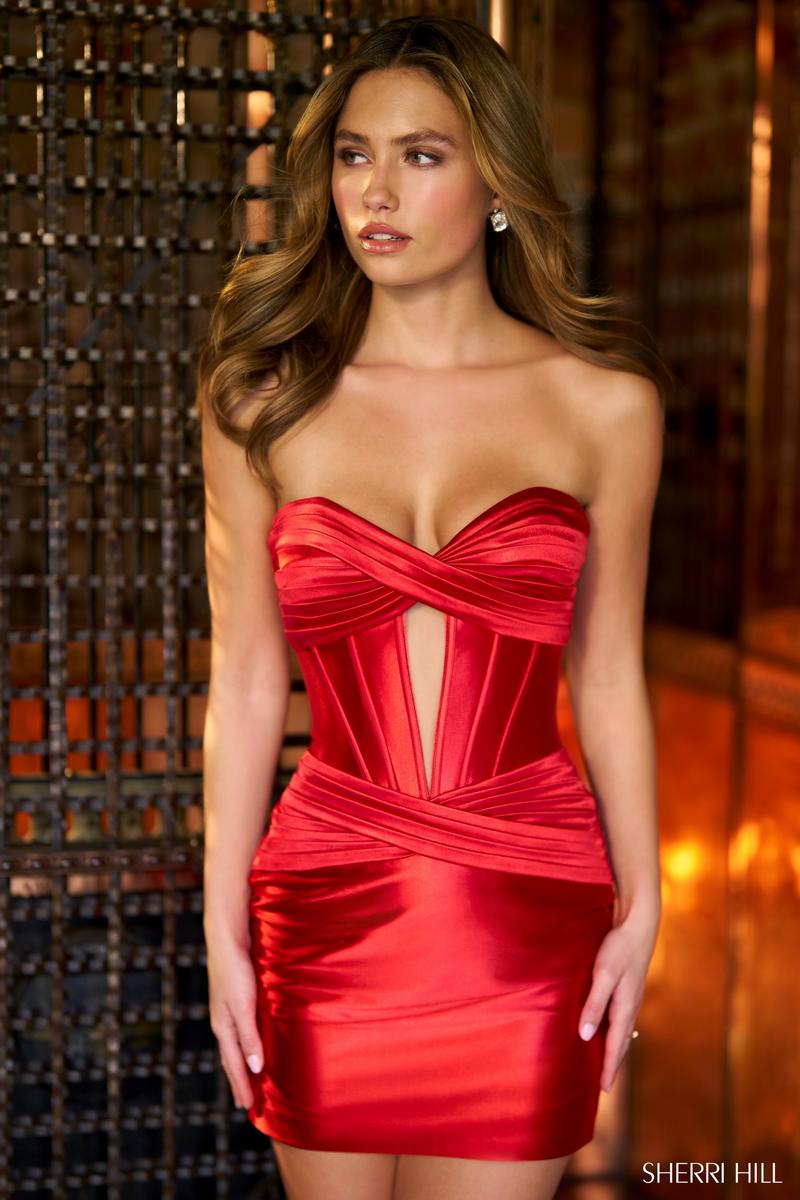
Color is not decorative; it is communicative. The color of your sexy cocktail dress operates on both cultural and psychological levels. Objective research in color psychology, referenced in resources from authoritative universities like the University of Rochester, provides a framework. Classic Little Black Dress (LBD) owes its enduring power to more than Coco Chanel’s 1926 design (as documented in Vogue at the time). Black is scientifically perceived as slimming, authoritative, and sophisticated. It absorbs light, creating a unified, powerful shape. Red, however, is a stimulant. Studies, including those cited in the Journal of Personality and Social Psychology, have linked the color red to heightened perceptions of attractiveness and status across cultures, a phenomenon sometimes called the “red dress effect.” It commands attention on a visceral level. Metallics (gold, silver) reflect light, literally making you a center of illumination in a dimly lit room, while deep jewel tones (emerald, sapphire) convey luxury and depth. When choosing, consider the message: unassailable authority (black), confident magnetism (red), radiant celebration (metallic), or enigmatic richness (jewel tones). This decision is a strategic application of scientific insight, not just a matter of preference.
The Architecture of Enhancement: Accessories and Footwear
With the dress as your foundation, accessories and footwear are the load-bearing elements that complete the structure. The principle here is complementary contrast. A dress with intricate beading or a high neckline might call for minimalist, sleek accessories—a single, bold cuff bracelet or statement earrings, but rarely both. This follows the design principle of having a single focal point to avoid visual clutter. As renowned stylist Rachel Zoe has often stated on her platforms, “Style is a way to say who you are without having to speak.” Your accessories are that punctuation. For footwear, the engineering is literal. A stiletto heel alters your posture, arching the back and elongating the leg—a biomechanical change that projects confidence. However, this must be balanced against the ergonomics of your night. A sleek, pointed-toe flat or a block-heel sandal can offer formidable style without compromising mobility. Consider the texture interplay: satin shoes with a lace dress, metallic sandals with a solid-color sheath. Each choice should feel like a deliberate, enhancing counterpoint to the dress’s primary statement.
The Final Layer: Hair, Makeup, and the Unquantifiable Confidence
Beauty styling is the finishing layer of this architectural project. It should harmonize with, not compete against, your dress. A dramatic, off-the-shoulder neckline is beautifully framed by an updo or sleek hair, drawing attention to the collarbone and décolletage. A simple column dress provides the perfect canvas for a bold, red lip—a look famously championed by figures from Hollywood’s golden age to modern icons like Taylor Swift, who has cited it as a signature of feeling powerful. Makeup, at its best, is applied color theory. Smoky eyes or a bold lip follow the same focal-point principle as accessories. Yet, beyond the objective techniques lies the subjective, crucial element: confidence. This is the intangible that all the objective styling serves to cultivate. When you know the science behind your silhouette, the psychology of your color, and the intent behind your accessories, you are not just wearing a dress—you are embodying a carefully crafted persona. This knowledge breeds an authentic confidence that is the ultimate accessory.

Knowledge as Your Best Investment: Finding Value
Understanding these principles is the first step; acquiring the pieces is the next. A truly stunning sexy cocktail dress need not command a prohibitive price. The professional knowledge you now possess allows you to shop strategically. Look for quality construction—fully lined fabrics, secure zippers, finished seams—which are indicators of durability and better fit, even at mid-range price points. Consider rental services for high-designer pieces for a one-off event, a model popularized by platforms like Rent the Runway. End-of-season sales, outlet collections from reputable brands, and even pre-loved luxury sites can be treasure troves. The key is to apply your discerning eye: does this dress have the structural elements (darts, seams, fabric weight) to create the desired silhouette? Does the color align with your intent? Investing in one impeccably chosen, versatile dress based on these criteria is more valuable than several trend-driven pieces. Your empowered choice, informed by knowledge, is the greatest value proposition of all.

So, as you prepare for your next night out, view your closet and the boutique rack with a new lens. See the geometry in the cut, the science in the color, and the narrative in the details. A sexy cocktail dress is more than attire; it is a curated expression. By applying these objective principles—from silhouette science to chromatic psychology—you move beyond dressing for an occasion to designing an experience. The final look will not merely be worn; it will be inhabited, with a confidence born from understanding the powerful language of style.