

5 Ways to Style Sexy Cocktail Dresses for Effortless Glamour
The allure of a cocktail event lies in its promise of sophistication, social sparkle, and a chance to express a curated version of oneself. Central to this expression is the sexy cocktail dress, a garment that balances allure with elegance, hinting at confidence without uttering a word. Yet, the concept of “sexy” is often misconstrued as overt or trying too hard. True effortless glamour isn’t about the dress wearing you; it’s about you commanding the dress through intelligent styling, understanding the science of silhouette, the psychology of color, and the art of personal narrative. This guide moves beyond generic advice, delving into five foundational styling philosophies that transform a sexy cocktail dress from a mere outfit into a statement of empowered, effortless allure.
1. The Architecture of Allure: Mastering Silhouette and Fit
The foundation of glamour is not a trend, but a principle: impeccable fit. A sexy cocktail dress achieves its power not by being skin-tight, but by honoring the architecture of the human form. This is where objective design principles intersect with personal presentation. The concept of “fit” is rooted in ergonomics and aesthetic proportion, often referenced in design literature from institutions like the Fashion Institute of Technology, which emphasizes that clothing should complement the body’s natural lines. A dress that is too large drowns the figure, while one that is too small creates tension lines and disrupts the fabric’s intended drape. The goal is a symbiotic relationship where the dress highlights your strongest attributes—be it a defined waist, sculpted shoulders, or elegant neckline—through precise tailoring. Consider the iconic “bodycon” dress; its sex appeal, as analyzed in cultural commentaries on styles popularized by figures like Kim Kardashian, derives from its engineered compression and stretch, creating a smooth, second-skin effect that celebrates curves without excess fabric. This is a scientific application of textiles to achieve a specific visual outcome. Effortless glamour here means selecting a silhouette that you inhabit comfortably. A fit-and-flare dress, for instance, uses structural engineering (the fitted bodice) and material physics (the flared skirt) to create an hourglass illusion, a shape consistently associated with attractiveness in cross-cultural studies noted in psychological research. The effortlessness comes from confidence, which is a direct byproduct of wearing something that feels like it was made for you.

2. The Psychology of Chromatic Confidence: Strategic Color Selection
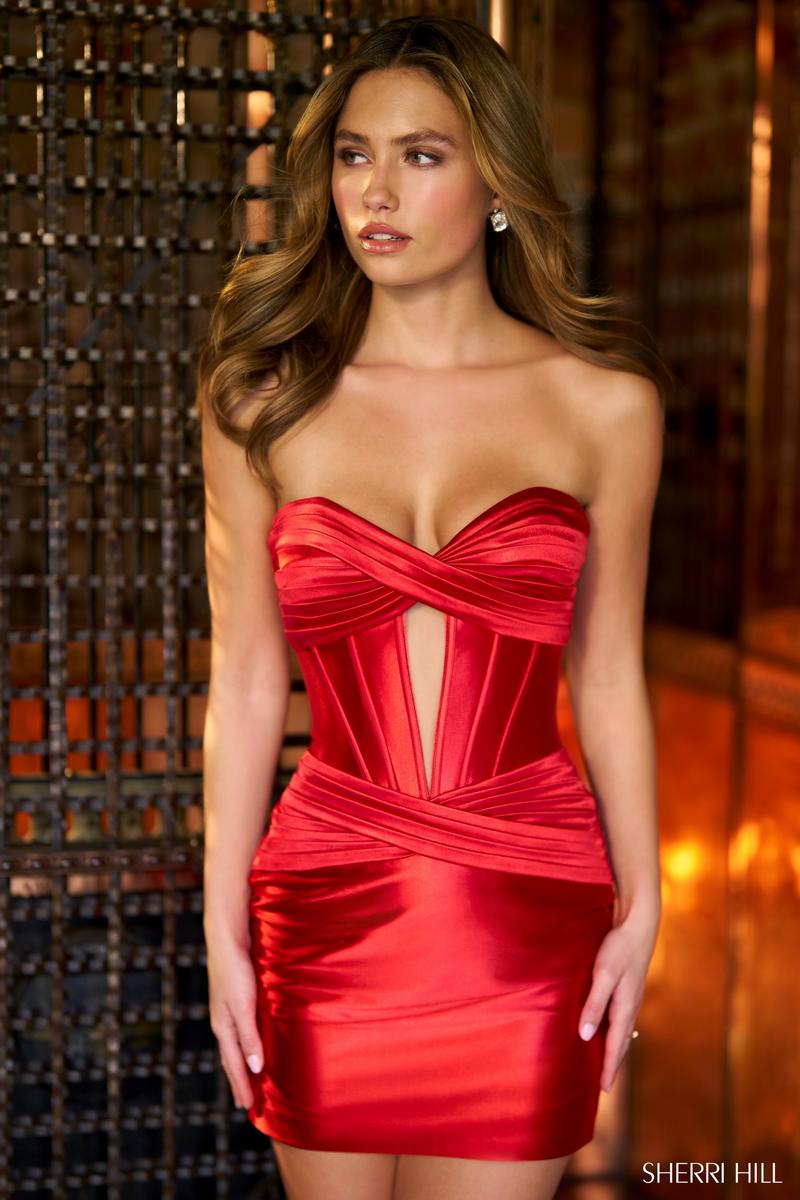
Color is not merely decorative; it is a non-verbal communicator with deep psychological underpinnings. Choosing the right hue for your sexy cocktail dress is a strategic decision that influences perception and mood. Scientific explanations from color theory, widely documented on platforms like Wikipedia and in art school curricula, explain how different wavelengths of light are processed by the brain to evoke emotions. Red, for example, is frequently cited in studies (such as those published by the University of Rochester) as a color that increases attraction and is perceived as a signal of confidence and power. This isn’t mere opinion; it’s a reproducible psychological effect. A scarlet sheath dress, therefore, carries a different narrative weight than a slate blue one. Black, the quintessential cocktail staple, operates on principles of sophistication and slimming, a phenomenon explained by the Helmholtz-Kohlrausch effect in visual perception where darker colors recede. But effortless glamour also knows when to break the rules. A vibrant emerald green or a deep royal blue can convey uniqueness, intelligence, and a more nuanced sensuality. As designer Diane von Furstenberg once stated, “Color is a creative energy, a life force.” This energy must align with your personal aura. Consider your skin’s undertone—a concept from cosmetic science—to select colors that make you glow rather than wash you out. The glamour is effortless when the color feels like an extension of your intent, whether it’s to command the room with a bold crimson or to intrigue with a mysterious aubergine.
3. The Alchemy of Accents: Intelligent Accessorizing
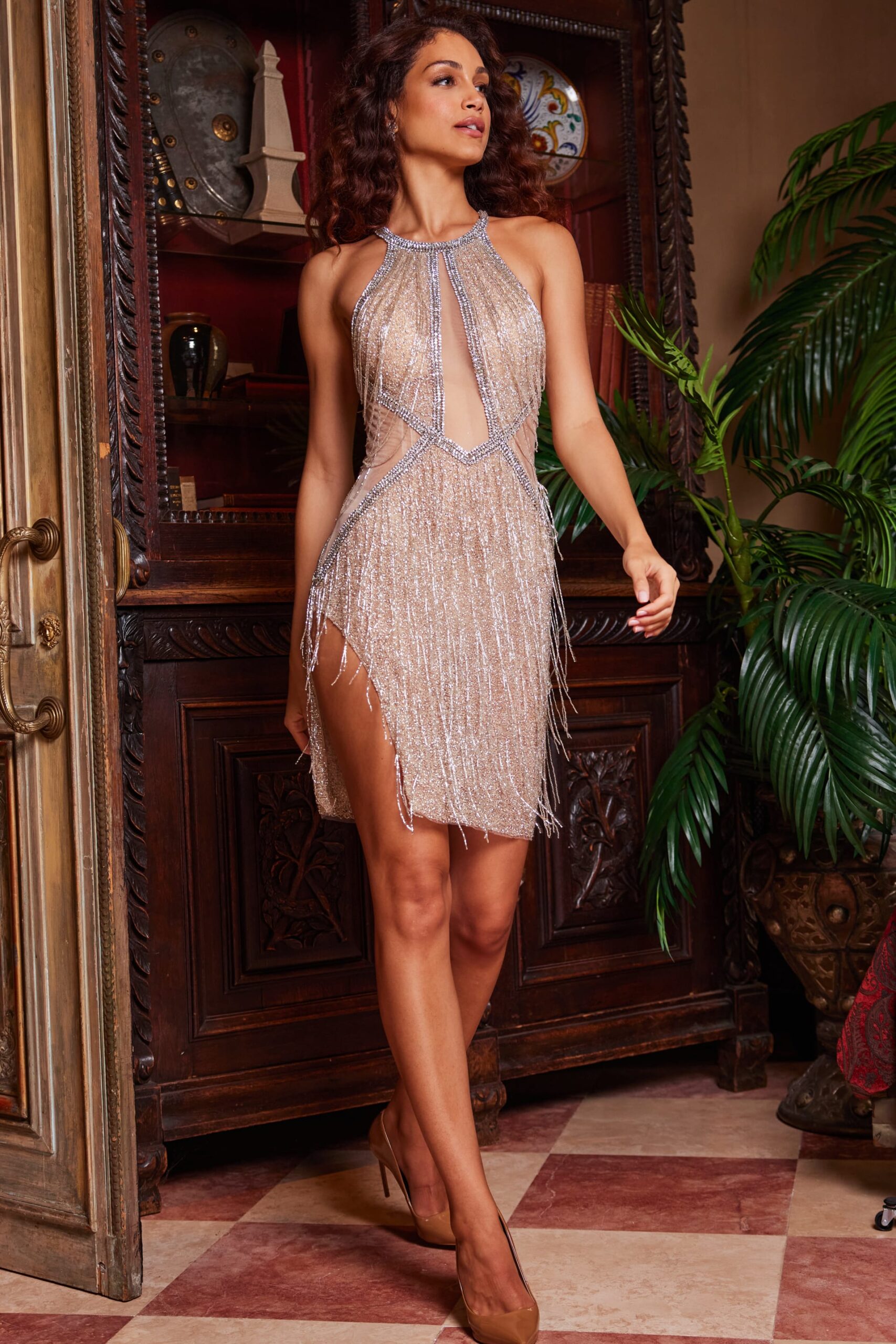
A common pitfall in the pursuit of a sexy look is over-accessorizing, which shifts the focus from “effortless” to “overworked.” The principle of intelligent accessorizing is akin to the chemical concept of a catalyst—a small, precise element that accelerates and perfects a reaction without being consumed by it. Your sexy cocktail dress is the core compound; accessories are the catalytic agents. This philosophy is echoed by stylists on platforms like YouTube, such as Allison Bornstein, who advocates for the “three-word method” to create a coherent style story. If your dress is “minimal, sculptural, and sleek,” your accessories should follow suit: a single, geometric cuff bracelet rather than a stack of bangles, or sharp, architectural heels instead of ornate platforms. The goal is complementary contrast, not competition. Consider the neckline: a plunging V-neck might be best served by a delicate pendant that follows the line or, more boldly, by no necklace at all, allowing the décolletage to be the star. A high neckline, conversely, provides a perfect canvas for statement earrings. The science here involves visual weight and focal points, principles drawn from graphic design. A clutch should be held, not clung to; its size and embellishment should balance the dress’s detail. The true mark of glamour is editing. As Coco Chanel’s often-referenced adage advises, “Look in the mirror and take one thing off.” This practice ensures your accessories amplify your presence rather than clutter it.
4. The Foundation of Poise: Cultivating the Right Posture and Mindset
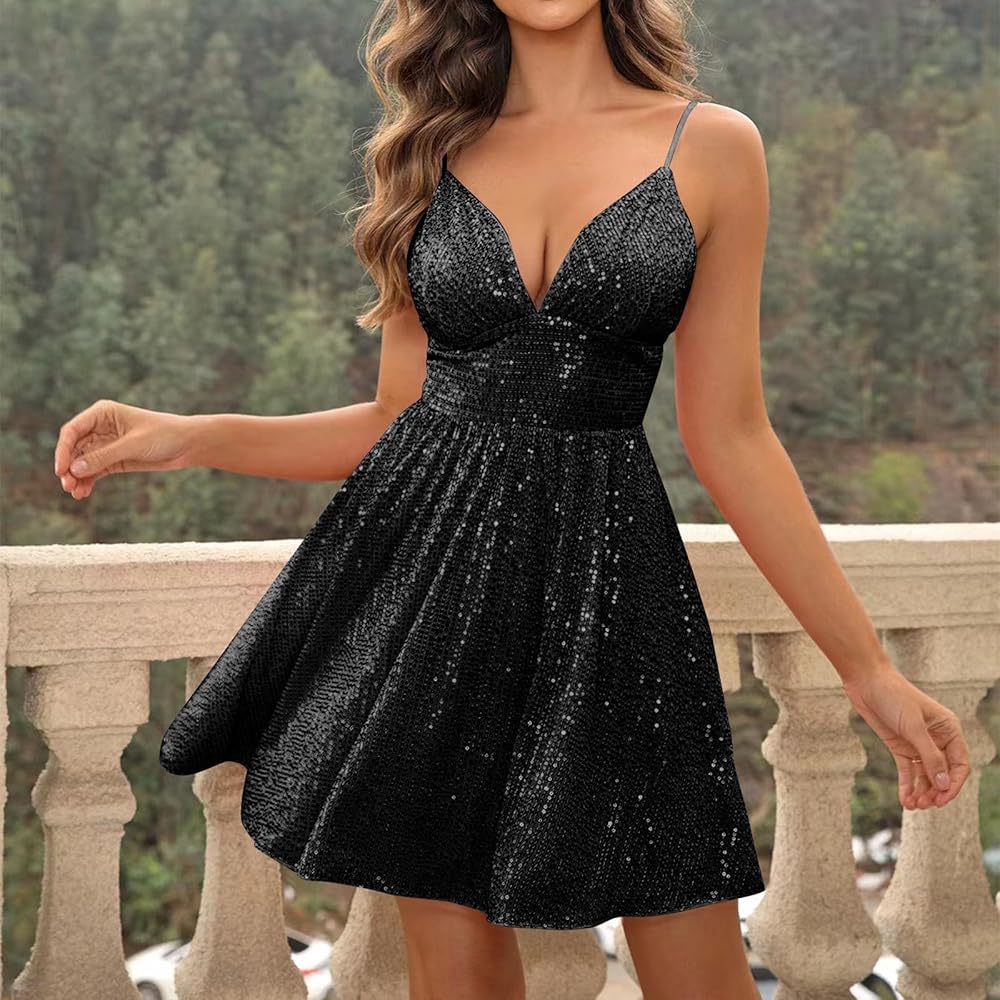
The most exquisitely styled sexy cocktail dress can fall flat without the correct foundation: the wearer’s posture and mindset. This is the intangible element that transforms an outfit into a presence. Glamour is a performance of self-assurance, and its mechanics are both physical and psychological. From a biomechanical perspective, good posture—spine aligned, shoulders back, head held high—immediately makes any garment hang better, improving the dress’s fit and silhouette. More importantly, as social psychology research from sources like Amy Cuddy’s TED Talk on “power poses” suggests, adopting a confident physical stance can actually alter hormone levels, reducing cortisol and increasing testosterone, thereby genuinely boosting feelings of confidence. This creates a powerful feedback loop: the dress makes you feel good, your posture reflects that, which makes you feel even more powerful, further enhancing the glamour you project. The mindset is about ownership. You are not hiding in the dress; you are presenting yourself through it. This viewpoint is championed by style icons like Rihanna, who consistently wears clothes with an air of unapologetic ownership, regardless of trend. Effortless glamour means your energy is calm and centered, not frantic or seeking approval. It’s the difference between entering a room wondering “Do I look okay?” and entering knowing “I am here.” This internal work is the ultimate accessory, one that no discount can ever apply to, yet it is priceless.
5. The Narrative of Texture and Detail: Beyond the Basic Black Dress
To achieve true distinctiveness, one must engage with the narrative potential of texture and strategic detail. While the little black dress is a timeless template, effortless glamour in a modern context often involves subverting expectations through material intelligence. This involves understanding the haptic and visual qualities of fabrics. A dress in liquid satin, for instance, plays with light reflection, creating a luminous, body-conscious flow that is inherently sensual. The science of luster, as explained in textile manuals, shows how filament fibers in satin create this characteristic shine. Conversely, a dress in matte velvet offers a tactile, luxurious depth that absorbs light, conveying richness and warmth. Details like strategic cut-outs, delicate lace insets, or intricate beading should serve the dress’s overall story, not act as random decorations. A single, well-placed cut-out on the waist or back can be far more intriguing and tasteful than an overly exposed design. This principle of “less is more” is a cornerstone of modernist design philosophy, applicable to fashion. When shopping, look for these intelligent details. For instance, a dress with a modest front but a dramatic open back offers a reveal that is controlled and sophisticated. Brands often highlight these craftsmanship details, and savvy shoppers can find stunning pieces at discounted prices during end-of-season sales or on reputable consignment sites, where high-quality, detail-oriented sexy cocktail dresses from previous seasons are available, proving glamour need not be prohibitively expensive.
Effortless glamour is not an inherited trait but a cultivated art. It is the synthesis of knowledge—of your own form, of color’s power, of design principles—and the confidence to apply that knowledge with a light, precise touch. A sexy cocktail dress is the canvas, but you are the artist. By mastering the architecture of fit, leveraging the psychology of color, applying the alchemy of accessories, building the foundation of poised mindset, and curating a narrative through texture, you move beyond getting dressed and into the realm of crafting an experience. This is where the magic happens: when the dress disappears, and all that remains is the undeniable, effortless glow of you.