

The Ultimate ASICS Windbreaker Guide for Effortless Layering
In the realm of athletic and casual wear, mastering the art of layering is a non-negotiable skill for comfort, performance, and style. At the heart of this system lies a piece often underestimated yet utterly indispensable: the windbreaker. More than just a simple jacket, a well-designed windbreaker acts as a versatile shield, a modular component that bridges the gap between base layers and outer protection. This guide is dedicated to dissecting the ASICS windbreaker, not merely as a product, but as a cornerstone of intelligent dressing. We will move beyond superficial descriptions, delving into the material science, design philosophy, and practical layering systems that make these garments exceptional. By the end, you will possess the knowledge to select and utilize an ASICS windbreaker to create adaptable, high-performance outfits for any dynamic day.
The Science of Shelter: Understanding Windbreaker Technology
To appreciate the ASICS windbreaker, one must first understand what it is designed to combat: wind chill. Wind chill isn’t just a feeling; it’s a quantifiable physical process where moving air accelerates the rate of heat loss from the body’s surface. A static layer of insulating air is stripped away, causing a rapid drop in skin temperature. The primary function of any windbreaker is to create a still-air boundary layer. This is achieved through tightly woven or laminated fabrics that are impermeable to air movement while often remaining permeable to moisture vapor—a critical distinction. ASICS typically employs advanced polyester or nylon fabrics with technologies like DWR (Durable Water Repellent) finishes. As noted in textile engineering literature from institutions like the North Carolina State University College of Textiles, a DWR treatment causes water to bead up and roll off the fabric surface, preventing saturation and maintaining breathability. This isn’t about being waterproof in a downpour (that’s a rain shell’s job), but about fending off wind-driven mist and light precipitation, ensuring your core remains stable and dry. The construction of an ASICS windbreaker often involves minimal seam construction and strategic venting, reflecting a design ethos that prioritizes aerodynamic efficiency and thermoregulation, principles deeply rooted in ASICS’s running heritage.
The Core Tenets of Effortless Layering
Layering is not about piling on clothes; it’s a strategic system of moisture management, temperature regulation, and environmental protection. The classic three-layer system—base, mid, and shell—is a proven framework. The ASICS windbreaker primarily serves as that essential outer shell or a highly versatile mid-layer, depending on conditions. The first tenet is moisture-wicking. Your base layer (often synthetic or merino wool) must transport sweat away from the skin. The second is insulation, provided by a mid-layer like a fleece or lightweight down jacket, which traps warm air. The third is protection, which is where your windbreaker excels. It blocks wind and light rain, preventing the “wind chill” effect from robbing your insulating layers of their warmth. The genius of a good windbreaker in this system is its lightness and packability. When the wind dies or the sun emerges, it can be stowed in its own pocket, transforming your outfit instantly. This adaptability is key to “effortless” layering. You are not locked into a single, bulky configuration; you are dynamically responding to your environment and activity level. A runner might use a thin ASICS windbreaker as their sole outer layer over a tech tee, while a hiker might don it over a fleece when cresting a windy ridge.

Anatomy of an ASICS Windbreaker: Design Details That Matter
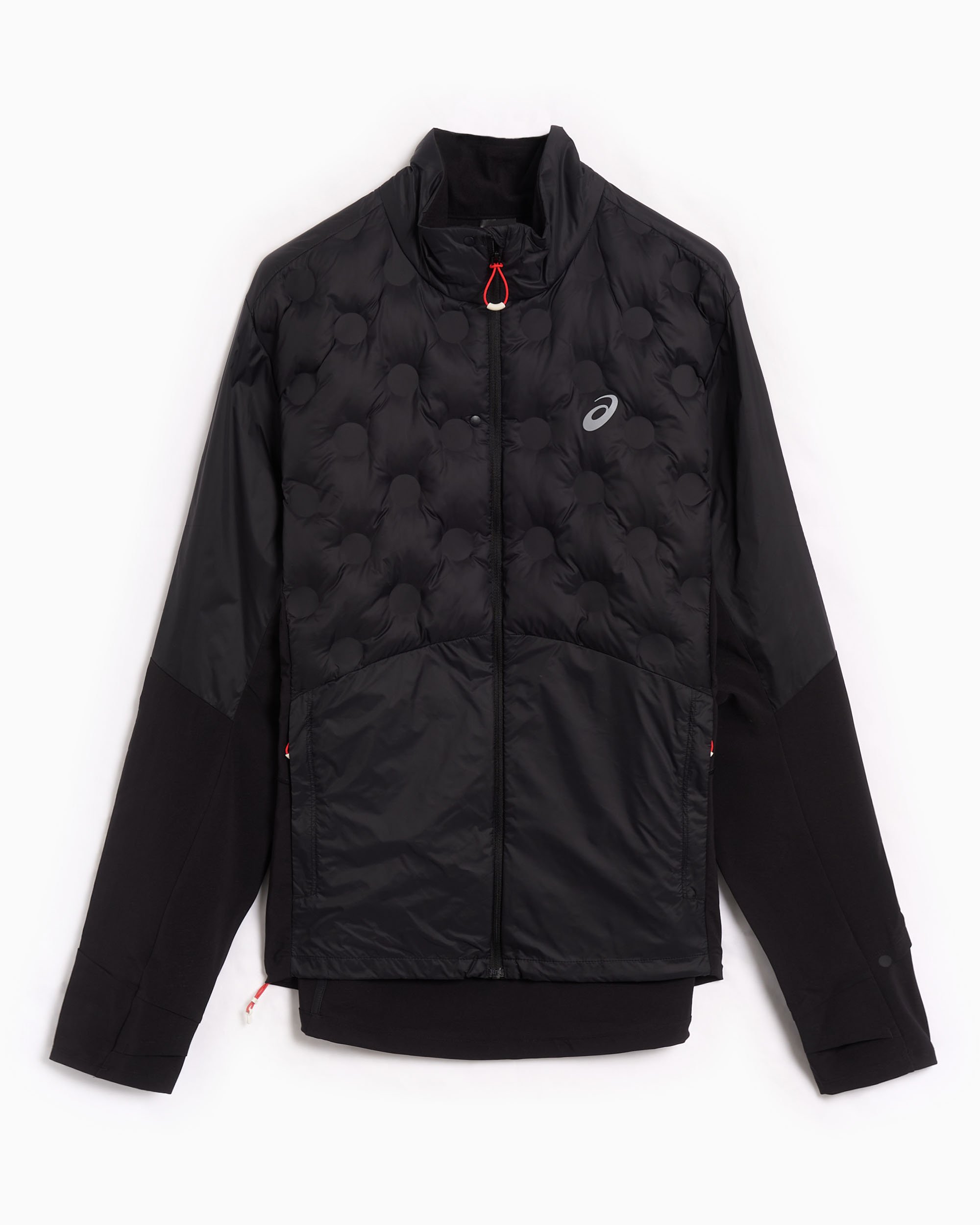
Not all windbreakers are created equal. The value of an ASICS model lies in the thoughtful integration of performance-driven details. Examine the cuffs: are they elasticated, adjustable with hook-and-loop tabs, or thumbholes? Each serves a purpose—sealing out wind or securing sleeves during movement. The collar is another critical point; a high, soft-lined collar protects the neck without chafing. Pockets are more than storage; zippered hand pockets secure valuables, while a chest pocket might be angled for easy access while wearing a backpack. The zipper itself is a telltale sign of quality. A smooth, durable YKK zipper, often backed by a storm flap, ensures reliable function. Breathability zones, such as mesh-lined underarms or perforated back panels, are engineering solutions to the core challenge of balancing wind resistance with vapor transmission. As running coach and author Jack Daniels (of “Daniels’ Running Formula” fame) has often emphasized in interviews, comfort and minimal distraction are paramount for performance. A jacket that flaps noisily, lacks venting, or has poorly placed seams becomes a hindrance. The design of an ASICS windbreaker is typically a direct response to these athlete-centric concerns, resulting in a garment that feels like a second skin rather than a barrier.
From Track to Street: The Versatility Proposition
The modern ASICS windbreaker transcends its athletic origins. The clean lines, minimalist branding, and sophisticated color palettes (often moving beyond high-visibility neon to muted tones, navy, black, and olive) allow for seamless integration into casual wardrobes. This is where the concept of “effortless layering” finds its full expression in daily life. Imagine it thrown over a hoodie for a coffee run, layered atop a crewneck sweater for a brisk evening walk, or even worn with chinos and a t-shirt for a smart-casual look that anticipates a change in weather. Fashion commentators on platforms like The Essential Man often highlight the windbreaker as a key transitional piece. Its lightweight nature makes it ideal for unpredictable spring and autumn days, or for air-conditioned interiors. The aesthetic is one of considered utility—a nod to sportswear heritage without being overtly “gym-only.” This duality is a significant part of its value. You are investing in a piece that performs under physical duress but also complements your off-duty style, maximizing cost-per-wear and reducing the need for specialized, single-use garments.

Making an Informed Investment: Value Beyond the Price Tag
Acquiring the right gear is an exercise in informed decision-making. While discounted prices are always attractive (and we will touch on that), the true value lies in the intersection of performance, durability, and versatility. When evaluating an ASICS windbreaker, consider its intended primary use. Is it for high-output running, lightweight travel, or general casual wear? Check the fabric denier (a measure of thickness)—a lower denier (e.g., 20D) is lighter and more packable, while a higher denier (e.g., 40D) offers greater durability. Examine the warranty and repair policies; brands that stand behind their products inspire confidence. As for cost, the professional knowledge we bring you is this: sales often coincide with seasonal transitions. End-of-season sales (e.g., late fall for summer items, late winter for winter items) are prime opportunities. Additionally, checking authorized retailers’ websites, including ASICS’s own outlet section, can yield significant savings on previous season’s colorways, which are often functionally identical to the latest models. Investing in a quality windbreaker at a discounted price elevates it from a mere purchase to a smart acquisition for your long-term wardrobe ecosystem.
The journey through the world of the ASICS windbreaker reveals it as a tool of remarkable sophistication. It is a testament to applied material science, human-centered design, and the principles of modular dressing. It asks you to think strategically about your comfort, to understand the environment as a variable to be managed, not just endured. Whether you are pushing your physical limits or simply navigating the uncertainties of a daily commute, this piece provides a simple, elegant solution. It is the definition of functional elegance—a lightweight barrier that empowers you to move freely, adapt quickly, and face the elements with prepared confidence. Your approach to layering will no longer be a guess but a deliberate, effortless act.