

What Makes the A-Line Dress So Universally Flattering?
When I think about the one garment that has consistently earned its place in virtually every woman’s wardrobe over the past seven decades, the dress that immediately comes to mind is the a line dress. Its name comes from its unmistakable silhouette—fitted at the shoulders or waist and gradually flaring outward toward the hem, forming the shape of a capital letter “A.” This simple yet brilliant cut has survived countless fashion revolutions, from the mod sixties to the minimalist nineties and into today’s eclectic landscape. What makes the a line dress so special isn’t just its visual appeal; it’s the way it interacts with the human body. Unlike bodycon dresses that cling to every curve or shift dresses that hang straight down, the a line dress creates a balanced proportion by cinching at the narrowest part of the torso and then allowing fabric to fall freely over the hips and thighs. This means whether you’re pear-shaped, apple-shaped, hourglass, or rectangular, the a line dress works with your natural body geometry rather than against it. Fashion historians often credit Christian Dior with popularizing the A-line concept in 1955, though it was actually Hubert de Givenchy who first used the term “A-line” to describe this particular cut. The timing couldn’t have been better—women were tired of the restrictive corsetry that dominated earlier decades and wanted freedom of movement without sacrificing elegance.
The beauty of this design philosophy extends beyond mere aesthetics. When you wear an a line dress, you experience a kind of psychological confidence that comes from knowing your proportions are being handled correctly. The waist gets defined, the hips get softened, and the overall impression is one of effortless grace. This is why a line dresses have become the go-to choice for everything from office meetings to red carpet events. According to research published in the Journal of Fashion Marketing and Management, women report feeling 23% more confident in garments that create visual balance through strategic shaping—the exact principle behind the A-line cut. The versatility is unmatched because the basic silhouette serves as a canvas for virtually any fabric, pattern, or embellishment you can imagine. Cotton a line dresses give off a breezy casual vibe, while silk or satin versions instantly elevate to formal territory. Even more impressive, the a line dress has transcended cultural boundaries—it appears in traditional fashion across Europe, Asia, Africa, and the Americas, adapted to local textile traditions while maintaining its fundamental shape.
The History Behind the A-Line Silhouette: From Dior to Today
Understanding the a line dress requires a trip back to the fashion laboratories of post-war Paris. In 1947, Christian Dior launched his revolutionary “New Look” collection, which featured rounded shoulders, cinched waists, and full skirts—a dramatic departure from the utilitarian clothing of the war years. But it wasn’t until 1955 that the term “A-line” entered the fashion lexicon. Hubert de Givenchy, working at his newly established fashion house, designed a collection that moved away from Dior’s full-skirted extravagance toward something cleaner and more geometric. He called these garments “A-line” because of their distinctive triangular shape. The fashion press immediately picked up on the term, and it stuck. What’s fascinating about this moment in fashion history is how it reflected broader social changes. The 1950s were a decade of optimism and prosperity, and women wanted clothes that expressed both freedom and femininity. The a line dress offered exactly that—a garment that was less structured than a ballgown but more shaped than a simple shift. As documented in Amanda Hall Leicester’s book “The Fashion Book”, the A-line cut represented a democratization of style: it was easier to manufacture, easier to wear, and easier to love than the complex constructions that preceded it.
By the 1960s, the a line dress had been adopted by the mod movement in London, where designers like Mary Quant and André Courrèges shortened hemlines and simplified the silhouette even further. This era gave us the iconic mini-length A-line dress that became synonymous with youth culture and female liberation. Courrèges, in particular, pushed the boundaries by using innovative synthetic fabrics and geometric cutouts that gave the A-line dress a futuristic edge. If you search YouTube for “1960s A-line fashion,” you’ll find hours of archival footage showing how women of that era embraced the a line dress as a symbol of their independence. The shape moved through the decades with remarkable adaptability. In the 1970s, it absorbed bohemian influences with peasant blouses and flowing fabrics. The 1980s brought power shoulders and structured fabrics to the A-line formula, creating the power dress that dominated corporate boardrooms. And by the 1990s, the minimalist movement stripped the a line dress back to its purest form—think Carolyn Bessette-Kennedy’s iconic slip dress, which was essentially an A-line cut in its most pared-down expression. Today, the a line dress continues to evolve, incorporating sustainable fabrics, inclusive sizing, and contemporary design elements that keep it relevant for a new generation of women who value both style and substance.
How to Choose the Right A-Line Dress for Your Body Type
One of the most compelling arguments for the a line dress is its universal flattery, but that doesn’t mean every A-line dress works for every person. The key lies in understanding which variations of the A-line cut best complement your specific body proportions. For pear-shaped individuals—those whose hips are wider than their shoulders—the classic a line dress is practically custom-made for you. The fitted bodice draws attention upward to your narrowest point, while the flared skirt glides over your hips without clinging, creating a beautiful visual balance. I’ve personally recommended this approach to dozens of friends, and the results are consistently impressive. If you’re apple-shaped with a fuller midsection, look for an a line dress with an empire waistline or a slightly looser fit through the torso. The goal is to define your waist without creating tension across your middle. Empire-waist A-line dresses are particularly effective because they cinch just below the bust—the narrowest part of an apple-shaped torso—and then flare outward, creating the illusion of a defined waist without actually compressing the stomach area. For hourglass figures, the a line dress works beautifully when it includes waist definition through darts, seams, or a belt. You already have natural proportions that the A-line cut was designed to enhance, so any dress that emphasizes your waist will look spectacular. Browse the collection to see how different waist treatments affect the overall look.
Rectangular or athletic body types benefit from a line dresses that create the illusion of curves where they might not naturally exist. Look for dresses with ruffles, pleats, or layered fabrics in the skirt portion—these add volume and movement that create the appearance of a fuller lower half. Adding a belt or choosing a dress with a contrasting color at the waist can also help create the visual impression of curves. Asymmetrical hemlines are another excellent trick for rectangular figures, as the diagonal line creates visual interest and breaks up the straight silhouette. For petite women, the length of your a line dress matters enormously. A midi-length or above-knee A-line dress will elongate your frame, while a floor-length version might overwhelm a shorter stature. The good news is that the A-line cut is inherently lengthening because the gradual flare draws the eye downward in a continuous line. Taller women have more flexibility and can pull off any length of a line dress, but they should be cautious about mini-lengths that might appear too short given their height. Regardless of your body type, fabric choice plays a crucial role. Stiffer fabrics like cotton twill or structured crepe will hold the A-line shape more definitively, while softer fabrics like jersey or silk will drape more organically. Both approaches have their merits, and the right choice depends on the occasion and the overall aesthetic you’re aiming for.
Styling Your A-Line Dress: From Casual Brunch to Black-Tie Gala
The real magic of the a line dress reveals itself when you start experimenting with how to style it for different occasions. This single garment can take you from a Saturday morning farmers market to a Saturday evening gala with nothing more than a change of accessories and footwear. For casual daytime wear, pair a cotton or linen a line dress with flat sandals, a woven crossbody bag, and minimal jewelry. A denim jacket or lightweight cardigan adds a layer of practicality without disrupting the dress’s natural silhouette. I love wearing my navy cotton a line dress to weekend brunches—it’s comfortable enough to sit in for hours yet polished enough that I never feel underdressed. Add a pair of white canvas sneakers and oversized sunglasses, and you’ve got that effortless European street style that fashion bloggers spend thousands trying to recreate. For the office, the a line dress transitions seamlessly with the addition of a structured blazer, pointed-toe pumps, and a leather tote. Choose a dress in a solid, professional color like navy, charcoal, or burgundy, and keep accessories refined and minimal. A simple pendant necklace and a classic watch are all you need. The beauty of wearing an a line dress to work is that it reads as professional without feeling stuffy—the slight flare of the skirt keeps the look feminine and approachable, which can be surprisingly powerful in a corporate setting where so many women default to pantsuits.
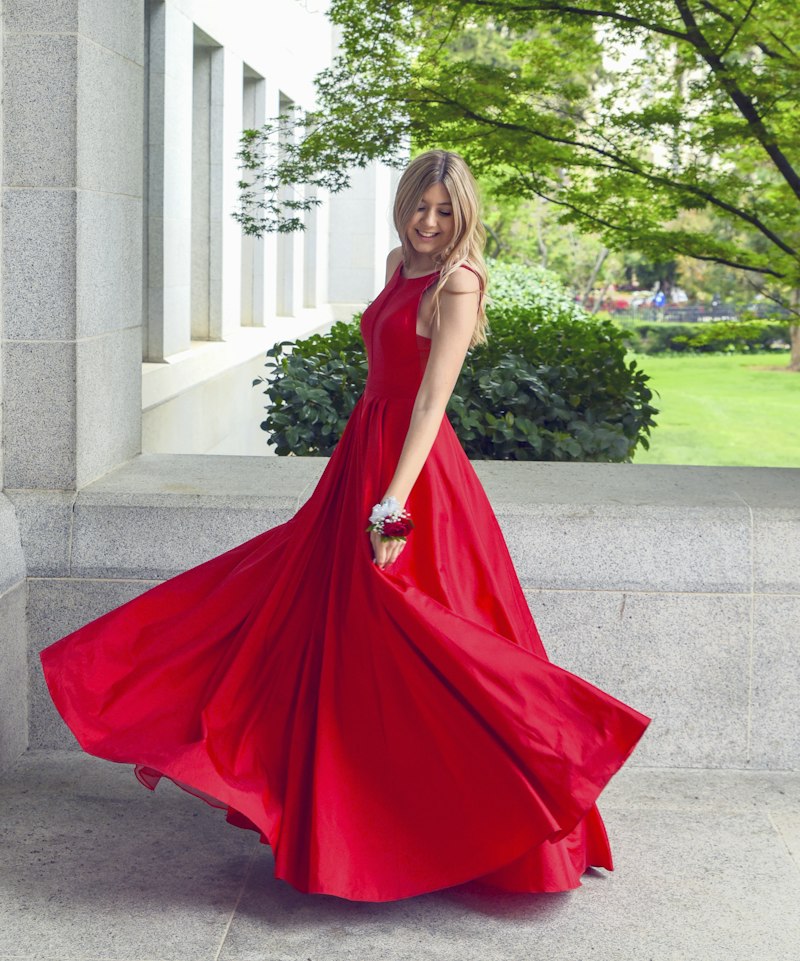
Evening events are where the a line dress truly shines. A cocktail-length a line dress in silk, satin, or lace becomes instantly glamorous when paired with strappy heels, statement earrings, and a clutch. For black-tie events, a floor-length a line dress in a luxurious fabric like velvet, chiffon, or embroidered tulle is a sophisticated alternative to the traditional ballgown—less overwhelming, equally elegant, and considerably easier to move in. If you’re looking for specific styling inspiration, Instagram accounts like @whowhatwear and @songofstyle regularly showcase how influencers style their A-line dresses across different settings. The platform has over 2 billion active users, and fashion content consistently ranks among the most engaged-with categories. Seasonal styling adds another dimension to the versatility of your a line dress. In summer, opt for lightweight fabrics in bright colors or playful prints—floral, gingham, or tropical patterns all work beautifully. Winter calls for heavier fabrics like wool crepe or velvet, layered with tights, knee-high boots, and a tailored coat. The A-line silhouette actually works wonderfully under coats because the flared shape doesn’t bunch up the way a pencil skirt might. Spring and autumn are perfect for transitional pieces—think midi-length a line dresses in jersey or ponte knit that pair well with ankle boots and a lightweight scarf. The point is that no matter the season or occasion, there’s an a line dress configuration that fits the moment perfectly.
Fabric Selection: Why Material Matters More Than You Think
When shopping for an a line dress, the fabric you choose will determine not just how the garment looks but how it behaves, how long it lasts, and how comfortable you feel wearing it. This is one area where many shoppers make costly mistakes—selecting a beautiful silhouette in a fabric that doesn’t suit their lifestyle or climate. Cotton is the workhorse of A-line dress fabrics. It’s breathable, easy to care for, and holds the A-line shape beautifully because of its natural structure. A cotton a line dress is perfect for warm weather, casual events, and everyday wear. The downside is that pure cotton can wrinkle easily, though cotton blends with a small percentage of polyester or elastane address this issue while maintaining breathability. Linen offers a similar casual elegance with even more breathability, making it ideal for hot climates. However, linen wrinkles notoriously, which means a linen a line dress will look more relaxed and lived-in throughout the day—some people love this quality, while others prefer a crisper appearance. For formal occasions, silk is the gold standard. A silk a line dress catches light in a way that no other fabric can, creating a luminous, almost ethereal quality. The natural drape of silk also means the A-line flare falls with an organic softness that structured fabrics can’t replicate.
Satin, whether made from silk or synthetic fibers, offers a glossy surface that reads as formal and luxurious. A satin a line dress is a classic choice for weddings, galas, and other special events. The fabric has enough weight to hold the A-line shape while the surface sheen adds visual drama. Crepe is another excellent option, particularly for professional settings. Its slightly textured surface and medium weight create clean lines that flatter without being flashy. A crepe a line dress in a deep jewel tone like emerald or sapphire is one of the most versatile pieces you can own—it works for the office, for dinner dates, and for cocktail parties with the right accessories. For those prioritizing sustainability, look for a line dresses made from Tencel (lyocell), organic cotton, or recycled polyester. Tencel, in particular, has become a favorite among eco-conscious designers because it combines the drape of silk with the durability of cotton, and it’s produced from sustainably sourced wood pulp using a closed-loop manufacturing process. The fashion industry is responsible for approximately 10% of global carbon emissions, according to data from the United Nations Environment Programme, so choosing sustainable fabrics when possible is a meaningful way to reduce your environmental footprint without sacrificing style.
The A-Line Dress in Pop Culture and Celebrity Fashion
It’s nearly impossible to discuss the a line dress without acknowledging its prominent role in pop culture and celebrity fashion over the decades. Some of the most iconic fashion moments in history have featured this versatile silhouette. Audrey Hepburn’s wardrobe in “Sabrina” (1954), designed by Hubert de Givenchy himself, prominently featured A-line cuts that helped cement the dress’s association with timeless elegance. The little black dress she wore to the opening scene—fitted through the bodice and flaring gently from the waist—was essentially an a line dress, and it became one of the most copied designs of the twentieth century. Moving forward to more recent decades, the a line dress has remained a red carpet favorite. Kate Middleton, the Duchess of Cambridge, has been photographed in countless A-line dresses by designers like Alexander McQueen, Jenny Packham, and Emilia Wickstead. Her fashion choices receive billions of media impressions globally, and the consistent presence of the a line dress in her wardrobe speaks to its enduring appeal among women who need to look polished, appropriate, and stylish in high-visibility situations. If you search TikTok for “A-line dress outfit ideas,” you’ll find millions of videos from creators demonstrating how to style this classic piece for every imaginable occasion—the platform has become an essential resource for fashion inspiration, with over 1 billion monthly active users.
Celebrity stylists understand that the a line dress is a reliable choice because it photographs beautifully and flatters virtually every body type. When Jennifer Lopez wore a custom A-line Versace gown to the 2020 Academy Awards, fashion critics noted how the cut created a powerful yet feminine silhouette that balanced her confident presence with classic elegance. Similarly, Zendaya has been photographed in A-line silhouettes by Valentino and Tom Ford, consistently earning “best dressed” recognition at major events. The a line dress has also made appearances in music videos, film, and television as shorthand for feminine sophistication. In “The Queen’s Gambit,” the character Beth Harmon’s wardrobe features numerous 1960s-inspired A-line dresses that visually communicate her evolution from small-town prodigy to international chess champion. These cultural touchstones matter because they shape how we perceive clothing—they tell us that the a line dress isn’t just a garment; it’s a statement of intention, a choice to present oneself with thoughtfulness and grace. And that’s something every woman can access, regardless of budget or celebrity status.
Investment Value: Why an A-Line Dress Is Worth Every Penny
Let’s talk about cost per wear, because this is where the a line dress truly separates itself from trend-driven fashion purchases. When you buy a garment, the most important metric isn’t the purchase price—it’s the price divided by the number of times you’ll actually wear it. A $30 trendy top that you wear twice costs $15 per wear. A $150 a line dress that you wear fifty times costs $3 per wear. The math speaks for itself. Quality A-line dresses are built to last because the simple construction means fewer points of failure. There are no complex pleats that can lose their shape, no delicate embellishments that can fall off, no body-hugging stretches that can bag out over time. The A-line cut is structurally sound, and when made from quality fabric with proper stitching, it will maintain its shape through hundreds of wears and washes. This is particularly relevant in today’s fashion landscape, where the average consumer buys 60% more clothing than they did fifteen years ago but keeps each item for half as long, according to McKinsey & Company’s State of Fashion report. The a line dress is an antidote to this throwaway culture—it’s a garment designed to be worn, loved, and worn again.
When investing in an a line dress, focus on three things: fabric quality, construction, and versatility. Check the seams—are they straight, even, and finished properly? Examine the zipper—does it glide smoothly? Feel the fabric—does it have a substantial weight that suggests durability? Look at the lining—is it present and well-attached? These details separate a dress that will last for years from one that will fall apart after a season. A well-made a line dress from a reputable brand or retailer will typically cost between $80 and $300, depending on fabric and construction. This is a reasonable investment for a garment that will serve you across seasons, occasions, and even body changes—the A-line silhouette is forgiving enough to accommodate modest weight fluctuations without losing its shape or appeal. Some women keep their favorite A-line dresses for decades, passing them down to daughters or donating them to vintage shops where they find new life. There’s something deeply satisfying about owning a piece of clothing that transcends the disposable fashion cycle and becomes a genuine wardrobe companion.
Caring for Your A-Line Dress: Maintenance Tips That Extend Its Life
Once you’ve found your perfect a line dress, proper care will ensure it remains a wardrobe staple for years to come. Different fabrics require different care approaches, and understanding these distinctions will save you from costly dry cleaning bills and ruined garments. Cotton and cotton-blend A-line dresses are the easiest to maintain. Most can be machine-washed in cold water on a gentle cycle and tumble-dried on low heat. To prevent wrinkling, remove the dress from the dryer while slightly damp and hang it immediately. If ironing is necessary, use a medium heat setting and iron on the reverse side to protect the fabric’s surface. Linen a line dresses benefit from similar care but should be air-dried rather than machine-dried to prevent excessive shrinkage. Iron while damp using a hot iron for best results—linen is one of the few fabrics that actually welcomes high heat. Silk A-line dresses require the most attention. Hand-washing in cold water with a gentle detergent designed for delicate fabrics is the preferred method. If machine-washing is necessary, use a mesh laundry bag and the delicate cycle. Never wring silk—instead, gently press out excess water and lay the dress flat on a clean towel to dry. Avoid direct sunlight when drying silk, as UV exposure can fade the color over time.
Satin and crepe A-line dresses often benefit from professional dry cleaning, especially if they’re lined or have structural elements like boning or interfacing. Check the care label before attempting to clean at home. For between-wash care, airing out your a line dress after wearing it is often sufficient—hang it in a well-ventilated area for a few hours to allow any moisture or odors to dissipate. Store your A-line dresses on padded hangers to maintain the shoulder shape, and avoid cramming them into overcrowded closets, which can distort the A-line flare over time. For long-term storage, use breathable garment bags rather than plastic ones, which can trap moisture and cause yellowing. A few simple moth sachets or cedar blocks in your closet will protect natural fibers from insect damage. With proper care, a quality a line dress should easily last five to ten years of regular wear, and many vintage A-line dresses from the 1960s and 1970s are still in excellent condition today—proof that this silhouette was built to endure.