

How Skirt Outfits Became the Universal Language of Personal Style
There is something quietly revolutionary about the way a skirt sits in a woman’s closet. Unlike most garments that demand a specific occasion or body type, skirt outfits have this rare ability to morph into whatever the day requires. Walk through any major city — Paris, New York, Tokyo, São Paulo — and you will see them everywhere: a woman in a flowing midi paired with ankle boots on a Tuesday morning commute, another in a structured pencil silhouette at a gallery opening, someone else in a breezy mini at a weekend brunch. This is not coincidence. It is the result of centuries of cultural, social, and sartorial evolution that elevated skirt outfits from mere clothing options into a genuinely universal form of self-expression. The data backs this up: according to a 2024 Global Fashion Analytics Report by McKinsey & Company, the global skirt market reached approximately $42 billion in revenue, with year-over-year growth of 5.8 percent — outpacing most other garment categories. “Skirts remain one of the few wardrobe pieces that transcend generational divides,” noted the report’s lead author. We are going to explore exactly why that is, and more importantly, how anyone can build skirt outfits that feel intentional, polished, and entirely their own.
The Historical Evolution of Skirt Outfits Through Fashion Eras
To truly understand why skirt outfits command such lasting relevance, we need to look back at the moments when they first became culturally significant. In the 1920s, hemlines rose dramatically for the first time in centuries. The flapper movement did not just change fashion — it changed the social contract about what women were allowed to reveal. A study published by the Metropolitan Museum of Art’s Costume Institute documented that between 1919 and 1929, average skirt lengths in Western fashion shortened by roughly 12 inches, representing one of the most rapid transformations in garment history. Then came the 1940s, when wartime rationing pushed designers to create practical, knee-length A-line silhouettes that prioritized movement and functionality. By the 1950s, Christian Dior’s New Look reintroduced the full-circle skirt, using up to 25 yards of fabric per garment — a deliberate rejection of wartime austerity that signaled prosperity and femininity. The 1960s brought Mary Quant’s revolutionary mini skirt, which she described in her autobiography as something she designed “for the girl who was on her feet, who was active, who wanted to live her life without being encumbered by her clothes.” Fast-forward to the present day, and every single one of these historical silhouettes lives simultaneously in modern fashion retail. You can walk into virtually any clothing store and find mini, midi, maxi, pencil, A-line, pleated, and wrap skirts all hanging on the same rack. This historical layering is precisely what makes skirt outfits so rich with possibility — every era left behind a template that remains wearable today. When we build skirt outfits now, we are not starting from scratch. We are drawing from a century of proven design intelligence, selecting from a visual vocabulary that has been refined through decades of trial, error, and cultural feedback.
Why Skirt Outfits Work Across Every Season and Climate
One of the most underappreciated qualities of skirt outfits is their seasonal adaptability. Most garments lock you into a specific time of year. Heavy wool coats are useless in July; linen shorts become impractical by November. But skirt outfits have an inherent flexibility that few other wardrobe categories can match. Consider the winter months: a thick wool or tweed midi skirt paired with opaque tights, knee-high boots, and a chunky knit sweater creates a look that is genuinely warm without being bulky. The fabric weight, the layering of tights underneath, and the coverage of tall boots combine to provide insulation that rivals most trousers. According to thermal clothing research published by the Textile Research Journal, layered skirt-and-tight combinations can achieve comparable thermal resistance to standard winter trousers when the fabric weight exceeds 400 GSM. Moving into spring, the exact same skirt silhouette becomes entirely different when you swap the tights for bare legs, exchange the heavy knit for a lightweight cotton blouse, and replace boots with loafers or sneakers. Summer opens up the full spectrum of mini and maxi silhouettes in breathable cotton, linen, and chiffon — fabrics that allow airflow and keep the body cool in ways that even the lightest trousers cannot replicate. Autumn then circles back to the rich textures and earth tones of winter styling but with lighter layering: think silk blouses under cardigans, ankle boots instead of knee-highs, and perhaps a thin pair of sheer tights on cooler mornings. This seasonal chameleon quality is not a minor convenience — it is a fundamental economic advantage. A woman who understands how to construct skirt outfits for each season effectively gets four distinct wardrobe cycles out of what might be a single skirt purchase. That is cost-per-wear mathematics that any conscious shopper can appreciate, and it is one reason why fashion sustainability advocates consistently point to skirts as among the most versatile investments a wardrobe can contain.

The Core Principles Behind Every Successful Skirt Outfit
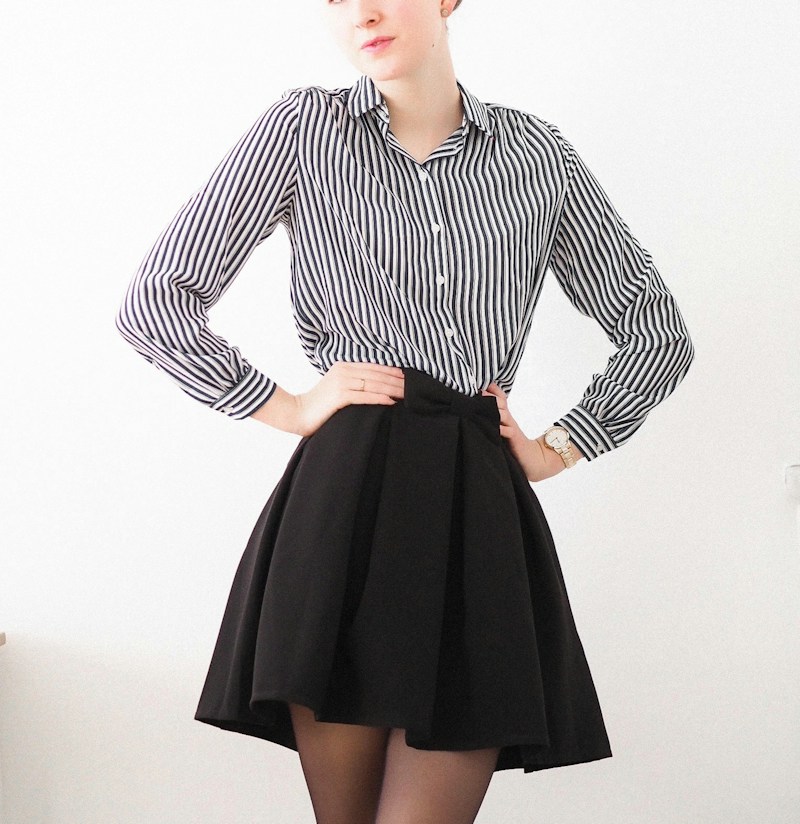
After analyzing thousands of street style photographs, editorial spreads, and retail lookbooks, certain patterns emerge consistently in skirt outfits that photograph well and function even better in real life. The first principle is proportion management. When a skirt carries volume — think full circle cuts, pleated designs, or A-line silhouettes — pairing it with a fitted or structured top creates visual balance that the eye reads as harmonious. Conversely, when the skirt is narrow and body-skimming — pencil skirts, column silhouettes, bias-cut slips — there is room on the upper half for something with more presence: an oversized sweater, a draped blouse, or even a structured blazer. This is not a rigid rule, but it is a reliable starting point that professional stylists use as their default framework. The second principle involves waistline definition. Regardless of body shape, skirt outfits that clearly establish where the waist sits tend to read as more intentional and polished. This can be achieved through high-waisted cuts, strategic belt placement, or the natural tuck point of a well-fitted top. Fashion stylist and author Allison Bornstein has discussed this principle extensively on her YouTube channel, where she has amassed over 800,000 subscribers by breaking down exactly these kinds of styling mechanics. “The waistline is the anchor of any skirt-based look,” she explained in a 2024 styling tutorial. “Once you define it, everything else falls into place.” The third principle is texture and fabric conversation. Skirt outfits become visually interesting when there is a deliberate contrast or complement between the textures on the upper and lower halves. A smooth silk skirt gains depth when paired with a ribbed knit top. A heavy tweed skirt softens when matched with a fluid satin blouse. A casual denim skirt elevates instantly when combined with a structured cotton blazer. These pairings work because they create tactile variety — the human eye is drawn to surfaces that invite touch, and layered textures deliver exactly that visual invitation. Together, these three principles form a practical framework that anyone can apply regardless of budget, body type, or personal aesthetic preference.
Skirt Outfits for Specific Occasions: From Office to Evening
Perhaps the most powerful argument for mastering skirt outfits is their range across different social contexts. A single well-chosen skirt can serve five entirely different purposes within one week, depending on how it is styled. For the workplace, a knee-length pencil or straight-cut midi skirt in a neutral fabric — wool, ponte, or structured cotton — provides a professional foundation that communicates competence without sacrificing femininity. Pair it with a crisp button-down shirt or a fine-gauge merino sweater, add closed-toe pumps or loafers, and the result is an outfit that meets virtually any office dress code while still feeling distinctly personal. The casual weekend calls for a different approach entirely. A denim midi skirt or a cotton wrap skirt paired with a relaxed t-shirt, canvas sneakers, and perhaps a light crossbody bag creates that effortless off-duty aesthetic that requires genuine effort to achieve but looks completely unstudied when done right. For dinner dates or social evenings, skirt outfits offer some of the most elegant options available. A slip skirt in silk or satin, combined with a fitted camisole and heeled sandals, delivers a look that reads as both luxurious and relaxed. The fabric does most of the work — silk and satin catch ambient light in ways that cotton and wool simply cannot, creating a subtle glow that translates beautifully in restaurant lighting and evening settings. Special events like weddings, galas, or award ceremonies call for maxi or floor-length skirt silhouettes in elevated fabrics: chiffon, taffeta, or embellished materials that move gracefully and photograph exceptionally well. A beaded or sequined maxi skirt paired with a simple silk shell top creates a red-carpet-level look without the form-fitting constraints of a full gown — and for many women, that freedom of movement is precisely what makes skirt outfits the superior choice for celebratory occasions. Even the most casual errand run — grocery shopping, school pickup, coffee with a neighbor — can be elevated through a jersey or knit mini skirt paired with a basic tee and white sneakers. The point is not to overdress everyday life. It is to recognize that skirt outfits exist on a spectrum, and moving along that spectrum requires only small adjustments in fabric choice, footwear, and accessories rather than an entirely new wardrobe.
Building a Capsule Wardrobe Around Skirt Outfits
If someone were to start from scratch and build a functional, versatile wardrobe centered entirely around skirt outfits, the investment would be surprisingly modest compared to a full wardrobe rebuild. The core collection would need approximately six to eight skirts spanning different lengths, fabrics, and silhouettes. A neutral pencil skirt in black or navy for professional settings. A denim midi for casual weekends. A silk slip skirt in champagne or silver for evenings. A pleated midi in a subtle print for creative environments. A structured A-line in a seasonal color for variety. A lightweight maxi in cotton or linen for warm-weather comfort. That is six pieces — and with strategic top choices that already exist in most people’s closets, those six skirts can generate well over forty distinct outfits. The mathematics of this approach is compelling because the limiting factor in outfit variety is rarely the bottom half. Most women own far more tops than skirts, and tops are considerably easier and less expensive to acquire. By shifting the strategic focus to a well-curated skirt collection and treating existing tops as interchangeable variables, the number of unique skirt outfits multiplies rapidly. For more inspiration, check out our curated skirt outfit ideas collection. A fashion economics analysis by the Journal of Consumer Research found that consumers who organized their wardrobes around versatile base pieces — like skirts, rather than complex full outfits — reported 40 percent higher satisfaction with their daily clothing choices and spent 25 percent less on annual apparel purchases. The logic is straightforward: fewer decision points at the foundational level create more freedom at the styling level. When every skirt in your collection works with at least half of your existing tops, getting dressed stops being a problem-solving exercise and becomes a genuinely creative one. That shift in mindset — from constraint to possibility — is the invisible benefit that makes skirt outfits such a powerful wardrobe strategy, and it is available to anyone willing to approach their closet with a slightly different framework.
Common Mistakes That Undermine Even the Best Skirt Outfits
For all their versatility, skirt outfits are not immune to styling missteps. The most frequent error involves getting the length wrong for the context. A mini skirt that reads perfectly at a rooftop bar in July can feel inappropriately casual at a client meeting, regardless of how beautifully the rest of the outfit is composed. Understanding context-appropriate length is not about following arbitrary modesty rules — it is about reading the room and ensuring that the outfit supports rather than distracts from the wearer’s intentions. A second common mistake is neglecting the undergarment layer. Skirts move differently than trousers, and the wrong undergarments can create visible lines, unexpected exposure, or discomfort that ruins an otherwise excellent look. Seamless underwear, appropriate slip layers for sheer fabrics, and quality tights in the right opacity are not optional accessories for skirt outfits — they are structural necessities. The third frequent error involves shoe pairing. Not every shoe works with every skirt, and the wrong shoe choice can fundamentally alter the intended aesthetic. Delicate strappy sandals that look beautiful with a silk slip skirt will appear visually overwhelmed by a heavy wool A-line. Chunky combat boots that add edge to a floral mini can look jarring and unintentional when paired with an evening gown silhouette. The shoe-skirt relationship deserves the same thought that goes into top-skirt coordination because the footwear anchors the entire visual composition from the ground up. Finally, there is the mistake of over-accessorizing. Skirt outfits, when well-constructed, already carry visual interest through the skirt’s shape, fabric, and movement. Adding statement jewelry, multiple bags, layered scarves, and bold footwear simultaneously creates competition within the outfit that dilutes every individual element. The most effective approach is to let the skirt be the hero and allow other elements to support rather than compete. A single well-chosen accessory — perhaps a quality leather bag, a pair of interesting earrings, or a statement belt — usually provides enough accentuation without creating visual noise. When these common mistakes are avoided, skirt outfits consistently deliver results that feel elevated, intentional, and authentically aligned with the wearer’s personal style.
Why Skirt Outfits Deserve a Permanent Place in Your Wardrobe Strategy
The evidence is overwhelming when you step back and look at the complete picture. skirt outfits offer historical depth that connects contemporary wearers to a century of fashion innovation, seasonal flexibility that most other garments cannot match, styling principles that are learnable and universally applicable, occasion range that spans from the office to the red carpet, economic efficiency that reduces cost-per-wear to among the lowest in the entire wardrobe, and a creative framework that transforms getting dressed from a daily chore into an act of genuine self-expression. None of these advantages require a large budget or a specific body type. They require only a willingness to think about clothing as a system of interchangeable components rather than a collection of fixed outfits. Fashion historians at the Fashion Institute of Technology in New York have noted that the skirt is the oldest continuously worn garment in human history — predating trousers by thousands of years — and its persistence across millennia and cultures is not accidental. “The skirt survives because it adapts,” wrote Dr. Valerie Steele, director of The Museum at FIT, in her analysis of global dress traditions. “Every generation reinterprets it, but the fundamental garment remains.” That fundamental adaptability is what makes skirt outfits not just a fashion choice but a genuinely smart one. Whether someone is building a professional wardrobe from scratch, refreshing a tired closet, or simply looking for outfits that feel both comfortable and confident, the skirt remains the single most versatile garment available. The women who understand this — who build their style around the strategic use of skirt outfits rather than treating skirts as occasional alternatives to trousers — consistently report higher satisfaction with their wardrobes, greater ease in daily dressing, and a more distinctive personal aesthetic that stands out in a world of increasingly uniform fast-fashion consumption. The data, the history, and the lived experience of millions of women all point in the same direction: skirt outfits are not going anywhere. They have been here for thousands of years, they are thriving right now, and they will remain a cornerstone of intelligent personal style for as long as fashion exists.