

Why a Burgundy Dress Is the Most Underrated Wardpiece You Will Ever Add to Your Closet

You open your closet on a Thursday evening and face the same old problem—nothing feels quite right for tonight. You scroll past the little black number that has carried you through three years of dinners, the navy sheath that looks sharp but predictable, the emerald piece you only wore once because it felt too loud. Then you pause at a gap on the hanger where a dress in deep wine-red should be hanging but is not. That gap, you will soon discover, represents the single most overlooked opportunity in your entire wardrobe. A burgundy dress occupies a rare space in fashion psychology: it carries the sophistication of black without the severity, the warmth of red without the aggression, and a depth of color that photographs beautifully under any lighting condition. According to a 2024 trend analysis published by the Fashion Snoops forecasting service, burgundy ranked among the top five colors for womenswear across all four major fashion weeks, yet consumer purchasing data shows it remains the least-owned color in the average woman’s closet. As Vogue’s market editor Nicole Phelps observed during a 2025 panel discussion, “burgundy is the color that stylists reach for when they want someone to look expensive without trying.” This article will walk you through exactly why this specific shade of wine-red deserves your attention, how to choose the right silhouette for your body type, and which occasions call for nothing less than a burgundy dress hanging on your arm.
The Psychology Behind Burgundy as a Power Color in Fashion
You might assume that choosing clothing color is purely a matter of personal taste, but decades of color psychology research tell a very different story. The hue you wear influences how strangers perceive your competence, approachability, and social status within the first three seconds of an encounter. Burgundy sits at a fascinating intersection in the color spectrum: it combines the authority and confidence traditionally associated with red—think of the classic power ties in boardrooms worldwide—with the grounding stability of brown undertones that signal reliability and warmth. A study published in the Journal of Experimental Psychology found that participants rated individuals wearing deep red tones as significantly more competent and trustworthy than those wearing bright red, black, or neutral tones in identical photographs. This finding explains why you so often see diplomats, television anchors, and corporate leaders gravitating toward burgundy and wine tones when camera presence matters. When you wear a burgundy dress, you trigger this same psychological response: people perceive you as someone who understands nuance, who chooses depth over flash, and who commands a room through quiet authority rather than volume. The color works because it signals investment without ostentation. Unlike brighter reds that demand attention, burgundy earns it through richness and subtlety, making it equally appropriate for a morning board presentation and an evening charity gala.
Choosing the Right Burgundy Dress Silhouette for Your Body Type
The single most important factor in making a burgundy dress work for you is not the shade of the fabric but the relationship between the garment’s silhouette and your natural proportions. Burgundy is a dense, visually heavy color that absorbs light rather than reflecting it, which means the cut of your dress will read more sharply than it would in a lighter shade. If you carry weight in your lower body, an A-line burgundy dress with a fitted bodice and gradually widening skirt creates a balanced line that draws the eye upward toward your face and shoulders. The V-neck variation works particularly well because it creates a vertical line that elongates the torso, and in burgundy, this elongation effect is amplified by the color’s depth. For women with an athletic or rectangular build, a wrap-style burgundy dress introduces curves where your natural silhouette is straighter, and the rich color ensures those curves read as intentional design rather than fabric bulk. If you are petite, the biggest mistake you can make is choosing a maxi-length burgundy dress in heavy fabric—the weight of the color combined with excessive length will overwhelm your frame. Instead, look for a knee-length or tea-length cut in a fluid fabric like chiffon or silk crepe, where the burgundy hue adds drama without adding visual mass. Women with an hourglass figure have the widest range of options, but the bodycon burgundy dress remains the most reliably flattering choice because it traces your natural waistline and the deep color provides a slimming contour that lighter bodycon fabrics simply cannot achieve.
Building a Complete Outfit Around Your Burgundy Dress
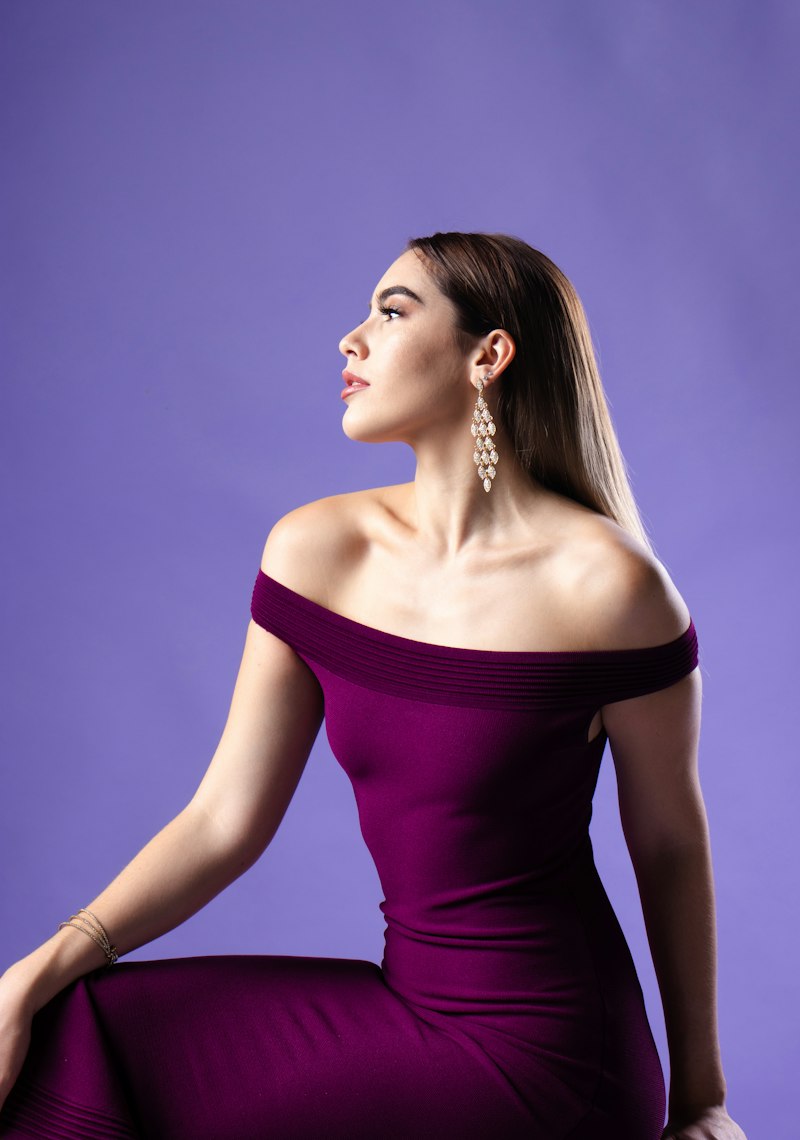
Once you have selected the right cut, the next challenge is building accessories and layers that complement rather than compete with the dominant color in your outfit. Burgundy is a complex shade with blue and purple undertones, which means your metal choice matters more than you might expect. Gold jewelry creates a warm, luxurious contrast that amplifies the richness of the fabric—this is the combination you see most frequently on red carpets and in high-end editorial spreads. Silver or white gold, by contrast, pulls out the cooler undertones in burgundy and creates a sharper, more modern aesthetic that works well for professional settings. When it comes to shoes, nude pumps remain the safest and most universally flattering choice because they extend the visual line of your leg without interrupting the burgundy-to-skin transition. Black shoes with a burgundy dress can work, but only when the burgundy leans dark enough to read as near-black in low light—a deep oxblood or plum-toned burgundy pairs well with black, while a brighter cherry-burgundy will clash. For outerwear, a camel or beige coat creates an unexpectedly sophisticated color palette that fashion editors consistently rate as one of the most photogenic combinations in womenswear. A black coat, while practical, flattens the visual impact of your burgundy dress by overwhelming its warmth with severity. The bag you carry should follow the same logic: if your shoes are nude, your bag can introduce a complementary tone—deep forest green, navy, or even a metallic gold clutch for evening events will elevate the overall composition without creating visual chaos.
The Seasonal Versatility That Makes Burgundy a Year-Round Investment
Most women categorize their dresses by season—florals for spring, bright cottons for summer, jewel tones for autumn, and dark velvet for winter. A burgundy dress breaks this categorization entirely because the color transitions naturally through every seasonal context without feeling out of place. In spring, a lightweight burgundy wrap dress layered under a denim jacket reads as effortlessly transitional, bridging the gap between winter’s heavy palette and summer’s brightness without committing fully to either. During summer months, a sleeveless burgundy midi dress in linen or cotton blend absorbs the harsh midday sun without the heat-retention problems that darker colors like black and navy create, while the warm undertones complement sun-kissed skin beautifully. Autumn is where burgundy naturally dominates—fall foliage, harvest tones, and the golden hour light all harmonize with wine-red hues, making a burgundy dress the most contextually appropriate choice for outdoor events, Thanksgiving gatherings, and autumn wedding celebrations. In winter, the same dress takes on a completely different character when paired with opaque tights, knee-high boots, and a structured wool coat. The burgundy hue reads as rich and warm against the cold grays and whites of winter landscapes, and velvet or satin fabrications in this shade become genuinely stunning under the crystalline quality of winter light. This four-season versatility means that a single well-chosen burgundy dress generates more outfit permutations and event-appropriate appearances than three dresses in more seasonal colors combined.
What Fashion Icons and Editorial Spreads Tell Us About Burgundy
If you want evidence that burgundy transcends fleeting trends, you need only look at how consistently the color appears in the wardrobes of women whose style has been studied, photographed, and emulated for decades. The Duchess of Cambridge has worn burgundy dresses to multiple high-profile events, and fashion analysts consistently note that her burgundy choices receive among the highest positive engagement metrics of her entire wardrobe. Sarah Jessica Parker’s character Carrie Bradshaw famously layered a burgundy slip dress under a sheer top in Sex and the City, a look that fashion historians still reference when discussing the early-2000s shift toward deeper, more sophisticated color palettes in mainstream television costume design. The editorial pages of Harper’s Bazaar and Elle feature burgundy dresses in at least two shoots per year, regardless of the season being covered, because art directors know the color photographs with a richness that other hues struggle to match. On the red carpet, actresses like Cate Blanchett and Viola Davis have repeatedly chosen burgundy gowns for award ceremonies, and the pattern is deliberate: burgundy photographs as deeply dimensional under camera flash, avoids the washed-out appearance that pale colors sometimes develop under harsh lighting, and creates a memorable visual signature without the attention-seeking quality of neon or metallic tones. The consistency of these choices across different eras, media, and cultural contexts tells you something important about the color—its appeal is not a trend but a structural feature of how human vision and cultural associations process deep red tones.
Where to Find a Quality Burgundy Dress Without Overpaying
The final piece of the puzzle is locating a well-constructed burgundy dress that delivers on the color’s promise without requiring a designer-label budget. The most common mistake shoppers make is purchasing a cheaply dyed burgundy dress that reads as brownish or muddy in natural light. Quality dyeing produces a burgundy with visible red and purple undertones that shift subtly as you move through different lighting environments—this chromatic dimension is what makes the color visually compelling. When shopping online, look for product photographs taken in both studio lighting and natural daylight, and pay close attention to customer review photos where real-world conditions reveal the true shade. Fabric quality matters enormously: a polyester burgundy dress will develop a synthetic sheen under certain angles that undermines the color’s elegance, while natural fibers like cotton blends, silk, or viscose absorb light in a way that keeps the burgundy looking rich and matte. For the best value, focus your search on mid-range retailers that invest in quality dyeing processes rather than luxury brands where you pay primarily for the label. A well-made burgundy dress from a thoughtful mid-range brand will outperform a carelessly constructed designer piece in every metric that actually matters—color accuracy, fabric drape, construction durability, and the way the garment moves with your body rather than against it. When you finally find that piece and hang it in the gap on your closet rod, you will understand why this single garment can quietly transform the way you dress, the way people respond to you, and the way you feel walking into any room.
If you are curious about exploring similar rich-toned silhouettes, you might also want to browse our collection of burgundy wrap dresses, which combine the depth of wine-red with one of the most universally flattering cuts in modern fashion.