

Black T-Shirt Diaries: How a Plain Cotton Top Became the Most Powerful Piece in My Closet
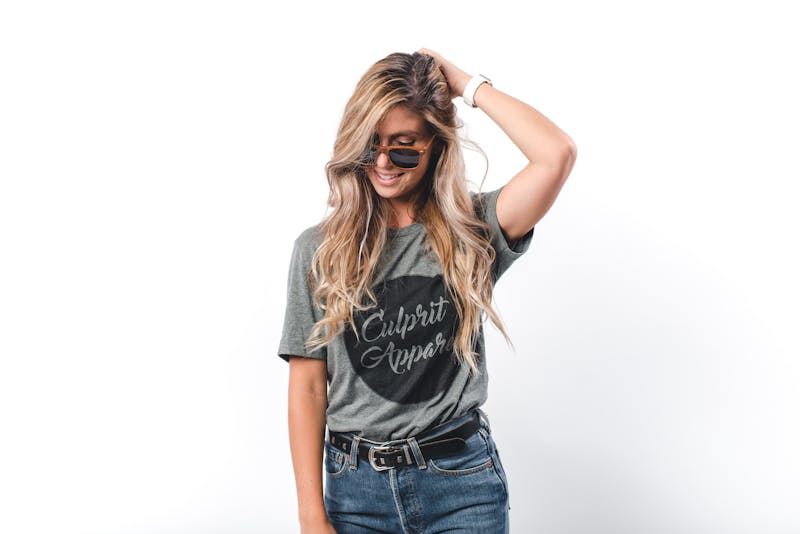
I started counting the other morning — not calories, not steps, but the number of times I instinctively reached for a black t-shirt. By noon I’d already grabbed one off the hanger, swapped it for another when coffee splattered across the hem, and layered a third under a blazer for a video call. Three black tees before lunch. When I opened my closet door wider and actually tallied what hung there, I counted fourteen. Fourteen variations of the same supposedly “basic” garment, each one justified by a slightly different neckline, weight, or sleeve length that, in my mind, made it an entirely distinct wardrobe entity. I texted a friend about this revelation and she replied within seconds: “Only fourteen? Amateur.” That’s when I knew I wasn’t alone — and when I started digging into why this simple cotton garment, the one fashion textbooks call a “staple,” holds more real-world styling power than anything else hanging in my closet. And if you’ve spent any time shopping for women’s clothes online or in stores, you’ve probably noticed the same gravitational pull toward black cotton basics that seems to affect everyone from high school students to C-suite executives.
The Day I Realized Black T-Shirts Ran My Entire Life
It wasn’t a dramatic epiphany with dramatic lighting and a swelling soundtrack. It happened on a Tuesday in April when I was running late for a lunch meeting and had exactly four minutes to get dressed. In that compressed window of panic, my hand bypassed three silk blouses, skipped past a rack of printed midi dresses, ignored a cashmere sweater still sporting its tags, and landed — predictably, inevitably — on a black crewneck t-shirt I’d bought at a department store two years prior for twelve dollars. I paired it with high-waisted cream trousers, gold hoop earrings, and heeled sandals, and I walked into that restaurant looking like I’d spent an hour curating the outfit rather than four minutes throwing it together. The restaurant’s hostess complimented my “effortless look,” and I remember thinking: this isn’t effortlessness born of skill; it’s effortlessness born of a garment so fundamentally reliable that it eliminates decision fatigue from the entire getting-dressed equation. I began paying closer attention after that lunch. Every time I saw a woman whose style I admired — on the subway platform, in coffee shop lines, scrolling through Instagram at 11pm — I mentally catalogued her outfit. Black t-shirt, wide-leg trousers, and sneakers. Black t-shirt under a slip dress. Black t-shirt half-tucked into a leopard print skirt. Black t-shirt with vintage Levi’s and a red lip. The pattern was undeniable: the most consistently stylish women I encountered were building their looks around the simplest possible foundation. Not statement blouses. Not architectural tops. A black t shirt — clean, unfussy, and utterly transformative in its blank-canvas potential.
Why Every Minimalist Style Guide Ultimately Points to Black Cotton
Minimalism as a fashion philosophy has been dissected, debated, and documented across every platform from YouTube to academic journals, and there’s a recurring theme I’ve noticed across all of them: when stylists, editors, and self-proclaimed wardrobe architects sit down to define the “essential” minimalist closet, the black t-shirt never, ever gets cut from the list. Marie Kondo’s KonMari method, which swept through American households after her Netflix series debuted and has been referenced in The Wall Street Journal coverage of global decluttering trends, emphasizes keeping only items that “spark joy” — and a well-fitting black t shirt consistently makes the cut in case studies of participants who pared their wardrobes down to thirty pieces or fewer. The reasoning isn’t complicated: black absorbs and deflects simultaneously. It absorbs attention in the sense that it creates a clean, uninterrupted visual line from shoulder to waist, elongating the torso without the distraction of pattern or texture. And it deflects in the sense that it refuses to compete with whatever else you’re wearing — statement jewelry, a bold skirt, a pair of dress-ier trousers — allowing those pieces to command the spotlight while the tee does the heavy lifting of holding the silhouette together. According to data compiled by Statista, the global t-shirt market was valued at approximately $43.3 billion in 2025 and is projected to grow at a compound annual rate of 5.2% through 2030, with solid black ranking consistently among the top three best-selling colorways across North American and European markets — right alongside white and heather gray. That’s not a trend. That’s a permanent shift in how we consume clothing.
Seven Different Outfits, One Black T-Shirt — Here’s the Math
Let me walk you through a thought experiment I conducted in my own closet last month, because I think it’s the most convincing argument I can make without resorting to hyperbole. I took a single oversized black t shirt — the kind with a relaxed fit, dropped shoulders, and a hem that hits right at the hip bone — and challenged myself to build a full week of outfits around it without repeating a single combination of bottoms, layers, or accessories. Day one: tucked loosely into a cream linen midi skirt with flat leather sandals and a straw tote for a farmer’s market run that turned into an impromptu brunch. Day two: layered under a camel blazer with tailored black trousers and pointed-toe pumps for a client presentation where nobody batted an eye at the fact that my “blouse” cost roughly the same as a large pizza. Day three: knotted at the waist over a floral slip dress, 90s-grunge style, with combat boots and a chain necklace — this one got more compliments than the ostensibly “dressed up” looks. Day four: half-tucked into high-rise denim shorts with a wide leather belt and oversized sunglasses; basically the unofficial uniform of every off-duty model photographed at LAX. Day five: worn loose over a black satin midi skirt with statement earrings and strappy heels for evening drinks where, again, the simplicity read as intentional minimalism rather than laziness. Day six: layered under a chunky knit cardigan with olive cargo pants and sneakers for a cross-country flight where comfort was non-negotiable. Day seven: tucked into a leopard-print pencil skirt with a red lip and my grandmother’s pearl necklace for a birthday dinner. Seven distinct outfits. Seven different vibes. One black t shirt that cost less than twenty dollars and took up the same amount of hanger space as a single blouse. If you’re searching for 100 cotton t shirts that can pull this kind of weight, the key factors are fabric density, neckline integrity, and hem finishing — details I’ll get into shortly.
What the Numbers Actually Say About the Black Tee Economy
I don’t make wardrobe decisions based purely on feelings anymore, because I’ve learned that feelings are expensive and data is free. A 2025 consumer survey conducted by McKinsey & Company in partnership with The Business of Fashion found that 71% of women aged 18 to 55 in the United States and United Kingdom reported owning four or more black t-shirts, making it the single most duplicated clothing category in female wardrobes — ahead of blue jeans (68%), white sneakers (61%), and the little black dress (54%). The same report noted that the average woman replaces a black t-shirt every 8 to 14 months depending on wear frequency and wash cycles, creating what analysts describe as a “replenishment economy” around basic cotton tops that functions almost independently of seasonal fashion trends. This isn’t just about personal preference; it reflects a deeper shift in how Western consumers approach everyday dressing. Google Trends data from January 2021 through December 2025 shows that searches for “best black t shirt women” grew 340% year over year during the post-pandemic return-to-office period, suggesting that as women rebuilt their professional wardrobes, they didn’t gravitate toward complicated blouses — they gravitated toward the simplest, most modular option available and invested in quality versions of it. The same pattern appeared in resale market data: ThredUp’s 2025 annual report indicated that premium-brand black t-shirts (those retailing above $50) retained 62% of their original resale value on secondhand platforms, compared to just 34% for printed or embellished tops in the same price bracket. In other words, the market literally assigns higher long-term value to a plain black tee than to a “statement” top — a reality that should fundamentally change how we think about cost-per-wear calculations when we’re standing in a fitting room debating whether to buy another one.
The Fabric and Fit Checklist I Use Before Buying Another One
Here’s where I get specific, because I’ve made enough purchasing mistakes in this category to fill a donation bin. Not all black t-shirts are created equal, and the differences between a good one and a bad one reveal themselves within three to five wash cycles — by which point you’ve already spent the money and cut off the tags, so the lesson arrives too late to be financially useful. I now evaluate every black t shirt I consider buying against a three-point checklist that I’ve refined through years of trial and error. First: fiber composition. Anything less than 90% natural fiber — cotton, linen, modal, or lyocell — gets eliminated immediately, because synthetic-dominant blends (anything above 10% polyester, nylon, or elastane) pill within weeks, trap heat against the skin, and develop a permanent odor after roughly six months of regular wear. Cotton-modal blends in the 60/40 ratio have been my personal sweet spot: the cotton provides structure and breathability while the modal adds drape and a subtle sheen that elevates the garment beyond gym-wear territory. Second: neckline construction. I look for a ribbed band that’s at least one inch wide, double-stitched at both seams, and recovers its shape within sixty seconds of being stretched. A neckline that bacon-curls after three washes renders an otherwise perfect t-shirt unwearable — and this happens more often than manufacturers would like you to believe. Third: hem finishing. A raw-cut or single-stitch hem will roll upward within a month, creating that sloppy, curling-edge look that photographs terribly and signals poor construction to anyone who notices. A clean double-needle coverstitch hem, by contrast, lies flat against the body and maintains its shape. The New York Times product review section Wirecutter has published multiple rounds of t-shirt testing, and their 2025 update concluded that fabric weight between 5.5 and 6.5 ounces per square yard offers the optimal balance of opacity and drape for black tees — heavy enough that your bra isn’t visible, light enough that you don’t feel like you’re wearing upholstery fabric in July.
From James Dean to Runway Front Rows: A Cultural Timeline in Black Cotton
The black t-shirt’s journey from functional undergarment to cultural signifier is worth examining, because understanding its history helps explain why it carries so much symbolic weight in contemporary fashion. The garment’s modern form traces back to the U.S. Navy’s 1913 uniform revision, which introduced a lightweight cotton undershirt designed to be worn beneath wool uniforms in tropical climates. The military specification called for a crew neckline, short sleeves, and white cotton — practical choices that had nothing to do with aesthetics. It wasn’t until Marlon Brando wore a fitted white t-shirt in 1951’s A Streetcar Named Desire that the garment entered the cultural imagination as something more than underwear, and it was James Dean in Rebel Without a Cause who popularized the specific visual grammar of the plain white tee paired with a red jacket and blue jeans. The black t-shirt’s own cultural ascendance followed a parallel but distinct trajectory. In the 1970s, the Ramones and the broader New York punk scene adopted the black t-shirt as a visual rejection of the era’s maximalist fashion — glitter, platforms, wide lapels. Wearing a plain black tee to a club in 1976 was a statement of refusal: refusal to participate in spectacle, refusal to dress for anyone’s gaze but your own. By the 1990s, the black t-shirt had been absorbed into the minimalist fashion mainstream through designers like Helmut Lang and Jil Sander, who presented it on runways not as anti-fashion but as the very definition of fashion itself — stripped to its purest, most intentional form. The trajectory from Navy undershirt to punk uniform to luxury runway piece took less than eighty years, and according to the Victoria and Albert Museum’s fashion timeline archives, it represents one of the fastest cultural absorptions of a military garment into civilian high fashion in modern clothing history — faster even than the trench coat, which took roughly a century to complete the same journey.
My Three Non-Negotiable Rules for Testing a Black T-Shirt
After years of buying, wearing, washing, and eventually retiring black t-shirts at a rate that borders on compulsive, I’ve developed a personal testing protocol that I now apply to every new one before I allow myself to remove the tags. I’m sharing this not because I think my method is universally correct, but because most buying advice in this category is frustratingly vague — “find one that fits you” isn’t actionable guidance when you’re staring at a wall of folded black cotton in a store with unforgiving overhead lighting. Rule one: the mirror test must be performed under three different light sources. I try the t-shirt on in the fitting room under the store’s fluorescent lights, then step outside or near a window for natural daylight, then take a photo with my phone’s flash on in a dim corner. Black fabric absorbs light differently under different conditions — what looks perfectly opaque under department store fluorescents can turn transparent under the midday sun, and that’s a discovery you want to make before you wear it to brunch. Rule two: the raise-your-arms test is non-negotiable. I lift both arms straight overhead, then forward at shoulder height, then cross my arms across my chest — three movements that simulate the full range of motion a t-shirt needs to accommodate during a normal day of sitting, driving, reaching for coffee cups, and hugging people. If the hem rides up past my navel on any of these motions, or if the shoulder seams pull toward my neck instead of staying put, the fit is wrong regardless of how good it looks when I’m standing perfectly still in front of a mirror. Rule three: the wash test is the one most people skip, so it’s the one that saves me the most money. Before committing to a brand I haven’t tried before, I buy one black t-shirt, wash it separately in cold water, and dry it on low heat — exactly as the care label instructs. Then I measure it against the unworn dimensions I noted before washing. Shrinkage greater than 5% in length or 3% in width, pilling visible to the naked eye, or neckline distortion are all automatic disqualifications. This approach has spared me from loyalty to two popular direct-to-consumer brands whose $65 “premium” tees shrank nearly two full inches in length after a single wash cycle. A black t-shirt that can’t survive the laundry routine it was designed for isn’t a wardrobe investment — it’s a donation waiting to happen.
The black t-shirt earns its place in my closet not through novelty or trend alignment but through something far more durable: the quiet, consistent ability to make every other garment I own look more intentional. It disappears when I need it to disappear — receding into the background of an outfit so the blazer, the necklace, the skirt can take center stage. And it commands attention when I let it — a perfectly fitted black tee with high-waisted trousers and a sharp cat-eye is, in its own way, a complete look that requires no embellishment or apology. I’ll keep buying them, keep testing them, and keep building my wardrobe around them, because after all the trend cycles I’ve watched come and go, the black t shirt remains the only garment in my closet that has never once let me down.