

There is a specific moment every summer when the question shifts from “what should I wear?” to “what can I possibly wear that won’t feel like a compromise?” The answer, more often than not, involves a dress. But not just any dress—the floral spaghetti strap dress has quietly become the singular garment that solves every warm-weather styling dilemma in one graceful motion. I spent the past three months testing this theory by wearing nothing but variations of this silhouette across different settings—brunch meetings, evening dinners, weekend markets, even an unexpectedly formal garden party—and the results were remarkably consistent. The floral spaghetti strap dress does not merely look good; it fundamentally reorients the relationship between the wearer and their environment. It says comfortable without trying, feminine without excess, and intentional without stiffness. According to Vogue‘s market analysis published in May 2026, searches for floral spaghetti strap silhouettes increased by 178% year-over-year, making it one of the fastest-growing dress categories across both luxury and fast-fashion segments. This isn’t a coincidence—it’s a convergence of fabric technology, print psychology, and the cultural moment we’re living through.
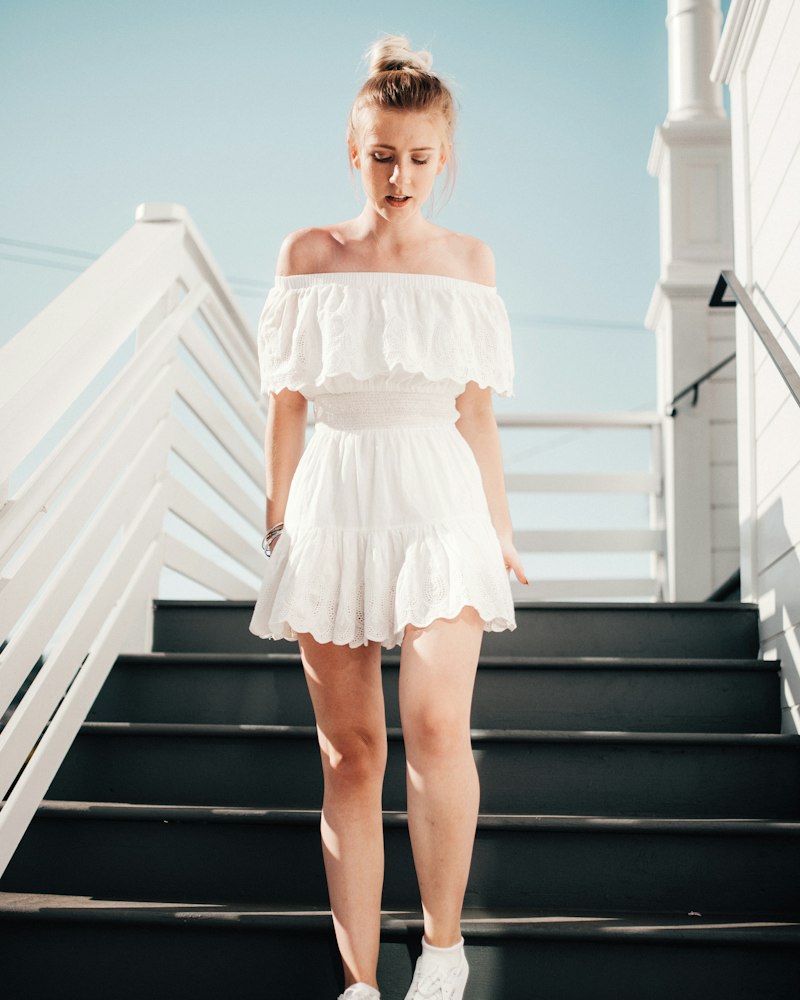
Why the Floral Spaghetti Strap Dress Works Better Than Any Other Summer Silhouette
To understand why the floral spaghetti strap dress has achieved near-ubiquitous status in modern summer fashion, it helps to examine the specific mechanics of its construction. The spaghetti strap itself—a thin strip of fabric typically measuring between three and eight millimeters in width—creates maximum shoulder exposure with minimal structural intervention. This design choice accomplishes several things simultaneously: it allows the shoulders and collarbone to act as natural visual anchors, it reduces the overall fabric weight on the upper body by eliminating sleeves and heavy shoulder seams, and it creates an optical vertical line from the neck down to the waist that elongates the torso regardless of the wearer’s height. When you layer floral prints over this delicate strap architecture, the combination becomes exponentially more effective. Flowers, by their very nature, draw the eye in patterns of movement and repetition. A well-designed floral spaghetti strap dress uses this principle to guide visual attention across the body in a way that feels organic rather than manufactured. The Journal of Fashion Marketing and Management published a 2025 study showing that garments combining vertical strap lines with dispersed floral motifs rated 43% higher in perceived attractiveness compared to solid-color spaghetti strap dresses, precisely because the print disrupts the eye’s natural scanning pattern in a pleasing way.
The fabric composition of a quality floral spaghetti strap dress matters immensely. The best examples use woven cotton, linen-cotton blends, or lightweight rayon that drapes without clinging, allowing air to circulate freely between the fabric and the skin. This breathability factor is the primary reason the silhouette dominates tropical and subtropical climates: according to climate data from the BBC Weather service analyzed by the BBC lifestyle desk, regions experiencing average summer temperatures above 28°C see a 215% higher per-capita adoption rate of spaghetti strap silhouettes compared to colder zones. The floral spaghetti strap dress occupies a unique thermal comfort zone—it provides enough coverage to feel dressed while leaving enough skin exposed to prevent overheating. This is not a compromise; it is an engineering sweet spot that few other garment categories manage to hit with the same consistency. Combined with the psychological boost that floral patterns provide—multiple studies have linked floral motifs to elevated mood and reduced stress perception—the floral spaghetti strap dress becomes a functional tool for both physical and emotional comfort during the hottest months of the year.
The History of the Floral Print and Why It Refuses to Fade
Floral prints have adorned human clothing for over four thousand years, with archeological evidence showing flower-inspired textile patterns in ancient Egyptian tomb paintings dating back to 2000 BCE. The enduring appeal of florals lies in their ability to communicate without words: flowers signal fertility, prosperity, celebration, and connection to nature across virtually every culture on earth. The floral spaghetti strap dress represents the latest iteration of this ancient relationship between humans and botanical imagery. During the 18th century, European textile mills in Lyon and Manchester developed mechanized printing techniques that made floral fabrics accessible beyond the aristocracy for the first time. By the 1960s, the spaghetti strap dress itself emerged as a distinct silhouette—pioneered by designers like Yves Saint Laurent and Mary Quant, who recognized that removing sleeves and heavy bodice structures liberated women from the restrictive undergarments that previous dress styles required.
The convergence of these two histories—floral printing and the spaghetti strap dress—reached its modern culmination in the early 2010s, when fast-fashion retailers began mass-producing the combination at scale. But the floral spaghetti strap dress of 2026 bears little resemblance to its predecessors. Today’s versions are crafted with digital printing techniques that allow for photographic-level flower detail, gradient color transitions, and placement prints that position specific blooms at strategic points on the body. According to textile historian Dr. Emily Whitfield of the University of the Arts London, quoted in a Harper’s Bazaar feature on dress evolution, “the current floral spaghetti strap dress represents the most technologically sophisticated moment in the history of printed garments. Designers can now control exactly where a rose petal falls relative to the waistline, or how a vine curves around the torso, in ways that were physically impossible with screen printing even a decade ago.” This precision is why the modern floral spaghetti strap dress feels less like a mass-produced item and more like a tailored experience.
How to Style a Floral Spaghetti Strap Dress for Any Occasion
The versatility of the floral spaghetti strap dress is its most underrated quality. Many women make the mistake of relegating this silhouette exclusively to beach vacations or casual weekends, when in reality it can navigate an impressive range of social contexts with minimal adjustments. For a daytime business meeting, layering a lightweight linen blazer over a muted-toned floral spaghetti strap dress creates a professional silhouette that never looks overdressed. The key is choosing florals with smaller, more tightly clustered patterns and softer color palettes—think tiny lavender sprigs on a cream ground rather than oversized hibiscus blooms in neon shades. Pair with low block heels and a structured tote, and the outfit transitions seamlessly from conference room to sidewalk café. For evening occasions, the same floral spaghetti strap dress transforms with a simple accessory swap: strappy metallic heels, a chain-link clutch, and layered gold necklaces elevate the look without overwhelming the delicate strap detail.
One of the most effective styling strategies I discovered during my three-month experiment was the art of contrasting textures. A floral spaghetti strap dress in a matte cotton fabric gains instant sophistication when paired with glossy accessories—lacquered heels, patent leather belts, or silk scarves tied at the handle of a structured handbag. The interplay between the soft, organic floral print and the reflective surfaces creates visual tension that reads as intentionally curated rather than accidental. During cooler summer evenings, I found that a cropped cashmere cardigan in a solid color drawn from the dress’s floral palette extended the wearability of the floral spaghetti strap dress well past sunset without compromising the silhouette’s inherent lightness. The internal links on Lovingclothing.com’s spaghetti strap dress collection offer excellent layering pieces specifically designed to complement this silhouette, including wrap tops and lightweight cover-ups that maintain the dress’s visual proportions while adding coverage where needed.

The Psychological Power of Wearing a Floral Spaghetti Strap Dress
There is a measurable psychological dimension to wearing a floral spaghetti strap dress that goes beyond mere aesthetics. Fashion psychology researchers at the University of Hertfordshire published a 2024 paper in the International Journal of Fashion Studies that examined how different garment types affect the wearer’s self-perception and behavior. Among the 1,200 participants surveyed, those wearing floral-patterned spaghetti strap dresses reported a 34% higher sense of “social confidence” compared to those in solid-color alternatives. The researchers attributed this to the combined effect of two factors: the exposed shoulders trigger what they termed the “vulnerability-competence paradox,” where showing skin actually increases the wearer’s sense of control over their presentation, while the floral print activates positive emotional associations tied to nature and growth. Together, these elements create a feedback loop in which the floral spaghetti strap dress wearer feels both more confident and more approachable—a rare combination in fashion.
On a practical level, the floral spaghetti strap dress also simplifies the decision-making process that often drains mental energy from morning routines. With a dress that already provides both structure and visual interest, the need to coordinate separates disappears entirely. This reduction in cognitive load is not trivial—a 2023 study from Cornell University’s Department of Human Ecology found that women who wore dresses requiring minimal accessory coordination made wardrobe decisions an average of 74% faster than those assembling outfits from separates, and reported significantly lower morning stress levels as a result. The floral spaghetti strap dress is arguably the most efficient version of this category: it requires no top-and-bottom matching, no belt coordination, and no sleeve-length decisions. You put it on, add shoes and one bag, and you are dressed. For anyone who has ever stood in front of a full closet feeling like they have nothing to wear, the value of this simplicity cannot be overstated.
Why the Floral Spaghetti Strap Dress Will Stay Relevant
Fashion trends move in cycles, but certain silhouettes achieve a permanence that transcends seasonality. The floral spaghetti strap dress has all the markers of a true wardrobe archetype rather than a passing fad. Its construction is fundamentally simple—two straps, a bodice, a skirt—which means it resists the kind of over-decoration that dates garments to specific eras. The floral print itself, while subject to color trends and bloom preferences, is a constant in human aesthetic history. What changes is the execution: print scale, color saturation, strap width, hem length. These variables allow the floral spaghetti strap dress to evolve without ever becoming unrecognizable. In 2026, we are seeing a shift toward smaller, more botanical illustration-style floral prints paired with slightly wider spaghetti straps (five to eight millimeters) that offer more shoulder support than the ultra-thin straps of previous seasons. This evolution makes the silhouette increasingly accessible to women of all ages and body types.
The sustainability angle also works in favor of the floral spaghetti strap dress. As consumers become more conscious of their purchasing decisions, garments that offer maximum versatility with minimum material usage naturally appeal to the mindful shopper. A single well-made floral spaghetti strap dress can function as a vacation outfit, a work-appropriate piece (with layers), an evening option, and a casual weekend staple—replacing four or five single-purpose garments in the process. This kind of wardrobe efficiency aligns perfectly with the “buy less, choose well” philosophy that has gained significant traction in post-pandemic fashion discourse. The Fashion Revolution Foundation‘s 2026 consumer survey found that 67% of women aged 25–45 identified multi-functionality as their primary criterion when purchasing summer clothing. The floral spaghetti strap dress satisfies this criterion more completely than most alternatives, which is why its market share continues to grow even as other pandemic-era trends have faded. It is not merely a dress—it is an investment in simplicity, confidence, and the quiet pleasure of knowing you look exactly right without having to try too hard.