

There is a particular kind of morning in early autumn that defeats every careful wardrobe plan: cold enough that bare legs feel like a mistake, warm enough that tights feel like a surrender, and busy enough that you have roughly ninety seconds to decide. For three seasons now, the piece that has ended that argument for me is a black maxi skirt. Not a statement skirt, not a print, not something that needs a matching mood — just a long, dark, quiet column of fabric that skims the floor and somehow works with a knit on a cold morning, a silk blouse at the office, and a plain tee on a Saturday without ever looking like the same outfit twice. A black maxi skirt is what happens when a garment stops being a trend and starts behaving like infrastructure. It does not ask you to build around it; it simply absorbs whatever you put near it and makes the whole thing look deliberate.
This is not a piece that gets written about the way a sequin dress or a corset does, and that is exactly the point. The black maxi skirt is the quiet workhorse of a real wardrobe — the one that gets worn on the days that actually fill a calendar, rather than the days that end up on a mood board. Below I have pulled together everything I have learned about why it works, where the shape came from, which fabrics make the difference between elegant and shapeless, how to style one piece across work and weekends and evenings, how to choose the right cut for your height and shape, and how to keep a black maxi skirt looking deep and sharp for years rather than a single season. If you have been treating the maxi as a summer-only or holiday-only idea, the honest answer is that you have been missing the version of it that earns its place in autumn.
Why a Black Maxi Skirt Solves More Autumn Problems Than Any Other Skirt
The first reason the black maxi skirt works so hard is temperature range. A long skirt covers far more surface area than a midi or a mini, and that extra fabric is a genuine barrier against the wind and the cool air that arrives well before winter does. Unlike trousers, though, a skirt does not trap heat close to the body in the same way, so you can wear a black maxi skirt on a mild October afternoon without feeling sealed in. That middle ground between too hot and too cold is exactly where most autumn days live, and few garments are genuinely comfortable across the whole of it. Add a black maxi skirt to a wardrobe and you suddenly have an option for the twenty-degree swing between an early commute and a late evening without changing your entire outfit, which is worth more than any single novelty buy.
The second reason is colour, and black is not a lazy choice here — it is the most strategic one. Black is the most reliable neutral in fashion precisely because it refuses to compete: it flatters every other colour you own, it holds a silhouette at any distance, and it forgives the small marks and the uneven lighting that a long hemline collects on a real day. In practical terms, a black maxi skirt lets you wear the same three tops in rotation and never once look like you have run out of ideas, because black is doing the quiet work of making each combination look finished. That is also why the plain black floor-length skirt has outlasted every colour trend that has tried to replace it. It is the rare piece that is both a basic and a statement, depending entirely on what you put with it — and that flexibility is the whole reason it becomes a uniform rather than an occasional choice. When you own one that fits properly, you stop negotiating with your wardrobe on the hard days, and that convenience compounds over a whole season of early starts and long evenings.
A Short History of the Long Black Skirt, From Mourning Dress to Modern Uniform
The floor-length skirt is far older than the word “maxi”, and the black version carries a heavier cultural weight than most people realise. According to the documented history of the maxi skirt, floor-length skirts have moved between formal, modest, and fashionable roles across the last two centuries, flaring and falling with each era’s mood. The black floor-length skirt in particular spent a long stretch of the nineteenth and early twentieth centuries tied to mourning and formality in Western dress, worn long and dark out of ritual rather than style. That inheritance is precisely why a black maxi skirt carries a quiet seriousness that a bright one does not — it is a shape with a memory, and the seriousness reads today as elegance rather than gloom.
From there the piece travelled in two directions. Designers pulled the long black skirt into evening wear, where the floor-skimming line became shorthand for understated glamour, and streetwear pulled it the other way, where it became a practical foundation for layered, everyday dressing. The cultural dominance of the little black dress is often credited with teaching shoppers that black could be the most versatile choice rather than the safest one, and the black maxi skirt inherited that lesson at full length. By the time the maxi cycled back into wide popularity in the twenty-first century, the black version had already been quietly normalised as a wardrobe basic rather than an occasion piece. Today it sits in the rare position of being both historically loaded and completely frictionless — a garment you can wear to a meeting, a dinner, and a Sunday market without rethinking a thing, which is exactly what makes it worth owning in the first place.
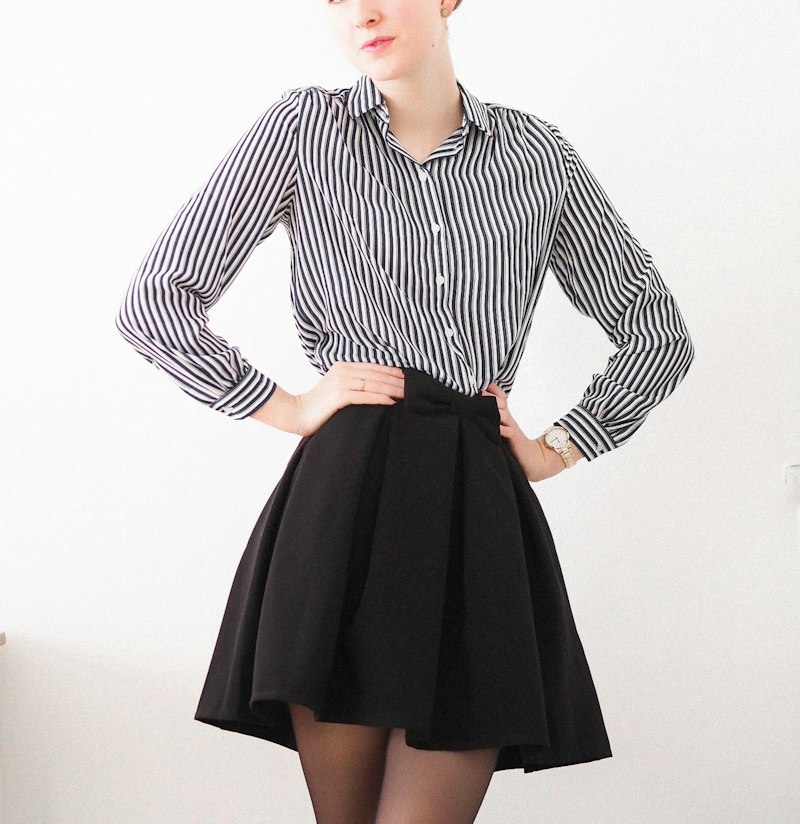
Black, Maxi, and Flattering: What the Long Dark Line Actually Does
The reason a black maxi skirt flatters so reliably comes down to two effects working at once, and the first is visual. A continuous dark column running from the waist to the floor reads as a single unbroken line, which the eye interprets as length. Because black absorbs light rather than reflecting it, the hemline does not catch a bright horizontal edge the way a lighter skirt can, so the silhouette stays vertical and the figure reads taller and leaner. This is why a black maxi skirt is one of the few skirts that genuinely suits a wide range of heights without tailoring: the darker and more even the tone, the stronger the effect. It is a case where the most flattering option is also the most practical one, and that overlap is rare in fashion.
The second effect is behavioural, and it is worth being honest about it. According to the documented study of colour perception, black is widely associated in Western fashion with authority, formality, and sophistication, which is why it dominates in settings where people want to look composed. Wearing a black maxi skirt therefore does two jobs at once: it smooths the body physically through the long dark line, and it signals a certain settled confidence that a loud print cannot replicate. The practical upshot is that a black maxi skirt works across social situations that would otherwise require different outfits, because it never reads as over- or under-dressed. A skirt that makes you look both slimmer and more self-possessed, and that also happens to be the easiest thing in the wardrobe to combine — that is not a happy accident. It is the entire reason the shape keeps coming back season after season while louder trends fall away.
The Fabrics That Decide Whether a Black Maxi Skirt Looks Elegant or Flat
With a black maxi skirt, fabric is the whole game, because a long piece in the wrong cloth will either cling in the wrong places or hang like a curtain. The most forgiving choice is a mid-weight fabric with some structure and a soft drape: a fine wool blend, a ponte knit, a heavier crepe, or a good gabardine will hold a clean vertical line and keep the hem from collapsing. Weight matters more here than on a shorter skirt, because a long hemline reveals a flimsy fabric instantly — thin fabrics go shiny at the seat and knee, catch on tights, and lose their shape by mid-afternoon, while a slightly heavier cloth hangs better, wrinkles less, and reads as considerably more expensive than it costs.
Fibre choice should follow the season and the finish you want. Brushed wool and wool blends take black deeply and hold a crisp, matte surface that suits autumn and winter, while a wool structure that absorbs moisture without feeling damp keeps you comfortable moving between a heated office and a cold street. Satin and silk give a black maxi skirt a fluid, evening-appropriate sheen, but they show every crease and cling, so they suit a straighter or bias-cut style rather than a full one. Jersey is the easiest everyday option and the most portable, though a very thin jersey tends to reveal rather than flatter. If you want a single black maxi skirt to cover the most ground, choose a mid-weight matte fabric with a bit of body — enough to skim, not enough to stiffen. A quick test in the fitting room is to walk a few steps and watch the hem: a good fabric moves and falls back into line, while a cheap one either flaps unnaturally or sticks to your legs. If you can see the outline of your knees through the front of the skirt under ordinary light, the fabric is too thin for a floor-length cut, no matter how good the price looks.

How to Style a Black Maxi Skirt for Work, Weekends, and Evenings
The beauty of a black maxi skirt is that one garment covers the whole day, and the styling rule is simply to change what sits above it. For the office, pair a straight or A-line black maxi skirt with a tucked, slightly structured blouse or a fine knit, add a slim belt to mark the waist, and finish with a low heel or a pointed flat; the long dark line reads professional and far less predictable than the usual grey trousers. For weekends, loosen everything: an oversized cotton tee, a cropped or knotted layer, chunky boots or clean trainers, and a casual crossbody bag turn the same skirt casual without losing its polish. Because black already unifies the outfit, you can afford one strong element — a bright knit, a bold bag, a metallic shoe — without the look tipping into chaos, and that single accent is often what makes the outfit feel considered rather than effortless by accident.
Evening is where a black maxi skirt quietly outperforms almost anything else you own. Swap the flat shoe for a heeled boot or a strappy sandal depending on the season, add a silk camisole or a fitted top in a jewel tone, and choose a small structured bag — the length and the darkness do the rest. A floor-grazing black skirt with a fitted top reads as polished evening wear with none of the fuss of a dress, and it is far easier to sit, travel, and stay warm in. For colder weather, layer a fine long-sleeve knit underneath or a tailored coat over the top, keeping the coat open so the vertical line survives. If you want to see how these ideas come together in finished pieces — from fluid bias cuts to structured everyday columns — you can browse the styling notes in the guide on how to style a black maxi skirt and pick the cut that suits your own shape. One good black maxi skirt genuinely can replace the three separate skirts you keep for three separate occasions, which is why it ends up the most-worn thing you own.
Choosing the Right Black Maxi Skirt for Your Height, Shape, and Season
Buying a black maxi skirt well is mostly about cut and rise rather than size. On a petite frame, a high rise combined with a straight or gently tapered line keeps the body looking long, and avoiding a bulky tiered volume is the single biggest favour you can do yourself at under five foot four. On a taller frame, you can carry volume, wide A-line flares, and tiered or pleated construction far more easily, and a lower or mid rise often looks better balanced. On a curvy figure, a slightly heavier fabric with a bit of stretch skims rather than clings, and a straight or soft A-line cut skims the hip without adding width; on a straighter frame, a bias cut, a pleat, or a subtle flare creates movement and the illusion of curve. The trick is to match the silhouette to the body rather than to the trend of the season.
The rise and the waistband matter more than most shoppers expect, because a long skirt is anchored entirely at the waist and any pulling there is magnified all the way to the hem. Choose a rise that sits where you are comfortable and a waistband with a little structure rather than a thin elastic, which will roll and drag. On length, the classic styling note is that a black maxi skirt should hover just off the floor with your usual shoes on, breaking only slightly; too short reads as an awkward midi, and too long gets stepped on and soaked at the hem. Always try a black maxi skirt with the shoes you will actually wear it in, because two centimetres of heel changes the whole line. Finally, keep the shape seasonal: a matte wool blend and a higher rise suit autumn and winter, while a lighter viscose or satin version and a softer drape suit transitional weather. Buy the cut and the fabric that match your real life rather than the model’s, and the piece will earn its keep all season.
Keeping a Black Maxi Skirt Deep, Sharp, and Looking New
Black is the most demanding colour to maintain and the most rewarding when it is looked after, because faded black has nowhere to hide. The main enemy is washing: every hot wash and every tumble-dry cycle strips dye and dulls the surface, so treat a black maxi skirt the way you would treat any dark investment piece. Turn it inside out, wash it cold and on a gentle cycle with a colour-protecting detergent, and air-dry it in the shade rather than in direct sun, which fades black unevenly and can leave a grey cast across a long panel. Wash it less often than you think you need to — airing a skirt between wears removes most odour, and black hides minor marks far better than lighter tones, so a spot-clean and a day on a hanger often replaces a full wash entirely.
Storage and pressing keep the colour and the line intact. Hang a structured black maxi skirt on a proper clip hanger rather than folding it over a rail, so the hem does not crease and the waist does not stretch, and keep it out of long direct light to slow any fading. When it needs pressing, use the lowest effective heat, work on the reverse, and use a pressing cloth so the surface does not go shiny — a shiny patch on black is the fastest way to make an affordable skirt look cheap. A fabric steamer is usually kinder than an iron for any draped or crepe finish. Keep a lint roller handy, because a long dark hem picks up fibres and pet hair from everywhere it passes, and a black maxi skirt that is lint-free always looks more expensive than one that is not. Looked after this way, one good black maxi skirt will hold its depth and its shape across several autumns, which is the quiet case for buying the better fabric in the first place rather than replacing a thin one every year. Treated as a staple rather than a season, it becomes the piece you reach for without thinking — and that, more than any trend, is what a uniform is made of.