

Most wardrobes are not short of clothes; they are short of one piece that quietly ends the decision before it begins. That is what a skirt cut long tends to do. It reaches past the knee, gathers a little warmth at the ankle, and turns a plain knit or a tired shirt into an outfit without demanding anything in return. On a grey morning in late September, when the light is low and the temperature cannot decide what it wants, a long skirt is the answer that requires no negotiation — you pull it on, add whatever sits at the top of the drawer, and you are dressed. The question worth asking is whether that convenience is a fluke or something more structural.
This piece argues that it is structural, and it sets out the case in plain terms. It begins by explaining what actually separates a long skirt from a maxi, because the two are used interchangeably and should not be. From there it traces how the long skirt travelled from working dress to modern staple, then walks through how to read length, fabric and cut before you spend money. It moves on to styling a single long skirt three ways, explains why the proportion flatters so many heights and shapes, examines what this autumn’s market data actually shows about demand, and closes with how to care for the piece so it survives the season that sold it to you. Read to the end and you will know whether one long skirt can genuinely carry an entire autumn — and, more usefully, how to choose the one that can.
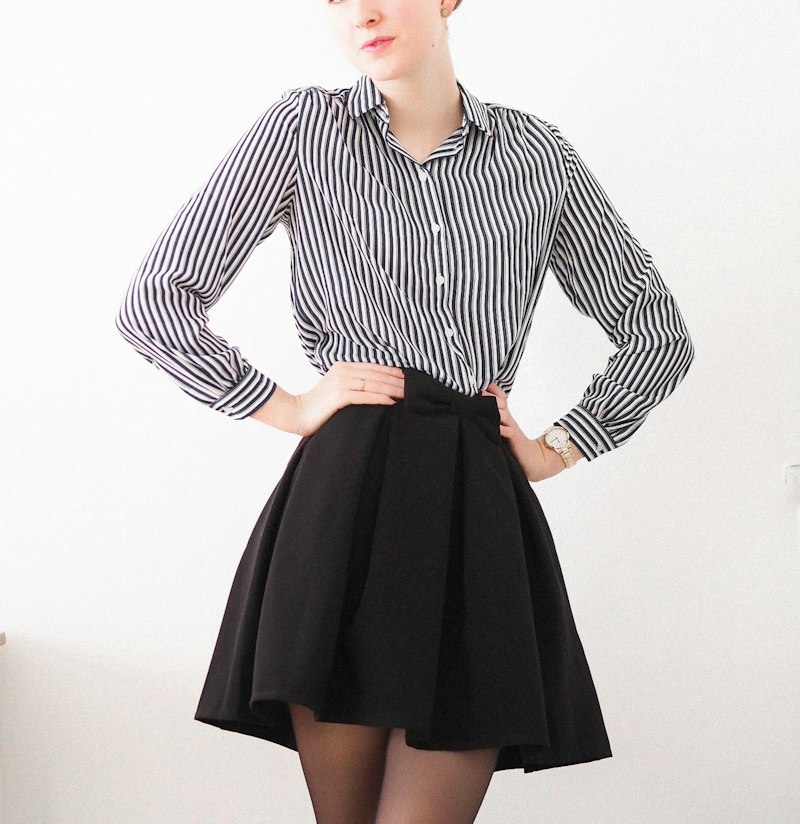
What Actually Makes a Long Skirt Different From a Maxi
The words get swapped constantly, but they do not mean the same thing, and the difference matters when you are shopping. A maxi is defined by a hemline: it is a skirt that reaches the ankle or the floor. A long skirt is defined by intent as much as by measurement — it is any skirt that deliberately extends well below the knee, whether it lands mid-calf, just above the ankle or fully to the floor. In practice that means a maxi is always long, but a long skirt is not always a maxi. A tailored, calf-grazing long skirt is a different garment, with a different feel, from a sweeping floor-length maxi. Understanding the distinction stops you buying the wrong thing for the wrong occasion, and it stops you assuming that “long” automatically means “formal” or “beach”.
Construction explains most of the behaviour. A long skirt has more cloth hanging from the waist, and that extra length changes everything about how the fabric reads. Weight matters more than it does on a shorter skirt, because a light fabric over a long drop can look insubstantial, while a dense one can feel heavy. Drape matters too: a long skirt reveals whether a material falls cleanly or clings, because there is simply more surface on which to see it. This is why the same fabric can look wonderful as a knee-length skirt and disappointing as a long one — the length exposes everything. Choose the cloth for the length, not the length for the cloth, and a long skirt will hang with the calm, unbroken line that makes the whole silhouette work.
It also helps to be honest about what a long skirt is not. It is not a substitute for a formal gown, and it is not automatically a summer piece. A long skirt made from a warm, structured fabric — wool, corduroy, ponte, a heavy cotton twill — is a genuinely cold-weather garment that can be worn with boots and a coat for months. A long skirt in a fine, floaty fabric belongs to warmer days and open shoes. The same length can therefore serve two completely different wardrobes depending on the material, which is exactly why the category is so useful once you stop treating it as one single thing. The point of a long skirt is range, and range only appears when you choose the fabric deliberately.
How the Long Skirt Travelled From Working Dress to Modern Staple
Long skirts are old — far older than most items in a modern closet. As the historical record of the skirt shows, the garment has been worn in some form for thousands of years, and for most of that time a long length was simply the default for women, whatever the culture or the century. Length was governed by convention, climate and work rather than by fashion, and the hemline only became a deliberate style decision — something to be raised or lowered on purpose — relatively recently. Seen in that light, the long skirt is not a trend that keeps coming back; it is the baseline from which every shorter hemline departed.
The nineteenth and early twentieth centuries show the pivot clearly. Writing on Victorian fashion records how floor-length skirts, supported by layers of petticoats and then by the crinoline and the bustle, defined respectable dress for decades. Those were long skirts in the fullest sense: heavy, structured and laden with social meaning. When hemlines rose dramatically through the twentieth century, the long skirt did not disappear — it retreated, resurfacing in evening wear, in bohemian dress, in the prairie and peasant revivals, and eventually in the minimal, column-like styles that designers return to whenever the culture decides it has had enough of exposure. The long skirt we wear now is the heir of all of that: the sober, wearable descendant of a garment that once meant nothing but length.
The reason that history is worth holding in mind is that it explains why the long skirt never feels like a costume, even when it is dramatic. The eye has had centuries of practice reading a long hemline as settled, adult and deliberate, so a long skirt signals calm authority before a single word of styling is applied. That inherited association is free value, and it is why the same skirt can pass in a boardroom, at a winter dinner and on a slow Sunday without changing anything. It is not that the garment adapts; it is that our reading of it already contains every one of those registers.
Length, Fabric and Cut: Reading a Long Skirt Before You Buy
Because a long skirt is a considered purchase, it rewards a considered approach. Start with length, measured against your own body rather than a label. The two most useful points are mid-calf and ankle: mid-calf reads relaxed and works beautifully with boots, while ankle-length reads more elegant and lengthens the line if the skirt is slim. Stand in the mirror and check where the hem lands relative to your shoes, because a long skirt that finishes at an awkward point — right on the widest part of the calf, for instance — fights your proportions, while one that finishes just below the knee or just above the ankle flatters them. A few centimetres decide whether the piece looks deliberate or accidental.
Fabric is the next decision, and it should follow the season you intend to wear it. For autumn and winter, structured cloths — wool blends, corduroy, ponte, denim, heavy twill, tweed — hold a clean line and take a crease well, and they sit happily under a coat without bunching. For spring and summer, look for linen, cotton voile, fine silk or a light crepe that moves and breathes, and expect to press it more often. Fit matters more on a long skirt than on a short one, because there is more cloth to expose a mistake: aim for a waistband that sits flat and does not gape, and a cut that skims the hip rather than gripping it. Sit, walk and climb a stair in the fitting room; a long skirt that restricts any of those will rarely be worn, however lovely it looks on the hanger.
Cut and detail round out the decision. A straight or gently tapered long skirt gives a clean vertical line and is the easiest to style; an A-line or flared long skirt adds movement and hides the hip; a wrap or slit long skirt introduces adjustable fit and a little ease of stride. Look for a lining if the fabric is at all sheer or scratchy, a hem that hangs straight rather than wavy, and a fastening that sits flush rather than pulling. Three details reliably separate a well-made long skirt from a cheap one: a flat, interfaced waistband; a straight, evenly finished hem; and a lining that matches the outer fabric. Get those right and the skirt will look twice its price.
Styling One Long Skirt From Office to Weekend to Evening
The best reason to own a long skirt is how much it does on its own, which means styling it is mostly about restraint. For the office, keep everything above the waist quiet: a fine-knit sweater or a crisp shirt tucked in, a structured blazer in a solid tone, opaque tights and a low heel or a polished flat. Let the skirt carry the line and refuse the temptation to add a second focal point. Accessories should echo rather than compete — a slim belt at the natural waist, small earrings, a simple leather bag. The result reads as senior and composed without effort, because the long unbroken line is doing the work and you are simply not interrupting it. If you want to see how the shape translates across a full season, browsing a long skirt collection makes the point faster than any paragraph.
For the weekend, the same long skirt relaxes without losing its edge. Worn with a chunky knit, ankle boots and a crossbody bag, it becomes an easy answer to “warm but not fussy” — the length keeps it from looking shapeless, the fabric keeps it from looking like pyjamas. Add a denim or leather jacket if the day is cold, or a soft cardigan if it is not. This is the outfit that proves the piece’s versatility: the same long skirt that held a meeting can hold a market, a long lunch or a train journey, because its quality is self-evident and its styling needs are minimal. Buy well, wear it three ways, and the cost per wearing falls faster than almost anything else in the wardrobe.
For an evening, the same piece turns warmer and more deliberate. Swap the knit for a fine silk blouse, the blazer for a tailored coat or a soft wrap, the flat for a heel. Let one metallic element — a clutch, a pair of earrings, a slim bracelet — echo the line of the skirt, and keep everything else matte. Because a long skirt creates such a strong vertical, evening styling should protect that line rather than break it: avoid a bulky top that sits over the waist, and prefer a tuck or a cropped layer that keeps the waist visible. A deep-toned long skirt with a satin shoe is quietly more interesting than a predictable dress, precisely because so few people think of it. You will not match anyone else in the room, and that is the point.
Why a Long Skirt Flatters Almost Every Height and Shape
Proportion is the real reason the long skirt works so widely, and it is worth understanding rather than taking on faith. A long skirt creates one long vertical line from waist to hem, and the eye reads vertical lines as height. That is why petite wearers often look taller in a slim, ankle-grazing long skirt worn with a heel or a pointed flat than in a knee-length skirt that cuts the leg in half. The trick is to keep the vertical unbroken: a high, clean waistband, a top that tucks or ends at the waist, and a hem that finishes close to the shoe rather than at a busy point. Get those right and the piece adds length to almost any frame.
For curvier shapes, the long skirt is forgiving in a different way. Because it skims rather than grips, a well-cut long skirt in a fluid fabric follows the body’s line without highlighting every contour, and an A-line or gently flared version hides the hip and thigh entirely. The key is fabric weight: too stiff and the skirt stands away from the body and adds bulk; too thin and it clings and reveals. A medium-weight cloth with a little give is the sweet spot, because it moves with you and still falls in a clean line. Worn with a fitted top, it balances the silhouette; worn with a loose top, it creates an easy column that feels both relaxed and intentional.
Height is not the obstacle many people assume, either. Taller wearers can carry a floor-length or a boldly printed long skirt that shorter frames might avoid, while petite wearers get the most from slim, single-colour long skirts with a defined waist and a shoe in a similar tone to the hem. The unifying principle is contrast management: the fewer places the eye is asked to stop, the taller and cleaner the whole outfit reads. That is why a long skirt in a solid colour, worn with matching tights and a shoe close in tone, lengthens the body so effectively. It is not magic and it is not a trick of the mirror; it is straightforward design, available to anyone who reads it.
What This Autumn’s Data Says About the Long Skirt
Fashion writing reaches for “timeless” far too readily, so it is more useful to look at what the numbers show. Apparel market data published by Statista has recorded steady growth in the global women’s clothing segment, and buyers consistently report that within that growth the fastest-moving styles are the ones that feel substantial and easy to wear rather than novel for their own sake. The logic is simple: when shoppers are more careful with money, they gravitate toward pieces that look and feel durable, and a long skirt — more cloth, more presence, longer useful season — answers that demand directly. It sits at the intersection of the two strongest signals in the market: a classic shape and a garment that promises to earn its place.
Runway coverage tells a compatible story. Over recent autumn and winter seasons the major houses have returned repeatedly to longer hemlines, flowing columns and floor-skimming silhouettes as a counterweight to the minimal lengths that dominated the previous decade. Buyers report that a long skirt is one of the easiest pieces to sell, because length is visible on a screen, on a rail and on a body, and it survives the journey from a photograph to a fitting room far better than a subtle cut or a quiet colour. In an era of image-led shopping, a garment that reads clearly in a thumbnail has a real commercial advantage, and a long skirt reads clearly.
There is a behavioural argument too. Wardrobe studies and consumer surveys repeatedly find that people wear a shrinking share of what they own, and that the pieces they actually reach for are the ones that feel substantial and require little thought to style. A long skirt scores on both counts: it feels like something, and it needs almost nothing to look finished. That combination — high perceived value and low styling cost — is the underlying reason the length keeps returning each cold season. It is not driven by a single runway moment; it is a durable answer to a recurring problem, which is why it has outlasted every trend that tried to displace it.
Caring for a Long Skirt So It Outlasts the Season
A long skirt earns its keep over years, and a little care protects that. Start by reading the care label and following the gentlest option it allows: many wool and structured blends are dry-clean only, while cotton and washable versions should go on a cool, delicate cycle turned inside out. Because a long skirt has a lot of fabric, it also has a lot of hem, and the hem is the first place wear shows — check it now and then for pulled threads and loose stitching, and mend small problems before they travel. Never wring the skirt or tumble-dry it hot; heat and agitation distort a hemline and dull a fabric faster than anything else.
Storage matters more than people expect. Hang a long skirt from the waistband on a clip hanger rather than folding it over a rail, so the weight of the cloth is supported and the hem keeps its shape; fold very heavy or beaded versions flat with tissue between the folds instead. Give it room, because a long skirt crushed against other clothes takes creases that are slow to fall out. Press on the reverse at a low setting with plenty of steam, and use a pressing cloth on any fabric with a nap, a sheen or a print. Between wears, a soft brush or a quick pass with a lint roller keeps dust off, especially on darker structured cloths where it shows most.
The reward for that modest effort is a garment that behaves like an inheritance rather than a purchase. A good long skirt does not pill the way cheap knits do, it does not lose its shape the way loosely woven cloth can, and it does not date the way a novelty cut will. Kept well, it can be worn across a decade of autumns and winters — to work, to dinners, to long walks and to the ordinary Tuesdays in between — and still look as deliberate on the last outing as on the first. That is the quiet bargain at the heart of the long skirt: choose one with care, look after it lightly, and it goes on being the piece that ends the decision long after the trend that introduced it has moved on to something else entirely.