

The first organza maxi dress I ever owned arrived in a flat box, folded so thin I assumed there had been a mistake, and it turned out to be the most quietly startling thing in my wardrobe. It was a floor-length dress in pale champagne, cut with a simple bodice and a skirt that seemed to float an inch above the ground rather than rest on it. What struck me was not the sparkle or the drama of a party dress but the opposite — the way a sheer, structured fabric could make a whole silhouette feel weightless and modern at the same time. I wore it to a late-summer dinner and then, to my surprise, found myself reaching for it on ordinary evenings too, with a tank underneath and flat sandals. Once I understood why a single length of organza behaves the way it does, I stopped thinking of it as occasion-only and started thinking of it as a genuine wardrobe instrument.
What follows is a properly worked account of the organza maxi dress rather than a trend note. An organza maxi dress is, at its simplest, a garment cut to the ankle or the floor from organza — a thin, crisp, sheer fabric woven from tightly twisted yarn that holds its own shape instead of draping like chiffon or clinging like satin. The length gives it elegance, the stiffness gives it architecture, and the sheerness gives it a lightness that photographs almost unlike anything else in a wardrobe. In the sections below I will unpack what an organza maxi dress actually is, where sheer organza came from, why it feels so right at this particular moment, how it compares with tulle, chiffon and satin, how to get the fabric, lining and fit right, how to wear one in ordinary life, what the consumer data says about sheer and occasion dressing, and how to choose and care for one that lasts. There is also a considered edit of organza maxi dresses already on the site if you would rather see the idea in physical form first.
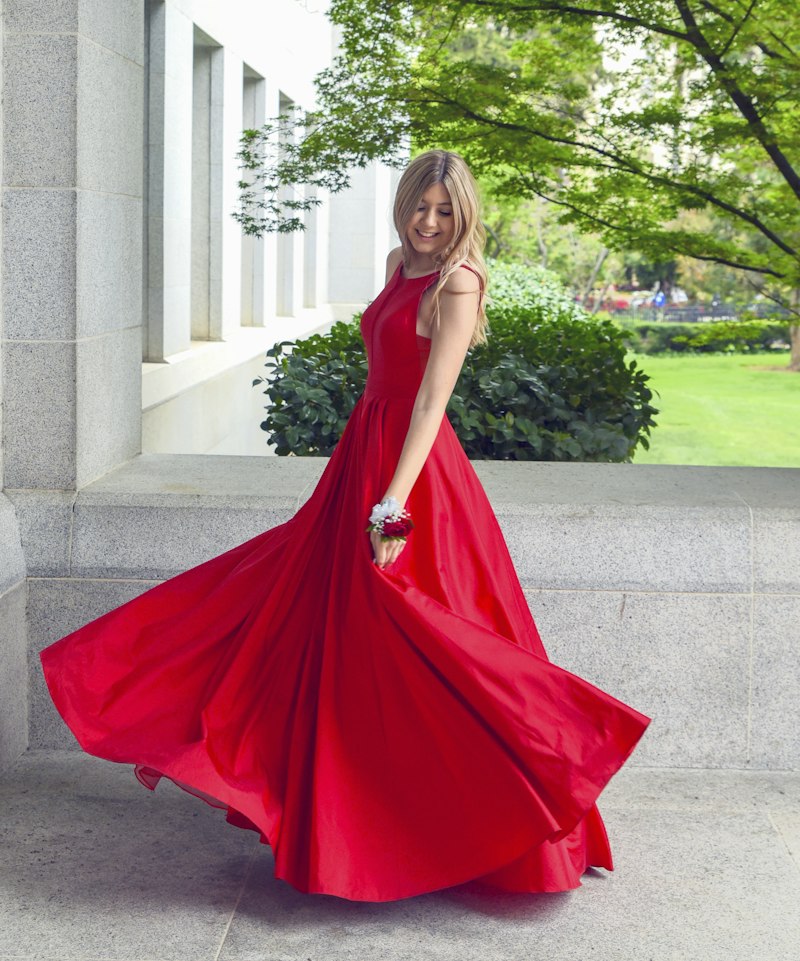
What an Organza Maxi Dress Really Is
Start with the definition, because the definition is where the entire appeal lives. An organza maxi dress is a long dress — typically falling to the ankle or fully to the floor — cut from organza, a lightweight, sheer, plain-woven fabric traditionally made from twisted silk or, in modern form, from polyester or blends that mimic the same crisp hand. Unlike a fluid fabric, organza has what dressmakers call a firm hand: it holds a pleat, it stands away from the body and it keeps a shape rather than collapsing into it. That single quality is what turns a long dress from something heavy into something that appears to hover, and it is the reason the organza maxi dress reads as sculptural rather than simply pretty. The skirt does not cling; it floats, and the eye reads that float as lightness even when the skirt itself is full.
The sheerness deserves its own paragraph, because sheer fabric is not simply a way of showing skin. Because organza is translucent, it interacts with light in a way that opaque fabric cannot: it softens whatever lies beneath it, blurs the hard line of a seam or a bodice, and makes a colour look lighter and more atmospheric than it would on its own. That is why an organza maxi dress in a single solid tone can look almost like watercolour, and why designers use organza to build layered, cloudy silhouettes that would look heavy in a solid weave. The fabric also dictates how the dress must be built: because it is sheer, an organza maxi dress almost always carries an underlayer — a lining, a slip, or a separate bodysuit or camisole chosen by the wearer — and that layering is part of the design rather than a problem to solve.
It helps, too, to be clear about what an organza maxi dress is not. It is not a chiffon maxi dress, which is fluid and moves with the body rather than holding a shape. It is not a tulle dress, which is built from a net weave and creates volume through gathered layers rather than through the stiffness of a single cloth. It is not a satin maxi dress, whose smooth, reflective face is opaque and grounded. The organza maxi dress is its own thing: long, sheer, and deliberately structured so that the fabric itself creates the silhouette. That combination is what flatters a wide range of figures and occasions, and it is why one well-cut organza maxi dress can stand in for several more specific pieces across a season of weddings, dinners and celebrations.
Where Sheer Organza Came From
Organza is older than most of the fabrics it is compared with, and knowing its history explains why it returns to fashion in every generation rather than belonging to a single decade. The fabric takes its name from Urgang, a Central Asian silk-weaving centre, and reached Europe through the historic silk routes as an ultra-fine, crisp silk cloth used for veils, linings and the layered gowns of formal court dress. *As the reference entry on **organza** records, the fabric is a thin, plain-woven sheer traditionally produced from twisted silk, and it has been used for centuries where lightness and structure were both required.* The organza maxi dress inherits that lineage directly: it is the modern, wearable form of a cloth that was always chosen for exactly the combination of transparency and hold that makes a long dress feel ethereal.
The twentieth century turned organza from a couture material into a language of celebration. As eveningwear loosened and skirt lengths moved freely, designers used sheer, structured fabrics to build gowns that seemed to defy gravity — full, floating skirts held out by the fabric itself, layers that read as mist rather than mass. Mid-century couture houses relied on silk organza for the grandest of their formal skirts, while later decades kept the material alive through wedding dressing and, from the 1990s onward, through minimalist evening design that treated a single sheer layer as the whole statement. The organza maxi dress sits at the meeting point of those histories: grand enough for a ceremony, simple enough for a modern wardrobe.
There is a practical history at work in the fabric, too, and it explains the dress’s endurance. A long dress only stays elegant if its skirt behaves: too flimsy and it clings and tears at the hem, too heavy and it drags and looks like a curtain. Generations of cutters solved that problem with organza because the fabric’s crispness lets a long skirt hold volume without adding weight, and its fineness keeps the result light enough to move. That is why the organza maxi dress is not the property of one era or one budget. It reappears whenever a mood for romance and movement returns, and it fades only when a taste for hard-edged minimalism briefly takes over — before coming back, as it always does, because the underlying logic of sheer, structured lightness never really stops being useful.
Why the Organza Maxi Dress Feels Right Now
The current moment suits the organza maxi dress unusually well, because dressing has moved towards pieces that feel personal rather than prescribed. The most interesting wardrobes of the past few seasons have been built around one strong, singular garment worn with restraint, and an organza maxi dress is exactly that kind of piece: a single sheer length doing all the work, distinctive enough to be the focal point and quiet enough to let everything else stay simple. It reads as modern because it is airy and uncluttered; it reads as grown-up because it is long and well cut; and it reads as individual because the wearer decides what lies beneath it — a slip for softness, a bodysuit for sleekness, or a contrasting layer for a deliberate, editorial contrast. In a culture saturated with images, an outfit that says one clear thing tends to be the one that stays in the mind.
There is also a mood argument, and it is stronger than it first sounds. As wardrobes turn towards garments that feel dependable and thoughtfully chosen, coverage of style has noted a steady shift towards pieces bought for versatility and comfort rather than one-season novelty. *Reporting on how everyday dressing has moved towards considered, lasting pieces, **BBC** style writers have observed that shoppers increasingly favour garments bought to be worn often and styled many ways over fleeting trend items.* The organza maxi dress fits that instinct precisely: worn with a slip it is a wedding guest or a gala, worn over denim and a tee it is a modern everyday look, and worn with a structured lining it is a dinner dress. That range is exactly what most people want from a piece intended to be worn more than once.
Practicality is what keeps the organza maxi dress in rotation once the novelty of a new season fades. Because the fabric holds shape, the dress needs very little styling to look finished, which makes it an efficient choice on a busy evening; because it is long and forgiving, it flatters without demanding a particular shoe or bag; and because it is sheer, it can be tuned to the occasion simply by changing the layer underneath. One organza maxi dress can move from a beach ceremony with a simple slip and sandals to a formal dinner with a satin underlayer and a heel without any change to the dress itself. Those efficiencies are the real argument for the piece, and they are why a single good organza maxi dress can do the work of several more specific garments across a season.
The Organza Maxi Dress Beside Tulle, Chiffon and Satin
The fastest way to understand the organza maxi dress is to place it beside the three fabrics it is most often confused with, because the differences are subtle on a rail and obvious on a body. A tulle maxi dress is built from a hexagonal net that creates volume through gathered, layered puffiness; it is the classic ballerina fabric, and it delivers a fuller, softer, more candy-like volume than organza ever does. A chiffon maxi dress is fluid and clingy-adjacent, moving with the body and reading as relaxed and romantic. A satin maxi dress is opaque and reflective, grounded and evening-leaning, and it drapes rather than stands. The organza maxi dress sits between them, taking the airiness of tulle, the flow of chiffon and a hint of the polish of satin, and combining them into something that feels light without feeling insubstantial.
That difference in structure changes everything about how the dress reads on the body. Because organza holds a shape, it can create a defined, architectural skirt — a subtle flare, a clean column with a slight stand at the hem, or a full, floating volume — without the dense layering that tulle requires; because it is sheer, it keeps the silhouette light and the mood soft. Beside a tulle dress, the organza version looks sharper and more grown-up; beside a chiffon maxi, it looks more sculpted and deliberate; beside a satin maxi, it looks airier and less formal. It is, in short, the most wearable way to wear a dramatic length in warm-to-mild weather, because the fabric supplies the drama while the sheerness keeps it from feeling heavy.
There is a place for all of them, and the choice usually comes down to the occasion and the light. Choose tulle for a playful, full-skirted celebration. Choose chiffon for a relaxed, breezy summer event. Choose satin for a sleek, high-shine evening. Choose the organza maxi dress when you want length, lightness and a sense of structure at once — which is to say, for a wedding, a garden party, a formal dinner or any occasion that calls for something special without weight. Understood this way, the four are not rivals but options, and the organza maxi dress is simply the one that most often manages to feel both remarkable and easy.
Fabric, Lining and the Fit That Makes It Work
Because an organza maxi dress depends on the behaviour of one cloth, fabric choice matters more here than on almost any other shape, and the first job is to judge the organza itself. A quality organza has body without stiffness — it should hold a fold when you pinch it, then release and spring softly back, rather than crumpling like paper or collapsing like tissue. Silk organza is the most refined and the most expensive, with a subtle lustre and a natural spring; good synthetic and blended organzas are more affordable and easier to care for, and a well-made version will look almost indistinguishable across a room. Avoid fabric so thin that it tears at the seam or so plastic in feel that it crackles; both turn a floating skirt into something that looks cheap rather than weightless.
The lining comes next, because a sheer dress is only flattering when the layer beneath it is decided deliberately. The classic solution is a matching or tonal slip lining built into the skirt, so the dress keeps its airy look while offering coverage; a separate bodysuit or a fine satin slip gives the wearer control and lets the dress be worn more ways. For a modern, translucent look, choose a lining in a contrast tone — a blush underlay beneath an ivory organza, or a deeper shade beneath a pale one — so the sheerness becomes part of the design rather than an accident. Whatever you choose, check that the underlayer sits smoothly and does not pull, because a sheer dress shows every wrinkle in the layer beneath it far more clearly than an opaque one would.
The bodice, waistline and length finish the job, and here proportion is everything. Because a full organza skirt adds visual width at the hem, the line usually flatters most when the waist is clearly defined, whether by a seam, a narrow belt or a well-cut bodice, so the eye reads a deliberate silhouette rather than a shapeless cloud. Check that the skirt hangs evenly and that the hem is finished cleanly — a crisp rolled hem or a narrow faced hem is the mark of a well-made sheer skirt — and look at the closures, because a concealed zip and a properly set waist seam keep the dress from shifting as you walk. Get these three things right, and the organza maxi dress will flatter almost any frame.
How to Wear an Organza Maxi Dress in Real Life
Start with the daytime version, because it is the one that proves the piece’s range. Choose an organza maxi dress in a light, neutral tone and pair it with a simple slip lining, then add flat sandals or clean sneakers and keep the rest of the look minimal so the sheer length does the talking. Tie a fine knit loosely over the shoulders if the day is cool, and keep jewellery to one considered piece. This is the version that carries you through a garden lunch or a relaxed celebration without fuss, and because the fabric is airy and forgiving, it still looks polished hours after you put it on. The trick is restraint: the organza already supplies romance, so the styling should stay quiet.
For a sharper, more deliberate look, lean into contrast rather than softness. Take the same organza maxi dress and layer it over a sleek bodysuit or a satin slip in a tonal or deep shade, add a structured heel and a single architectural bag, and the outfit turns modern and confident enough for a formal dinner or an opening. Keep makeup and hair clean, because the whole advantage of the dress is its one floating line, and clutter fights that advantage. For a wedding or a gala, a full-skirted organza maxi dress in a rich colour with a proper underlayer and a heel reads as occasion dressing without the weight of a heavy gown, which is exactly why it has quietly replaced the traditional ballgown for many people.
For cooler days and transitional weather, treat the organza maxi dress as a confident base and build outward. Add a fitted turtleneck beneath the sheer bodice, a long coat or a cropped jacket over the top, and ankle boots; the sheer skirt keeps the look from turning heavy, while the layers add warmth and edge. For a modern evening, an organza maxi dress over tailored trousers is a genuinely current move — the sheer skirt floats over the fabric beneath, and the result reads as intentional and clever. Across all three versions, one well-chosen organza maxi dress can cover most of a season’s worth of occasions, and that versatility is the quiet argument for buying a good one rather than several forgettable ones.
What the Data Says About Sheer and Occasion Dressing
It would be easy to treat the organza maxi dress as a purely aesthetic choice, but the consumer data tells a consistent story about what people actually buy and rewear. When shoppers are asked why they return to a garment again and again, fit, occasion and versatility reliably outrank how trend-led a piece happens to be. *According to apparel and consumer research compiled by **Statista**, practical attributes such as comfort, easy styling and suitability for more than one occasion are among the strongest drivers of repeat wear and repurchase decisions.* That is the exact profile of a well-made organza maxi dress: comfortable when the lining and bodice are right, simple to style, and able to move between a wedding, a dinner and a modern daytime look, which is why it tends to survive the trend cycle that first brought it into view.
Retail and search behaviour points the same way. Style desks that track seasonal buying have repeatedly observed that celebratory, sheer and layered pieces sell through steadily across the year rather than in a single burst, while the most extreme novelties fade within a season. Demand for sheer and occasion dressing has proven notably resilient in recent years, with party and event dressing holding up strongly even as everyday categories fluctuate — a pattern that keeps structured, sheer lengths in demand well beyond a single wedding season. That endurance matters to your budget, too, because a dress you genuinely want to wear to the next three celebrations is worth far more than one defined by a single season’s headline.
It also pays to think in cost per wear, the only wardrobe arithmetic that holds up. A well-made, versatile organza maxi dress worn to several events, then restyled for dinners and daytime, costs less each time you wear it than a cheaper dress bought for one party and left hanging. Divide the price by the number of times you realistically reach for something, and the maths is unforgiving: the dependable, versatile garment wins almost every time. The pieces that survive that test are rarely the loudest ones; they are the quiet, well-constructed, quietly confident ones — and a good organza maxi dress sits firmly in that group. Buy one that fits, wear it well, and watch how quickly it earns its keep.
Choosing and Caring for an Organza Maxi Dress That Lasts
Almost anyone can wear an organza maxi dress, because the shape can be tuned to the figure, but the proportions should still respect the wearer. If you are petite, choose a dress with a defined waist and a hem that clears the ankle, and pair it with a small heel so the length elongates rather than swamps; a high-waisted bodice helps here. If you are tall, you can carry a floor-skimming organza maxi dress beautifully and even favour a fuller, more dramatic skirt. If you are curvy, choose a fabric with enough body to hold its line, keep the bodice well fitted, and let the sheer skirt float away from the body rather than cling, so the silhouette stays balanced. The goal is always the same: create one clean, floating line from waist to hem, and let the fabric do the work.
Care is what keeps an organza maxi dress paying you back event after event, and it starts with treating a fragile, structured fabric with respect. Most organza, whether silk or synthetic, prefers hand washing in cool water with a gentle detergent, or a very gentle machine cycle in a protective bag; it should never be wrung or tumble dried, because twisting crushes the crispness that gives the fabric its shape. Hang the dress to dry away from direct heat and sunlight, and press or steam it on a low setting, ideally over a cloth, to release creases without flattening the weave. Store it on a padded hanger or folded flat with tissue so the skirt does not snag, and keep it away from rough hooks and sequins that can catch the sheer surface.
That longevity is really the whole thesis. An organza maxi dress is not the most practical purchase you will ever make, and it is rarely the piece that fills a wardrobe on its own. It is simply the one you will reach for when you want to look remarkable and at ease at the same time — because it supplies lightness and structure while you supply the identity through the layer beneath, and because it turns a single sheer length into a whole silhouette. It replaced, in my own wardrobe, a heavy gown and a couple of ordinary party dresses, and it has done so with an airy, floating confidence that flatters the figure and works from a garden ceremony to a city dinner. Choose a fabric with body and a true spring, a lining that sits smoothly, and a colour you will still love next summer, and the organza maxi dress will quietly become one of the most versatile pieces you own — which, in the end, is the highest compliment a garment can earn.