

The Spaghetti Strap Dress for Women Steps Back Into the Room
For a decade the fashion industry sold volume. Sleeves grew, shoulders widened, skirts took up space on the underground at seven in the morning, and the body underneath became almost secondary to the architecture around it. Then, quietly, the line reversed. Look at the season archives that editors actually use as working documents — Vogue Runway’s autumn 2026 ready-to-wear collections are a useful place to start — and the narrow-strapped dress keeps appearing between the oversized tailoring, often in plain black, often cut on the bias, almost always the simplest thing on the rail. Market data points the same way. Statista’s womenswear outlook shows a category that keeps growing while individual wardrobes keep shrinking, which is another way of saying women are buying fewer, more adaptable pieces and wearing them harder. A dress with two thin straps and no sleeve is the purest expression of that logic: it takes up almost no space, weighs almost nothing, and changes character completely depending on what is worn over it. Retailers noticed before editors did. The shape reappears season after season in the quiet parts of the range — the black version on the third page of a lookbook, the satin one in the window in January — because it sells through at full price and returns at a fraction of the rate of trend-led pieces, which is the closest thing the industry has to an honest verdict.
What follows is not a trend announcement. The spaghetti strap dress for women has been declared dead and reborn so many times since the mid-1990s that the cycle itself has become boring, and the honest story is more useful than the hype: this is a garment with specific engineering problems — strap width, strap anchor points, fabric weight, opacity, the way a bias-cut hem moves — and once those problems are understood, the dress stops being a risky purchase and becomes one of the most reliable things in a wardrobe. The sections below work through the details in the order they matter: where the shape came from and why it keeps returning, how strap geometry changes the shoulder line, what to put underneath so the dress behaves in daylight, which fabrics drape instead of clinging, how to carry the piece through cold months with knitwear, tailoring and leather, how to match necklines to different frames, how the same dress serves a Tuesday morning and a holiday evening, and how to wash it without destroying the fall of the cloth. None of this requires a particular body, a particular budget, or a particular occasion; it requires knowing what to look at before the money changes hands, and being honest about the fact that a thin strap is a piece of load-bearing equipment rather than a decorative detail. Readers who have owned one of these dresses for years tend to describe the same experience: the first version was a mistake, the second was a revelation, and the difference between the two was almost entirely in the details covered below.

The Nineties Shape That Refused to Retire
The genealogy matters because it explains the cut. The slip-style dress entered mainstream wardrobes in the early 1990s as a piece borrowed from the inside of the wardrobe and worn outside it, and its rise is inseparable from the minimalism that dominated the decade: pale grey, black, bone, almost no hardware, and a silhouette that followed the body rather than reshaping it. Calvin Klein’s mid-nineties shows are the reference point most fashion historians return to, and the images that circulated from them — a young Kate Moss in a plain narrow-strapped dress, nothing else, no jewellery of consequence — fixed an idea that has never really loosened its grip: that a dress can be a single continuous line from shoulder to hem. Vogue’s own retrospective writing on the period treats the look as an argument about restraint rather than display, which is precisely why it keeps coming back in moments when wardrobes feel overloaded. The 2020s revival differs from the 1990s original in one important way, and it is a practical difference rather than an aesthetic one: contemporary versions are cut with more room through the waist and hip, finished with wider straps, and often lined, because the women buying them are wearing them to work, to dinner, and to the airport rather than to a single photographed party. The revival also arrived through a different door than the original. Where the nineties version came from minimalism, the current one comes from cost per wear: the same dress that appears under a blazer in a Tuesday meeting appears three months later under a leather jacket on a Saturday, and the arithmetic of wearing one garment forty times a year is what persuaded a generation of shoppers who had sworn off thin straps entirely. That is a less romantic origin story than a runway moment, but it explains the staying power far better, and it explains why the shape has spread from designer floors into the middle of the market without losing its authority.
Strap Width, Strap Placement, and the Shoulder Line
Two straps, each a few millimetres wide, do an unreasonable amount of structural work. The first variable is width. A strap under about five millimetres behaves almost like a thread: it disappears from a distance, which flatters a defined shoulder and a long neck, but it concentrates pressure on a very small area of skin and it reads as evening wear. A strap of eight to twelve millimetres — still thin enough to be called spaghetti, but with visible substance — distributes weight better, holds a heavier silk or a lined bodice without stretching out, and moves the dress from occasion wear into daylight. The second variable is the anchor point. A strap that meets the bodice too far inside the shoulder blade pulls the neckline inward and makes the bust area collapse; a strap set too far out slides off every time an arm lifts. The reliable position is roughly two to three centimetres in from the outer edge of the shoulder, aligned with the highest point of the shoulder bone, and it should be tested in the fitting room by raising both arms above the head and watching whether the armhole gapes or the neckline lifts away from the chest. The third variable is adjustment hardware, which is the most neglected detail in the whole garment: metal sliders hold a setting, thin plastic ones creep, and a strap that has been shortened by more than four centimetres will sit at the wrong angle forever. Shoulder slope decides more than most shoppers expect, because a pronounced slope needs a shorter strap and a squarer neckline to keep the dress from drifting outward, while a flat, wide shoulder can carry a deeper scoop and a longer strap without any risk of slippage. Strap position also decides how the whole dress hangs, because the two anchor points are the only places where the garment is actually supported. Move them inward by a centimetre and the bodice lifts; move them outward and the neckline sags into a soft V that no amount of adjustment will fix. This is why a dress that fits perfectly on one woman can look unsupported on another of the same size, and why trying two sizes matters more here than in almost any other garment.
What Sits Underneath: A Practical Layer, Not an Afterthought
The single biggest reason a thin-strapped dress gets returned is not the dress. It is what happens in daylight, in a car mirror, in a liftshaft with downlighting, when the fabric and the layer beneath it disagree with each other. The fix is engineering, not anxiety. Start with the dress itself: check whether the bodice is lined, and if it is not, hold the fabric up against a lamp in the shop before buying, because a silk that looks opaque in a dim boutique can behave very differently at noon. A half-slip or a smooth, seamless base layer in a tone close to the dress solves most visibility problems and also stops static, which is what makes thin fabrics cling across the hip. Look for flat seams, laser-cut edges, and a fabric that does not add bulk at the waistband; anything with a pronounced elastic edge will print through a bias-cut skirt within twenty minutes of sitting down. Straps need the same attention. If the dress has narrow straps, the layer underneath should have straps of a similar width, or none at all, and convertible hardware is worth the extra cost because it lets one base piece serve three different necklines. Finally, do a movement test rather than a standing-still test: sit, cross the legs, reach for something overhead, bend forward, and check the neckline and the armhole in a mirror. A dress that passes that sequence on a normal Tuesday will behave the same way at a wedding, and the confidence that comes from knowing it is what makes the piece wearable rather than merely photogenic. A spaghetti strap dress for women that passes this test also needs less styling, which is the point: the fewer decisions required at seven in the morning, the more often the dress leaves the wardrobe. Keep one base layer in black, one in a warm neutral, and the whole category becomes simple.
Fabric Weight and Drape: Silk, Satin, Viscose
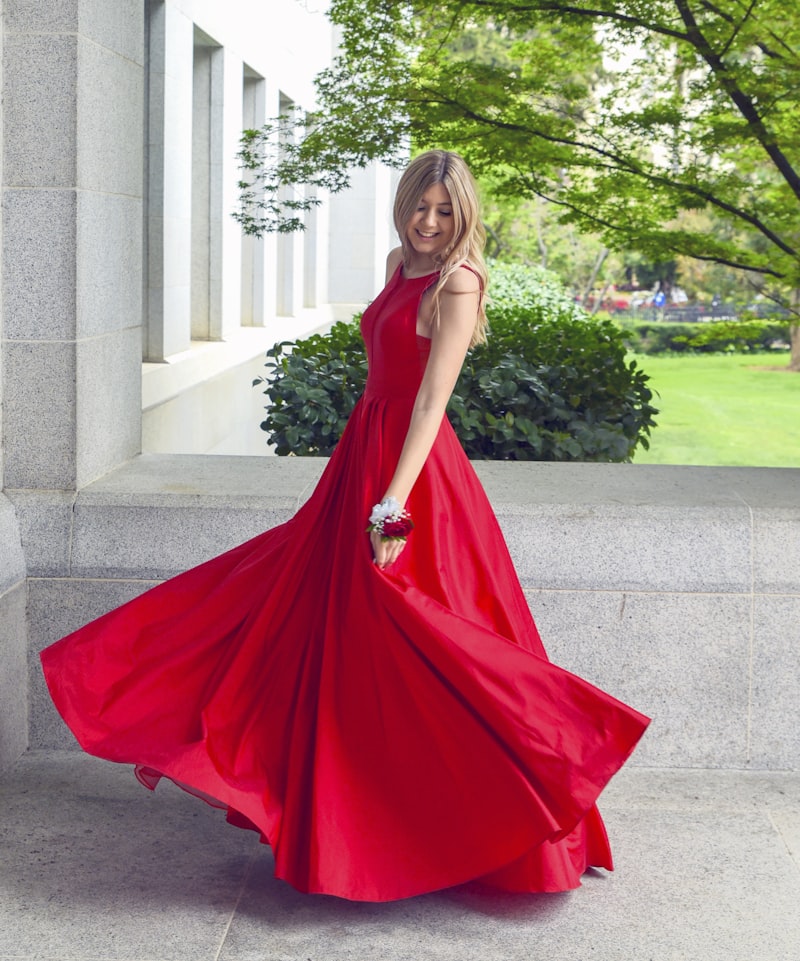
Drape is a function of weight, weave and cut, and the difference between a dress that skims and a dress that clings is usually a matter of twenty grams per square metre. Silk charmeuse at around nineteen to twenty-two momme has enough body to fall in a clean line and enough weight to recover from sitting; lighter silk habotai floats beautifully in a photograph and creases into a map within an hour of wear. Crepe-back satin is the practical compromise that most good mid-range versions use, because the crepe face resists marking and the satin face gives the low, liquid shine that makes the colour read as expensive. Viscose and viscose-elastane blends are the workhorses of the category: they drape almost as well as silk, take dye deeply, cost a fraction of the price, and behave best when the blend contains three to five per cent elastane, which lets the bias-cut panels move without distorting the seam. Cut matters as much as content. A true bias cut — fabric rotated forty-five degrees so the weave runs diagonally — gives the horizontal stretch that lets a narrow dress follow the body without darts or a zip, and it is the reason a well-made bias slip can be pulled on over the head. The trade-off is that bias-cut garments grow: a hem that sits at mid-calf in the shop may sit an inch lower after a day of wear, so buy for the length after settling, not before. Weight also governs how the dress photographs in daylight, since a heavier cloth absorbs light instead of transmitting it, and that single property does more for everyday wearability than any amount of lining. Buyers who want to compare fabrics properly should look at three things in the shop: the way the cloth falls from a raised hand, whether the light passes through it at arm’s length, and how quickly it recovers after being crushed in a fist for ten seconds. A fabric that fails the third test will look tired by mid-afternoon regardless of how well the dress is cut, and no amount of steaming on the morning of an event will bring the surface back.
Cold-Weather Layering: Cardigan, Blazer, Leather
A thin-strapped dress survives winter because it is the best base layer in a wardrobe, not despite its minimalism. The finest version of the look is a fine-gauge knit worn open over the top: a cardigan in merino or a cashmere blend, cropped at the hip or falling to mid-thigh depending on the proportion wanted, with the dress’s straps visible at the shoulder and the knit doing the work of a jacket. The contrast in texture is what makes it look deliberate — soft wool against liquid satin, matte against shine. Tailoring takes the same dress somewhere else entirely: an oversized single-breasted blazer, sleeves pushed to the elbow, a belt if the waist needs marking, and a pair of flat boots turns the piece into something that passes in most offices. A leather jacket is the third route and the most forgiving, because its structure holds the shoulder line and its weight balances a fluid skirt; a cropped moto jacket keeps the proportion sharp, while a longer trench-cut leather coat makes the dress read as a column. Underneath, a thin merino roll neck worn under the straps is the trick that extends the piece into real cold, and it works best when the knit is close-fitting and the neckline of the dress is low enough to show a clean band of colour. Boots matter more than coats in this equation: a knee-high boot under a midi hem leaves a narrow strip of dress visible and makes the whole outfit look considered, while an ankle boot with a wide shaft breaks the line. Add opaques in the coldest weeks, choose a denier close to the dress colour rather than black by default, and the same satin dress that worked in July will carry through February. The layering works because the dress is thin, not in spite of it: anything bulky underneath distorts the line, while a fine knit, a tailored jacket or a leather outer layer adds warmth without adding width at the waist. That is the practical reason the piece has migrated from summer evenings into winter wardrobes across northern Europe, where the same dress is worn eight months of the year with tights, boots and a coat over the top.
Matching Straps and Necklines to Real Bodies
There is no universal strap, which is why the fitting room deserves twenty minutes rather than two. A long neck and sloping shoulders suit the narrowest strap and a straight or square neckline, because the horizontal line of the neckline gives the eye something to hold and the thin strap keeps the shoulder looking long. A short neck or a fuller face reads better with a V-neckline and a slightly wider strap, since the vertical line created by the V does the lengthening that a straight edge cannot. Narrow shoulders gain from straps set a little closer to the neck and from a neckline that does not extend past the shoulder joint, while wide shoulders can carry a deeper scoop, a wider set, and a halter-style anchor without looking top-heavy. For petites, the useful rule is that the dress should end either above the knee or at the ankle, never at the widest part of the calf, and that the strap should be adjusted so the waist seam sits on the natural waist rather than below it. For taller frames, a bias-cut midi that skims the hip and falls to mid-calf is the most forgiving length, and a slightly wider strap keeps the proportion from looking fragile. Fuller busts need structure rather than coverage: a strap of at least one centimetre, a bodice with a seam under the bust or a shaped panel, and a fabric with enough weight to avoid pulling across the front. And for anyone between sizes, the honest advice is to buy for the bust and the shoulder and have the waist taken in, because a thin-strapped dress is one of the few garments a tailor can alter without leaving a trace. Two alterations are worth budgeting for on any spaghetti strap dress for women bought off the rail: shortening the strap by one to two centimetres and taking in the side seam under the arm. Together they cost less than a new dress and change the fit more than any size swap, because they correct the two measurements that ready-to-wear almost never gets right for a given body.
One Dress, Two Lives: Desk and Departure Lounge
The commercial case for the spaghetti strap dress for women rests on its ability to change register without changing clothes, and the two registers that matter most are work and travel. For the office, the dress needs three additions: a jacket with a defined shoulder, a shoe with a closed toe, and a bag with structure. A black or charcoal bias dress under a navy blazer, worn with a low block heel and a slim leather tote, reads as tailoring rather than evening wear, and the thin straps become a detail visible only when the jacket comes off at lunch. A belt over the dress and under the jacket marks the waist and stops the outfit from looking like a slip; a fine-knit cardigan buttoned to the waist does the same job in a softer register. For travel, the logic inverts: the dress should be the thing that packs flat, weighs nothing, and works in heat. A linen-blend vacation dress with narrow straps and a loose body is the version that survives a long flight and a hot arrival, worn with flat sandals and a cotton overshirt for the airport and nothing but sandals at the destination. The packing arithmetic is the real argument: two dresses of this type, one dark and one light, plus a blazer, a cardigan, and two pairs of shoes cover a week of mixed occasions in a carry-on. That versatility is measurable in cost per wear, and it is the reason the shape keeps returning to the rails even in seasons that claim to prefer volume. Statista’s tracking of the womenswear category makes the same point from the demand side: shoppers consistently reward pieces that cross occasions, and the dresses that survive multiple seasons are almost always the plainest ones in the range. A narrow-strapped dress is the plainest of all, which is why it has outlasted every silhouette that was supposed to replace it.
Washing, Drying, and Protecting the Drape
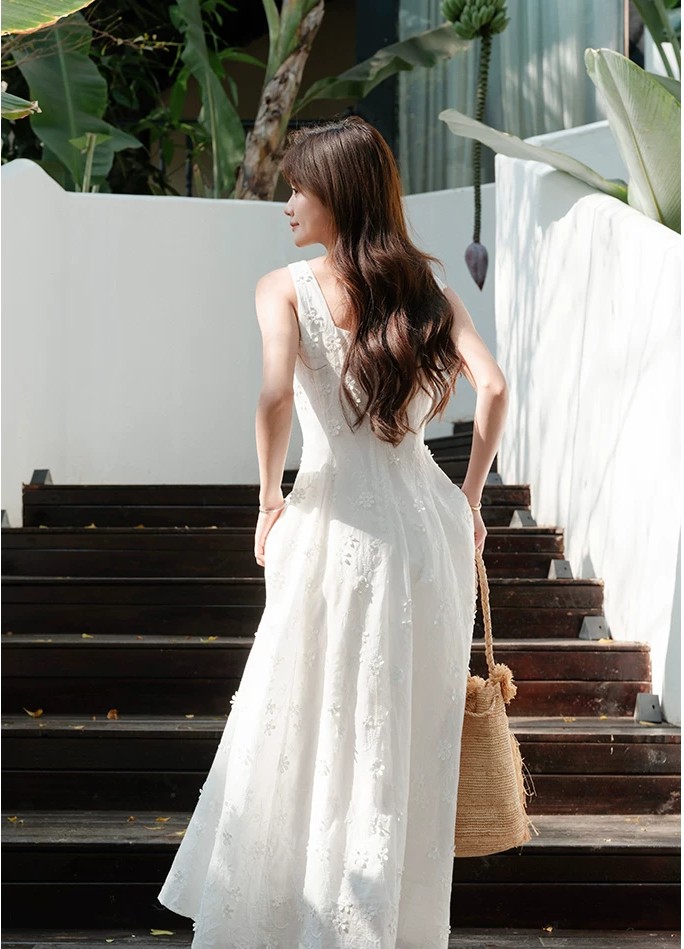
Thin fabric fails from handling long before it fails from age, and most of the damage happens in the first three washes. Silk and viscose should be washed by hand in cool water with a pH-neutral detergent, not because the fibre is delicate in the abstract but because agitation is what breaks the surface of a satin weave and leaves the dull patches that never come back. Submerge the dress, move it gently for two or three minutes, rinse in water of the same temperature, and never wring it: press the water out between two towels, then dry flat in shade, reshaping the straps and the hem while damp. Hanging a wet bias-cut dress is the single most common way to ruin it, because the weight of the water stretches the longest grain lines and the hem drops unevenly. Satin should be steamed rather than ironed, from the inside where possible, with the iron never resting in one place; if a crease must be pressed out, use a cloth between the soleplate and the fabric. Store the dress on a padded hanger rather than a wire one, which leaves shoulder marks that a thin strap cannot hide, and keep it out of direct sunlight, since viscose and silk both fade along the fold lines first. For the small repairs that keep a dress in service, keep a needle and a reel of matching thread: a strap that has pulled free at the anchor point takes five minutes to resew and a replacement dress takes a week to arrive. Care is not a chore attached to the garment; it is the reason a well-chosen piece can be worn for eight or nine years and still fall exactly the way it did in the shop. That longevity is the quiet argument for buying one good version instead of three cheap ones, and it is also why the dress keeps earning its space. Two spare straps cost almost nothing and take the pressure off the original pair, which is the part of a thin-strapped dress that wears out first, and a small bottle of pH-neutral wash kept in the bathroom removes the temptation to send the dress to a dry cleaner every second wear. None of this is glamorous, and none of it is difficult; it is simply the difference between a garment that lasts three summers and one that lasts a decade.
The return of the narrow-strapped dress is usually described as nostalgia, and that explanation is too lazy to be useful. What actually happened is that wardrobes got smaller, working weeks got more mixed, and women started asking garments to do more than one job — and a dress with two thin straps turned out to be unusually good at that job, provided the strap is anchored properly, the fabric has enough weight to fall instead of cling, and the layers underneath are chosen with the same care as the dress itself. The piece is not flattering by accident and it is not difficult by nature; it is a set of small decisions about width, weight and position, most of which are settled in the fitting room rather than in front of a mirror at home. Get those right and the spaghetti strap dress for women stops being a seasonal headline and becomes the thing reached for on the mornings when nothing else seems to work — which, in the end, is the only test of a wardrobe staple that has ever mattered. The dress also survives because it refuses to be categorised: it is not daywear and it is not evening wear, it is not formal and it is not casual, and that ambiguity is exactly what a modern wardrobe needs from the pieces that occupy the most space in it. Buy one in a weight that suits the climate, adjust the straps until the shoulder line is right, and the rest of the outfit tends to solve itself.