

Most advice about golf clothing is written as if the only question were whether something looks acceptable in the clubhouse. That is the easy part, and it is also the least interesting one. The harder question is whether a skirt still behaves like clothing on the fourteenth hole, when you have walked four miles, the wind has picked up, and you need to crouch behind a ball without thinking about anything except the line. A skirt that passes the dress-code test at the door but rides up on the downswing is not a golf skirt; it is a skirt you happen to be wearing on a golf course, and the two are separated by a surprising amount of engineering. The difference comes down to three unglamorous variables: fabric weight, liner construction, and where the waistband actually sits on your body. Get those right and everything else, including colour and print, becomes a matter of taste rather than risk, because the garment has already stopped being a problem. Get them wrong and no amount of styling will rescue the round, and you will spend eighteen holes thinking about your clothes instead of your putting line, and the scorecard will show it.
The female golf skirt grew out of a practical problem, not a fashion one
The garment most women now wear on the course, the skort, is a compromise that dates back to the moment sportswomen needed to move freely without abandoning the silhouette of a skirt. As described in the standard reference entry on the skort, the piece combines shorts with a skirt panel, usually across the front, so that the wearer gets coverage and freedom of movement at the same time. Tennis adopted it early, golf followed within a couple of decades, and by the time the women’s professional tour had established itself the skort had stopped being a novelty and become ordinary kit. That history is worth knowing when you shop, because it explains why so many garments sold as golf skirts are really shorts with a flap attached: the design was never about looking like a skirt from behind, it was about solving a mechanical problem in front while preserving a line that photographs well. Once you understand that, you stop expecting a golf skirt to drape like a dress and start asking the questions that actually matter: what holds the shape, what stays put, and what survives a full summer of use. Those three questions will do more for your game than any amount of fashion advice.
The commercial side of the game has noticed how much that problem is worth solving. According to the National Golf Foundation, more than eight million female on-course golfers played in 2025, women made up 28 percent of on-course players, the highest share on record, and the female base has grown by 2.5 million, or 46 percent, since 2019. Women also account for 35 percent of beginners, which means a large share of the people buying a first golf skirt have never had to think about liners, gussets or dress codes before. When a category grows that quickly, the market fills with products built for the photograph rather than the round, and the buyer absorbs the cost of finding out which is which. The LPGA, founded in 1950, has spent seven decades normalising the idea that women compete in skirts and shorts on television, but televised kit is tailored within an inch of its life and tells you very little about what survives a washing machine, a member-guest tournament and a hot afternoon in July. The gap between tour kit and club kit is where most buying mistakes happen, and it is wider than the price difference suggests, especially when a first purchase is made in a hurry before a trip.
Reading a club’s dress code before you buy anything
Dress codes are local. There is no single worldwide rule that governs what a woman may wear on a golf course, and any article that claims otherwise is guessing on your behalf. What exists is a set of conventions that most clubs converge on, written into their own bylaws and enforced at the pro shop door: no denim, no athletic shorts, collars on shirts in many places, hats off indoors, and a hemline that sits at or near mid-thigh. Some clubs specify a minimum length in inches, some say only that shorts and skirts must be tailored, and a few have quietly dropped hemline rules altogether while keeping the ban on jeans. If you are joining a club or playing as a guest, the safest move is to read the visitor information page before you pack, because the person who tells you at the first tee that your skirt is too short has no authority to waive the rule and every reason to enforce it. A fuller breakdown of collar, hemline and fabric conventions sits in our guide to the female golf dress code, which is worth reading alongside this one if you are shopping for a specific club rather than a general season.
In practice the hemline question resolves itself once you stop treating it as a fashion decision and start treating it as a measurement. A skirt that finishes two or three inches above the knee when you stand still will climb when you bend, and the bend is the movement that matters, not the pose. Measure the garment while seated if you can, or hold it against yourself and imagine sinking into a squat, because that is the position you will be in roughly forty times a round, and it is the position in which every hemline rule was written. Clubs that publish a length rule usually settle somewhere between mid-thigh and just above the knee, and a garment cut to the longer end of that range removes the entire category of anxiety at once. There is also a social dimension that nobody prints in the bylaws: dressing slightly more conservatively than the minimum is read as respect for the club, and it costs you nothing except a centimetre or two of leg. If you want to carry one rule in your head across countries, price brackets and handicaps, make it this one, because it is the only one that never fails, whichever country you are playing in that week.
Fabric is where a golf skirt earns or loses its keep
Golf is played in weather that changes its mind. You will stand in sun, walk into shade, get rained on for six minutes, and then stand still again while three people putt, and the fabric has to cope with all of it without becoming a different garment. A material that holds moisture turns into a cold compress the moment you stop moving, and a material with no recovery turns into a sagging hem by the turn, which is why so many skirts look tired in photographs taken at the ninth. The practical answer for most players is a synthetic blend with a meaningful elastane content, usually polyester with somewhere between 12 and 20 percent spandex, woven or knit tightly enough that it springs back after being stretched across a hip. Four-way stretch is the phrase to look for on the label, because two-way stretch only moves in one direction and golf asks for the other one every single time you rotate through the ball. For a female golf skirt, weight matters as much as composition: a fabric around 200 to 260 grams per square metre holds its shape and hangs cleanly, while the very light fabrics sold as summer pieces tend to cling, show every seam underneath and advertise the liner through the outer layer.
Natural fibres are not disqualified, but they need help. Cotton poplin and linen look wonderful, breathe beautifully and photograph like a dream, and both crease into a map of your round within nine holes unless they are blended with something elastic that pulls them back into shape. Wool and wool-blend tweeds are the traditional answer for cold mornings, and they are genuinely excellent in wind, which is why the fabric survives in autumn collections year after year, but they need a lining to stop the skirt catching on the shorts beneath and they need more careful storage than a synthetic. If you are buying one skirt for a full season rather than one for a specific trip, choose the synthetic blend, then add a heavier textured piece later for the months when the temperature drops below twelve degrees. The test in the shop is simple and takes about ten seconds: grip a section of the fabric in both hands, pull it firmly, release, and watch whether it returns to its original shape immediately. If it holds a faint ripple now, it will hold a much bigger one by the eighteenth hole, and no amount of steaming will put it back.
Length, liners, and the geometry of a golf swing
The liner is the part of a female golf skirt that buyers underrate most, largely because it is invisible in every product photograph and impossible to judge from a hanger. A properly built skirt has shorts underneath, and those shorts need three qualities at once: they must be long enough not to ride up when you walk, short enough not to bunch at the hem, and made of a fabric light enough that two layers in July do not feel like a self-imposed penalty. Inseams of around three to four inches work for most players, because anything shorter migrates upward with each stride and anything much longer tends to peek below the hem when you bend to retrieve a ball. Look for a gusset, the small panel sewn into the crotch of the inner shorts, since it removes the seam that otherwise sits exactly where you do not want a seam while crouching over a putt. Flatlock stitching, the flat seam used across athletic wear, is the other detail worth checking in the fitting room, because it lies against the skin without a ridge and does not chafe after four miles of walking. Turn the garment inside out in the fitting room and look at the seams before you look at the mirror, since the inside is where the comfort is decided, usually by a raw edge or a single line of overlocking that will rub by the fourth mile of any given round.
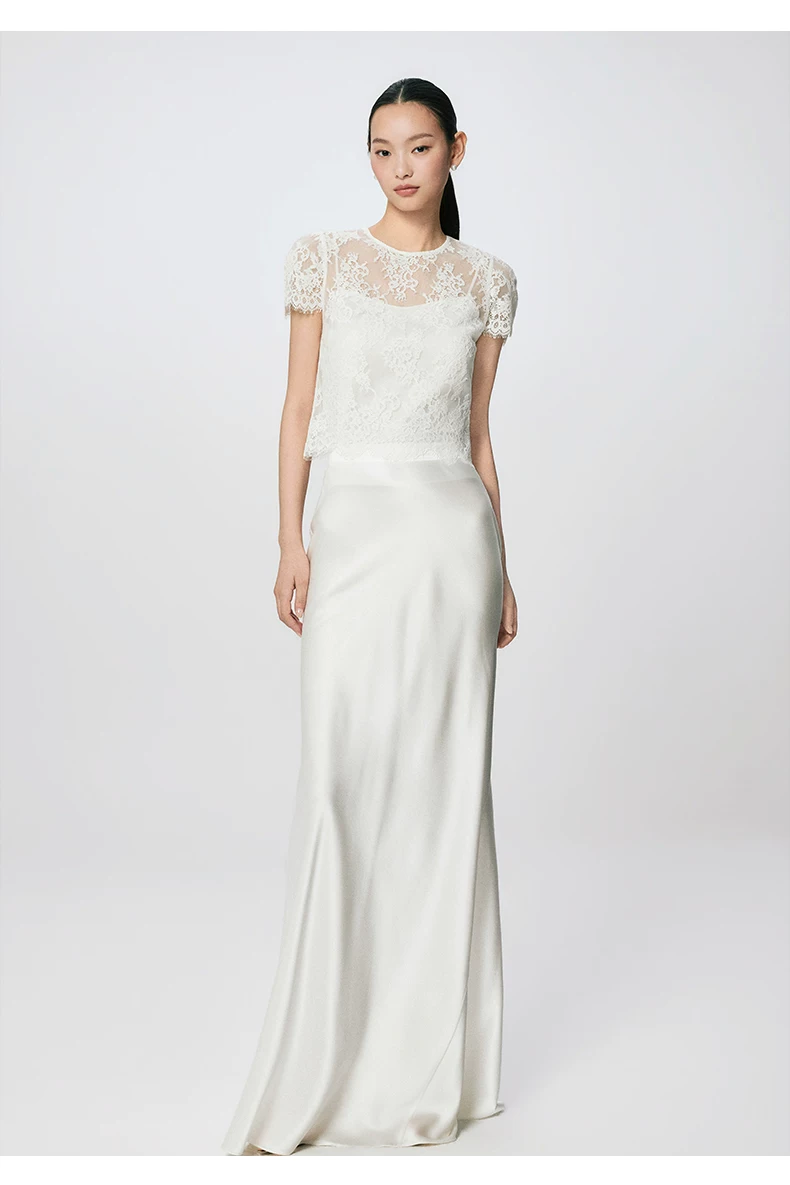
Then there is the swing itself, which is a rotation rather than a bend, and rotation is what pulls a hemline sideways instead of upward. A female golf skirt cut on a straight tube will twist around the body through the downswing; a skirt with a slight A-line flare has room to travel and settles back into place on its own. This is why the A-line shape keeps returning to golf collections decade after decade, and why a piece such as this high waisted A-line skirt reads as elegant off the course and remains workable on it, provided you accept that satin is a dry-weather fabric and pair it with a liner short underneath. The one construction to avoid is a bias-cut skirt in a heavy fabric, because bias cuts stretch in the direction of gravity and a golf swing adds a second pull at an angle to it, which is how a hem ends up uneven by the back nine. If you already own a skirt you love that twists, a pair of compression shorts underneath will solve most of the problem for a fraction of the price of a new skirt, and nobody on the first tee will ever know or care. That is a ten pound fix for a ninety pound problem, and it works on skirts you already own.
The waistband, the pockets, and other small engineering
Waistbands are where budget garments announce themselves, usually at the worst possible moment. A narrow elastic waistband, the kind sewn into a casing with a single row of stitching, will roll over the moment you sit down in a cart, and once it has rolled it never quite lies flat again for the rest of the round. A wide, flat-fronted waistband of three centimetres or more distributes pressure across the pelvis and stays put through the swing, and if it is lined with a strip of silicone or power mesh at the back, so much the better, because that is what stops the skirt sliding down when you bend. High-rise cuts have become the default for good reason: they sit above the hip bone, which means the skirt is anchored by your waist rather than by the widest part of your body, and they do not need constant adjustment after every shot or every cart ride. If you prefer a mid-rise, that is entirely reasonable, but check that the band is at least two and a half centimetres deep and that the stitching is a twin needle, which resists rolling far better than a single line of thread. If the band has a hidden elastic insert rather than a full elastic casing, that is usually a sign the maker has thought about how the garment behaves when it is worn rather than photographed.
For a female golf skirt, pockets deserve a paragraph of their own because they are the most common source of quiet disappointment in the category. A golf skirt needs somewhere to put a card, a tee, a marker and a spare ball, and the pockets that come with most fashion skirts are decorative slits that will not hold a scorecard and cannot be trusted with a phone. Look for at least one pocket with a depth of twelve centimetres or more and a mouth that sits on the side seam rather than the front, so that the contents do not press against your thigh when you address the ball. A back pocket with a zip is worth paying for, since it is the only place a phone can live without swinging into your leg on the downswing, and a small internal pocket for a ball marker costs almost nothing to add and saves you a search every third hole. Two details also separate a skirt built for play from one built for a photograph: a small loop or clip for a glove or towel, and a hem finished with a twin-needle stitch rather than a rolled hem, because rolled hems on stretch fabric tend to wave after a handful of washes.
What to wear with it, from tee box to terrace
The top half of the outfit is where a golf skirt stops being sportswear and starts being a wardrobe, and it is also where most players make the same avoidable mistake. On the course, a short-sleeve polo in a technical knit is the safe foundation, and a quarter-zip in a light merino or a brushed synthetic earns its place on any morning that starts below fifteen degrees and finishes in sunshine. The proportion that works most reliably is a top that finishes at or just below the waistband, because a long untucked shirt over a skirt adds a horizontal line exactly where you want a vertical one, and it also interferes with the swing when you turn through the ball. If you prefer an untucked look, choose a top with a slightly shorter body and a straight hem rather than a curved one, and check in a mirror that the hem does not catch on the waistband when you lift your arms to the top of the backswing. Colour is the easiest variable to control: pick one print you love, then keep every top in the outfit in a tone drawn from that print rather than added to it. That single discipline makes a small wardrobe look intentional, and it removes the morning decision that otherwise costs you ten minutes before a tee time.
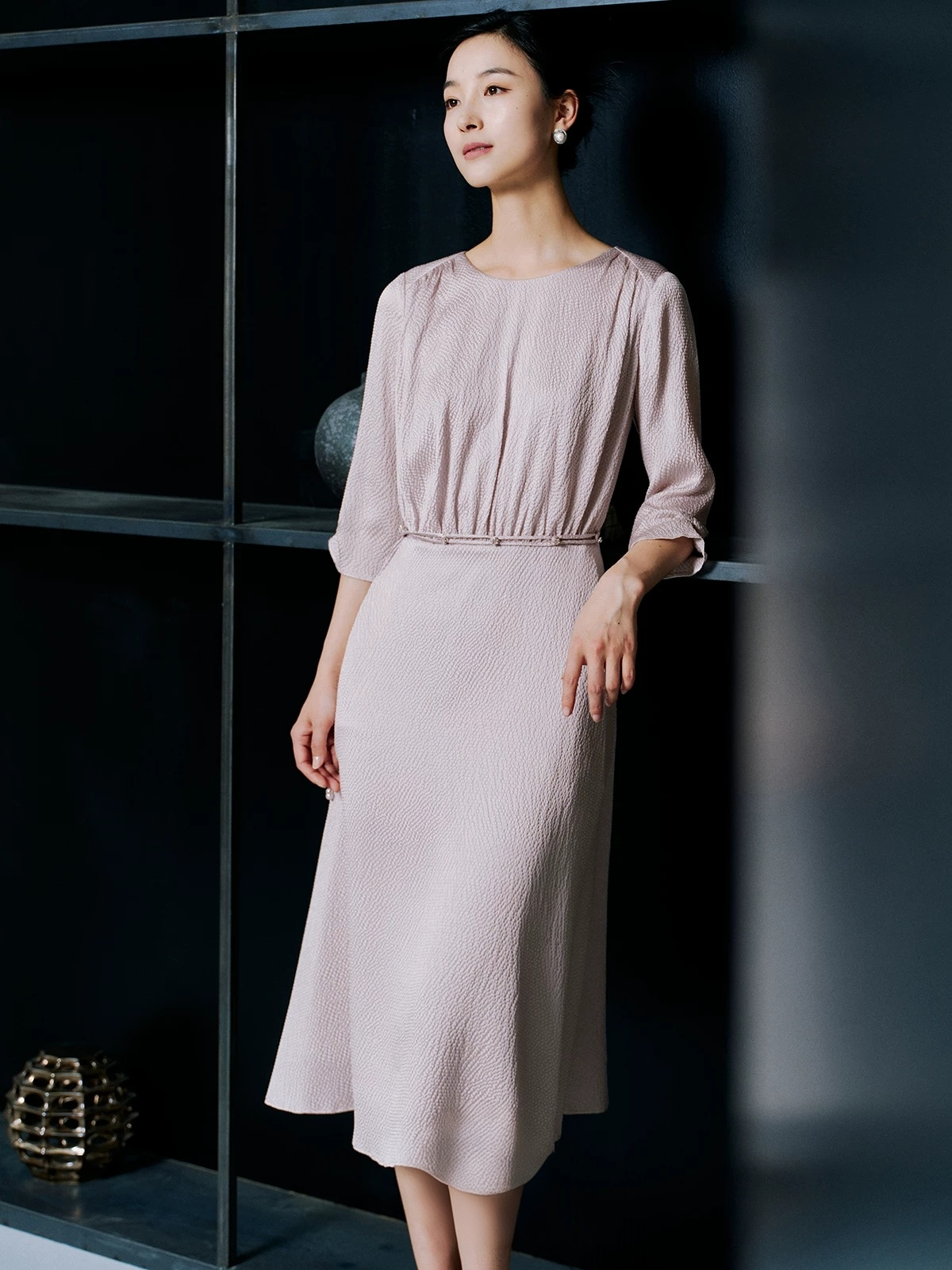
Below the hem, the shoe decision sets the register of the whole outfit before anyone notices anything else. Spiked or spikeless golf shoes in white or a neutral tone keep the look athletic and work with almost any print; a leather sneaker in the same family looks deliberate on a par-three course and slightly odd next to a tournament field where everyone else is in proper shoes. Socks are the detail that separates a considered outfit from an assembled one: a low-cut sock in the same tone as the shoe keeps the line clean and lengthens the leg, while a visible white sock above an ankle-length skirt cuts it in half. If the forecast is for rain, choose the darker shoe of the two you own, because wet grass marks pale leather in a way that no amount of cleaning fully reverses. For the clubhouse afterwards, swap the polo for a fine knit and add a flat sandal or a loafer, and the same skirt carries you through lunch without a change of clothes. If you want a second silhouette to rotate through the week, a high waisted A-line midi skirt does the same job with more coverage, and reads as ordinary daywear the moment you leave the course.
Washing, wear, and what a skirt actually costs per round
Technical fabrics fail slowly and then suddenly, and most of the damage happens in the laundry rather than on the course. The elastane that gives a skirt its recovery is degraded by heat, which means a hot wash and a tumble dryer are the two fastest ways to turn a skirt that fitted in April into one that sags in August. Wash cold, on a short cycle, with the garment inside out and the zip closed, and hang it to dry in shade rather than draping it over a radiator, because direct heat weakens the fibres even when the garment is not moving. Avoid fabric softener entirely, since it coats the fibres and reduces both wicking and stretch recovery over time, and treat sun cream as a chemical rather than a cosmetic, because the avobenzone in many formulas stains pale synthetics yellow at the waistband where your hands rest. If a skirt does start to pill at the seat, a battery fabric shaver restores the surface in about two minutes, and that is usually enough to get another full season out of it. Store skirts folded rather than hung, since the weight of a hem on a clip hanger slowly distorts the waistband over a winter.
The economics are worth doing honestly, because golf clothing is expensive and the price tag on the hanger tells you almost nothing about value. A skirt that costs ninety and lasts a hundred rounds costs less per round than one that costs forty and loses its shape after fifteen, and the difference compounds when you add the cost of replacing it mid-season. Count the rounds you actually play in a season rather than the ones you imagine playing, add the practice sessions and the range visits, and divide the price by that number; the answer is usually more revealing than the label. On that basis the sensible purchase is the mid-priced piece with a proper liner, a wide waistband and a fabric that passes the stretch test, bought in a neutral colour that will not date and worn with three or four different tops. Prints are where the pleasure lives and where the money goes, so buy one print you genuinely love, wear it hard, and let the rest of the rotation stay quiet for the season, which is how a small wardrobe starts to feel like a considered one. Three neutral skirts and one loud one will cover more rounds than six prints chosen in a single enthusiastic afternoon.
None of this requires you to become a student of textile engineering, and the point is not to turn a pleasant purchase into a research project with a spreadsheet attached. It is simply that a female golf skirt has a job to do, and the job is defined by movement rather than by appearance, which is the opposite of how most clothing is sold to women. Once you know that the liner, the waistband and the fabric weight are the three variables that decide whether the garment works, the shopping trip becomes short and the round becomes uneventful in the best possible sense. You will notice the difference most on the days when you notice nothing at all: no tugging at the hem, no adjusting after a shot, no calculating whether a bunker shot will expose something you would rather keep covered. That silence is what a good piece of kit buys, and it is worth rather more than any print, any logo, or any photograph taken on a terrace. Buy for the fourteenth hole, not the first one, and the skirt will still be in your bag three seasons from now, which is the only review that matters and the only one you will still be thinking about next autumn.