

Nautical clothing has a strange double life. On one side of the line it belongs to museums and old family photographs, to children in stiff collars standing on promenades, to a whole century of holiday pictures that smell faintly of salt and cigarettes. On the other side it is still, reliably, one of the most wearable things a woman can put on in July, and it keeps coming back not because designers are sentimental but because the shapes work. The sailor dress sits exactly on that fault line between costume and clothing, which is why it is so often misunderstood. Most people meet the idea first as a theme — a stripe, a collar, some braid — and only later discover, usually by accident in a changing room, that the real thing is calmer, better cut and considerably easier to wear than the souvenir version. The gap between those two experiences is not about taste or body shape. It is pattern-making. Where the collar sits on the shoulder, how wide the stripe runs, whether the cloth has enough body to hold an A-line without turning into a bell: those three decisions separate a dress you keep for a decade from one you wear once and photograph carefully so nobody notices the fit. >If you have ever typed sailor dress womens into a search field, scrolled through pages of identical photographs and closed the tab in defeat, the problem was probably not you. It was the photographs. Nautical dresses are unusually hard to judge from a flat image, because almost everything that makes them work happens in three dimensions: the stand of the collar, the way the bodice releases into the skirt, the weight of the fabric as it falls. A dress that looks charming on a hanger can hang like a curtain on a person, and a dress that looks plain in a listing can be the one you reach for every second week from May to September. What follows is an attempt to describe the garment in the terms that actually matter when you are deciding whether to spend money — construction, cloth, cut, styling and care — rather than in the language of mood boards. None of it requires a fashion education. It requires about fifteen minutes of attention and a willingness to look at seams instead of slogans.
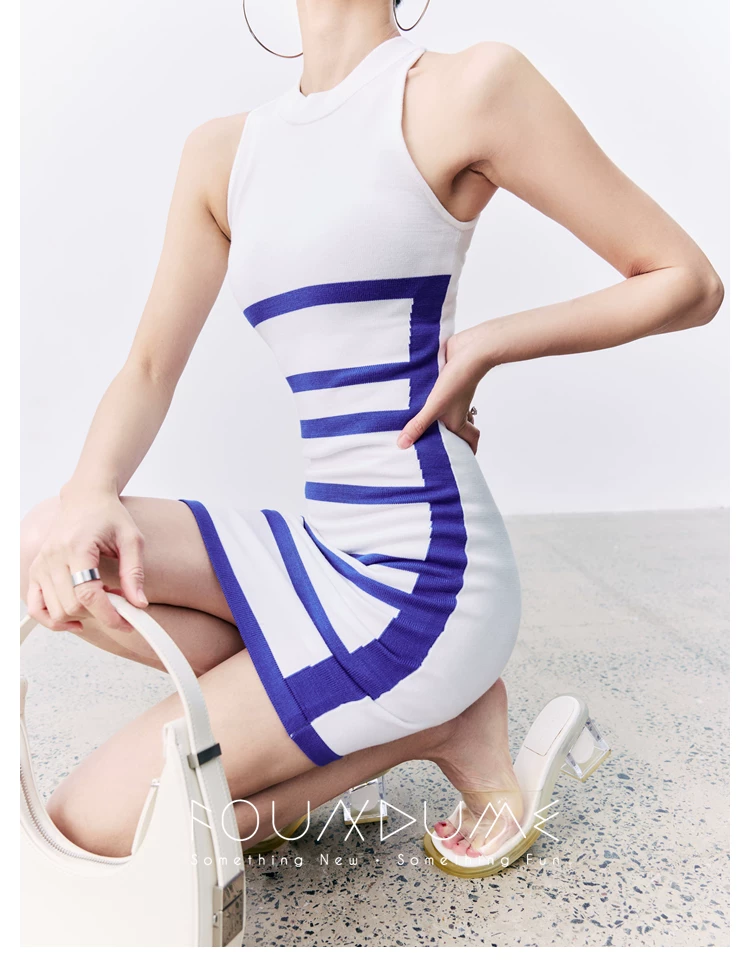
A working history, not a decorative one
The garment’s family tree is unusually well documented, which helps when you are trying to tell a designed dress from a fancy-dress one. The children’s sailor suit entered European wardrobes in 1846, when Queen Victoria had her eldest son photographed and painted in a scaled-down naval uniform aboard the royal yacht, and the image travelled faster than any advertising campaign could have managed at the time. Within twenty years the outfit had spread across Britain, France, Germany and the United States as ordinary middle-class children’s wear, which is worth pausing on: the first mass audience for this silhouette was not adults on holiday but small children on Sundays. The history of the sailor suit is essentially a history of practical clothing being borrowed upward into fashion, and the details survived because they were functional — a broad collar that could be replaced when it wore out, a square flap across the shoulders that shed rain, a loose cut that allowed growth and movement. >The stripe arrived through a different door, and its specifications were not decorative either. From 1858 the French navy issued a regulated jersey — twenty-one white stripes and twenty-one blue, each twenty millimetres wide — so that a man overboard could be spotted against the water. That number and that width are the reason a genuine Breton stripe looks the way it does, and the reason cheap imitations so often look slightly wrong: the scale has been enlarged until the pattern becomes a graphic rather than a texture. Coco Chanel put the jersey and the stripe into women’s daywear in 1917, at a moment when the alternative was still corsetry and constraint, and the Breton stripe has been in and out of production ever since. What this history gives you as a shopper is a set of proportions to check against. If a dress ignores all of them, it is quoting a photograph rather than a garment.
The details that separate a dress from a costume
Start at the neckline, because that is where a sailor dress for women usually fails. A well-made sailor collar is wide enough to sit across the points of the shoulders rather than perched on top of them, and it usually carries a square flap at the back that falls between the shoulder blades. The collar should stand slightly away from the neck, not grip it; if it clamps, the pattern has been flattened to save fabric and the whole dress will feel tight across the chest no matter what size you take. Look at the points — real ones are cut with a small amount of flare so they lie flat when you move, while cheap ones curl upward after two washes. Then look at the braid. Two or three narrow rows of piping along the collar edge read as a considered detail; a single thick ribbon of shiny satin reads as a costume, and it is usually the first thing to fray. >Stripe scale is the second tell, and it is the one most shoppers miss. A stripe of five to eight millimetres reads from a metre away as texture — the dress looks navy from across a room and striped only when you get close, which is exactly what you want for work or a lunch. Anything above roughly twenty millimetres becomes a statement, and statements are harder to wear twice a week. Check the side seams as well: on a properly made striped garment the pattern lines up across the seam within a couple of millimetres, because someone cut the panels individually instead of stacking them and hoping. Button placement matters more than it sounds. Functional buttons down the front or on the shoulder should sit on a placket with real buttonholes and a bit of interfacing behind them; decorative buttons glued or stitched straight through the cloth will pull the fabric into dimples the first time the dress is washed. Finally, look at the palette. Navy and white, ecru and indigo, black and bone: three combinations that have survived because they photograph well and forgive slight colour variation between dye lots. Red is fine as an accent on a collar edge. Red as the base colour is a costume decision.
The fabric decides everything the photograph cannot show
Cotton poplin is the classic choice for this silhouette and still the safest, provided it has enough weight. At around 120 to 150 grams per square metre the cloth is crisp enough to hold an A-line away from the legs, which is the entire point of the shape, and it takes a pleat or a box pleat without collapsing. Below that weight the dress turns translucent in sunlight and the skirt loses its architecture. The trade-off is creasing: poplin is a woven cotton and it will show every hour you spend sitting, so if you want a dress that survives a commute and a full day at a desk without a steamer, either accept the crease as part of the look or choose a cotton-linen blend, which wrinkles more softly and dries faster. Neither is a defect. Both are the honest behaviour of natural fibre, and the garments that hide it are usually hiding plastic. >Knit versions behave in the opposite way, and they are the ones most people actually end up wearing. A fine-gauge cotton or viscose jersey at 180 to 240 grams per square metre drapes rather than stands, skims the body instead of sculpting it, and travels without a single crease. The catch is stripe integrity. On a knit, stripes are usually yarn-dyed, which means the colour is in the thread and stays crisp through washing, but the pattern distorts where the fabric stretches — across the bust, at the hip, along a seam that has been overlocked too tightly. Try any knit dress on and look at the side seam at hip level: if the stripes break into a staircase, the seam is under tension and will only get worse. Printed stripes on a woven base are cheaper to produce and can look excellent, but they are printed onto the surface, so the white can grey out after a dozen washes and the print can crack along a fold. Turn the garment inside out in the shop. If you can see the stripe faintly through the back of the cloth, it is a print; if the reverse is a pale echo of the same colours, it is woven or dyed and will last longer.

Cuts that work on real bodies
The fit-and-flare is the most forgiving cut in the whole sailor dress family and the one most closely related to the original children’s pattern: a fitted bodice, a seam at the natural waist, and a skirt that opens over the hips. It flatters almost everyone because it creates a waist whether or not you have a pronounced one, and it hides the hip and upper thigh, which is where most people are least comfortable in summer. The A-line is the quieter sibling — less volume, a straighter fall, better for office wear and easier to sit in. The shift, cut close through the body with no waist seam, is the riskiest of the three and the most modern; it works beautifully on straight figures and on anyone who prefers a dress that does not announce itself, but it demands a fabric with real weight, because a thin shift clings to every line of underwear and becomes a different garment by two in the afternoon. The drop waist, with its seam at the hip, is the one to approach with caution: it lengthens the torso and shortens the leg, which is either exactly the proportion you want or precisely the opposite. >Scale is as important as shape, and it is where online shopping usually goes wrong. On a petite frame, a collar that measures more than about thirty centimetres across the back will overwhelm the shoulders, and a bodice cut for a 165-centimetre body will put the waist seam somewhere near the hip. Look for a petite-specific block or accept that the dress needs taking in at the waist and shortening at the hem, which is a fifteen-minute alteration rather than a rebuild. Tall women hit the opposite problem: bodices that end too high, sleeves that stop above the wrist bone, skirts that finish mid-calf when they were designed to finish at the knee. The measurements worth asking for before you buy are the bodice length from the nape of the neck to the waist seam, the shoulder width, and the total length from shoulder to hem. Those three numbers, compared with a dress you already own and like, will predict the fit more accurately than any size label. Bust shaping is the last check: princess seams or two well-placed darts will accommodate a fuller chest without gaping at the button placket, while a dress with no shaping at all will pull open between the second and third button and stay open all day.
Styling it without the costume effect
The single most useful rule when you style a sailor dress is to keep one nautical signal and let everything else be quiet. If the dress has a collar and a stripe, the shoes should be plain: a flat leather sandal, a suede loafer, a clean white trainer, an espadrille with a rope sole. If the dress is a solid navy with a collar, you have room for a striped canvas tote or a striped ribbon in the hair, but not both. Bags work best in materials that belong outdoors — straw, canvas, unlined leather — because the dress already carries enough visual information and a structured patent handbag fights it. For jewellery, gold hoops and a single thin chain are enough; pearls work if the dress is plain, and look dated if it is not. The overall aim is a woman who happens to be wearing a nautical dress, not a woman dressed as a sailor, and that distinction is almost entirely a matter of how many references you allow in one outfit. >Occasion changes the styling faster than season does. For an office with a relaxed dress code, add a navy blazer cut just below the hip, flat leather shoes and a structured tote, and the dress reads as tailoring rather than leisure. For a weekend, swap the blazer for a denim jacket, add white trainers and a canvas crossbody, and it becomes the easiest thing in the wardrobe. For a holiday, the same dress with leather slides, a straw hat and a woven bag is exactly right, and it will survive a ferry, a market and a long lunch without needing attention. For an evening, the trick is contrast rather than addition: keep the dress, remove the casual elements, and add a slim heel, a small bag and something metallic at the wrist. The mistake people make is layering nautical on nautical — a striped dress with a striped cardigan and a striped shoe — which produces a costume no matter how good each piece is on its own.
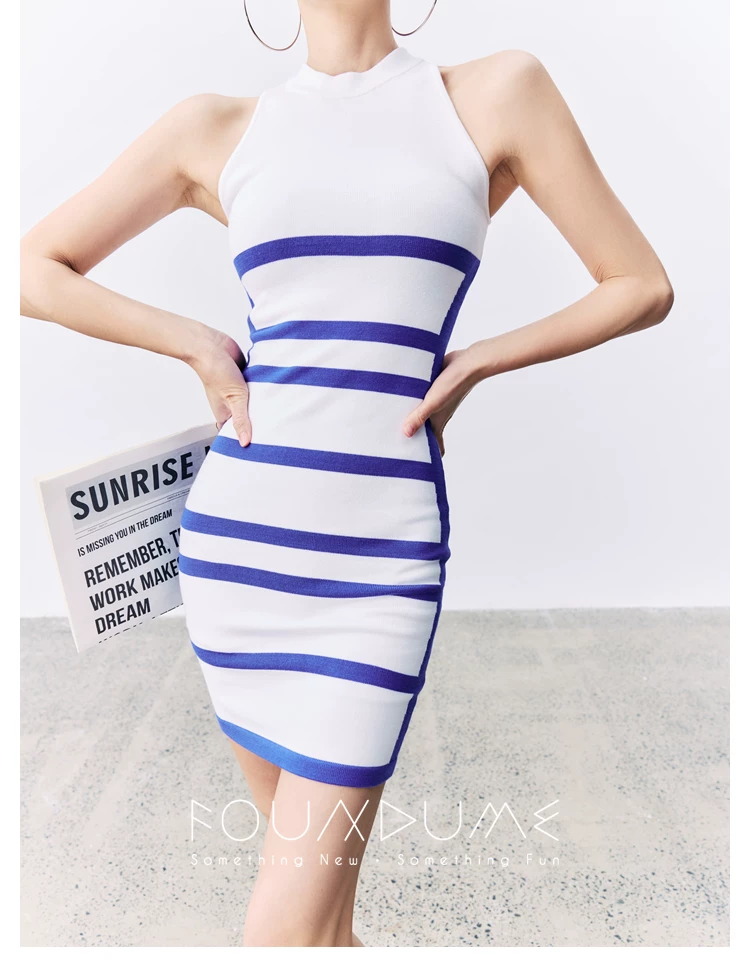
Layering it into the other three seasons
The reason a sailor dress for women earns its space in a wardrobe is that it survives being covered up. In early autumn, a fine-gauge cardigan worn open over the bodice keeps the collar visible while adding warmth, and the collar itself becomes the detail that stops the outfit looking like a summer dress in denial. Opaque tights in navy or charcoal, ankle boots with a low block heel, and a trench coat left open will carry a cotton poplin version into October without any alteration. The one rule is tonal: keep the tights and the boots in the same family as the stripe, because a white stripe against black tights creates a hard line at the hem that shortens the leg. With a knit version, layering is easier — the fabric has stretch and drape, so a slim roll neck underneath works, provided the dress has a wide enough neckline to accommodate it without bunching at the collarbone. >In deep winter, the dress becomes a mid-layer rather than a statement. A wool coat over the top, closed, with only the collar and a few centimetres of stripe showing at the neck, reads as a considered detail; the same dress worn under an unbuttoned puffer reads as an accident. If you want to wear it in February, choose a version with long sleeves or plan on a thin merino long-sleeve underneath, and pay attention to bulk at the waist seam — a heavy knit tucked under a fitted bodice will create a ridge that no amount of smoothing will fix. Spring is the easiest transition of all: the dress, a denim or suede jacket, and a pair of mules, with the tights removed as soon as the mornings allow. What makes this work across seasons is that the garment’s visual identity lives in the collar and the stripe, both of which stay visible under outerwear. Dresses whose interest is concentrated in the sleeve or the hem disappear entirely under a coat, which is why they get worn for eight weeks and forgotten.
Sizing, care, and the checks worth doing before you pay
Search results for sailor dress womens tend to sort by price rather than by construction, and most listings give you three numbers with no explanation, so it helps to know which three actually matter. The first is bust ease: a woven dress needs four to six centimetres of room over your actual bust measurement to let you raise your arms and breathe through a meal, and a knit needs two to four. The second is bodice length, measured from the nape of the neck to the waist seam; if it is more than two centimetres off your own measurement, the waist will sit in the wrong place and the skirt will hang oddly. The third is shoulder width, taken across the back from sleeve seam to sleeve seam, which is the single measurement that cannot be altered economically. If a dress fails on shoulder width, walk away. If it fails on length, a tailor can fix it for the price of a lunch. Ask for a photograph of the side seam and the inside of the collar if the listing does not show them, and treat a seller who cannot supply them as a seller who does not know the garment. >Care is straightforward but unforgiving, because navy and white are the least tolerant colour combination in a washing machine. Wash cool, at thirty degrees, inside out, with the buttons fastened so the placket does not pull, and use a colour catcher for the first five washes — navy dye migrates into white in warm water and there is no way back. Never bleach a white stripe on a navy ground; the bleach wicks along the fibre and leaves a pale halo that looks like a stain. Dry flat or hang in shade, because direct sun turns white cotton yellow far faster than most people expect, and tumble drying a knit version will shrink it by a size and pill the surface at the same time. Iron poplin on the reverse while slightly damp, and press the collar points from the inside so they stay sharp without shining. Knits should be folded, never hung, since the weight of a jersey dress on a hanger will stretch the shoulders into points within a season. Do those four things and a well-made nautical dress will outlast the trend cycle that produced it, which is a more useful measure of value than any price tag.