

5 Chic Short Dresses for Women to Elevate Your Summer Style
Summer style isn’t just about staying cool; it’s a vibrant language of self-expression, a dance between comfort and confidence. At the heart of this seasonal wardrobe lexicon lies the indispensable short dresses for women. More than mere garments, they are tools for crafting an aura, for translating personal energy into visual poetry under the sun. This season, move beyond the basic and explore five distinct archetypes of chic short dresses that promise to redefine your warm-weather narrative. We’ll dissect their aesthetic DNA, ground their appeal in cultural and design principles, and guide you toward integrating them with authority into your style repertoire.
The Architectural Shift Dress: Clean Lines, Maximum Impact
The shift dress stands as a monument to modernist design in fashion. Its origins are often traced to the 1920s ‘flapper’ dress, a deliberate rebellion against the restrictive corseted silhouettes of the previous era. This historical pivot wasn’t merely about style; it was a sociopolitical statement on women’s liberation and changing roles, as noted in fashion historiography from institutions like the Fashion Institute of Technology. The contemporary shift, particularly in a short length, retains that spirit of freedom. Its defining characteristic is its straight, clean line from shoulder to hem, creating a structured yet unfettered silhouette. This is not a dress that clings; it skims, offering a refined canvas that prioritizes form and shape over the contour of the body. From a design perspective, its power lies in its simplicity and the emphasis it places on quality of fabric and precision of cut. A well-constructed short shift dress in a technical cotton or crisp linen doesn’t just hang—it holds its architecture, giving the wearer an air of effortless, intellectual chic. It’s a uniform for the creative professional, the gallery visitor, the woman who commands attention through subtlety rather than spectacle. When selecting yours, look for interesting structural details: a slightly dropped waist, strategic bust darts, or minimalist seam lines that enhance the geometric form. Pair it with streamlined sandals and a structured bag to amplify its architectural intent.

Why the Shift Dress Works: The Science of Silhouette
The psychological impact of the shift dress’s silhouette is underpinned by principles of visual perception. The straight, vertical line it creates is processed by the brain as orderly, stable, and efficient. In his seminal work “The Fashion System,” semiotician Roland Barthes might analyze the shift as a signifier of modernity and rationality. Furthermore, the deliberate lack of waist definition engages what fashion theorists call “the politics of the gaze.” It invites appreciation for the whole aesthetic presentation rather than focusing on specific physical attributes, aligning with a more abstract and powerful form of beauty. This makes short dresses for women of the shift variety uniquely versatile; they can be both profoundly professional and casually elegant, depending on context and accessories. The choice of fabric is its scientific counterpart. Natural fibers like linen and high-grade cotton allow for superior breathability and moisture-wicking—key for summer comfort. Their ability to hold a press or maintain a slight, elegant wrinkle (as in the case of linen) speaks to a lived-in sophistication, a concept celebrated by designers like Margaret Howell. Investing in a high-quality shift is investing in a wearable piece of design theory.
The Romantic Ruffle Dress: Volume and Movement as Emotion
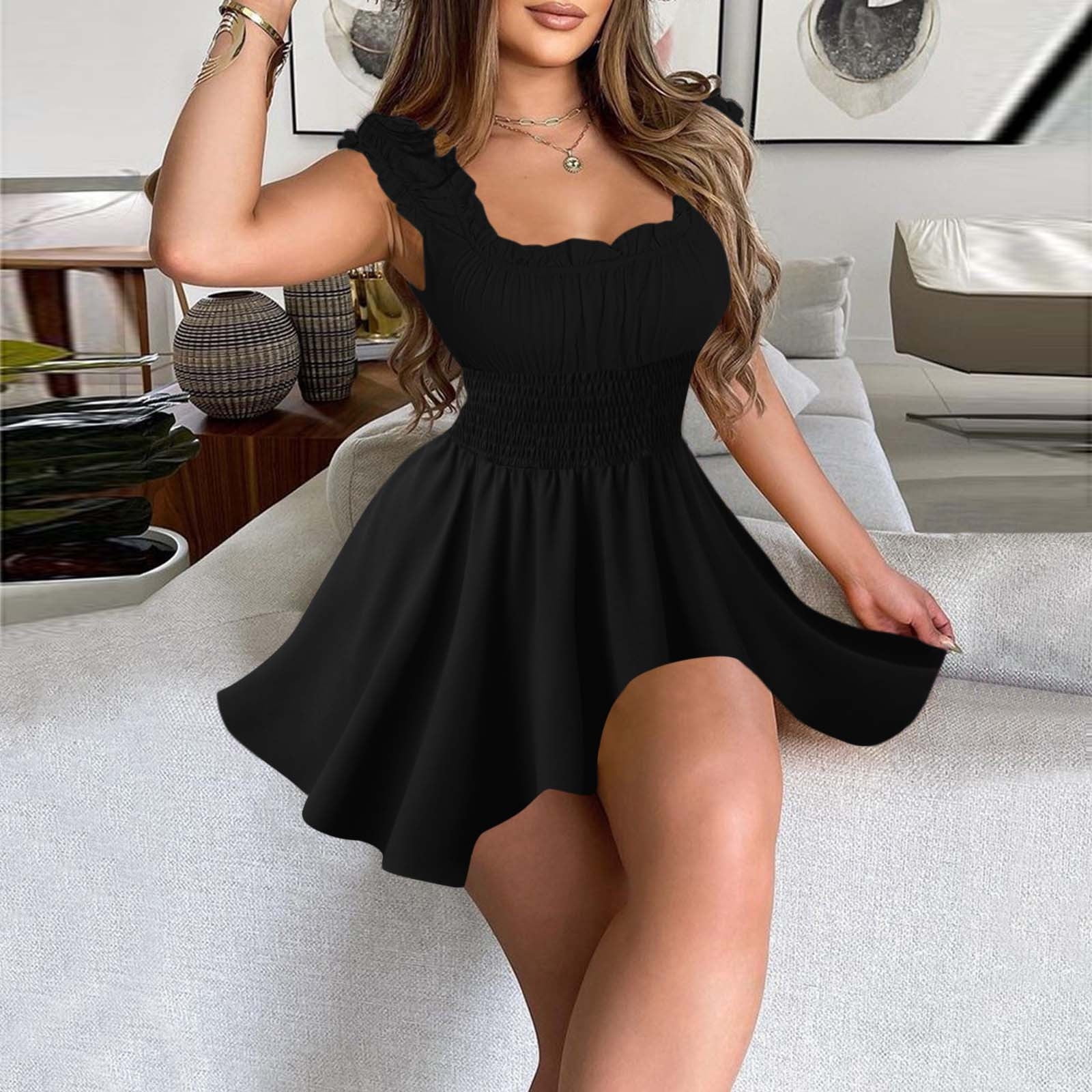
If the shift dress is a thesis on structure, the ruffle dress is its antithesis: a celebration of fluidity, romance, and dynamic movement. Ruffles, or flounces, have a long and varied history in dress, from the elaborate ruffs of the Elizabethan era to the flamenco traditions of Spain. In contemporary short dresses, they are deployed not as historical reenactment but as emotional triggers. The core function of a ruffle is to disrupt a flat plane, to introduce rhythm and texture. When you walk in a dress adorned with cascading ruffles at the hem, sleeves, or neckline, you create a kinetic sculpture. The dress moves with you, each step generating a soft, visual echo. This isn’t mere ornamentation; it’s a deliberate design strategy to convey playfulness, femininity, and a certain joyous abandon. The key to modernizing this look lies in scale and placement. Micro-ruffles on a slip dress add a subtle, tactile detail, while a single, dramatic ruffled sleeve (a nod to the ‘mono-ruffle’ trend documented by fashion platforms like Vogue Runway) makes a bold, asymmetrical statement. The romantic short ruffle dress thrives in settings of leisure and celebration—garden parties, sunset dinners, or any moment where expressing a lighter, more exuberant side of your personality is the goal.

The Psychology of Flounce: More Than Just Fabric
The appeal of ruffles can be partially explained through neuroscience and social signaling. The movement they create captures light and attention in unpredictable ways, stimulating visual interest. This aligns with the concept of “aesthetic resonance” discussed in design psychology. Furthermore, culturally, softness and volume in dress have often been associated with nurturing and approachability, a contrast to the sharp authority of tailored pieces. As style icon and actress Diane Keaton once reflected on her own eclectic style in an interview, “Clothes are a way to tell a story without having to speak.” A ruffle dress tells a story of openness and sensitivity. From a practical styling standpoint, balancing the volume is crucial. Since ruffles add visual weight, keep accessories minimal. A delicate necklace, bare legs, and simple sandals allow the dress to be the protagonist. Opt for fabrics with inherent drape like chiffon, georgette, or lightweight silk blends, which allow the ruffles to fall softly rather than stiffly. This ensures the romance feels innate, not costumed.
The Utilitarian Shirt Dress: Borrowed from the Boys, Perfected for You
The shirt dress is a sartorial masterpiece of borrowed utility. Its DNA is unmistakably rooted in the classic men’s shirt—think of the crisp poplin, the button placket, the collar. Its adoption into women’s fashion is a classic example of gender-fluid styling that empowers. This isn’t just a trend; it’s a permanent fixture, championed by figures from Katharine Hepburn in the mid-20th century to contemporary influencers. The short version of the shirt dress is arguably its most potent iteration for summer. It retains that sense of easy, purposeful dressing—you can literally throw it on—while the shortened hemline introduces a playful, leg-lengthening proportion. Its versatility is legendary: belted with sneakers for a weekend of errands, it’s the epitome of cool-girl nonchalance; worn unbelted over swimwear, it’s the perfect poolside cover-up; cinched with a leather belt and paired with heeled mules, it transitions seamlessly to a smart-casual work environment or a dinner date. The shirt dress democratizes style, offering a blueprint that feels both put-together and intensely personal.
Deconstructing the Shirt Dress’s Enduring Appeal
The shirt dress’s success is a case study in functional fashion. Its design elements—the front closure, the collar, the often-included pockets—are not decorative but serve clear purposes. This inherent practicality reduces cognitive load when getting dressed, a concept appreciated in the “capsule wardrobe” philosophy popularized by stylists like Susie Faux. The collar frames the face, providing structure, while the vertical line of buttons creates a flattering, elongating effect. From a cultural standpoint, wearing a garment with such strong masculine origins can be an act of subtle reappropriation, signaling confidence and a rejection of overly fussy femininity. As designer Phoebe Philo, renowned for her intelligent womenswear, once stated, “I want to give women a sense of ease. Clothes that they can live in.” The short shirt dress embodies this ethos perfectly. When shopping, consider fabric weight. A lightweight chambray or linen-cotton blend is ideal for summer, offering breathability and that perfectly lived-in crumple. Look for details like a slightly A-line cut or side slits for added movement, elevating it from a simple shirt to a definitive dress.
The Body-Conscious Slip Dress: Minimalism with Maximum Sensuality
The slip dress represents the pinnacle of minimalist seduction. Its genesis is intimate—literally derived from the undergarment of the same name. Its journey from private lingerie to public outerwear in the 1990s, propelled by icons like Kate Moss and designers at Calvin Klein, was a fashion revolution. It championed a “dressed-undressed” aesthetic that traded overt sexiness for a more nuanced, confident sensuality. The summer short slip dress distills this concept further. It is a study in line and silhouette, relying on exceptional fit and luxurious fabric to make its statement. There is nowhere to hide, and that is precisely the point. It celebrates the body’s form in its natural state, demanding a certain self-assuredness from the wearer. This is not about revealing more skin, but about revealing a mindset—one of comfort in one’s own skin. The sensuality is in the whisper of silk against skin, in the gentle sway of the bias cut, not in loud declarations. Styling is key to contextualizing its allure. For day, layer a fine cotton tee or a sheer mesh long-sleeve underneath, or throw on an oversized blazer. For evening, let it stand alone, amplified only by strategic jewelry and impeccable posture.

The Allure of the Slip: A Lesson in Confidence and Fabric
The power of the slip dress is deeply intertwined with material science and social history. Traditionally made from charmeuse, satin, or silk, these fabrics possess a specific gravity and sheen that allows them to drape and cling in a flattering manner. The bias cut—a technique of cutting fabric at a 45-degree angle to its warp—allows the material to stretch and flow over the body’s curves, a method mastered by designers like Madeleine Vionnet in the 1930s. Wearing a slip dress as outerwear is an act of recontextualization, turning the private into public, a theme explored in cultural critiques of fashion. It requires and projects confidence. As author and style observer Amy Odell notes in her writings, “The slip dress is a barometer for a woman’s feeling about her body on any given day.” It is a garment that asks you to be present. For summer, explore versions in lightweight satin or even a matte jersey for a more casual take. The essential short dresses for women that follow the slip silhouette prove that sometimes, the most powerful statement is made not by adding, but by subtracting everything non-essential.
The Statement Print Midi (in a Short Spirit): Bold Patterns, Curated Confidence
While we focus on shorter hemlines, the spirit of a bold, statement-making dress is essential for a complete summer style elevation. This category is defined not by length first, but by pattern—large florals, abstract geometries, graphic polka dots, or artistic brush strokes. When rendered in a shorter silhouette, these prints become dynamic and youthful, a walking canvas. The key to wearing such a dress is to understand the print’s scale in relation to your frame and to anchor its vibrancy with solid, neutral elements. The print itself does the talking; your role is to provide the confident punctuation. Scientifically, our attraction to pattern can be linked to our brain’s pattern-recognition abilities, which find pleasure in both symmetry and controlled chaos. Culturally, wearing bold prints has been a way to signal individuality and mood, from the floral motifs in traditional arts to the psychedelic prints of the 1960s that signaled rebellion. A short, printed dress is an instant mood-lifter and a focal point in any setting.

Mastering the Art of the Print: A Curatorial Approach
Choosing the right statement print is an exercise in personal curation. Look for prints with a color palette that complements your skin tone—whether it’s the clear, bright hues of a tropical print or the muted, earthy tones of a boho-inspired pattern. Consider the dress’s cut; a simple, shift or A-line silhouette often provides the best backdrop for a complex print, allowing it to shine without competing with complicated design lines. As fashion historian and blogger April Calahan might suggest, understanding a print’s origin or inspiration (is it a Liberty floral? A Matisse-inspired cut-out?) can deepen your connection to the garment. Styling is straightforward: let the dress be the hero. Pair it with nude or black footwear, minimal jewelry (perhaps just a pair of simple hoop earrings), and a sleek hairstyle. A bold lip color that picks up a minor hue in the print can be a brilliant finishing touch. This approach ensures your short dresses for women with statement prints project curated confidence, not clutter.
Elevating your summer style is an intentional act. It moves beyond mere temperature regulation into the realm of personal narrative. These five archetypes—the Architectural Shift, the Romantic Ruffle, the Utilitarian Shirt, the Body-Conscious Slip, and the Statement Print—offer more than just variety; they offer distinct vocabularies for different chapters of your summer story. Each dress, a specific type of short dresses for women, carries with it a history, a design logic, and a psychological resonance. By choosing with intention, grounding your choices in an understanding of form and function, and styling with confident clarity, you transform your wardrobe into a dynamic toolkit for self-expression. This season, let your style speak not just of the weather, but of the unique individual navigating its sunshine and showers.