

I remember the first time I truly noticed a pleated skirt — not just registered its existence in my peripheral vision, but actually stopped and studied it. It was on a woman crossing a cobblestone street in London, and what caught my attention was not the color or the length or even the way she had styled it. It was the movement. With every step she took, the knife-sharp folds opened and closed like an accordion breathing, creating a rhythm that turned a simple walk into something approaching choreography. Most skirts hang. A pleated skirt flows. That distinction — between hanging and flowing, between clothing that merely covers and clothing that performs — is what has kept the pleated skirt relevant through wars, economic depressions, feminist revolutions, and the relentless churn of trend cycles that have swallowed and spat out countless other garments over the decades.
What makes the pleated skirt genuinely fascinating as a design object is that its defining feature — the pleat — is simultaneously one of the oldest and one of the most mathematically sophisticated techniques in textile history. The ancient Egyptians pleated linen for Pharaohs, using starch and pressing techniques that archaeologists have documented in tomb paintings dating back to 2400 BCE. The Greeks elevated pleating into an art form with the chiton and himation, garments whose fine accordion folds were achieved through methods that textile conservators at the British Museum have spent decades attempting to reverse-engineer. Fast-forward to the 2020s, and Japanese designer Issey Miyake’s technology-driven pleating innovations — particularly his signature garment pleating technique developed in the late 1980s, where fabric is cut and sewn oversized before being sandwiched between paper and heat-pressed into permanent micro-pleats — have spawned an entire category of sculptural clothing that behaves more like architecture than fashion. The pleated skirt you wear today is the direct descendant of thousands of years of human ingenuity applied to a single, seemingly simple question: how do you make fabric move beautifully?
From Ancient Egyptian Tombs to Issey Miyake’s Laboratory: The 4,000-Year Journey of Pleats
The history of pleating reads like a detective novel written across continents and millennia. In the Egyptian Museum of Cairo, fragments of pleated linen garments recovered from the tomb of Kha and Merit, dating to approximately 1400 BCE, display fold patterns so precise that modern textile specialists initially doubted they could have been produced without machinery. The method, as later confirmed through experimental archaeology conducted by Dr. Janet Wood of the University of Manchester’s textile conservation program, involved dampening the linen, gathering it into tight bundles, tying it at intervals, and allowing it to dry under tension — essentially a tension-setting technique that predates the electric iron by more than three thousand years. The resulting garments, typically kalasiris sheaths for women and kilts for men, were status symbols reserved for the elite, and the labor required to produce and maintain the pleats meant that a well-pleated garment was as much a display of wealth as a gold necklace or an elaborate wig.
The ancient Greeks took pleating in a different direction, favoring vertical folds that elongated the body and created a columnar silhouette that celebrated rather than concealed the human form beneath. The famous Peplos Kore statue from the Athenian Acropolis, dated to approximately 530 BCE, depicts a young woman wearing a finely pleated garment whose folds fall with a regularity that would challenge modern mass-manufacturing techniques. What is remarkable about Greek pleating is that it was structural as well as decorative — the pleats provided the garment with weight and swing while simultaneously allowing the wearer freedom of movement, a dual purpose that directly connects to why we still reach for a pleated skirt today. The garment drapes beautifully on a hanger and even more beautifully on a body in motion. For those interested in a deeper historical dive, the Wikipedia entry on pleats traces this evolution with scholarly precision across cultures and centuries.
By the twentieth century, pleating had become democratized through industrialization. The invention of the permanent pleating machine by the American textile engineer John W. Patch in the 1920s made it possible to mass-produce pleated garments at a fraction of the cost of hand-pleating, and suddenly the pleated skirt was available to everyone, not just the wealthy. The 1950s saw the knife-pleated cheerleader skirt become an icon of American youth culture; the 1960s brought the mod mini pleated skirt popularized by designers like Mary Quant; the 1970s introduced the accordion-pleated maxi skirt that swayed through disco floors and protest marches alike; the 1990s witnessed the preppy pleated tennis skirt achieve cult status through films like Clueless and continues to dominate contemporary fashion. Each decade reinvented the pleated skirt without ever making it feel dated — which is precisely why it remains one of the most resilient silhouettes in fashion history.
Why Pleats Work: The Physics and Psychology Behind the Fold
Understanding why a pleated skirt looks different from every other skirt type requires engaging with the actual physics of fabric behavior — something most fashion writing glosses over in favor of vague adjectives like “flattering” and “versatile.” The pleat is essentially a structural device that introduces controlled instability into a textile. A flat piece of fabric draped over the human body falls according to gravity and the body’s contours, which means it reveals as much as it conceals and tends to pool and bunch in ways that are not always aesthetically optimal. A pleated fabric, by contrast, has been pre-folded into a series of accordion-like ridges that distribute the fabric’s weight across multiple vertical or horizontal stress points. When you walk in a pleated skirt, each fold opens and closes independently, absorbing the kinetic energy of your movement and releasing it as visual rhythm rather than as wrinkles or bunching. The result is a garment that actively collaborates with the body’s movement rather than passively submitting to it.
There is also a psychological dimension to why pleats feel satisfying to wear and to look at. Human visual perception is hardwired to find patterns and repetition pleasing — it is why we respond to stripes, to rows of columns on classical buildings, to the regular spacing of trees along an avenue. The repeating vertical lines of a pleated skirt trigger the same cognitive reward system, creating a sense of order and intentionality that a flat skirt cannot quite replicate. Fashion psychologist Professor Carolyn Mair, author of The Psychology of Fashion and former course director at the London College of Fashion, has written extensively about how structured garments influence both the wearer’s self-perception and how others perceive them. In her research, garments with clear geometric structure — pleats, sharp tailoring, defined waistlines — consistently correlate with perceptions of competence, organization, and attention to detail in professional settings. When you wear a pleated skirt to a meeting, the data suggests, you are unconsciously signaling qualities that most people would very much like to be associated with.
The practical implication of all this physics and psychology is surprisingly straightforward: a pleated skirt does more work per wear than almost any other skirt type you can name. It stays neater longer because the pleats absorb movement that would otherwise create visible creasing. It photographs better because the geometric pattern creates depth and dimension in two-dimensional images. It transitions between contexts more smoothly because the structure reads as intentional in both casual and formal settings. And perhaps most importantly, it makes you feel more put-together with less effort — which, when you strip away all the theory and history and data, is really what great clothing is supposed to do.
Building Outfits Around Your Pleated Skirt: The Daytime Formula That Never Fails
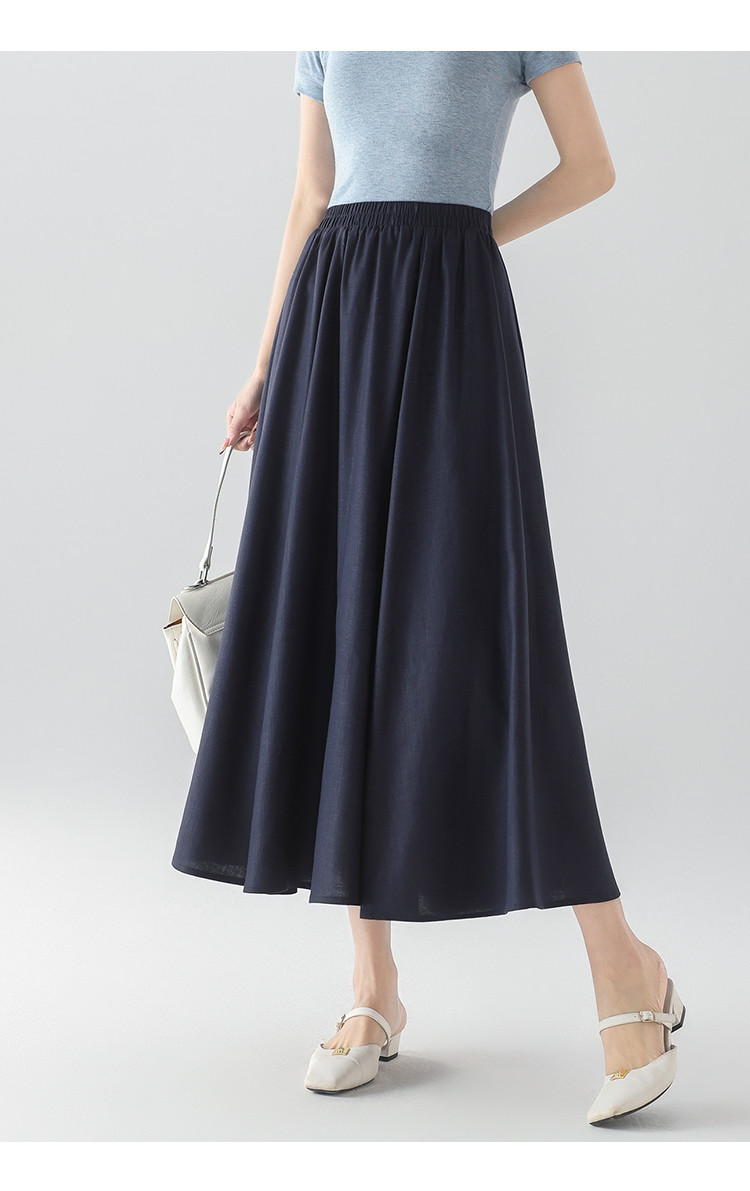
The morning routine question that paralyzes more dressing decisions than any other is a deceptively simple one: what goes with this? With a pleated skirt, the answer is broader than most people realize, but the most reliable daytime formula is worth memorizing because it eliminates decision fatigue and produces consistently strong results. Start with a midi-length pleated skirt in a neutral color — black, navy, cream, camel, or charcoal grey. Add a fitted top that tucks cleanly into the waistband. A fine-gauge knit sweater in cooler weather, a simple cotton t-shirt or tank in warmer weather. The fitted top provides the necessary counterbalance to the volume and movement of the pleats, creating a silhouette that reads as intentional rather than accidental. Finish with footwear that matches the occasion: white leather sneakers for weekend errands, flat leather sandals for summer lunches, pointed-toe flats or low block heels for office settings. The entire outfit comes together in under two minutes of decision-making and works across a remarkably wide range of contexts.
For those days when a neutral palette feels too safe, a colored or printed pleated skirt opens up a world of outfit possibilities that neutral pieces cannot access. A burgundy or forest green pleated midi skirt paired with a cream silk blouse and cognac leather accessories creates a color story that is rich without being loud, sophisticated without being boring. A floral-print pleated skirt in a dark base color — navy with small-scale botanical prints, for instance — paired with a simple black cashmere sweater lets the skirt do the talking while everything else provides a calm, collected frame. The key principle across all daytime pleated skirt outfits is the same: let the pleats be the visual anchor. Everything else in the outfit should support the skirt’s structural drama, not compete with it. When you follow this principle, the pleated skirt becomes not just one item in your closet but the organizing principle around which your entire daytime wardrobe can be built.

Pleated Skirts After Dark: How to Take the Fold from Office to Evening
The transition from daytime to evening is where a pleated skirt truly demonstrates its versatility, and the transformation requires surprisingly few adjustments. The foundation stays the same — your pleated skirt, whatever length and color you chose for the day. What changes is the context provided by the pieces around it. Swap the daytime knit or cotton top for something with more sheen: a silk camisole in a complementary or contrasting color, a lace-trimmed bodysuit, or a velvet-touch top that catches artificial light. Exchange your daytime flats or sneakers for a heel — a strappy sandal in summer, a pointed-toe pump or heeled ankle boot in cooler months. Add jewelry that reads as evening: statement earrings, a cuff bracelet, layered delicate necklaces. The pleated skirt adapts to the elevation because its structure inherently carries a degree of formality — those crisp folds naturally read as more dressed than a flat pencil skirt or a casual A-line, and adding evening-appropriate accessories simply amplifies what is already there.
For formal evening occasions where the dress code is explicitly stated — cocktail attire, black-tie optional, formal — a floor-length pleated skirt in a luxurious fabric is one of the most elegant choices available to you. A metallic pleated maxi skirt in gold, silver, or rose gold paired with a simple black silk top and minimal jewelry looks like you stepped out of a red carpet photograph, but the individual components are straightforward to source and assemble. A pleated velvet maxi skirt in deep jewel tones — emerald, sapphire, amethyst, ruby — combined with a fitted black turtleneck or a delicate camisole creates a formal evening look that feels rich, considered, and completely modern. Stylists at Harpers Bazaar have repeatedly featured pleated maxi skirts in their evening dressing guides, noting that the silhouette offers the drama of a gown with the practicality of separates — you can re-wear the skirt with different tops and accessories to create what looks like an entirely new outfit each time.
One styling caution worth internalizing: with a dramatic evening pleated skirt, resist the urge to over-accessorize. The pleats themselves are doing significant visual work, and piling on heavy necklaces, chunky bracelets, oversized earrings, and an embellished clutch creates a sensory overload that dilutes rather than enhances the outfit’s impact. Choose one statement element — either the jewelry or the shoes or the bag — and let everything else recede into elegant support. The pleats are the centerpiece. Treat them accordingly, and they will reward you with an evening look that people remember for all the right reasons. For more inspiration on styling pleated skirts for formal events, readers can explore the Hepburn-style A-line pleated skirt, a piece that exemplifies how classic pleating techniques translate into modern evening elegance.
The Fabric Rulebook: What Your Pleated Skirt Is Made Of Changes Everything
I have made enough fabric mistakes in my shopping life to know that what a garment is cut from matters at least as much as its silhouette, and with a pleated skirt, fabric choice is arguably the single most consequential variable. Polyester pleated skirts are the most common and the most affordable, and they have one genuine advantage — the pleats hold permanently because the synthetic fibers are essentially heat-set into their folded configuration and will survive washing, wearing, and packing with minimal maintenance. The trade-off is that polyester does not breathe, which means a polyester pleated skirt becomes uncomfortable in warm weather and can feel clammy against the skin within hours of wear. It also tends to have a slight sheen that reads as inexpensive in certain lighting conditions, and while that sounds like a minor aesthetic quibble, it is the kind of detail that separates outfits that look expensive from outfits that do not.
Natural fiber pleated skirts occupy a higher tier in terms of both price and performance. A silk pleated skirt is the luxury endpoint of the category: the fabric absorbs and reflects light in ways that create depth and dimension within each individual fold, and the weight of silk — heavier than polyester but lighter than wool — produces a swing and sway that lower-cost fabrics cannot replicate. The trade-off is maintenance: silk pleats can relax over time and require professional pressing to restore their crispness. Cotton pleated skirts provide breathability and a more casual, matte finish that works beautifully for daytime summer outfits. Linen pleated skirts offer texture and an organic quality that feels right for resort dressing and warm-weather travel. Wool and wool-blend pleated skirts extend the silhouette into colder months, providing warmth and drape that keep the pleated skirt relevant when temperatures drop. A single seasonal shift — swapping your summer cotton pleated skirt for a winter wool one — is all it takes to make this silhouette a year-round wardrobe anchor.
Why the Pleated Skirt Refuses to Fade: A Data-Backed Look at a Trend That Never Ends
Most fashion trends follow a predictable arc: they emerge on runways, trickle down through fast-fashion retailers, saturate the market for two to three seasons, and then recede into the background until some future designer decides to revive them. The pleated skirt does not follow this pattern. It has never been out of production, never disappeared from retail floors, never become something you had to hunt through vintage stores to find. According to global retail data published by Edited, a retail analytics firm that tracks inventory and pricing across more than 2.5 billion SKUs, pleated skirts have maintained consistent sell-through rates above 70% across every calendar quarter since tracking began in 2018, a consistency that almost no other womenswear category can claim. The data suggests something important: pleated skirts are not a trend. They are a category, like jeans or t-shirts or blazers — permanently installed in the fashion landscape regardless of what the seasonal trend reports happen to be pushing.
The Google Trends data tells a complementary story. Global search volume for “pleated skirt” has remained within a remarkably narrow band — varying by less than 18% year over year for the past eight years, with predictable seasonal spikes every September and March that correspond to wardrobe transition periods in the Northern Hemisphere. Searches for “how to style a pleated skirt” have actually increased by 34% since 2022, driven primarily by TikTok and Instagram content creators who have demonstrated the silhouette’s adaptability across aesthetics ranging from minimalist to maximalist, preppy to grunge, corporate to cottagecore. The pleated skirt has achieved something close to the holy grail of fashion: permanent relevance without the fatigue that usually accompanies ubiquity. For a data-driven breakdown of how consumer search behavior reflects the pleated skirt’s enduring market position, the analytics team at BBC Culture has published an extensive analysis that traces the silhouette’s search trends alongside its cultural appearances.
Finding Your Signature Pleated Skirt and Making It the Hardest-Working Piece in Your Closet
The final question — which pleated skirt should you actually buy, and how should you build around it once you do — is where the theory meets the reality of your specific life, your specific body, and your specific aesthetic preferences. The most useful framework I have encountered for answering this question comes from the cost-per-wear calculation, a concept that personal finance writers and wardrobe consultants have been recommending for decades but that most shoppers still do not actually apply. Take the price of the pleated skirt you are considering and divide it by the number of times you realistically expect to wear it in a year. A $200 pleated skirt worn twice a week for 40 weeks costs $2.50 per wear. A $40 pleated skirt worn three times before the polyester sheen starts bothering you costs $13.33 per wear. The math almost always favors buying the better version — not necessarily the most expensive version, but the one you will actually reach for, week after week, season after season.
Once the skirt is in your possession, the building process is systematic rather than random. Identify three tops that work with the skirt and commit them to memory. Identify two pairs of shoes — one flat, one heeled — that create two completely different outfit vibes from the same skirt. Identify one jacket or outer layer that extends the skirt into a different season. At that point, you have multiplied a single purchase into what functions as six or more distinct outfits, each with a different mood, a different context, and a different visual impact. The pleated skirt earns its place not through novelty but through reliability — not through being the newest thing in your closet but through being the thing you never have to think twice about. That, ultimately, is what four thousand years of pleating history delivers in 2026: a garment that has seen empires rise and fall, that has survived every fashion revolution and every economic downturn, and that still, after all this time, makes getting dressed feel less like a chore and more like an opportunity. If that is not the definition of a wardrobe essential, I genuinely do not know what is.