

I bought my first chiffon spaghetti strap dress three summers ago, and I’ll be honest — I almost returned it before I even took the tags off. It was hanging in my closet looking impossibly delicate, the kind of garment that makes you wonder if you’re actually supposed to wear it or just admire it from a distance. The straps were thinner than linguine, the fabric was so sheer I could read a newspaper through it (which, for the record, is what slips are for), and I had exactly zero occasions on my calendar that seemed worthy of something so… floaty. But here’s what nobody told me about dress shopping when it comes to chiffon: these pieces don’t wait for the right occasion. They create one. Two days after that near-return, I wore it to a casual Saturday brunch — and yes, I felt overdressed for approximately four minutes, right up until three separate strangers stopped me to ask where I got it. Since then, I’ve worn variations of the chiffon spaghetti strap dress to weddings, job interviews (under a tailored blazer), beach bonfires, rooftop bars, and once, memorably, to a pottery class where I somehow didn’t ruin it. If you’ve been staring at a delicate-looking dress in your own closet or shopping cart, wondering whether you’ll actually wear it, let me walk you through everything I’ve learned about making the lightest fabric in fashion work for real life.
The thing that sets a chiffon spaghetti strap dress apart from every other dress hanging in your closet isn’t the color or the cut — it’s the physics of the fabric. Chiffon is a balanced plain-weave fabric, which is a fancy way of saying the threads are twisted in alternating directions before being woven together. This creates microscopic puckers in the fabric surface that catch and scatter light in a way that flat-woven fabrics simply can’t replicate. What that means in practical, getting-dressed-in-the-morning terms is this: a chiffon spaghetti strap dress catches the light differently every time you move. It ripples. It floats. It does things that cotton and polyester and even silk charmeuse can only dream about. And when you pair that light-scattering, air-trapping weave with straps so minimal they barely exist, you get a silhouette that somehow manages to be both completely covered and impossibly light. It’s the dress equivalent of a magic trick, and once you understand the mechanics behind it, you’ll never look at your closet the same way. Over the past three years, I’ve cycled through seven different chiffon spaghetti strap dresses in various colors and cuts, and each one has taught me something new about why this particular combination of fabric and silhouette works in ways that heavier materials simply can’t match.
What Makes Chiffon Different from Every Other Fabric You Own
Chiffon didn’t start out as the accessible, everywhere fabric it is today. When it first appeared in France during the early 18th century, chiffon was exclusively made from silk, which meant it was accessible only to aristocracy and the extraordinarily wealthy. The word itself comes from the French “chiffe,” meaning cloth or rag — though calling it a rag feels almost offensive when you see how light plays across its surface. According to fabric historians, the original silk chiffon production was so labor-intensive that a single dress could require the work of multiple weavers over several weeks, making it one of the most expensive textiles available in pre-industrial Europe. As documented by textile scholars and referenced on Wikipedia, chiffon’s defining characteristic — the alternating S-twist and Z-twist crepe yarns that create its signature puckered texture — was originally developed by silk weavers in the Lyon region of France, who were trying to create a fabric that would hold dye more richly than flat-woven silks. What they accidentally created was something far more valuable: a fabric that seemed to have its own relationship with air and light, a textile so light that wearing it felt like wearing nothing at all, yet so visually rich that it looked like you’d spent a fortune on your outfit even when you hadn’t.
The democratization of chiffon came in 1938, when nylon was invented and suddenly the same puckered, light-diffusing weave could be produced at a fraction of the cost using synthetic fibers. By the 1950s, polyester chiffon had entered the market, and the fabric that once belonged exclusively to European nobility was suddenly available to anyone with a department store credit card. But here’s the interesting part — synthetic chiffon actually solved some problems that silk chiffon never could. Polyester chiffon holds pleats better, resists wrinkles more effectively, and doesn’t require the kind of specialized dry cleaning that silk demands. When you’re wearing a chiffon spaghetti strap dress to an outdoor summer event where you’ll be sitting, dancing, eating, and probably sweating, that wrinkle resistance isn’t a minor detail — it’s the difference between looking polished at 10 PM and looking like you slept in your dress by 8:30. The fabric historians got one thing absolutely right: the evolution of chiffon from aristocratic silk to accessible synthetic wasn’t a downgrade. It was an upgrade dressed up as democratization, and it’s the reason you can find a well-made chiffon spaghetti strap dress today for a fraction of what your great-grandmother would have paid for the equivalent garment in 1920.
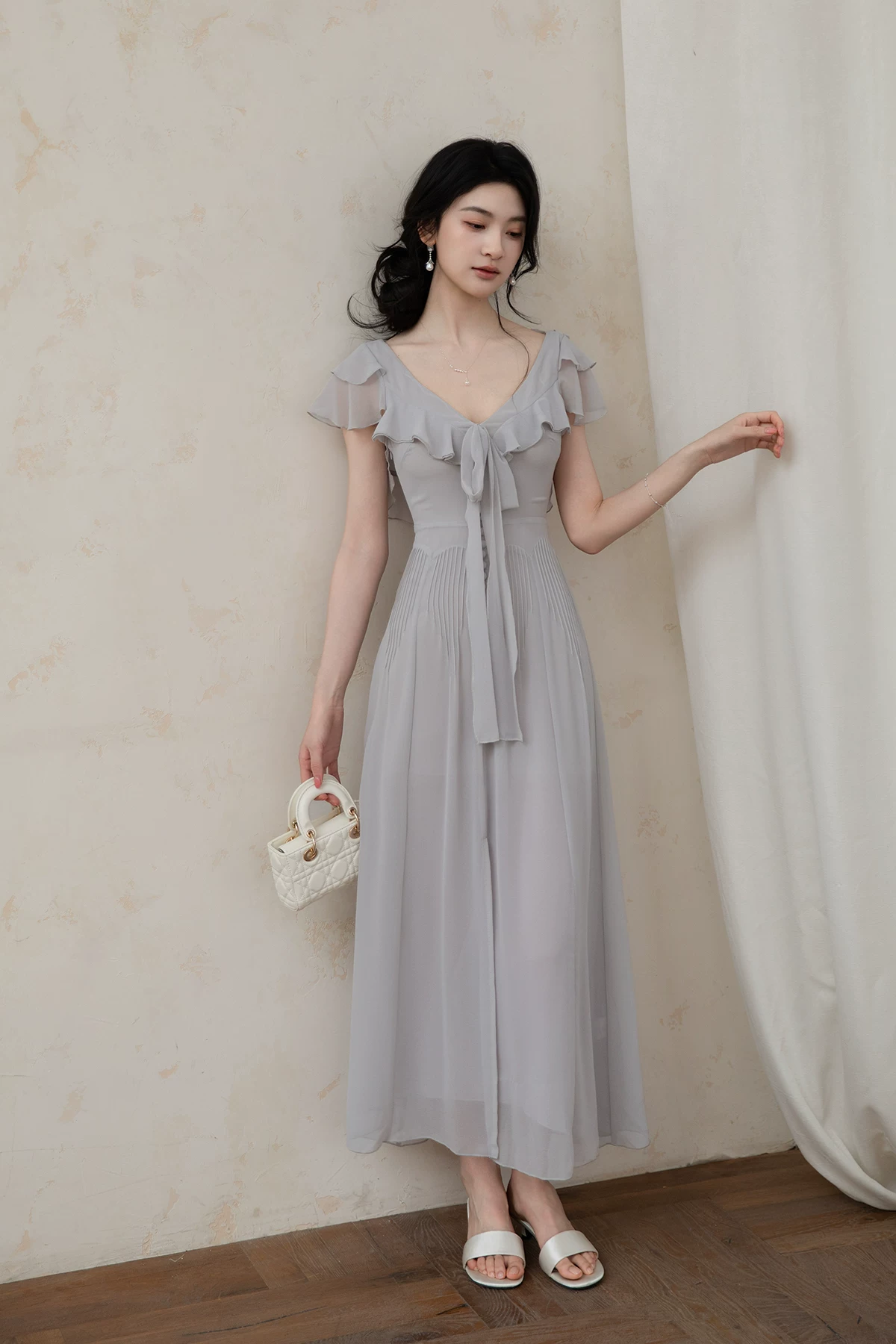
The Day I Realized Thin Straps and Light Fabric Are a Design Match Made in Heaven
I used to think spaghetti straps were a design compromise — something dressmakers did when they ran out of fabric for proper sleeves. I couldn’t have been more wrong. There’s an actual engineering principle at work when you pair the lightest possible straps with the lightest possible fabric, and understanding it completely changed how I think about dress construction. The math is surprisingly straightforward: chiffon, because of its twisted-yarn weave and microscopic surface texture, weighs significantly less per square yard than virtually any other woven fabric used in dressmaking. A typical polyester chiffon weighs somewhere between 30 and 60 grams per square meter, compared to cotton poplin at 120 to 150 grams per square meter or denim at a hefty 300 to 400 grams per square meter. When your fabric weighs half or a quarter as much as conventional dress materials, you don’t need substantial straps to hold it up — the dress practically supports itself through tension distribution across the bodice. What looks like a design risk (those impossibly skinny straps) is actually a structural inevitability: thick straps on a chiffon spaghetti strap dress would look like truck tires on a bicycle, because you’d be using heavy-duty hardware to support something that barely registers on a scale. Every fashion designer I’ve talked to or read interviews with confirms the same thing: spaghetti straps and chiffon aren’t a stylistic choice. They’re a physics problem that solved itself, and the solution happens to look beautiful.
What this means for anyone wearing a chiffon spaghetti strap dress is that the most common anxiety — will these straps hold? — is actually the one thing you don’t need to worry about. The straps on a well-made chiffon dress aren’t decorative. They’re functional, and they’re doing more work than you think. Because the dress itself is so light, the load on each strap is minimal, which means they’re actually under less stress than the straps on a heavy cotton sundress. I learned this the hard way after spending years avoiding spaghetti strap anything because I was convinced they’d snap the moment I reached for a drink. When I finally wore one, I spent the entire evening unconsciously reaching up to check if the straps were still there. They were. Every single time. Now I own enough chiffon spaghetti strap dresses that my friends have started making jokes about it, and not once — not at a wedding where I danced for three hours straight, not at a beach party where the wind was aggressive enough to knock over chairs — has a strap so much as threatened to give way. The physics holds up, literally and figuratively, and once you trust it, a whole category of dressing anxiety simply disappears.
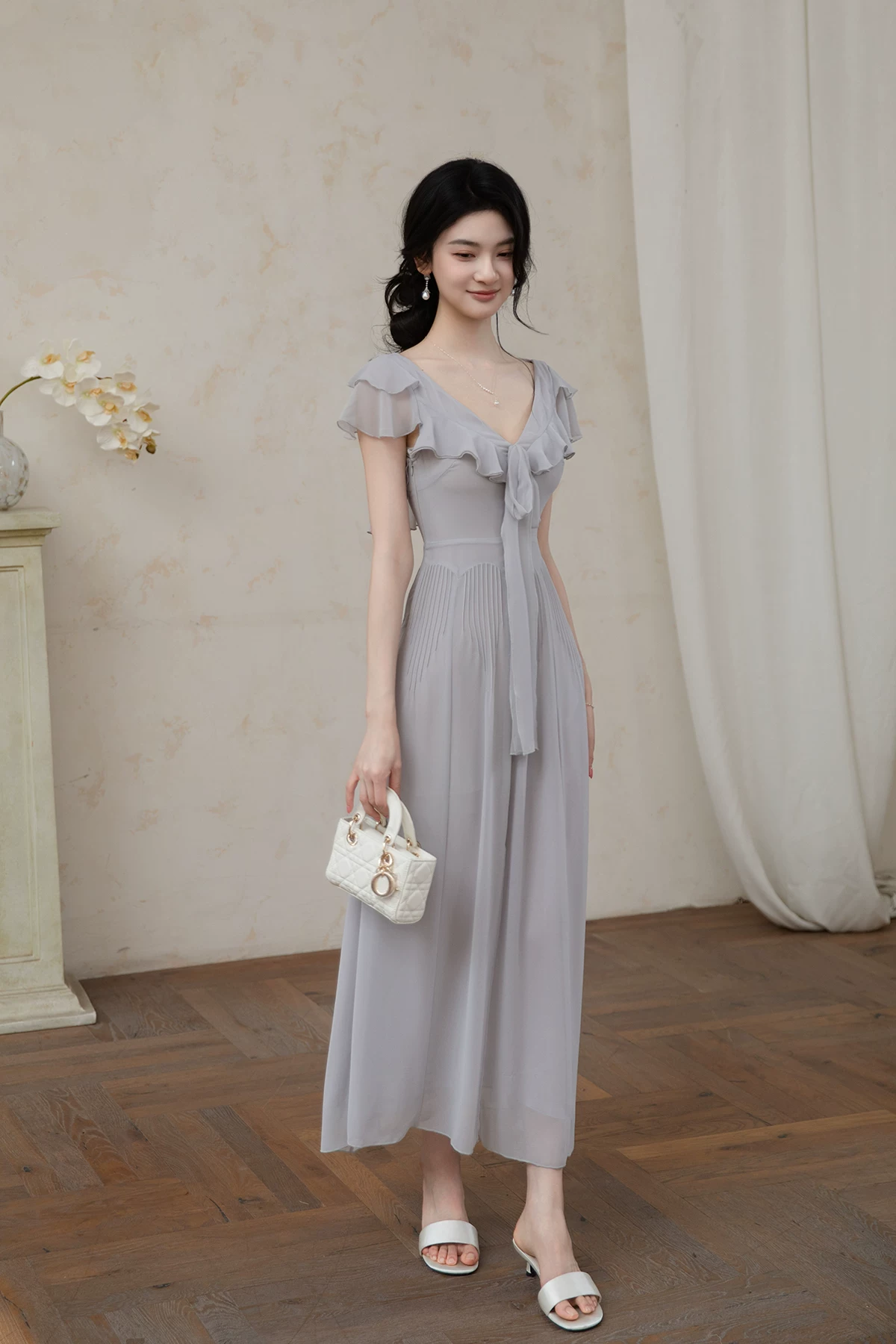
Dressing It Up Without Trying Too Hard
The thing that surprised me most about chiffon spaghetti strap dresses isn’t how they look on a hanger or even how they look standing still in front of a mirror. It’s how they transform in motion. A flat photograph of a chiffon dress does the garment zero justice — it looks like a regular dress, maybe a bit floaty, but nothing that explains why people keep stopping you to ask about it. Then you walk. The fabric lifts, catches air, settles back down, and lifts again in a rhythm that feels almost animated. This is why chiffon has been a red carpet staple for decades despite being one of the least expensive fabrics in formalwear. Fashion publications like Vogue have documented countless celebrity appearances in chiffon gowns, noting that the fabric photographs differently than any other material — it creates a sense of movement even in still images, which explains why you’ll see variations of the chiffon dress on everyone from Zendaya to Cate Blanchett at major premieres and awards shows. But you don’t need a red carpet to get that effect. I’ve worn my dusty rose chiffon spaghetti strap dress with flat sandals and no jewelry to a farmers market and still had someone ask if I was coming from a wedding. The fabric does the heavy lifting, and that’s the secret that red carpet stylists have known for decades while the rest of us were busy piling on accessories to compensate for fabrics that didn’t do anything interesting on their own.
If you’re trying to dress up a chiffon spaghetti strap dress for something formal, the strategy is counterintuitive: do less. The fabric brings so much visual interest on its own — the way it catches light, the way it moves, the subtle texture that reads as luxurious from any distance — that piling on heavy accessories actually works against you. I’ve found that a single delicate chain necklace that sits just above the neckline, tiny stud earrings, and a clutch that doesn’t compete with the dress are all you need. For shoes, strappy metallic heels extend the leg line without adding visual weight, which matters because a chiffon spaghetti strap dress creates such a light silhouette that chunky shoes can make the whole outfit look bottom-heavy. At my friend’s black-tie wedding last year, I wore my navy chiffon spaghetti strap dress with silver barely-there heels and a vintage silver cuff that belonged to my grandmother. The bride’s mother — a woman who has Opinions about formalwear — pulled me aside and said, “That dress is doing exactly what a formal dress should do, which is make people look at you, not at your clothes.” I’ve thought about that a lot since, because she nailed the appeal of chiffon in a single sentence. If you’re drawn to the idea of a summer dress that can pull double duty for evening events, chiffon belongs at the top of your list.
Why a Chiffon Spaghetti Strap Dress Works in December Too
The biggest misconception about chiffon spaghetti strap dresses is that they’re strictly summer garments. I believed this myself for two full years before a December party invitation forced me to reconsider. The venue was an overheated loft space in Brooklyn, the dress code was “festive,” and everything in my winter wardrobe felt either too heavy or too casual. In what I can only describe as a moment of fashion desperation, I pulled out my burgundy chiffon spaghetti strap dress — the one I’d worn to approximately fourteen summer events — and started layering. A fitted black turtleneck underneath turned the dress into a jumper. Black opaque tights and ankle boots grounded the floaty fabric. A cropped leather jacket added structure that balanced out the softness of the chiffon. When I walked into that party, nobody said, “Isn’t that a summer dress?” They said, “Where did you get that outfit?” because the layers transformed the chiffon from a standalone summer piece into the centerpiece of a completely season-appropriate look. That night fundamentally changed how I think about seasonal dressing, and it’s the reason I now buy chiffon spaghetti strap dresses in deep jewel tones specifically for fall and winter layering opportunities that most people never consider.
The physics that make chiffon great in summer — its breathability, its lightness, its ability to move air across your skin — don’t stop working when the temperature drops. You just have to work with them differently. Under a heavy wool coat, a chiffon spaghetti strap dress adds a flash of unexpected lightness when you take the coat off indoors. Layered over a thin cashmere turtleneck, the contrast between the substantial knit and the barely-there fabric creates visual interest that a single winter dress can’t match. I’ve also worn my emerald green chiffon spaghetti strap dress to two holiday parties with a velvet blazer and pointed-toe heels, and both times, people assumed I’d spent hours planning the outfit. The truth? I’d spent about four minutes, because once you understand that chiffon plays well with heavier fabrics through contrast, winter styling stops being a challenge and starts being genuinely fun. The one thing I’ll caution against: avoid chunky knit cardigans with chiffon spaghetti strap dresses. The proportions fight each other — the cardigan pulls the eye down while the dress lifts it up, and the result looks confused rather than intentional. Stick to structured outerwear like blazers, leather jackets, and tailored coats, and let the chiffon do what chiffon does best, which is provide an element of surprise against the heavier winter backdrop.
The Three Mistakes I Made with My First Chiffon Dress (So You Don’t Have To)
Mistake number one: I washed it. Not dry cleaned — I put my first chiffon spaghetti strap dress in the washing machine on the delicate cycle, convinced that “delicate” meant “safe for delicate fabrics.” It doesn’t. Chiffon’s twisted-yarn structure, which is the entire reason the fabric catches light the way it does, is also the reason it snags, pulls, and warps when subjected to the mechanical agitation of even a gentle wash cycle. I pulled that dress out of the machine looking like it had been attacked by a very small, very determined cat. The puckered texture that makes chiffon beautiful had become actual puckers — the bad kind, the kind that don’t iron out and that announce to everyone within viewing distance that you have no idea how to care for your clothes. Garment care experts at The Spruce recommend hand-washing chiffon in cold water with a mild detergent specifically formulated for delicates, then rolling the garment in a clean towel to remove excess water before laying it flat to dry — never wringing, never twisting, and absolutely never tossing it in a dryer. I’ve followed this advice religiously ever since, and my chiffon dresses have repaid me by lasting years instead of months. The extra ten minutes of hand-washing is a small price to pay for a dress that still looks new after its twentieth wear.
Mistake number two: I stored it on a wire hanger. If you’ve ever pulled a chiffon spaghetti strap dress off a hanger and found two strange bumps where the hanger ends pressed against the fabric, you know exactly why this is a problem. Chiffon is so lightweight that gravity alone will cause it to stretch and deform if it’s hung on anything but a padded or velvet hanger. Those shoulder bumps I mentioned? They don’t wash out, they don’t steam out, and they look like the dress decided to grow shoulder pads sometime during the night. Store your chiffon spaghetti strap dress either folded in a drawer — with tissue paper between folds to prevent creasing — or on a padded hanger with wide, rounded shoulders that distribute the minimal weight evenly across a larger surface area. It sounds fussy, I know. But replacing a chiffon dress because of preventable hanger damage is fussier, and significantly more expensive than buying a three-pack of velvet hangers at any home goods store.
Mistake number three, and this was the dumbest one by a wide margin: I ironed it directly. Chiffon is a thermoplastic fabric — which is a science-y way of saying that heat makes it melt. Not dramatically, not in a “my dress is on fire” kind of way, but in a “why is there a shiny iron-shaped mark on my favorite dress” kind of way that is somehow worse because it’s subtle and permanent. If you need to get wrinkles out of a chiffon spaghetti strap dress — and you will, because chiffon wrinkles when you look at it wrong — you have exactly two safe options: steam it from a distance of at least six inches, or hang it in the bathroom while you take a hot shower. Both methods relax the twisted yarns without subjecting them to direct heat, and both will make you look like someone who knows what they’re doing even if, like me, you learned all of this the hard way through a series of increasingly expensive mistakes. The shower method, by the way, is the one I use most often — not because it’s better than steaming, but because it requires zero equipment and fits into a morning routine without adding a single extra step.
How to Pick a Chiffon Spaghetti Strap Dress You’ll Actually Wear More Than Once
Here’s what I’ve learned after accumulating what my boyfriend calls a “concerning number” of chiffon spaghetti strap dresses: the difference between a dress you wear once and a dress you reach for every other week comes down to three details that most people don’t check before buying. First, look at the lining — or rather, check whether there is one. Chiffon is inherently sheer, which means an unlined chiffon dress requires a separate slip underneath. That’s fine if you’re going to a formal event where you’re willing to deal with multiple layers, but it’s a dealbreaker for the casual wear that makes up 90 percent of actual life. A lined chiffon spaghetti strap dress is a grab-and-go garment that you can throw on in thirty seconds and walk out the door. An unlined one is a project that requires advance planning and an extra trip to your lingerie drawer. Second, check the strap construction at the attachment points. The straps should be reinforced with bar tacks — those dense zigzag stitches you see on jeans and backpacks — where they connect to the bodice, not just folded over and stitched with a straight seam. Straight-seam attachments will eventually pull loose, and you’ll discover this at the worst possible moment, probably in public, probably when you’re reaching for something on a high shelf. Third, hold the dress up to a light source and check for inconsistent weave density. Cheap chiffon will show thin spots where the yarns are spaced unevenly, which means those areas will wear through faster and catch on things more easily than the surrounding fabric. Quality chiffon has a uniform, consistent weave that looks the same from every angle and under any light — and it’s worth paying a little more for that consistency, because a chiffon spaghetti strap dress with thin spots in the weave is a dress with a built-in expiration date.
Three years and seven chiffon spaghetti strap dresses later, I’ve stopped thinking of them as “special occasion” pieces. They’ve become my default for anything where I want to look like I tried without actually trying very hard — which, if we’re being honest, is most of life. The beauty of a chiffon spaghetti strap dress isn’t that it’s the fanciest thing you own or the most expensive or the most on-trend. It’s that it’s the most adaptable. It works in July with sandals and a sunhat. It works in January with tights and a leather jacket. It works for weddings and farmers markets and first dates and second dates and the kind of Tuesday where you just need to feel like a slightly better version of yourself. If you’re looking for a single dress that will earn its place in your closet through sheer versatility, stop searching through the structured cottons and the heavy knits and the trendy polyester blends. Find a lined chiffon spaghetti strap dress in a color you actually like, take care of it the way I wish I’d taken care of my first one, and prepare for people to ask you where you got it. They will. They always do. And when they ask, you can tell them what I’ve learned: that the lightest fabric in fashion somehow carries the heaviest weight in terms of versatility, and that a dress doesn’t need to weigh much to be the hardest-working piece in your entire wardrobe.