

The Windbreaker Diaries: How a Utilitarian 1940s Jacket Became 2026’s Most Unexpected Style Hero
I used to think of the windbreaker as something my dad wore on fishing trips — a crinkly nylon thing stuffed in the back of the car, smelling faintly of bug spray and bad decisions. I could not have been more wrong.
Over the past two years, the windbreaker has undergone a quiet but undeniable transformation. It has shed its reputation as purely functional gear and stepped into the spotlight as one of the most versatile pieces in contemporary fashion. From the runways of Milan to the streets of Tokyo, the lightweight jacket that once existed only to break the wind is now breaking style rules instead. Whether you pair it with a flowing dress, tailored skirts, or even layer it over a crisp T-shirt, the windbreaker is no longer hiding in glove compartments — it is front and center in women’s fashion.
What makes this shift so fascinating is that nothing about the core function of a windbreaker has changed. It still weighs next to nothing. It still blocks gusts. It still folds down to the size of a grapefruit. What has changed is the cultural context. Streetwear’s dominance over the past decade, the pandemic-driven obsession with comfort, and a growing appreciation for technical fabrics have all converged to create the perfect conditions for the windbreaker’s revival. According to Wikipedia, the term “windbreaker” originally referred to a specific type of gabardine jacket designed to resist wind chill, first popularized by American outdoor brands in the 1940s. What started as military surplus and camping gear has evolved into something far more significant in the world of women’s clothes.
The Accidental Icon: Where Windbreakers Actually Came From
If you trace the origins of the windbreaker back far enough, you land somewhere unexpected: the battlefields of World War II. The U.S. military needed lightweight, water-resistant outerwear that would not weigh soldiers down during extended campaigns. The solution was a tightly woven nylon shell — the ancestor of every modern windbreaker hanging in closets today. Brands like The North Face and Patagonia later commercialized these designs for civilian use, and by the 1970s and 1980s, the windbreaker had become standard-issue for hikers, campers, and suburban dads alike.
But here is where the story gets interesting. The windbreaker did not stay in the outdoors. It leaked into hip-hop culture in the 1980s and 1990s, embraced by artists who loved its bold colors, oversized fits, and the satisfying swish of nylon with every step. Run-D.M.C. rocked them. The Fresh Prince made them iconic on television. By the time the 1990s rolled around, the windbreaker was as much a streetwear statement as it was a piece of athletic equipment. British Vogue has noted in multiple features that the resurgence of 90s fashion has been a primary driver behind the windbreaker’s return to relevance, with designers like Demna Gvasalia at Balenciaga and the late Virgil Abloh at Off-White incorporating windbreaker-inspired silhouettes into their high-fashion collections throughout the late 2010s and early 2020s.
The beauty of this trajectory is that the windbreaker now occupies a rare cultural position: it is simultaneously nostalgic and forward-looking, utilitarian and stylish, accessible and aspirational. You can buy one for twenty dollars at a thrift shop or for two thousand dollars from a luxury fashion house. Either way, you are participating in the same cultural conversation — one that values lightness, mobility, and a certain effortless cool that heavier jackets simply cannot replicate. As I scroll through Instagram, I see the windbreaker styled by fashion influencers in Paris, layered over slip dresses in Seoul, and thrown over workout gear in Los Angeles. It has become a universal language of casual sophistication.
What Separates a Windbreaker From Everything Else in Your Closet
Let me be blunt: a windbreaker is not a raincoat. It is not a puffer. It is not a trench. And treating it like any of those things misses the entire point. A windbreaker does one job — it blocks wind — and it does that job while taking up approximately zero space in your life. That minimalism is precisely its superpower. My heaviest winter coat weighs nearly four pounds and requires its own dedicated hook by the door. My windbreaker weighs six ounces and lives permanently in my tote bag. It has saved me on at least a dozen occasions when the weather turned without warning and I was not dressed for it.
The technical distinction matters because it shapes how you use the garment. Raincoats are typically made from waterproof membranes like Gore-Tex that trap body heat; you end up feeling clammy after an hour. Puffers insulate, but they are useless in a drizzle and annoyingly bulky when the sun comes out. A windbreaker, by contrast, breathes. Most are made from tightly woven nylon or polyester with a DWR (durable water repellent) coating, which means they shed light rain but do not trap moisture. The result is a jacket that you can actually wear all day without wanting to tear it off. According to testing data referenced by Outdoor Gear Lab, the best windbreakers achieve wind resistance while maintaining breathability ratings that waterproof jackets simply cannot match — typically allowing air permeability of 20 to 60 CFM (cubic feet per minute) while blocking approximately 95% of wind chill.
This breathability factor is what makes the windbreaker uniquely suited to transitional weather — spring evenings, autumn mornings, summer breezes near the coast. It is the jacket you reach for when a sweater is not enough but a coat is too much. I have worn mine over a tank top in seventy-degree weather and over a cashmere sweater when it dropped to fifty. In both scenarios, it performed exactly as designed, adding just enough protection without transforming me into a walking sauna. No other jacket in my closet can make that claim with the same effortless grace.
Five Ways I Style My Windbreaker That Actually Work
Here is the thing about windbreakers that nobody tells you: they are far more versatile than you think. I have spent the better part of a year experimenting with different combinations, and I have landed on five outfits that genuinely work in the real world — not just in editorial photos where the model is standing in front of a pink wall looking vaguely European.
First, the easiest win: throw your windbreaker over a simple white tee and high-waisted jeans. This is my Monday-through-Thursday uniform when I cannot be bothered to think about what I am wearing. The windbreaker adds a layer of intentionality to an otherwise basic outfit — it says you thought about your look for at least thirty seconds, which is honestly more than most people manage. Second, layer it over a midi dress. This combination sounds counterintuitive — a sporty technical jacket over something feminine and flowing — but that contrast is exactly why it works. The windbreaker grounds the dress and makes it feel daytime-appropriate, while the dress elevates the windbreaker beyond gym territory. Third, wear it as part of a monochrome look. An all-black outfit with a black windbreaker over the top reads as sleek and intentional, not like you just left the track. Fourth, pair it with tailored trousers and loafers for a smart-casual vibe that works in creative offices. And fifth, my personal favorite: over a swimsuit at the beach or pool, where the windbreaker serves as the most practical cover-up imaginable — it dries in minutes, weighs nothing, and looks infinitely cooler than a terry-cloth robe.
What I have learned through trial and error is that proportion matters enormously. Oversized windbreakers work best with slim bottoms; cropped or fitted windbreakers look best with wide-leg pants or full skirts. The interplay of volume is what separates a deliberate outfit from one that looks like you grabbed the nearest jacket in a hurry. Color is equally important. I own a neutral celadon green windbreaker that goes with literally everything, and a bright coral one that I wear exclusively when I want to be noticed. Both have their place. If you are buying your first windbreaker, stick to neutrals — olive, navy, cream, or black — and graduate to statement colors once you have mastered the basics.
The Fabric Puzzle: Nylon, Polyester, and Everything Between
If you have ever stood in front of a rack of windbreakers wondering why one costs thirty dollars and another costs three hundred, the answer is almost always the fabric. Not all windbreaker materials are created equal, and understanding the differences will save you from buying something that falls apart after three washes or makes you sweat like you are wrapped in plastic wrap.
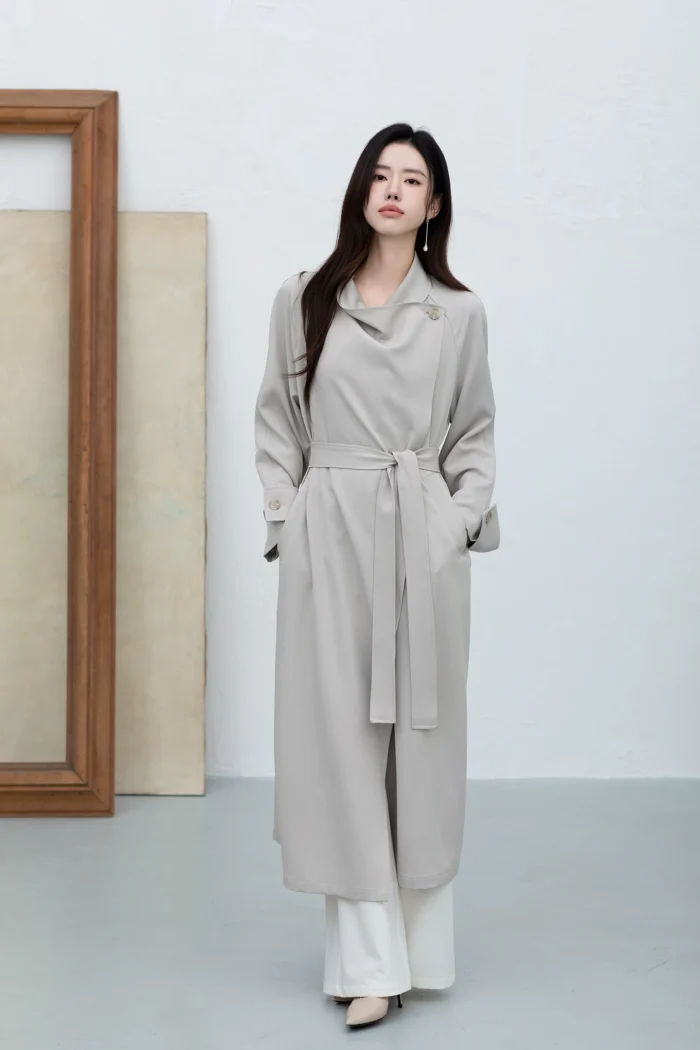
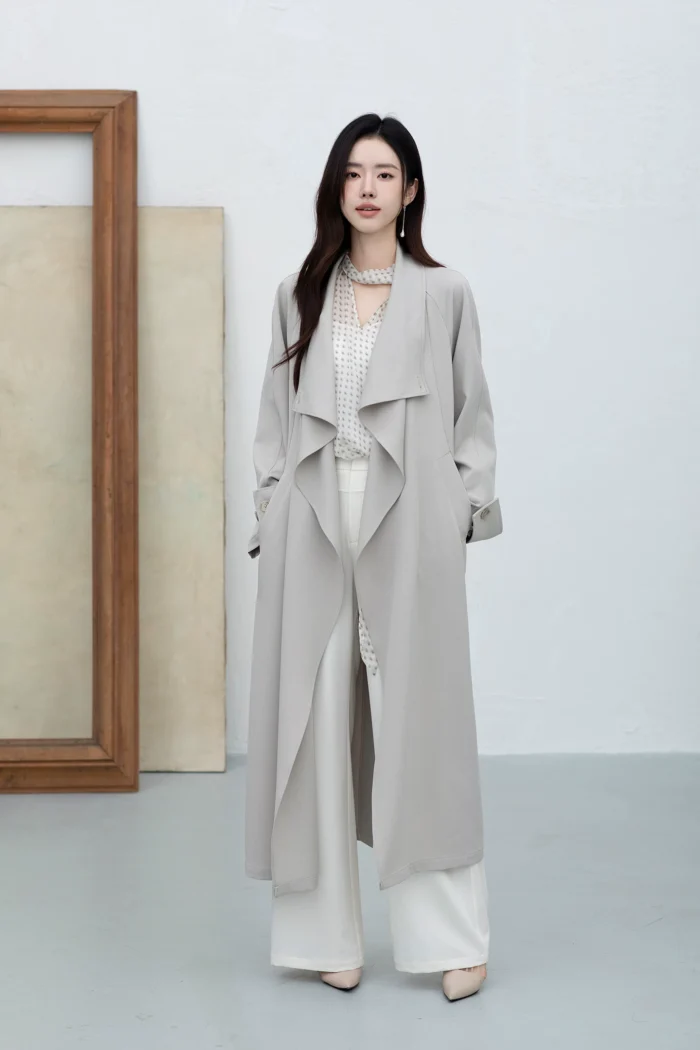
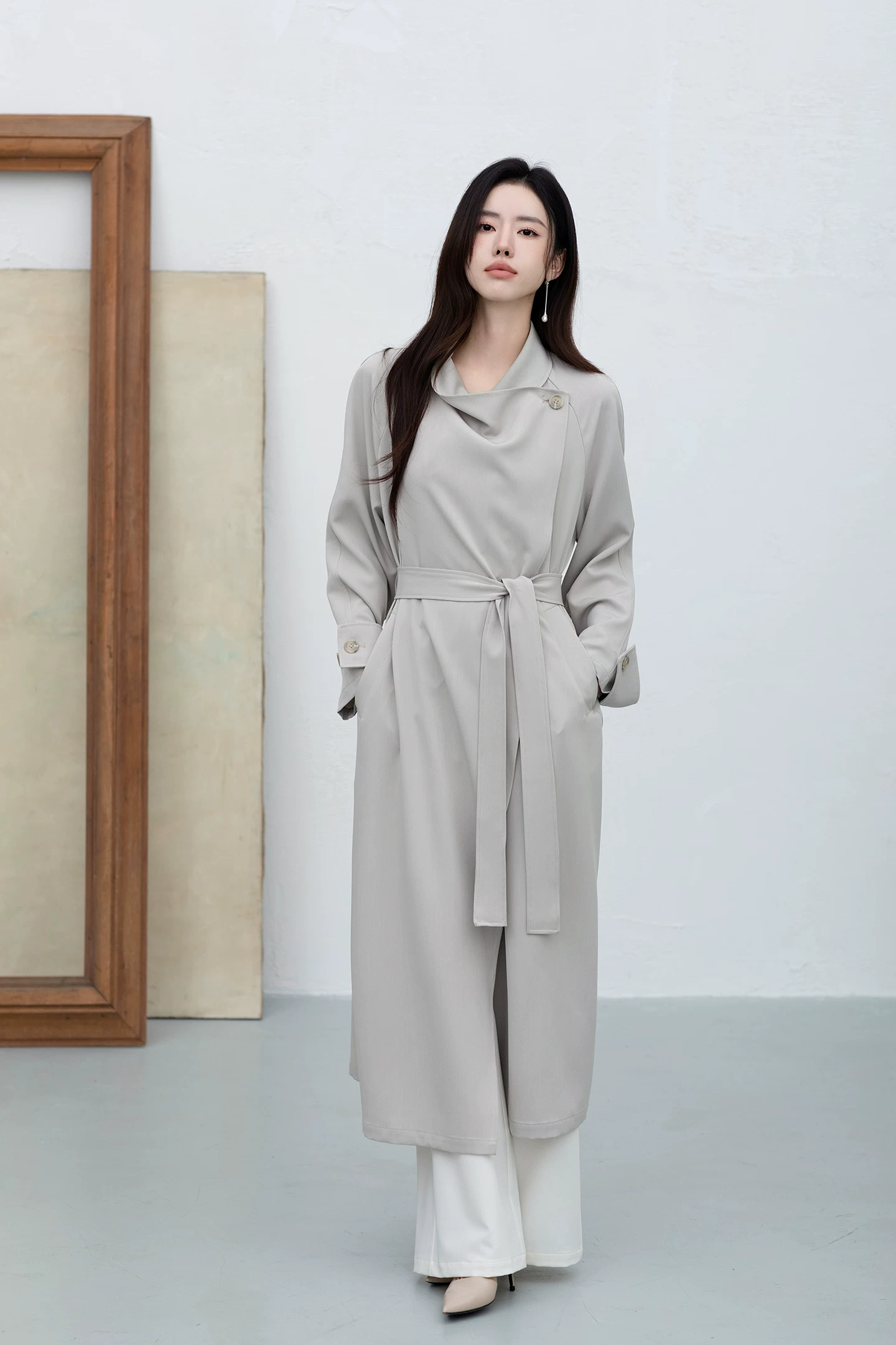
Nylon is the classic choice and for good reason. It is lightweight, durable, and has a distinctive rustling sound that some people love and others cannot stand. High-quality nylon — the kind used by brands like Patagonia and Arc’teryx — is ripstop, meaning it has a grid pattern woven in that prevents small tears from spreading. Cheap nylon, by contrast, feels plasticky and tears easily along seam lines. Polyester is the budget alternative: it is slightly heavier, slightly less breathable, but often more colorfast and less prone to fading in sunlight. A 97% polyester blend with 3% spandex, like the one used in the elegant windbreaker available at this thin spring windbreaker jacket for women, offers the ideal balance of structure and stretch — stiff enough to hold its shape, flexible enough to move with your body throughout the day.
Then there are the premium options. Gore-Tex Infinium is a windproof membrane that is more breathable than traditional waterproof Gore-Tex, used in high-end windbreakers from Arc’teryx and The North Face. Pertex Quantum is another technical fabric worth knowing about: it is astonishingly light — some jackets made from it weigh less than three ounces — while still blocking wind effectively. These premium fabrics are worth the investment if you plan to wear your windbreaker for high-output activities like trail running or cycling, but for everyday wear, a well-constructed nylon or polyester windbreaker will serve you perfectly well at a fraction of the cost.
The Windbreaker Across All Four Seasons
Most people file their windbreaker under “spring jacket” and forget about it for the rest of the year. That is a mistake. I have worn mine in every season, and while its role changes with the weather, its usefulness never disappears entirely.
In spring, the windbreaker is in its natural habitat. Temperatures fluctuate wildly between morning and afternoon, light rain appears out of nowhere, and the wind has a bite that heavier coats overcompensate for. A windbreaker solves all three problems simultaneously. I wear mine unzipped over a thin knit sweater, and I am comfortable from my 7 AM coffee run through my 6 PM walk home. In summer, the windbreaker transforms into something different: it becomes an evening layer, a beach cover-up, and an air-conditioning shield. Restaurants and movie theaters crank their AC to arctic levels in July; a windbreaker rolled up in your bag is the difference between enjoying your meal and shivering through it. On breezy beach days, it keeps the chill off without making you overheat, and it sheds sand more easily than any towel ever could.
Autumn is when the windbreaker earns its keep as a layering piece. Under a heavier coat, it adds wind protection without bulk. Over a sweater, it handles crisp October days on its own. And in winter, counterintuitively, a windbreaker can be your secret weapon. Worn as a mid-layer under a wool coat, it blocks wind that would otherwise cut through the wool and leave you freezing. Skiers and snowboarders have known this trick for decades: a thin wind shell under your insulation layer dramatically improves warmth by eliminating convective heat loss. The windbreaker, in other words, is not a seasonal item — it is a year-round tool that simply changes its role depending on the conditions.
From Hip-Hop to Haute Couture: The Windbreaker’s Cultural Journey
You cannot fully appreciate the windbreaker without understanding its cultural significance. This is not just a jacket; it is a garment with a social biography that crosses class, race, and geography in ways that few other items of clothing can claim.
The windbreaker’s first major cultural moment came in the 1980s, when hip-hop artists adopted it as part of the emerging streetwear aesthetic. The bold color-blocking, oversized fits, and synthetic materials aligned perfectly with the maximalist visual language of early hip-hop fashion. Groups like Run-D.M.C. and LL Cool J were photographed in windbreakers, and the look trickled down to fans who wanted to emulate their heroes. Simultaneously, the windbreaker became associated with British football culture, where brands like Stone Island and CP Company elevated the humble nylon jacket to luxury status through innovative fabric treatments and design details.
The 1990s took the windbreaker mainstream. It became the uniform of the “cool dad” in suburban America — think of any 90s sitcom father figure and he was probably wearing a brightly colored windbreaker while grilling burgers. Shows like The Fresh Prince of Bel-Air cemented the windbreaker’s place in pop culture, with Will Smith’s character regularly sporting bold, patterned versions that influenced an entire generation’s fashion sensibility. The windbreaker was democratic: you could find it at Kmart and at Barneys, on construction workers and on rappers, on soccer moms and on skateboarders. That democratic quality — the fact that a windbreaker does not announce your tax bracket — is part of what makes it so enduringly appealing. BBC Culture has highlighted how the windbreaker’s class-crossing appeal represents a rare unifying thread in fashion history, noting that very few garments have been adopted simultaneously by luxury designers, streetwear enthusiasts, outdoor adventurers, and everyday commuters with equal enthusiasm.
Finding the Right Windbreaker: What Actually Matters
After wearing windbreakers almost daily for two years, I have developed strong opinions about what matters and what does not when choosing one. Here is my honest assessment, based on far too many hours of research and even more hours of actually wearing these jackets in real life.
Priority number one is fit. A windbreaker should be slightly relaxed — enough room for a sweater underneath but not so much that it billows in the wind and defeats its own purpose. Look for articulated sleeves that allow full range of motion, and a hem that hits at your hip bone rather than mid-thigh. Anything longer starts to look like a lab coat; anything shorter reads as cropped, which is a specific aesthetic choice that works for some outfits but not all. Priority number two is packability. The defining feature of a windbreaker is that it disappears when you do not need it. A good windbreaker should stuff into its own pocket or come with a small stuff sack. If it does not pack down to at least the size of a water bottle, it is probably too heavy to serve its primary function. Priority number three is features: a two-way zipper for ventilation, elastic cuffs to seal out wind, a hood that actually stays on your head (ideally with a brim and an adjustable toggle), and at least two zippered pockets deep enough to hold a phone.
Things that matter less than you think: brand name, color (get what you like), and weight — within reason, a three-ounce windbreaker and a seven-ounce windbreaker feel nearly identical on the body. What matters far more is how the fabric feels against your skin and whether the cut flatters your particular body shape. I have tried on thirty-dollar windbreakers that fit beautifully and three-hundred-dollar windbreakers that looked like I was wearing a garbage bag. Price is not a reliable indicator of fit or style when it comes to windbreakers. Trust your mirror more than the price tag.
Caring for Your Windbreaker So It Actually Lasts
Here is an uncomfortable truth: most people destroy their windbreakers within the first year of ownership. Not through dramatic accidents — through laundry mistakes. The DWR coating that gives a windbreaker its water-repellent properties is surprisingly delicate, and the high heat of a dryer will degrade it faster than anything else. I learned this the hard way when I tossed my first windbreaker into a hot dryer and it came out looking like a crumpled tissue and repelling water about as effectively as a paper towel.
The correct care routine: wash your windbreaker in cold water with a mild detergent, preferably one designed for technical fabrics like Nikwax Tech Wash. Do not use fabric softener — it clogs the pores of the fabric and destroys breathability. Air dry only, ideally in the shade since direct sunlight can fade synthetic fabrics over time. If your windbreaker loses its water repellency — and it will, eventually — you can restore it with a spray-on DWR treatment available at any outdoor retailer. This simple maintenance routine will extend the life of your windbreaker from one season to five or more. For the windbreaker featured at lovingclothing.com, the manufacturer recommends dry cleaning or gentle hand washing below 30°C, which preserves both the fabric structure and the garment’s elegant drape far better than machine washing ever could.
The other thing that kills windbreakers: improper storage. Do not hang a windbreaker on a wire hanger — it will stretch the shoulders and create permanent dimples. Fold it loosely and store it in a drawer, or use a padded hanger if you must hang it. And keep it away from direct heat sources like radiators and heating vents, which can cause synthetic fabrics to become brittle and crack over time. Treat your windbreaker with a modicum of respect, and it will reward you with years of reliable service.
Why the Windbreaker Matters Right Now
There is something poetic about the windbreaker’s resurgence at this particular moment in history. We are living through an era where the boundaries between work and leisure, indoor and outdoor, formal and casual have blurred beyond recognition. The windbreaker, a garment designed for movement and transition, is the perfect uniform for this in-between world.
More than that, the windbreaker represents a shift in how we think about clothing. For decades, fashion was about adding — more fabric, more structure, more embellishment, more weight. The windbreaker is about subtraction. It strips the jacket down to its essential function and finds beauty in that simplicity. It does not try to be a coat. It does not try to be a blazer. It is exactly what it is, and in 2026, that kind of clarity feels genuinely refreshing. I have stopped apologizing for wearing my windbreaker to places where a “proper” jacket might be expected. The windbreaker is proper — on its own terms. Once you understand that, everything about getting dressed becomes a little easier.
If you have never owned a windbreaker, or if the one you own is a relic from high school gym class, consider this your invitation to rediscover the most underrated jacket in existence. It will not solve all your problems. But it will solve more of them than you expect — and it will do so while weighing less than an apple and fitting in your purse. That, in my book, is a genuine fashion miracle.