

Two summers ago I owned eleven dresses and still complained that I had nothing to wear. Last year I owned four, and I never once felt short of options. The difference was not discipline or minimalism for its own sake — it was one garment doing the work of several. The strap dress, the simplest thing on the rail, turned out to be the most flexible, and understanding why changed the way I shop. A bare shoulder line and two thin supports sound like the least versatile thing a woman could own, yet the opposite turned out to be true.
What follows is what I learned across a full year of leaning on a single shape: how a strap dress is actually constructed, where the silhouette came from, why straps flatter rather than merely reveal, how to choose one that fits properly, five real ways I wore mine, how to match fabric to season, and how to keep the whole thing looking new. If you have ever dismissed the strap dress as a party-only piece, this is the case for reconsidering it entirely.
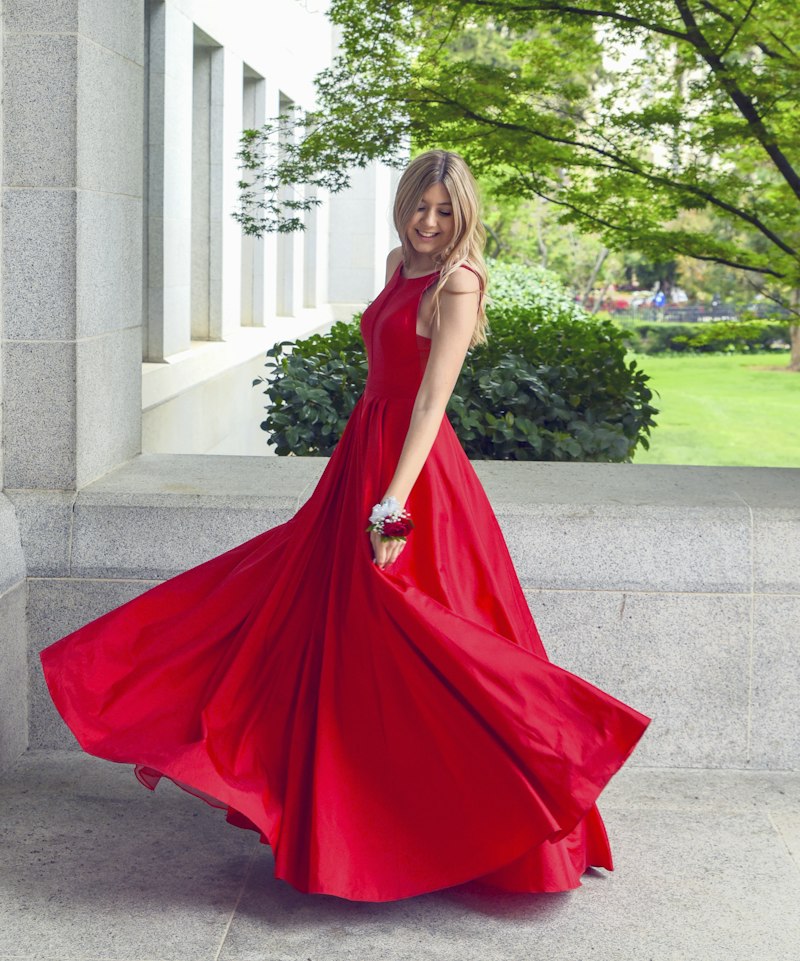
The Anatomy of a Strap Dress
Strip the idea down and a strap dress is a bodice held up by two narrow bands over the shoulders. That description sounds limiting, but every part of it is adjustable, and adjustment is the secret. The straps themselves can be thin spaghetti, wide flat bands, ties knotted at the shoulder, ribbon-thin or rope-like, beaded or plain; each choice changes where the garment sits, how much shoulder is exposed and how the whole dress reads. A spaghetti strap whispers and a wide strap speaks, yet they are the same silhouette wearing a different voice.
The neckline is the second variable. A straight-cut top reads modern and graphic, a sweetheart curve reads romantic, a square neck reads slightly vintage, and a cowl or draped top reads soft and quiet. Because the shoulders are bare, the neckline has room to become the focal point rather than competing with sleeves. That is why a strap dress can travel from a beach lunch to a wedding without a single change of clothing — you are not swapping garments, you are changing how the eye reads the same one under different light and with different layers.
Then there is the construction behind the straps, which is where the real quality lives. A well-made strap dress has a stable, lightly structured bodice so the front does not collapse, an inner lining or shelf support so the shape holds without a bra if you prefer, and straps that are firmly anchored at precisely the right point so they neither dig in nor slip off the shoulder. Cheap versions skip this engineering, which is why they slide, gape and feel fragile. The strap dress looks effortless precisely because someone put effort into the parts you cannot see.
Where the Strap Dress Comes From
*As the **reference entry on the slip and the strapped undergarment** explains, the garment that became the modern strap dress originated as innerwear — a simple strapped slip worn beneath other clothes — before crossing into outerwear during the twentieth century as hemlines rose and the body became something to dress rather than conceal.* That history explains a great deal about the silhouette. It was never designed to be fussy; it was designed to be light, close to the body and easy to put on, and it still behaves that way today.
The slip’s move from underwear to eveningwear is a familiar fashion story, but the strap dress did something more interesting than simply getting photographed. It became the connective tissue between two very different kinds of dressing. On the one hand it is the height of minimal evening style, worn alone with heels and jewellery. On the other it is the most natural thing to layer, because a garment with no sleeves and a clean neckline slides under a cardigan, a blazer or an open shirt without fuss. Few other dresses carry that much range with so little fabric.
That range is why the strap dress refuses to date. Silhouettes with sleeves belong to a decade — they carry a shoulder shape, a cuff, a length that instantly identifies the year it was designed. A bare-shouldered dress with two narrow straps belongs to no particular period, which is exactly why it keeps returning. It has been reissued, re-styled and re-photographed across generations, and every time it reads as current because there is almost nothing in it that can look old.
Why Straps Flatter More Than They Reveal
It is tempting to assume a strap dress is only flattering on one body type. In practice the opposite is true, because bare shoulders create a strong vertical frame around the face and neck, and a frame draws the eye upward. *”A clean shoulder line is one of the most reliable ways to make a garment look expensive and a person look put-together,” the stylist and fashion editor Anna Wintour has argued in interviews about minimal dressing, and the observation holds across body types.* The strap dress builds that line into the garment by default, which is why it so often flatters even when the rest of the cut is plain.
The data behind everyday outfit choices supports the same idea. *According to a 2025 consumer survey by **Statista**, a clear majority of women aged 25 to 44 who described themselves as style-conscious ranked “easy to style up or down” above every other feature when buying a dress* ([Statista](https://www.statista.com/)). A strap dress is the near-perfect answer to that brief: change the shoes and it is daytime, change the jewellery and it is evening, add a knit and it is autumn. No other single dress shape hits all three modes so cheaply.
There is a practical comfort point that rarely gets mentioned and matters enormously. Because a strap dress has almost no fabric above the chest, it is the coolest option in a heatwave and the easiest to sit in during a long, warm evening. Where a sleeved dress traps heat and creases at the elbow, a strap dress stays crisp and light. The silhouette that photographs as glamorous is, in daily use, simply the most practical warm-weather shape a woman can own — and that rare combination of looking dressed-up and feeling comfortable is precisely why trust in it grows.
How to Choose a Strap Dress That Actually Fits
Start with the strap width and adjustability, because this single letter decides whether the dress behaves at your shoulder. If you are between sizes or have ever had straps slip, choose ties or adjustable sliders rather than fixed bands; a tie strap dress gathers at the shoulder and can be tightened by a centimetre or two, which is usually all the difference between a dress that stays and one that travels. Wide straps are the safer choice for a fuller bust, while thin spaghetti straps suit a smaller frame and a lighter look.
Next, inspect the bodice for structure and support. A good strap dress holds its own shape on the hanger rather than hanging limp, carries an inner lining or an internal band, and has a neckline that stays put when you move. Test the fit the way you would wear it for real: reach both arms forward, sit down, and turn your torso — the straps should stay flat and the front should not gape. If you plan to skip a bra, look for a firm shelf or lightly boned front; if you plan to wear one, look for a neckline that accommodates a strapless or low-back style cleanly.
Finally, judge the length and the fabric weight together. A strap dress can be mini, midi or maxi, and the right one depends on how you intend to wear it: mini for weekends and holiday, midi for the widest range of occasions, maxi for evening and heat. Hold the fabric to the light — a weight with a little body will hold a clean line, whereas something too thin will cling and show every breeze. Buy for the way you actually spend your days, not for a single imagined occasion, and a strap dress will end up worn far more than you expect.
Five Ways I Wore My Strap Dress
The first, and most surprising, was to work. A midi strap dress in a solid dark tone, layered under a light knit or a linen blazer, reads polished and calm, especially with a flat sandal or a low mule. The trick is to keep the layer fitted at the shoulder so it frames the straps rather than hiding them entirely. Worn this way, the strap dress is an office piece, not a holiday piece, and it survives a full day of meetings because it is cool and comfortable in a warm room.
The second was to dinner, with nothing added at all. Heels, a small structured bag, one piece of jewellery, and the strap dress is finished; the bare shoulder line does the work that a jacket would in colder months. The third was to the beach as a cover-up over swimwear, thrown on over a bikini with sandals — the same dress that looked polished at dinner that evening read effortless at noon. That single afternoon taught me more about the value of the shape than any purchase I have made since.
The fourth was layered for a cooler evening, over a fine thermal tee or under a cropped cardigan, with ankle boots, which stretched the dress well into autumn. The fifth and simplest was at home, worn loose with bare feet, because a garment that is genuinely comfortable on the sofa is one you will reach for without thinking. Five outfits, one dress, no repurchasing — and every version looked intentional rather than improvised, which is the highest compliment a single piece can earn.
Matching Strap Dress Fabric to Season
The strap dress is at its best in summer and at its most useful when you understand how fabric shifts its role. Cotton and linen are the obvious warm-weather choices: light, breathable and slightly relaxed, they suit the beach, the weekend and the garden, and they take a little creasing as part of their character. Cotton poplin holds a cleaner line than slubby linen, so choose poplin for anything you want to look crisp and linen for anything you want to look easygoing. Both breathe, which matters more than any other factor once the temperature climbs.
Satin and silk move the same silhouette straight into evening. A satin strap dress catches light along the shoulder line and the drape, which makes an inexpensive cut look far richer than it is, and a silk version feels cool against the skin on a humid night. For the transitional weeks, jersey and fine knit are the quiet workhorses — they layer without bulk and hold their shape under a cardigan. In cooler weather, a heavier strap dress in a wool blend or a lined satin becomes genuinely wearable with a thermal layer underneath, which is how the shape earns a place beyond one season.
Colour deserves a sentence of its own, because bare shoulders make tone more visible than usual. A solid, saturated colour reads deliberate and expensive; a busy print can compete with the clean lines of the straps, so if you want a printed strap dress, choose a small repeat rather than a large one. For a first purchase, a dark neutral — black, navy, chocolate, deep green — will layer over more of your wardrobe than any pale or bright option, and it will still work when you strip the layers away.
Keeping a Strap Dress Looking New
Fine straps are the first thing to suffer if a dress is cared for carelessly. Wash less than you think you need to: hanging a strap dress in fresh air overnight removes most everyday odour and lets the fibres recover, which is gentler than repeated washing. When you do wash it, follow the label precisely. Cotton and jersey usually tolerate a cool gentle cycle; silk and satin are better hand-washed cold or dry-cleaned, then laid flat to dry rather than hung, because the weight of water can stretch delicate shoulder straps out of shape.
Heat is the next enemy, and it attacks the straps first. Keep a strap dress away from a hot tumble dryer, which weakens the fibres and dulls any sheen, and steam rather than iron directly wherever you can. If you must press, use a low setting with a cloth between the iron and the fabric so the metal never touches a delicate strap. Store the dress on a padded hanger where possible, or folded flat for knits, so the shoulder straps keep their length and do not develop a stretched, tired look at the top edge.
Look after a strap dress this way and it will outlast three cheaper replacements. A firm bodice, straps that hold, and a colour that layers across the rest of the wardrobe are the three things worth paying for; everything else is detail. Choose one good shape, wear it across five different versions of your week, and the verdict is hard to argue with. The strap dress looks like the least you can wear and turns out to be the most you can do with a single garment.