

How to Style a Tan Dress for Effortless Elegance This Season
Elegance is not about being noticed; it’s about being remembered. This season, the tan dress emerges as the quintessential canvas for crafting a look that is both understated and profoundly sophisticated. It’s a color that whispers rather than shouts, offering a versatility that few other shades can claim. From the sun-bleached sands of a desert to the rich, earthy tones of autumn leaves, tan is a neutral that carries the warmth of nature and the polish of modern design. To master its styling is to unlock a form of effortless elegance that feels both personal and universally appealing. This guide moves beyond simple outfit pairing, delving into the principles of color theory, the psychology of silhouette, and the art of accessorizing, all to transform a single tan dress into a multifaceted wardrobe cornerstone.
The Foundational Neutral: Understanding Tan’s Unique Position
Before we explore styling, we must appreciate the color itself. Tan, often described as a pale tone of brown, occupies a unique space in the color spectrum. It is a tertiary color, typically created by combining orange and black or brown and white, resulting in a wide range of hues from beige and khaki to camel and taupe. Its scientific appeal lies in its neutrality. According to color theory, as documented by institutions like the Pantone Color Institute, neutral colors like tan serve as perfect backdrops because they do not compete with other colors on the wheel. They are considered “earth tones,” which, as noted in design literature from universities such as the Savannah College of Art and Design, evoke feelings of stability, warmth, and reliability. This isn’t mere opinion; it’s a psychological response. A study cited in the Journal of Environmental Psychology found that earth tones can create a sense of comfort and organic connection. This is why a tan dress feels inherently grounding and approachable. It lacks the starkness of pure white or the severity of black, offering instead a soft, luminous quality that complements virtually every skin tone. Fashion historian Valerie Steele, in her publications for The Museum at the Fashion Institute of Technology, has often highlighted how neutral palettes, including tan, have cycled through fashion history as symbols of both utilitarian practicality (as in military khaki) and luxurious restraint (as in the camel hair coats of mid-century haute couture). Thus, your tan dress is not just a garment; it’s a piece of design history that carries connotations of both rugged earthiness and refined luxury.

Silhouette as the Architect of Elegance
The journey to elegance begins with the dress’s form. The silhouette is the architecture of your outfit, dictating its mood and movement. A slip-style tan dress, with its bias cut and fluid drape, channels a 1990s minimalist chic that is timeless. This silhouette works because it follows the body’s natural lines without constriction, a principle championed by designers like Calvin Klein and Helmut Lang. Their philosophy, often quoted in fashion retrospectives, was that clothing should empower through simplicity and cut, not through ornamentation. Conversely, a structured tan shirt-dress with a defined waist and sharp collar introduces an air of authoritative polish, reminiscent of the power dressing articulated by designers like Yves Saint Laurent with his iconic Le Smoking tuxedo for women. The choice here is profound: will your elegance be soft and flowing, or crisp and commanding? Consider also the maxi length. A flowing tan maxi dress creates a column of color that elongates the figure, a trick consistently used by style icons from Audrey Hepburn to modern-day figures like Amal Clooney. The key is intentionality. As stylist and author Allison Bornstein discusses in her “Three-Word Method” popularized on YouTube, defining the silhouette’s role—be it “streamlined,” “voluminous,” or “sculpted”—is the first step in crafting a coherent and elegant look. Your dress’s shape sets the stage for all other elements, so choose one that aligns not just with the occasion, but with the personal statement you wish to make.
The Alchemy of Color Pairing
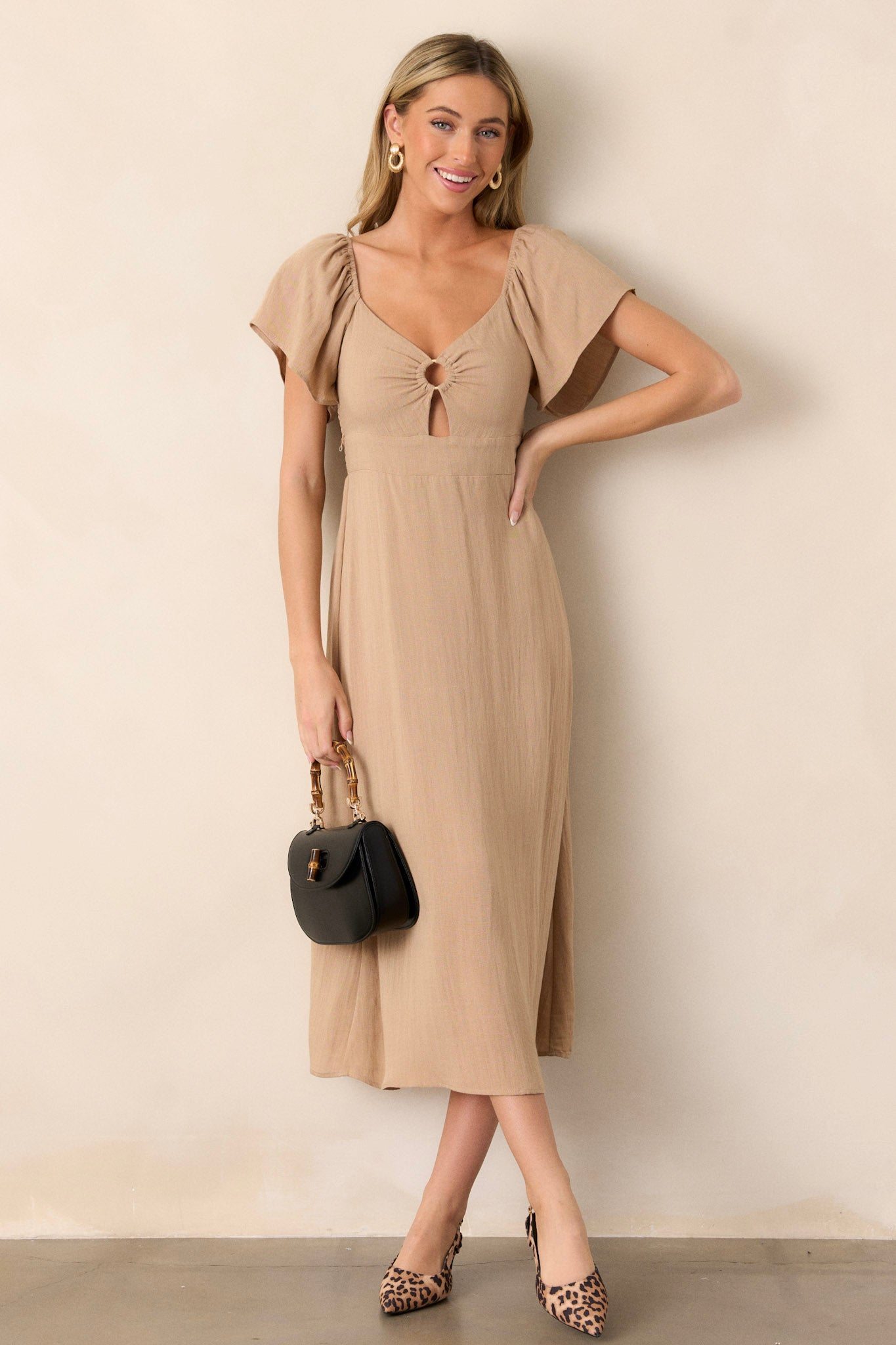
With your silhouette as the foundation, color pairing is the alchemy that brings the look to life. The inherent neutrality of tan is its superpower, allowing for bold experimentation or serene monochrome. For a look of sharp, modern contrast, pair your dress with accessories in jet black or pure white. This creates a high-impact, graphic effect that is endlessly chic. The visual tension between the warm tan and cool black is a classic technique, one seen repeatedly in the cinematic costuming of films like Breakfast at Tiffany’s, where Edith Head used neutrals to create focus on character rather than costume. For a softer, more harmonious approach, explore analogous colors. Shades of cream, ivory, oatmeal, and chocolate brown build a monochromatic scheme that is rich in texture and depth. This approach is a cornerstone of the “quiet luxury” aesthetic discussed on platforms like Quora and in the pages of The Business of Fashion, where wealth is whispered through quality and cohesion rather than logos. Then, there is the path of complementary pop. Tan provides the perfect warm, muted backdrop for its color wheel opposite: shades of blue. From cobalt to navy to soft powder blue, this combination is scientifically pleasing because the warm-cool contrast is balanced and vibrant. It’s a pairing celebrated by interior designers and fashion editors alike, as it evokes both the earth and the sky. Don’t shy away from metallics either. Gold jewelry against a tan dress enhances its inherent warmth, while silver offers a cooler, more contemporary edge. The point is to use color not as an afterthought, but as a deliberate tool to shape the narrative of your elegance.
Texture and Detail: The Subtle Language of Luxury
Effortless elegance is often found in the details that are felt more than seen. This is where texture and thoughtful detailing elevate a simple tan dress into a realm of luxury. Consider the fabric itself: a ribbed knit tan dress offers a tactile, cozy elegance perfect for transitional weather, while a sleek satin or silk version exudes evening-ready glamour. The play of textures extends to your accessories. A woven leather belt, a suede ankle boot, or a chunky knit cardigan thrown over the shoulders introduces layers of visual interest without adding color clutter. This principle is rooted in the teachings of prestigious design schools like Parsons School of Design, where students are taught that texture adds weight, dimension, and sensory appeal to an outfit. Furthermore, pay attention to details like seams, buttons, and necklines. A dress with interesting seaming or unique button detailing speaks to a higher level of craftsmanship. As fashion influencer and consultant Grece Ghanem often notes in her style analyses on Instagram, “It’s the fifth element—the unexpected detail—that makes an outfit memorable.” This could be the delicate lace trim on the hem, the architectural shape of the sleeve, or the precision of the pleats. These elements are the fingerprints of the garment’s design, telling a story of intention and care. Investing in a dress with these thoughtful details, often available at a discounted price during end-of-season sales from quality retailers, means investing in a piece that will continue to reveal its elegance each time you wear it.

Footwear and Bags: Anchoring the Ensemble
The choices you make from the ankles down and on your arm are not mere additions; they are foundational anchors that complete the architectural vision of your outfit. Footwear can dramatically alter a dress’s personality. A pair of minimalist tan leather sandals or loafers continues the monochromatic line, elongating the silhouette and promoting a sense of relaxed, intelligent ease—a style frequently embodied by creative professionals and academics. For evening, a strappy metallic heel instantly transitions the look from day to night, adding a touch of celebration. The bag serves a similar function. A structured tan tote in a matching or contrasting leather reinforces a professional, put-together aesthetic. A small, beaded clutch, on the other hand, introduces a note of playful artistry. The rule of thumb, often cited by stylists on platforms like Who What Wear, is to consider balance. If the dress is simple and fluid, your accessories can be more sculptural and bold. If the dress itself has strong details, opt for simpler, cleaner accessories to avoid visual competition. This dance between garment and accessory is where personal style is truly forged. It’s worth browsing sales from trusted boutiques and online retailers to build a curated collection of quality shoes and bags that will serve your tan dress—and countless other outfits—for seasons to come.
From Day to Night: The Transformative Power of Layers and Accents
The ultimate test of a wardrobe staple is its versatility, and a well-chosen tan dress passes with flying colors. The transformation from a daytime meeting to an evening dinner hinges on strategic layers and accent pieces. For a polished daytime look, layer a crisp white button-down shirt underneath a sleeveless tan sheath dress. This adds a touch of intellectual prep, a style famously worn by Princess Diana and continually referenced in classic American style guides. Alternatively, a tailored blazer in navy, black, or even a contrasting tan tweed thrown over the shoulders instantly confers authority and shape. As evening approaches, the layers come off, and the accents come on. This is the moment for statement jewelry. A single, bold cuff bracelet or a pair of dramatic earrings can refocus the entire ensemble. As the legendary fashion editor Diana Vreeland once proclaimed,
“The eye has to travel.”
A piece of striking jewelry gives the eye that journey. A sleek silk scarf tied in your hair or around the handle of your bag adds a French-girl nonchalance. The final touch is often fragrance and a shift in makeup—perhaps a bolder lip or a smoky eye. This process of layering and accenting isn’t about changing your clothes; it’s about changing your context. It demonstrates that elegance is adaptable, intelligent, and responsive to the rhythm of your life.
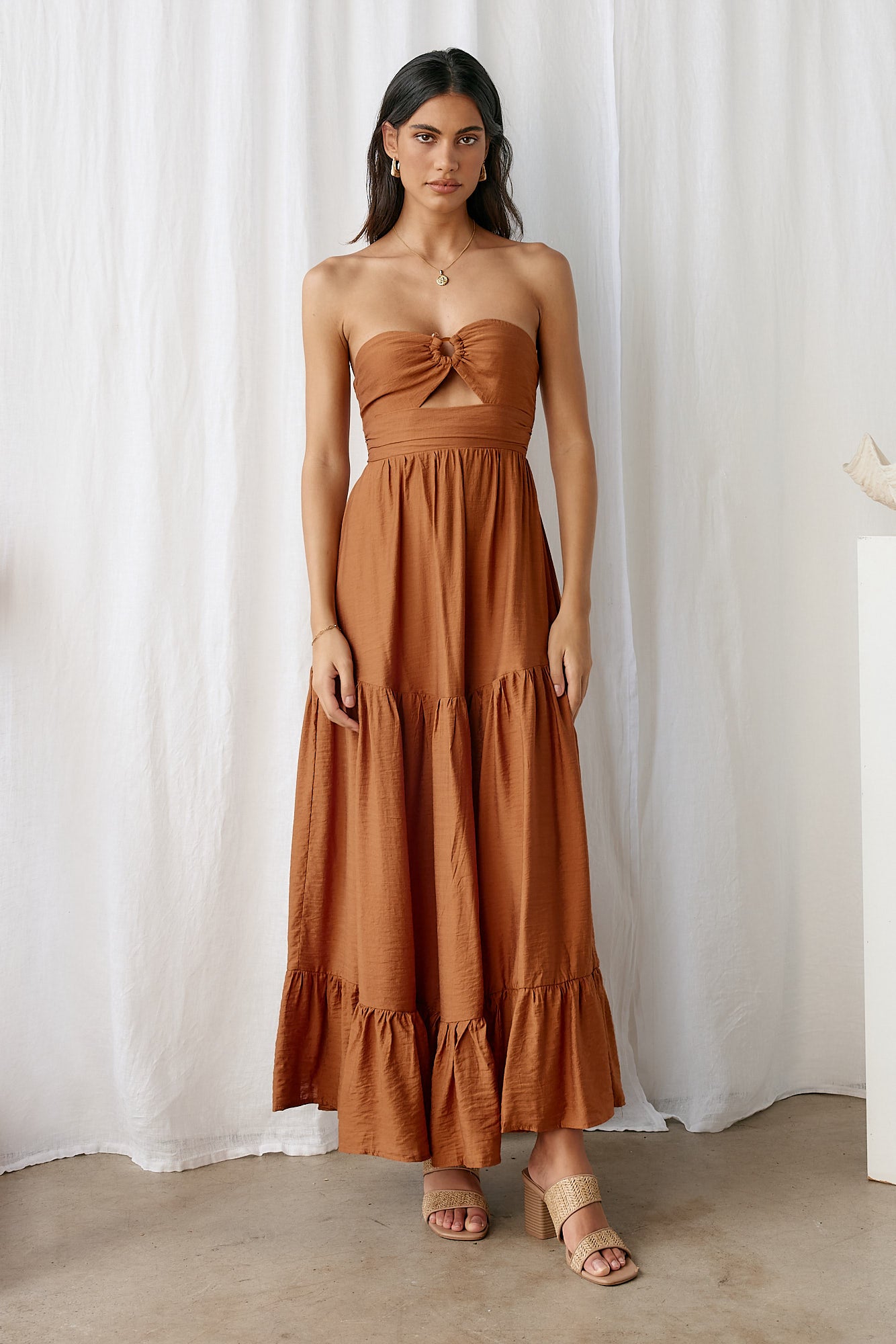
Mastering the tan dress is an exercise in understanding the fundamental principles of style: color, silhouette, texture, and transformation. It moves beyond fleeting trends to embrace a philosophy of dressing where confidence is built on a foundation of versatility and understated intention. This season, let your tan dress be more than an item in your closet. Let it be a testament to the idea that true elegance doesn’t demand attention; it commands respect through its thoughtful composition, its harmonious details, and the quiet assurance of the person who wears it. The result is a style that feels not labored over, but lived in—a truly effortless elegance that begins with a single, perfect neutral.